 Ferndale Siding
 Building Exteriors for a Coastal Community
Lummi Nation sits right up against the water on the Lummi Peninsula, tucked between Bellingham Bay and the Strait of Georgia in Whatcom County. That waterfront position is part of what makes the community beautiful, and it's also exactly why homes here take a harder beating than houses just a few miles inland. Salt-laden air, near-constant onshore moisture, and a moss season that can stretch from October well into May put real, ongoing stress on siding, roofs, windows, and decks. We've worked exteriors throughout Whatcom County long enough to know that a house built for "generic Pacific Northwest weather" isn't the same as a house built for a shoreline community, and we approach Lummi Nation jobs with that difference in mind.
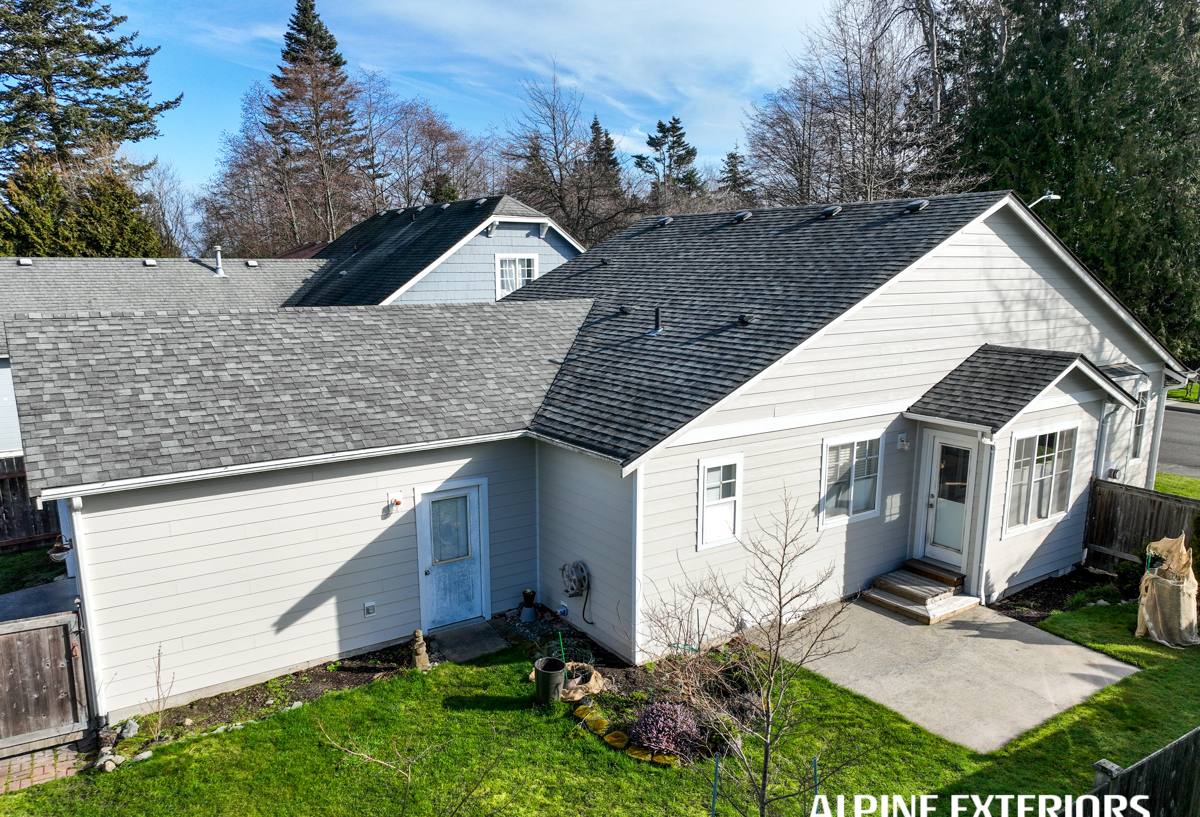
What Salt Air and Driving Rain Actually Do to a House
It's worth being specific about the mechanisms at work, because they're different from what damages a house in a drier or more inland climate.
Salt Air and Metal Fatigue
Airborne salt accelerates corrosion on anything metal — fasteners, flashing, gutter hangers, hinges, and trim screws. On a home a few blocks from the water, corrosion-prone fasteners can start showing rust streaks and weakening years before they would somewhere inland. Once a fastener corrodes and loosens, whatever it's holding — a siding panel, a piece of flashing — starts moving, and movement is what lets water in.
Driving Rain and Wind-Driven Moisture
Rain that comes in sideways off the water finds every gap a straight-down rain never would. It pushes up under lap siding, behind poorly sealed trim, and into any seam that isn't properly flashed and caulked. Over years, that's how you get soft trim boards, stained siding at the bottom courses, and rot that starts from the inside of a wall assembly rather than the surface.
Moss, Algae, and a Long Damp Season
Shade, humidity, and mild temperatures are a perfect combination for moss and algae growth on roofs and north-facing siding. Beyond the cosmetic issue, moss holds moisture against the surface it's growing on. On a roof, that means shingles and the decking underneath stay wet longer than they should. On siding, especially wood-based products, sustained dampness is what starts the rot clock.
Why We Standardized on James Hardie Fiber Cement
We install James Hardie fiber cement siding exclusively. We don't install vinyl, LP SmartSide, Cemplank, Allura, primed spruce, or cedar, and that's a deliberate call based on how those materials perform over time in exactly the conditions Lummi Nation deals with — not a knock on anyone who's chosen them.
Vinyl siding expands and contracts significantly with temperature swings, and in a marine environment with constant humidity cycling, those seams and laps are where moisture works its way in over time. It also softens and can warp near heat sources, and it's a petroleum-based product with a look that reads as "vinyl" up close no matter how good the embossing is.
Wood-based products — cedar, primed spruce, and engineered wood siding like LP SmartSide — perform well when maintenance stays perfectly on schedule, but a wet coastal climate doesn't give much room for missed years. Any breach in the paint or sealant, any spot where caulking fails, becomes an entry point for moisture, and wood-based cores swell, delaminate, or rot from there. Fiber cement products from other manufacturers (Cemplank, Allura) are close cousins to Hardie in raw material, but we've standardized on Hardie specifically for its factory-applied ColorPlus finish, its HZ5 product engineering for wet climates, and the depth of its installation network and warranty support in this region.
James Hardie fiber cement is non-combustible, dimensionally stable across our wet-to-dry seasonal swing, and holds its factory finish for a long time without repainting. It doesn't rot, it doesn't feed moss the way wood fiber can, and it's engineered specifically for the kind of moisture exposure a shoreline property deals with every year. That combination is why it's the only siding product we put on a home.
How a Siding Job Works Here
Assessment First
Every job starts with a real look at the wall assembly, not just the visible siding. We check for soft spots, look at flashing details around windows and doors, and check how water has historically moved off the roof and away from the walls. On a coastal property, we pay particular attention to the sides that take the most weather — usually the water-facing and prevailing-wind-facing elevations.
Installation Details That Matter More Here
Correct installation is what makes any siding product perform to spec, and in a high-moisture, salt-exposed area, the details matter more than usual: proper starter strips, correct fastener spacing and type (we use corrosion-resistant fasteners throughout), rain-screen or drainage plane details where called for, and careful flashing and caulking at every penetration — windows, doors, hose bibs, light fixtures. Hardie's own installation instructions are specific for a reason, and skipping steps is where "the product failed" claims usually trace back to a shortcut in the install, not the material itself.
Color and Finish
ColorPlus finish is baked on at the factory under controlled conditions, which gives it better UV and moisture resistance than field-applied paint, and it means touch-up rather than full repainting when something does need attention down the road.
Roofing in a Salt-Air, High-Moss Environment
Roofs on the Lummi Peninsula deal with the same moss and moisture pressure as siding, plus wind exposure off the water. We look at ventilation, underlayment condition, and flashing around every roof penetration, since a small flashing failure is usually how a roof leak actually starts, not a failure of the shingles themselves. Good attic and roof ventilation also matters more here — it's what keeps moisture from condensing inside the roof assembly during the long wet stretch of the year.
Windows That Hold Up to Coastal Exposure
Windows facing the water take direct wind-driven rain, and a window with weak flashing or aging seals is one of the more common quiet sources of wall damage — water gets behind the window frame and travels down into the wall cavity long before anyone notices a problem inside. When we replace windows, we treat the flashing and integration with the siding as seriously as the window unit itself, and we look at energy performance too, since a home this close to open water often deals with more temperature swing and wind chill than one a few miles inland.
Decks: Built for Wet Wood and Salt Exposure
Outdoor living spaces here face the same moisture load as the rest of the house, plus direct weather exposure with no wall assembly protecting them. Ledger board attachment and flashing, fastener corrosion resistance, and drainage underneath the deck surface are the details that determine whether a deck stays solid for decades or starts having soft spots and loose railings within a handful of years. We build decking systems with materials and hardware selected for sustained damp exposure, not just general PNW weather.
Comparing Siding Materials in a Coastal Whatcom County Climate
| Material | Moisture Behavior | Maintenance Need | Typical Longevity Here |
|---|---|---|---|
| Vinyl | Seams and laps are common moisture entry points; expands/contracts with temperature | Low, but limited repair options when damaged | Moderate |
| Cedar / Primed Spruce | Absorbs moisture if finish is breached; prone to rot in sustained damp | High — regular repainting/sealing on strict schedule | Shorter without diligent upkeep |
| Engineered Wood (e.g. LP SmartSide) | Wood-fiber core vulnerable if moisture gets past the coating | Moderate to high | Depends heavily on maintenance consistency |
| James Hardie Fiber Cement | Engineered for wet climates (HZ5); doesn't rot or feed moss growth | Low — factory finish holds up for years | Long, when installed to spec |
Why a Local Crew Matters
They've Seen This Exact Weather Pattern Before
A crew that works Whatcom County's shoreline regularly recognizes salt-air corrosion, moss-driven rot, and wind-driven water intrusion on sight, because they've dealt with it on the house down the street. That familiarity shows up in the small decisions — fastener choice, flashing detail, where to add extra sealant — that a generic install wouldn't necessarily catch.
Vetting Any Contractor Before You Hire
- Ask specifically what siding, roofing, and window brands they install and why they chose those over alternatives
- Confirm they carry current liability insurance and any required licensing for exterior work in Washington
- Ask how they handle flashing and moisture barrier details around windows, doors, and penetrations — a vague answer is a red flag
- Get a written estimate that separates material, labor, and any tear-off or disposal costs
- Ask about manufacturer warranty terms and whether the installer is certified to back them
- Check that they're familiar with the specific weather exposure of your property's location, not just the region in general
Getting Started
If your home in or around Lummi Nation is dealing with moss buildup, soft or discolored siding, corroded fasteners, or a roof that seems to hold onto moisture longer than it should, it's worth having someone look before small problems become structural ones. We offer free, no-pressure estimates for siding, roofing, window, and deck work, and we're happy to walk your property, point out what we see, and explain the options honestly — no obligation either way.