 Ferndale Siding
 Roofing in a Marine Climate: What Lummi Nation Homes Are Up Against
Homes in and around Lummi Nation sit close to the water, and that proximity shapes what a roof has to survive year after year. Salt-laden air off Bellingham Bay and the Strait of Georgia works differently on roofing materials than inland air does — it accelerates corrosion on exposed metal fasteners and flashing, and it can shorten the useful life of lower-grade shingles. Add in Whatcom County's long stretch of driving rain each fall and winter, plus the shaded, damp conditions that let moss take hold on north-facing slopes for much of the year, and you have a climate that punishes roofs that were installed to a minimum standard rather than the right one.
None of this means a roof here needs to be exotic or overbuilt. It means the details that get skipped on an easy job — proper underlayment, correct flashing at every transition, ventilation that actually balances intake and exhaust — matter more here than they would in a drier, calmer part of the state. A roof replacement done right in this area should be built with those realities in mind from the first materials order, not patched around later.
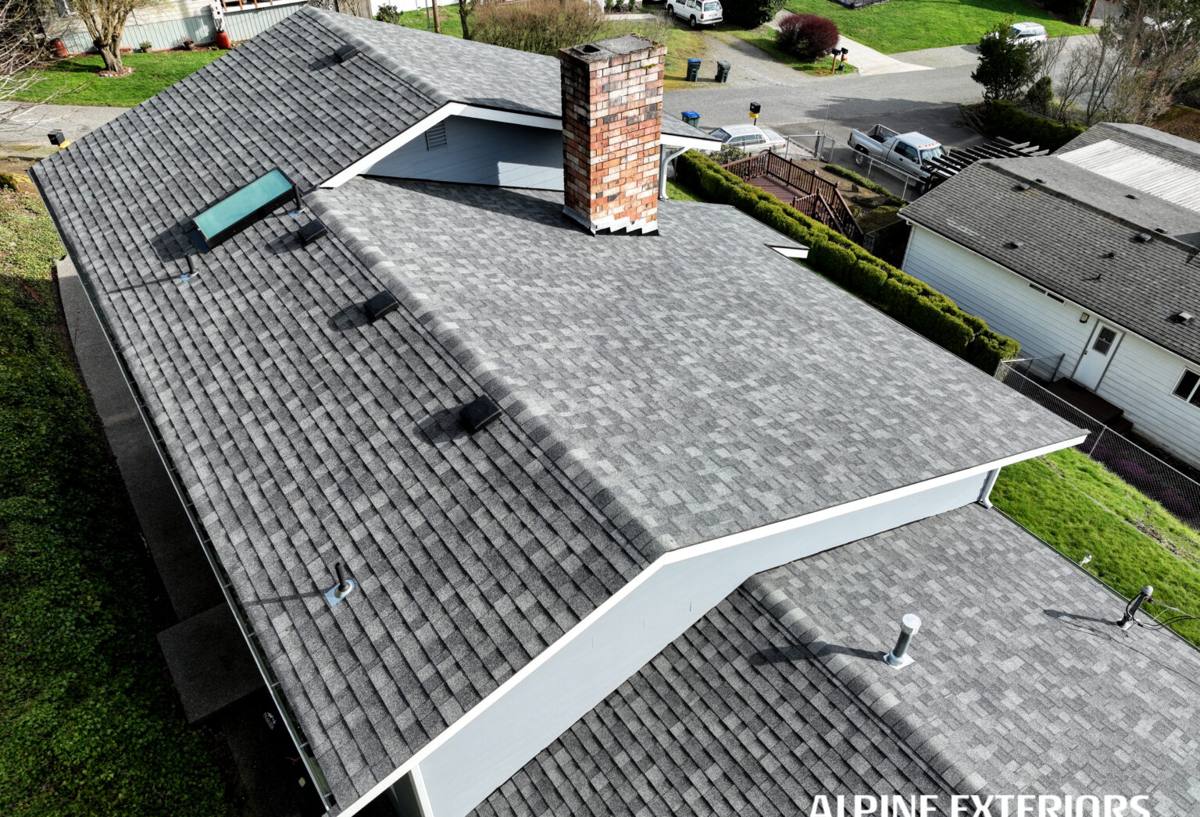
How to Tell a Roof Needs Replacing, Not Just Repair
Not every roofing problem calls for a full replacement, and a straight answer on that is part of an honest estimate. That said, there are signs that usually mean repair is a temporary fix at best:
- Granule loss heavy enough that you're finding grit in gutters and downspouts every season
- Shingles that are cupping, curling, or cracking across multiple slopes rather than one isolated spot
- Soft spots or sagging in the roof deck, which usually points to water damage underneath the surface layer
- Persistent moss growth that keeps returning within months of cleaning, even on a roof that's only 10-15 years old
- Daylight visible through the attic decking, or recurring leaks at valleys, chimneys, or skylights
- A roof that's simply reached the end of its rated lifespan for its material, even if it "looks okay" from the ground
If a roof is showing one or two of these in a limited area, targeted repair can often buy several more years. If several of these are showing up at once, repair usually becomes a cycle of chasing leaks rather than solving the underlying problem — and that's when replacement is the more honest recommendation.
What a Correct Roof Replacement Actually Involves
Full Tear-Off, Not a Layover
A proper replacement starts with removing the existing roofing down to the deck. Layering new shingles over old ones is sometimes allowed by code in limited cases, but it hides the condition of the deck underneath, traps moisture between layers, and voids many manufacturer warranties. In a climate this wet, we want eyes on the deck itself before anything new goes down.
Deck Inspection and Repair
Once the old roofing is off, the sheathing gets inspected for soft spots, delamination, or rot — common wherever a slow leak has been running unnoticed. Any compromised sections get replaced before underlayment goes on. Skipping this step is one of the most common ways a "new roof" fails early.
Underlayment and Ice-and-Water Protection
Given how much driving rain this area sees, underlayment choice isn't a place to cut corners. Self-adhered ice-and-water membrane belongs at eaves, valleys, and around every penetration — the spots where wind-driven rain is most likely to work its way backward under the shingles. Synthetic underlayment across the rest of the field holds up better than old felt paper in a climate that rarely gets a long dry stretch to let materials fully dry out between rain events.
Flashing at Every Transition
Chimneys, skylights, dormers, sidewalls, and roof-to-wall intersections are where the large majority of roof leaks actually start — not in the open field of shingles. Correct step flashing, counter-flashing, and kick-out flashing at these points is what separates a roof that stays dry for decades from one that develops slow leaks within a few years.
Ventilation That Balances
A roof deck needs a balanced path for air to move from intake (usually soffit vents) to exhaust (ridge or roof vents). In a moss-prone, high-moisture climate, unbalanced or blocked ventilation traps warm, damp air against the underside of the deck, which accelerates both deck rot and moss growth on the shingles above it. This is one of the most overlooked parts of a roof replacement and one of the most consequential.
Choosing a Roofing Material for This Climate
There's no single "best" roofing material — the right choice depends on budget, roof pitch, how long you plan to stay in the home, and how much long-term maintenance you're willing to take on. Here's how the common options actually compare for a coastal, moss-prone, rainy climate like this one:
| Material | Moisture / Salt-Air Behavior | Moss Resistance | Typical Lifespan | Maintenance Load |
|---|---|---|---|---|
| Architectural Asphalt Shingle | Good when installed with proper underlayment and flashing | Moderate; benefits from zinc/copper strips near the ridge | 20-30 years | Low to moderate; periodic moss treatment |
| Standing-Seam Metal | Excellent; sheds water fast and resists moss better than any other option | High | 40-50+ years | Low; occasional fastener/sealant check |
| Cedar Shake | Attractive but sensitive to constant moisture; needs consistent airflow underneath | Low without diligent upkeep | 20-30 years with maintenance | High; regular treatment and inspection |
| Composition/3-Tab Shingle | Adequate but thinner profile wears faster in driving rain and wind | Moderate | 15-20 years | Low to moderate |
We'll walk through these trade-offs honestly during your estimate rather than steering you toward whatever happens to be easiest for us to install. Cedar, for example, can look great on the right home, but we're upfront that it demands more attention in a climate this damp — that's a maintenance conversation, not a knock on the material itself.
Our Roof Replacement Process, Step by Step
- On-site inspection: We walk the roof (or use appropriate access for steep pitches) and check the attic from the inside, looking at ventilation, existing moisture damage, and deck condition.
- Written estimate: You get a clear breakdown of material options, scope of work, and price — not a vague number with allowances buried in fine print.
- Material selection: We help you weigh the options in the table above against your budget and how long you plan to own the home.
- Scheduling around weather: Given how much rain this area gets, we plan tear-off in stages and keep the deck protected if weather turns mid-project.
- Tear-off, deck repair, and installation: Old roofing comes off, the deck gets inspected and repaired as needed, then underlayment, flashing, and the new roofing go on in that order.
- Cleanup and final walkthrough: Magnetic sweep for nails, full site cleanup, and a walkthrough so you can see the finished work and ask questions before we consider the job done.
Moss and Moisture Control Built In, Not Added On
Moss doesn't just sit on top of a roof looking bad — its root structure holds moisture against the shingle surface and, over time, lifts granules and shortens the roof's life. In this area's shaded, damp microclimates, a roof that isn't set up to resist moss from day one will need it treated repeatedly. A few things make a real difference: zinc or copper strips installed near the ridge line let rainwater carry trace metal ions down the roof slope, which suppresses new moss growth; keeping nearby tree canopy trimmed back improves airflow and sun exposure on the roof; and balanced attic ventilation keeps the underside of the deck from staying damp long after the surface has dried. We build these into the replacement itself rather than treating moss control as an annual add-on service you have to keep paying for.
What Affects the Cost of a Roof Replacement
Every roof is different, so a real number only comes from an on-site look. That said, most estimates move up or down based on the same handful of factors:
- Roof size and complexity: Square footage, number of valleys, dormers, and penetrations all add labor time.
- Pitch and access: Steep or hard-to-access roofs require more safety setup and take longer to work.
- Deck condition: Hidden rot or delamination found after tear-off adds material and labor to repair before new roofing goes on.
- Material choice: As the comparison table shows, asphalt, metal, and cedar carry very different price points and lifespans.
- Ventilation and flashing upgrades: Bringing older ventilation or flashing up to a proper standard adds some cost but pays off in fewer callbacks and leaks.
- Disposal and permitting: Tear-off debris hauling and any required permits are part of a complete, honest estimate rather than a surprise line item later.
Depending on these factors, a full roof replacement on a typical single-family home in this area commonly falls in the broad range of roughly $9,000 to $25,000 or more, with metal roofing generally landing at the higher end and standard asphalt shingle at the lower end. Treat this as a rough starting point for budgeting, not a quote — your actual number depends on your specific roof.
Permitting and Working Respectfully in the Community
Projects on or near Lummi Nation land can involve a different permitting path than a typical Ferndale or unincorporated Whatcom County address, depending on exactly where the property sits and whose jurisdiction applies. Rather than guess or assume, we confirm the correct permitting authority for your specific property before work starts and handle that paperwork as part of the project. We also treat every job here the way we'd want a contractor to treat our own neighborhood — showing up when we say we will, keeping the site clean, and being straightforward about scope and cost from the first conversation.
Why Hiring a Crew That Already Works This Area Matters
A roof replacement is only as good as the details nobody sees once the shingles are down — the flashing behind a chimney, the ventilation balance in the attic, the underlayment under the ridge cap. A crew that already works regularly in Ferndale, Whatcom County, and the surrounding Lummi Nation community has already made the adjustments that this climate demands: heavier ice-and-water protection at eaves and valleys, ventilation sized for near-constant humidity, and moss-suppression details built into the install rather than sold separately afterward. That local track record isn't a marketing line — it's the difference between a roof that needs attention again in five years and one that quietly does its job for decades.
If you're weighing repair against replacement, or just want a straight answer on what your roof actually needs, we're happy to take a look. Reach out for a free, no-pressure estimate using the form below — we'll walk the roof, answer your questions honestly, and give you a clear, written breakdown with no obligation.