 Ferndale Siding
 Fiber Cement Siding on the Lummi Peninsula
Siding on the Lummi Peninsula does a different job than siding twenty miles inland. Homes here sit close enough to Bellingham Bay and the Strait that salt-laden air is a daily condition, not an occasional one, and the open water means wind has room to build before it hits a wall. We install James Hardie fiber cement siding for homeowners in and around Lummi Nation, and this page is specifically about that one product and that one service: what the local climate demands from a siding material, what a correct installation actually involves out here, and how we run the job from first walkthrough to final cleanup.
This is general guidance for the area, not a claim about any particular property. If you're weighing a re-side on the peninsula, the details below should give you a realistic picture of what you're deciding between and what to expect from the work itself.
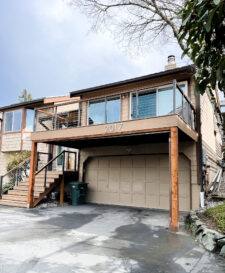
What This Location Demands From a Siding Material
Salt Air, Close to Open Water
Salt in the air does two things to a house over time: it accelerates corrosion in exposed metal — fasteners, flashing, trim hardware — and it breaks down lower-grade finishes faster than a dry inland climate ever would. A siding material's core matters here, but so does its finish, because the finish is the first line of defense against that steady salt exposure. A coating that fails early exposes the substrate underneath to everything else this climate throws at it.
Wind-Driven, Sideways Rain
Storms coming off open water rarely drop rain straight down. Wind pushes it sideways into siding laps, trim joints, and butt seams, which is a harder water-management problem than a simple annual rainfall number suggests. A siding system that assumes calm, vertical rain — meaning looser joint tolerances or thinner factory sealing — tends to show leaks here well before it would somewhere more sheltered.
A Moss Season That Doesn't Really End
Mild temperatures and near-constant moisture add up to a moss and mildew season that can run most of the year on shaded, north-facing walls. Any siding surface that stays damp for extended stretches becomes a growth surface eventually, and a material with even a little surface porosity gives moss more to hold onto. It usually shows up on the roof first, but by the time it's visible on a wall, moisture has often had time to work on whatever is behind that wall's finish.
Why Fiber Cement Fits This Climate
James Hardie fiber cement is a cement, sand, and cellulose fiber composite — an inorganic core that doesn't absorb water the way wood-based sidings can, and doesn't give moss or fungus organic material to feed on. That matters more here than it would in a drier region, because the core material is being asked to tolerate sustained dampness, not just occasional wetting. A few specifics worth knowing:
- ColorPlus factory finish: Baked on under controlled conditions rather than brushed on at the job site, which holds up to salt air and UV noticeably longer than field-applied paint.
- HZ5 formulation: Hardie's product line engineered for regions with heavy moisture exposure and freeze-thaw cycling — a fit for the peninsula's conditions, not an upgrade we add for the sake of it.
- Dimensional stability: The cement core doesn't swell, cup, or warp the way wood-based panels can after repeated wet-season cycles, so joints and reveals stay consistent for the life of the siding.
- Non-combustible core: A safety and insurance consideration that applies everywhere we install, this location included.
The Product System: Profiles and Trim
"Fiber cement siding" covers more than one product shape, and the right choice depends on the home's style and exposure, not just personal preference. The main options we work with:
| Product | What It Is | Where It Fits Best |
|---|---|---|
| HardiePlank lap siding | Horizontal overlapping boards, the most common residential profile | Traditional and craftsman-style homes; wide range of exposure widths |
| HardiePanel vertical siding | Large-format vertical panels with battens or exposed joints | Modern or accent elevations; fewer horizontal laps for water to work into |
| HardieTrim boards | Fiber cement trim for corners, window and door casing, fascia | Pairs with either plank or panel siding for consistent, low-maintenance trim |
| HardieSoffit panels | Vented or non-vented panels for eaves and overhangs | Areas exposed to wind-driven moisture and moss from underneath the roofline |
Most homes on the peninsula end up with HardiePlank as the primary field material and HardieTrim for corners and openings, since that combination gives the most consistent water-shedding performance across a typical wall. Vertical panel siding shows up more often as an accent on porches, gables, or additions than as a whole-house choice, though it has real advantages on walls that see the most direct wind-driven rain, since fewer horizontal laps means fewer places for water to find a way in sideways.
What Correct Installation Involves Out Here
Fiber cement performs the way it's designed to only when it goes on correctly, and on an exposed peninsula lot the installation details matter more than they would somewhere sheltered. What we won't skip:
- Rain screen gap: A drainage cavity behind the siding so any moisture that gets past the exterior surface can drain and evaporate instead of sitting against the sheathing.
- Manufacturer-spec fastener type and spacing: Hardie specifies both for a reason; loose spacing or the wrong fastener is one of the more common causes of early failure we find on tear-offs.
- Proper clearance from grade and roofline: Siding installed too close to the ground or to a roof surface stays wet longer and wicks moisture it shouldn't.
- Lapped, integrated house wrap and flashing: Every seam and penetration needs to shed water downward and outward, particularly on walls catching wind-driven rain head-on.
- Sealed butt joints and trim transitions: Open or poorly sealed joints are where salt-laden moisture finds a way behind the siding first.
None of this is exotic — it's the manufacturer's own installation spec, followed consistently on the parts of a job that are hardest to check once the siding is up and the yard is cleaned.
Why We Install James Hardie and Nothing Else
We install James Hardie fiber cement exclusively. We don't install LP SmartSide, vinyl siding, Cemplank, Allura, primed spruce, or cedar. That's a professional standard we arrived at from what we've found on tear-offs and service calls in exposed, high-moisture parts of the county, not a supplier relationship. Each of those other products has a legitimate place in the market, and homeowners in less demanding climates are often satisfied with them. On a peninsula lot getting direct salt air and sideways rain off open water, we'd rather stand fully behind one system than offer something cheaper and let the trade-offs surface on someone else's timeline, years after the invoice is paid.
How We Run a Fiber Cement Siding Job Here
- We walk the exterior in person and check the existing siding, substrate, and trim for hidden moisture damage before quoting anything.
- We tear off the old siding rather than overlay in most cases on this peninsula, since overlay traps whatever moisture issues are already present behind a second layer.
- We repair or replace any compromised sheathing or framing we find once the wall is open — this is priced honestly as it's discovered, not guessed at up front.
- We install house wrap, flashing, and a rain screen gap before a single course of siding goes up.
- We install HardiePlank, panel, and trim to manufacturer spec, with fastener pattern and clearances set for this location's wind and moisture exposure.
- We walk the finished job with you and point out anything you should know about long-term care, since fiber cement is low-maintenance but not zero-maintenance.
Cost Factors for a Lummi Nation Re-Side
| Factor | What It Affects | Why It Matters Here |
|---|---|---|
| Tear-off vs. overlay | Labor scope and access to substrate | Tear-off is usually the right call given how often moisture is already present behind older siding |
| Substrate condition | Repair cost before new siding goes on | Trapped moisture behind failing siding can rot sheathing well before it's visible from outside |
| Profile and trim selection | Material cost and finish complexity | Lap siding with standard trim is generally more economical than vertical panel with custom battens |
| Home orientation and exposure | Detailing and fastener spec | Walls facing open water need more rigorous flashing and sealing attention than sheltered elevations |
| Site access | Labor time and equipment staging | Larger lots and tree cover common on the peninsula can add setup time |
These are general drivers, not a quote. Two homes on the same stretch of the peninsula can need different scopes once old siding actually comes off, which is why we look at the property in person before putting a real number on the work.
Signs Your Current Siding Is Past Its Service Life
- Moss or dark staining that returns quickly after cleaning, especially on north-facing walls
- Soft or spongy siding, particularly low on the wall or around window and door trim
- Peeling paint, bubbling, or visible warping on siding boards
- Visible gaps at seams, corners, or trim joints where wind-driven rain can track in
- Corroded or discolored fasteners, trim hardware, or flashing
- Rising energy bills that may point to a wall assembly no longer sealing properly
Why a Crew That Already Works This Area Matters
A crew that installs fiber cement across Whatcom County regularly, including the more exposed stretches near open water, learns which wall orientations stay wet longest, which fastener and flashing details are worth the extra time, and where a shortcut that goes unnoticed inland will get exposed fast on a peninsula lot. That's the kind of judgment that doesn't show up on a spec sheet. It shows up in fewer callbacks after the first hard winter storm and in a finished wall that's actually built for the conditions it's going to face, not just for the conditions the manufacturer's general installation guide assumes.
If you're considering fiber cement siding for a home in or around Lummi Nation, we're glad to walk the property and give you a straight, no-pressure assessment of what the job actually involves. Use the form below to schedule a free estimate.