 Ferndale Siding
 Siding Built for a Marine Climate: Point Roberts, WA
Point Roberts sits on its own small peninsula at the southern tip of Boundary Bay, cut off from the rest of Whatcom County by water and land border. It's a community defined by its shoreline — most homes are within a few minutes of salt water on at least one side, and that proximity shapes everything about how an exterior holds up over time. Siding, roofing, windows, and decks here don't age the same way they do twenty miles inland. Salt air, driving rain off the Strait, and a long, wet moss season all take a steady toll, and a lot of that damage happens slowly enough that homeowners don't notice until paint is peeling, trim is soft, or moss has worked its way under a seam.
We're based in Ferndale and have worked exteriors up and down this stretch of the county, including the drive out to Point Roberts. We know what marine exposure does to different siding materials, and it's a big part of why we standardized on one product system rather than offering a menu of options that perform very differently once they're facing salt spray and year-round dampness.
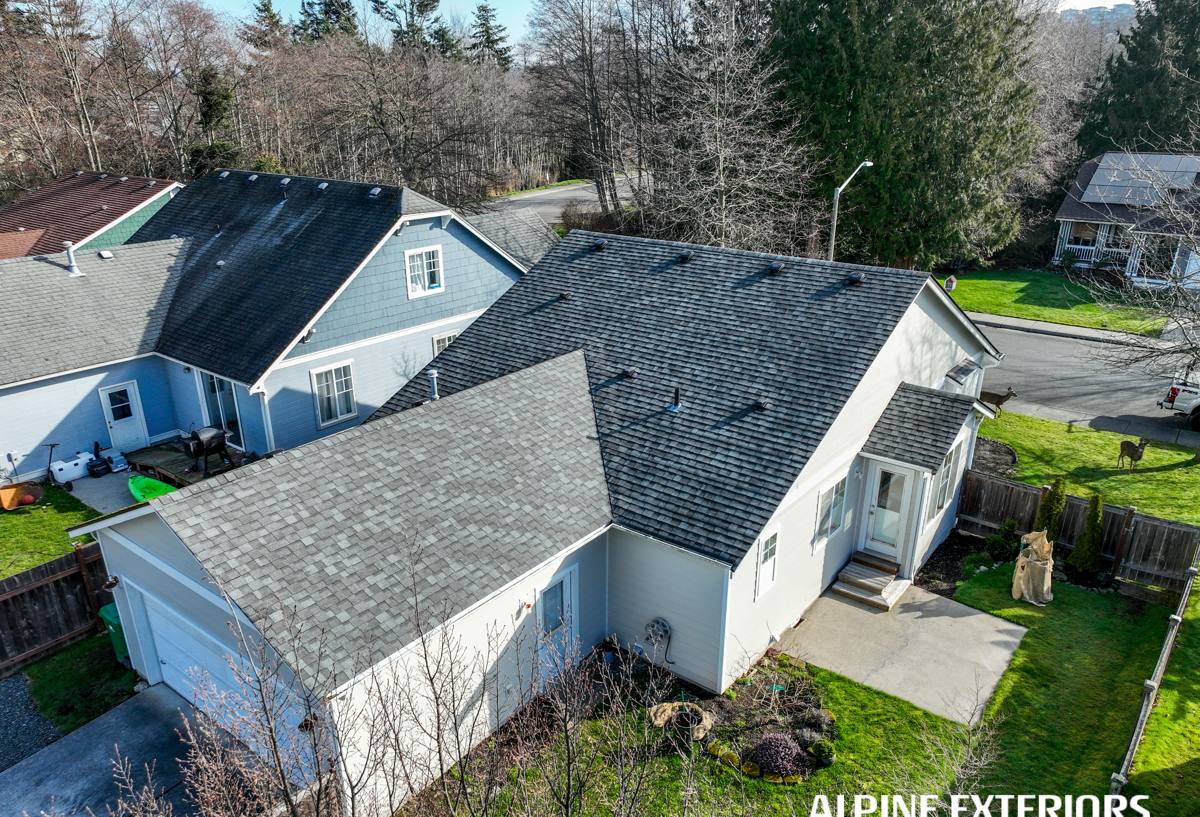
What Point Roberts Homes Are Up Against
Salt Air and Corrosion
Airborne salt doesn't just affect metal fasteners and flashing — it also accelerates the breakdown of paint films and some siding substrates, especially on the sides of a home that face open water. Over years, salt-laden air can chalk and dull painted surfaces faster than the same product would fade a few miles inland. Fastener corrosion is a real concern too, which is why the hardware and flashing details matter as much as the siding material itself.
Wind-Driven Rain
Being surrounded by water on multiple sides means Point Roberts catches wind off the Strait of Georgia and Boundary Bay with little to break it up. Wind-driven rain doesn't just wet a wall surface — it gets pushed sideways and upward into laps, seams, and penetrations that a calmer climate would never test. Siding that isn't installed with the right overlaps, flashing, and caulking tolerances is far more likely to let water behind the cladding here than in a sheltered inland lot.
A Long Moss Season
Cool, damp, and shaded conditions for much of the year make this whole part of Whatcom County prone to moss and algae growth on roofs, decks, and north-facing siding. Moss holds moisture against a surface long after a storm has passed, which is exactly the kind of sustained dampness that rots wood trim, degrades paint, and can work its way into seams over time. A siding system that resists moisture absorption handles this kind of exposure far better than one that doesn't.
Part-Time and Seasonal Homes
A meaningful share of homes on the peninsula are used seasonally or part-time. That's not a criticism — it's just a reality that matters for exterior maintenance. Small issues like a cracked caulk joint, a lifted shingle, or a soft spot in trim can go unnoticed for months between visits, and in a marine climate, months is long enough for a small problem to become a bigger one. Homes that sit vacant for stretches benefit even more from durable, low-maintenance materials that don't rely on someone catching problems early.
Why We Only Install James Hardie Fiber Cement
We don't offer vinyl, LP SmartSide, primed wood, or cedar siding, and that's a deliberate choice, not a limitation of what we're capable of installing. In a climate like Point Roberts', the difference between siding materials isn't cosmetic — it shows up in how the product handles moisture, salt exposure, and years of moss and algae contact.
- Non-combustible core. James Hardie fiber cement is made primarily from cement, sand, and cellulose fiber, giving it a fire resistance that engineered wood products can't match.
- Moisture-resistant by design. Fiber cement doesn't absorb and swell with water the way wood-based products can, which matters directly in a climate with this much sustained dampness and moss.
- Factory-applied ColorPlus finish. The finish is baked on in a controlled factory environment rather than field-applied, giving better UV and weather resistance than most site-painted siding — a real advantage against salt air fading.
- Climate-engineered HZ product lines. Hardie's HZ5 formulation is engineered for wetter, cooler regions like ours, rather than a one-size-fits-all product sold everywhere in the country.
- A strong, transferable warranty that reflects the manufacturer's confidence in the product's long-term performance — useful for any owner, but especially relevant to homes that may change hands.
We've made this call as our own professional standard, not as a blanket statement about every product on the market. Vinyl, engineered wood, and cedar all have their place and their advocates. We simply won't put our name behind an installation using materials we don't believe hold up to this specific coastline's demands over the long haul.
Siding Materials Compared for Marine Exposure
| Factor | James Hardie Fiber Cement | Vinyl | Engineered Wood / Primed Spruce |
|---|---|---|---|
| Salt air / UV fade resistance | Strong — factory ColorPlus finish | Moderate — can chalk and warp with heat/UV | Depends on paint upkeep; fades faster |
| Moisture and moss tolerance | High — doesn't swell or rot | Doesn't rot, but seams can trap moisture | Vulnerable if coating fails or is neglected |
| Fire resistance | Non-combustible | Melts/deforms under heat | Combustible |
| Maintenance for part-time owners | Low — long intervals between attention | Low, but cracks/fades are hard to spot-repair | Higher — coating needs regular monitoring |
| Typical warranty structure | Long-term, transferable | Varies widely by manufacturer | Shorter, often prorated |
None of these numbers are meant to disqualify every product on the market — they're the reasoning we used to settle on one system we're comfortable standing behind on a coastline like this one.
Working With a Ferndale-Based Crew in Point Roberts
Point Roberts is a bit of a logistical outlier — reaching it by land means driving through Canada and back across the border, and any exterior project there benefits from a contractor who plans for that rather than treats it as an afterthought. We schedule Point Roberts jobs with that drive and border crossing built into the timeline, order and stage materials in advance, and coordinate crew days to minimize back-and-forth trips. Permitting still runs through Whatcom County, and we handle that the same way we would for a Ferndale or Blaine project.
A local crew also means someone who has actually seen how homes on this stretch of the county weather over the years — which sides take the worst of the wind, where moss tends to establish first, and what installation details actually hold up rather than just what looks good on paper.
Beyond Siding: Roofing, Windows, and Decks
Siding is only one piece of a home's exterior envelope, and in a marine climate the other components are just as exposed. We handle all four as part of the same exterior scope:
Roofing
A roof in this climate deals with the same moss and moisture pressure as the siding, plus direct exposure to wind-driven rain at ridges, valleys, and penetrations. Roofing and siding work often overlap on the same project, and coordinating flashing details between the two is where a lot of long-term leak problems are prevented.
Windows
Window flashing and sealant are one of the most common points where wind-driven rain finds its way behind an exterior wall. When we're already opening up a wall for siding work, it's often the right time to address aging windows or reflash existing ones properly.
Decks
Outdoor living space matters on a waterfront peninsula, and decks face the same moss, moisture, and salt exposure as the rest of the exterior — often worse, since they're horizontal and collect standing water and organic debris directly.
Signs Your Point Roberts Home May Need Exterior Attention
- Peeling, chalking, or bubbling paint, especially on water-facing walls
- Moss or dark streaking building up on siding, trim, or roof edges
- Soft or spongy spots when pressing on wood trim or fascia boards
- Visible gaps or cracked caulking around windows, doors, or siding seams
- Warped, buckled, or separating siding panels
- Rust staining running down from fasteners or flashing
- Musty smells or discoloration on interior walls near exterior corners
If a home has sat unoccupied for a stretch of time, it's worth walking the exterior specifically to check for these signs before assuming everything is fine — small issues in this climate rarely stay small.
Maintenance in a Salt Air, High-Moss Environment
Even durable siding benefits from a bit of routine attention in this climate. A yearly walk-around to clear debris and moss from siding laps, gutters, and deck boards goes a long way. Rinsing salt residue off siding after storm events, especially on water-facing walls, helps preserve factory finishes longer. And catching a failed caulk joint or a loose piece of trim early is far cheaper than repairing water damage behind the wall later.
For part-time residents, it's worth having a local contact or contractor do a periodic exterior check between visits — the kind of thing that catches a small leak before it becomes a rot repair.
Getting Started
If you're looking at siding, roofing, window, or deck work on a Point Roberts home, we're happy to talk through what your exterior is facing and what a straightforward, honest plan looks like — no pressure, no upsell. Use the form below to request a free estimate and we'll get in touch to schedule a look at your property.