 Ferndale Siding
 Why Siding Replacement Looks Different on the Lummi Nation Shoreline
Homes on and around Lummi Nation sit closer to salt water than almost anywhere else we work in Whatcom County. That proximity changes how siding ages. Salt-laden air corrodes fasteners and metal trim faster than it does further inland, wind-driven rain gets pushed sideways into laps and butt joints that would stay dry in a calmer spot, and the tree cover and marine humidity that blanket this stretch of coastline keep north- and west-facing walls damp long after a storm has passed. Add in a moss season that can run from October through April in a wet year, and you have a set of conditions that punishes any siding product with a weak moisture-management design or a finish that can't hold up to constant wetting and drying.
We don't treat Lummi Nation as a generic stop on a Ferndale service map. Homes here need a siding system and an installation approach that accounts for salt exposure, sustained moisture, and biological growth all at once — not just one of the three.
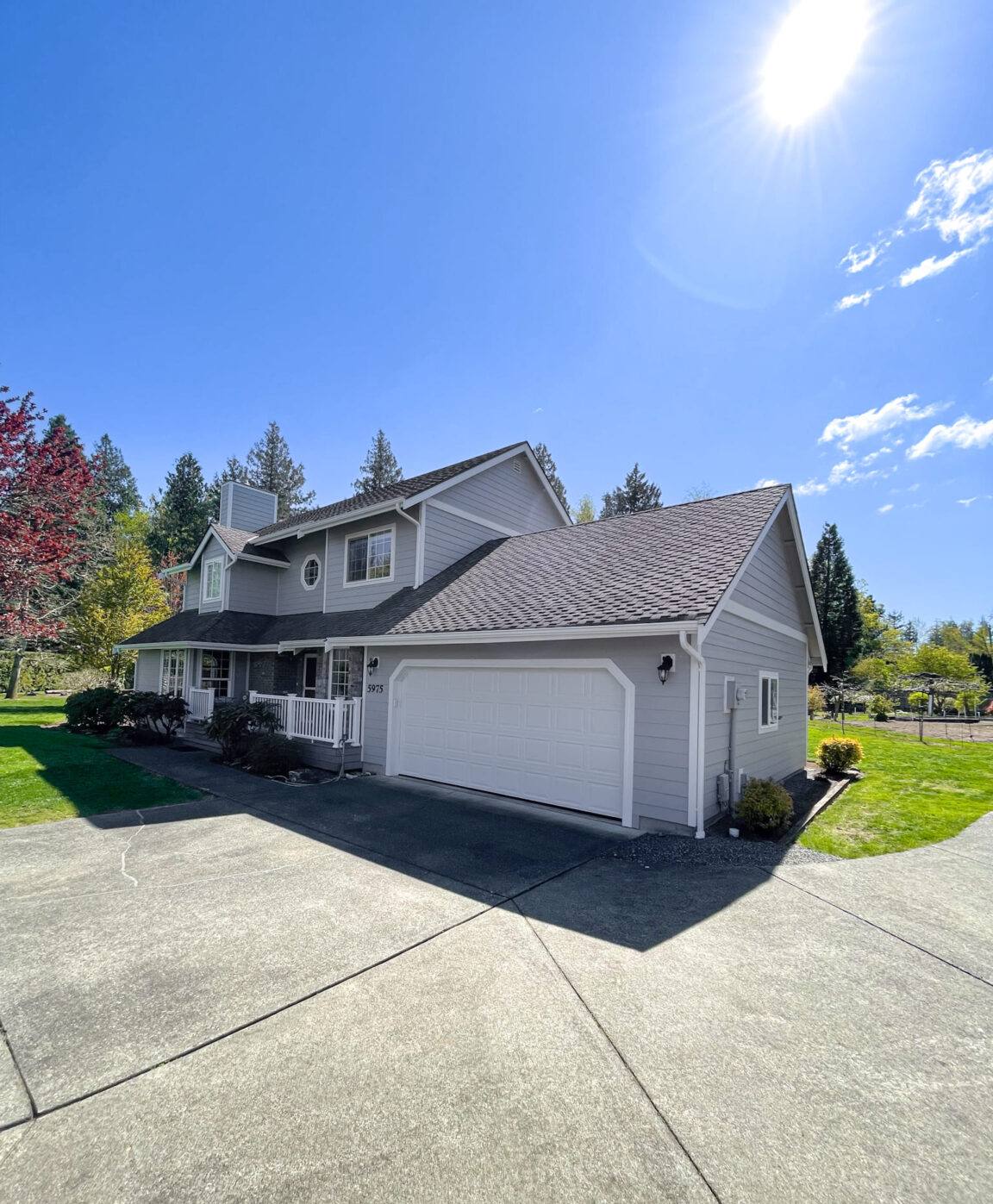
What Salt Air, Rain, and Moss Actually Do to Siding
Salt air and corrosion
Airborne salt is conductive and hygroscopic — it holds moisture against metal and accelerates rust. On homes near the water, we routinely see corroded face nails, rusted-through flashing, and staining on trim years before it should show up. Any siding job in this area has to use fasteners and flashing rated for coastal exposure, not the standard-grade hardware that's fine 20 miles inland.
Driving rain and wind exposure
Open water and low tree cover on some lots mean wind can push rain horizontally into a wall assembly instead of letting it run off vertically. Siding that relies on caulk or paint film alone to keep water out — rather than a shingle-lap design plus a properly built drainage plane behind it — fails faster under this kind of load.
Moss, mildew, and prolonged dampness
Whatcom County's wet season keeps shaded walls damp for days at a stretch. Wood-based sidings absorb that moisture, swell, and become a growth medium for moss and mildew. Paint applied on top of a moisture-absorbent substrate blisters and peels faster here than the same paint on a stable, low-absorption material.
Why We Only Install James Hardie Fiber Cement
We install James Hardie fiber cement siding exclusively — not vinyl, not LP SmartSide, not Cemplank, Allura, primed spruce, or cedar. That's not a marketing position; it's a standard we set because of what we see failing on coastal Whatcom County homes.
Where the alternatives fall short here specifically
- Vinyl expands and contracts with temperature swings and can warp or crack in sustained wind exposure; seams give wind-driven rain an easier path inward.
- LP SmartSide and other wood-strand products use an engineered wood core — durable in many climates, but any coating breach lets moisture into the substrate, and repeated wetting near salt air accelerates that risk.
- Cedar and primed spruce are natural wood. Wood absorbs and releases moisture constantly, which is exactly what a marine-humidity, moss-prone environment exploits. Repainting and moss treatment become a recurring maintenance cycle, not a one-time job.
- Cemplank and Allura are also fiber cement and share Hardie's basic strengths, but we've standardized our crews, warranty process, and material sourcing around one manufacturer's engineered product line and factory finish rather than splitting our expertise across several.
What Hardie gets right for this location
Fiber cement doesn't feed moss the way wood fiber does, it doesn't corrode, and it holds its shape in wind and temperature swings far better than vinyl. James Hardie's ColorPlus factory finish is baked on under controlled conditions rather than field-applied, which matters a lot in a climate where field-applied paint rarely gets the dry cure time it needs. Hardie's HZ5 product line is engineered specifically for climates with freeze-thaw cycling and moisture exposure — a closer match to this coastline than a general-purpose HZ10 formulation.
What a Correct Siding Replacement Job Involves
Replacing siding correctly is not just removing old boards and nailing up new ones. On a Lummi Nation home, the sequence matters as much as the material.
- Tear-off and substrate inspection. We pull the old siding and check the sheathing underneath for rot, soft spots, or prior water intrusion — common on walls that have been catching wind-driven rain for years.
- Repair before covering anything up. Any compromised sheathing or framing gets replaced. Covering damaged substrate with new siding just hides a problem that will keep growing.
- Weather-resistive barrier. A new, continuous water-resistive barrier goes over the sheathing, lapped correctly from bottom to top so water sheds outward, not into the wall.
- Flashing at every penetration. Windows, doors, hose bibs, vents, and roof-to-wall intersections all get flashed to direct water out and down — the detail work that separates a durable job from one that leaks in three years.
- Corrosion-resistant fastening. Given the salt exposure here, we use fasteners and trim hardware rated for coastal or marine environments, not standard interior-grade hardware.
- Proper Hardie installation to manufacturer spec. Correct nailing pattern, gapping at joints per Hardie's documented clearances, and factory-finished cut ends sealed where field cuts occur.
- Final inspection and cleanup. We walk the job checking laps, caulking at trim (not at butt joints, which need to stay as designed), and site cleanup before calling it done.
Cost Factors Specific to This Area
Every siding estimate is different, but a few factors come up more often on Lummi Nation and shoreline-adjacent properties than they do on a typical inland Ferndale job:
| Factor | Why It Affects Cost Here |
|---|---|
| Substrate condition | Homes with a history of moisture intrusion from driving rain often need sheathing repair before new siding goes on |
| Corrosion-rated hardware | Coastal-grade fasteners and flashing cost more than standard-grade but are necessary given salt air exposure |
| Site access and staging | Waterfront and tribal land access can involve longer material staging or narrower work areas depending on the lot |
| Trim and moisture detailing | Extra flashing and sealing at wall penetrations adds labor time but is what keeps wind-driven rain out long-term |
| Moss and growth remediation | Walls with existing moss or mildew buildup may need treatment and drying time before installation begins |
Signs Your Siding Is Already Losing the Fight
Because this area's climate accelerates wear, it's worth knowing what to watch for before small problems become structural ones:
- Green or black staining that returns shortly after cleaning, especially on north- or west-facing walls
- Soft or spongy spots when you press on the siding near the bottom courses or around window trim
- Paint that's peeling or bubbling rather than just fading
- Rust streaks below nail heads or metal trim pieces
- Visible warping, cupping, or separation at seams and corners
- A musty smell near exterior walls inside the home, which can indicate moisture has already reached the sheathing
Our Process for Lummi Nation Homeowners
We start with an on-site walk of the home, not a drive-by estimate. That's especially important here, since the same house can have very different exposure on its water-facing side versus its sheltered side. From there:
1. Assessment and measurement
We look at existing siding condition, check for moisture damage at trim and penetrations, and measure the home to spec out material needs.
2. Written estimate
You get a clear, itemized quote — material, labor, and any substrate repair called out separately so there are no surprises once work starts.
3. Scheduling around the weather
Given how much rain this region gets, we plan tear-off and installation windows around forecasts rather than pushing through wet conditions that compromise the weather barrier and flashing work.
4. Installation to manufacturer spec
Every board is installed per James Hardie's published installation guidelines — gapping, nailing, and flashing done the way the warranty actually requires, not just the way that looks finished from the curb.
5. Walkthrough and warranty paperwork
We walk the finished job with you and get your Hardie product warranty registered, which is transferable if you sell the home.
Why Local Experience on This Specific Coastline Matters
A crew that mostly works dry, inland neighborhoods can install siding perfectly well on a calm day and still miss the details that matter here — the extra flashing at a west-facing gable, the corrosion-rated fastener swap, the timing needed to keep a weather barrier dry during install. Working Lummi Nation and the surrounding Ferndale shoreline regularly means we've already made the adjustments this environment demands, rather than learning them on your house.
If your siding is showing wear, or you're planning ahead before winter's driving rain and moss season set in, we'll come take a straightforward look and give you a free, no-pressure estimate — no obligation, just an honest read on where things stand.