 Ferndale Siding
 Lummi Island's Climate Is Harder on Siding Than Most People Realize
Lummi Island sits out in the Salish Sea, separated from the mainland by a short ferry crossing from Gooseberry Point. That location is part of what makes the island beautiful, and it's also exactly why exterior materials take more abuse there than they do a few miles inland in Ferndale or Bellingham. Homes on the island face near-constant exposure to salt-laden marine air, wind-driven rain coming off open water, and a wet season that can stretch on for months without much of a break.
Salt air is corrosive to fasteners and hard on paint films. Driving rain finds its way into any gap in a siding system that wasn't detailed correctly — laps, corners, and trim joints are where water gets in first. And the long stretch of damp, low-light months in Whatcom County creates ideal conditions for moss and mildew to take hold on anything that stays wet for extended periods. None of this is unique to Lummi Island, but the island's directly-on-the-water exposure makes the effects show up faster and more visibly than they would on a similar home set back from the shoreline.
What This Looks Like on an Actual House
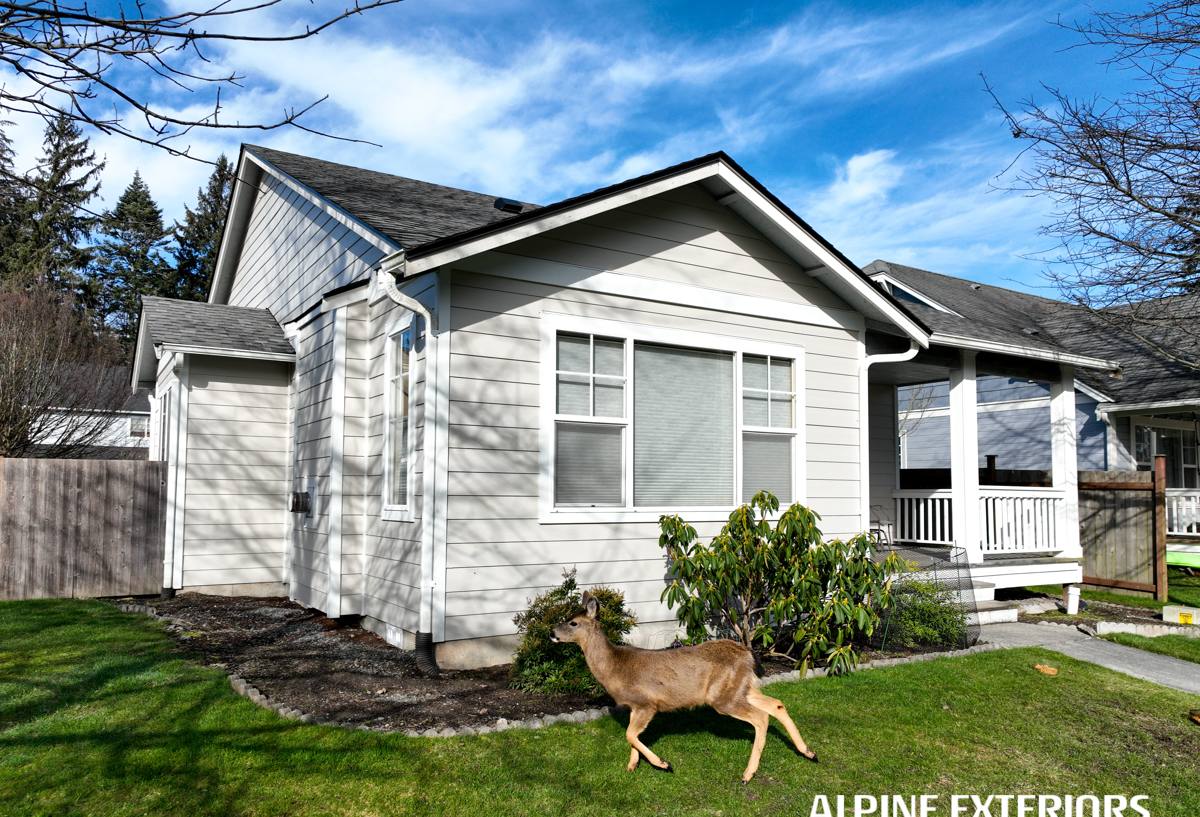
On homes with lower-grade siding, we typically see this pattern play out: paint or coating starts to fail years earlier than it should, joints between boards open up as the material swells and shrinks with moisture, and moss establishes itself on north-facing walls and anywhere siding sits close to landscaping or tree cover. Once moss gets a foothold, it holds moisture against the wall surface, which accelerates whatever rot or deterioration process is already underway. It becomes a maintenance cycle that never really ends — power washing, re-caulking, re-painting — instead of a siding system that just holds up.
Why Ferry Access Actually Matters for a Siding Project
Working on Lummi Island isn't the same as working in town, and homeowners should expect their contractor to plan around that instead of treating it as an afterthought. Materials, crews, and equipment all have to move on the ferry schedule, which means a project run by a contractor unfamiliar with the island's logistics can end up with wasted trips, delayed material deliveries, or a crew standing around waiting on a boat. A crew that regularly works on the island plans deliveries and scheduling around the ferry from the start, which keeps the project moving instead of stretching out longer than it needs to.
This is also a case where hiring a genuinely local contractor — one based in Ferndale and familiar with Whatcom County's outer communities, rather than a company dispatching crews from Seattle or elsewhere — tends to produce a smoother project. Local crews already understand the climate exposure specific to island and waterfront properties, know how to sequence a job around ferry logistics, and aren't learning the area for the first time on your dime.
Our Position: James Hardie Fiber Cement Only
We install James Hardie fiber cement siding exclusively. We don't install vinyl, LP SmartSide, Cemplank, Allura, primed spruce, or cedar. That's a deliberate standard, not a sales pitch, and it matters more on a site like Lummi Island than almost anywhere else we work.
Vinyl siding can warp and become brittle with age, and its seams and J-channels give wind-driven rain more opportunities to work behind the panel over time — a real liability in an exposed marine environment. Wood-based and wood-composite products like primed spruce or cedar look good initially but require an ongoing paint and sealant maintenance schedule to keep moisture out, and that schedule gets harder to keep up with the more exposed a home is to salt air and rain. Engineered wood siding products have had documented moisture-related performance issues in wet climates when installation details aren't followed exactly. None of these are unusable products everywhere — but on a site with Lummi Island's exposure, we don't think they're the right call, and we'd rather turn down that installation than put something on a home that we know is fighting an uphill battle against the local climate.
James Hardie fiber cement is non-combustible, dimensionally stable, and manufactured with a factory-applied ColorPlus finish that's baked on rather than field-painted — which means the color coat isn't dependent on weather conditions during installation and holds up significantly longer than site-applied paint. Hardie also makes HZ5 product engineered specifically for harsher, wetter climate zones, which is the specification we use on exposed coastal and island sites like Lummi Island.
What We Do Beyond Siding
Siding is our core focus, but we also handle roofing, windows, and decks — which matters on a property like a Lummi Island home because these systems all interact. A siding replacement is a natural point to also address flashing details at the roofline, aging windows that are letting moisture or drafts into the wall assembly, or a deck that's been absorbing the same salt air and rain exposure as the siding. Coordinating these as one project, rather than as separate jobs with separate contractors, means fewer opportunities for water management details to fall through the cracks between trades.
Services We Provide
- James Hardie fiber cement siding installation and replacement
- Roofing repair and replacement, coordinated with siding and flashing work
- Window replacement, including flashing integration with new siding
- Deck construction and replacement built for wet, salt-exposed conditions
How a Siding Replacement Works on an Island Property
The process starts the same way it would anywhere: an on-site assessment of the existing siding, sheathing, and any moisture damage that's already occurred behind the wall surface. On coastal and island homes we pay particular attention to areas where moss or standing moisture has been present, since that's often where sheathing damage is hiding even if the surface siding still looks intact.
From there, we plan removal and installation in a way that minimizes how long the wall assembly is exposed to weather — important anywhere, but especially important given how quickly a rain system can move in off the water. Materials and crew scheduling get built around the ferry, and we sequence the work so that water-resistive barrier and flashing details go in correctly at every window, door, and penetration before the new Hardie siding goes up over them. The siding itself is only as good as the water management system underneath it, and that's true regardless of which product you choose.
Cost Factors on a Lummi Island Project
| Factor | Why It Affects Cost |
|---|---|
| Home size and wall complexity | More square footage, corners, and trim details mean more material and labor |
| Existing wall condition | Rot or moisture damage found behind old siding adds repair work before new siding goes on |
| Ferry logistics | Material deliveries and crew scheduling need to be planned around ferry timing, which affects project sequencing |
| Siding profile and trim selection | Lap width, panel vs. plank style, and trim detailing all affect material cost |
| Access and site conditions | Waterfront lots, slopes, and limited staging space can affect labor time |
We give homeowners a written estimate that accounts for these factors up front rather than a vague ballpark, so there aren't surprises once the ferry-dependent scheduling is already underway.
Dealing With Moss and Long-Term Maintenance
Even with a well-installed Hardie system, Whatcom County's damp season means moss and mildew can still develop on the surface of any exterior material, including fiber cement — the difference is that Hardie's factory finish and dense composition resist moisture absorption far better than wood-based products, so surface growth doesn't translate into the same structural risk. Keeping vegetation trimmed back from walls, maintaining gutters so water isn't sheeting down the siding face, and periodic gentle washing go a long way toward keeping a Hardie exterior looking good for the long haul on an island property.
What to Look For When Hiring a Contractor Out Here
- Experience specifically with island, waterfront, or high-exposure coastal properties in Whatcom County
- A clear plan for scheduling materials and crews around ferry access
- Manufacturer training or certification for the specific siding product being installed
- A written scope that details flashing and water-resistive barrier work, not just the siding itself
- A real local presence in Ferndale or the surrounding area, not a crew traveling in from out of the region
- A warranty that's explained clearly, including what's covered on labor versus material
Warranty and What to Expect Long-Term
James Hardie backs its ColorPlus-finished products with a strong, transferable warranty covering both the substrate and the factory finish, which matters if you ever sell the home — a documented Hardie exterior with warranty coverage remaining is a genuine selling point on an island property where buyers know exactly what the climate does to lesser materials. We stand behind our installation work as well, since a warranty on the product doesn't mean much if the flashing and water management details underneath weren't done correctly in the first place.
If you own a home on Lummi Island and your siding is showing its age — chalking paint, moss buildup, open joints, or soft spots near the base of the walls — we're happy to come take a look. We'll give you a straightforward, no-pressure estimate and an honest read on what your exterior actually needs, with scheduling planned around the ferry from the start.