 Ferndale Siding
 Building a Deck That Actually Holds Up on the Lummi Peninsula
A deck built for inland Washington doesn't automatically survive out here. Properties on and around the Lummi Peninsula sit close enough to Bellingham Bay and the Strait of Georgia that salt-laden air reaches the wood, metal, and fasteners year-round, not just during storms. Add Whatcom County's long wet season and the shade cover common on wooded lots, and you get a combination that eats through under-built decks faster than most homeowners expect. A deck that's framed, fastened, and finished correctly for this specific stretch of coastline will outlast one built to a generic spec by a decade or more.
This page covers what we actually do differently when we build or replace a deck for a home in or near Lummi Nation — the framing choices, the hardware, the drainage details, and the maintenance reality — so you know what to look for whether you hire us or someone else.
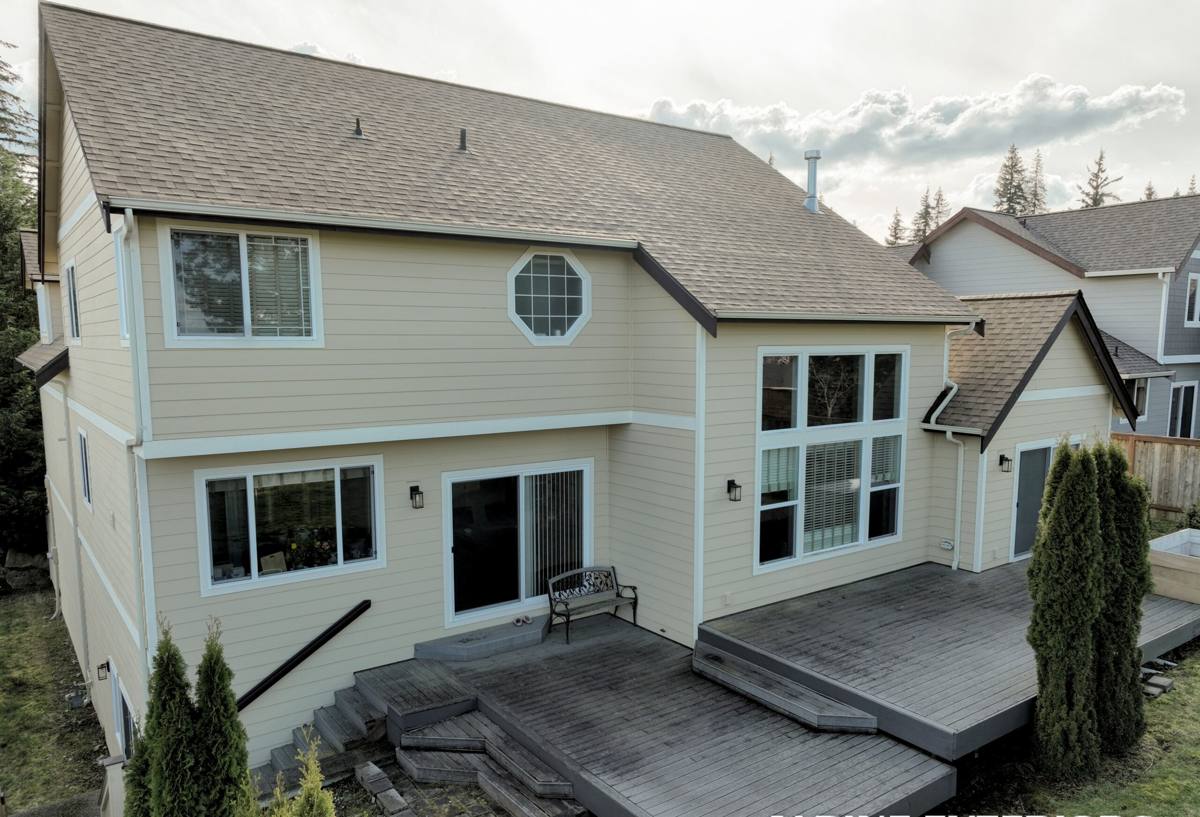
What This Climate Does to a Deck Over Time
Salt Air and Corrosion
Airborne salt doesn't just affect waterfront homes. Wind off the bay carries fine salt spray well inland, and it settles on any exposed metal — nail heads, screw threads, joist hangers, post bases. Ordinary galvanized hardware can start pitting and staining within a few seasons out here. Once corrosion starts on a fastener, it weakens the connection long before it's visible from the surface, which is exactly the kind of failure you don't want in a structure people stand on.
Driving Rain and Moisture Intrusion
Whatcom County doesn't just get a lot of rain — a good share of it comes in sideways off the water during winter storms. That matters for a deck because horizontal rain finds its way behind ledger boards, under poorly flashed rim joists, and into end-grain cuts that a builder assumed would stay dry. Standing decks that look fine from the yard can be rotting quietly at the ledger connection, which is the single most common structural failure point we find on older decks in this area.
Moss, Algae, and Shade
Between tree cover and the length of our wet season, moss and algae get a real head start on any horizontal wood surface. Beyond looking bad, a moss layer holds moisture against the decking board around the clock, which accelerates rot and turns boards slick and dangerous underfoot — especially on stairs.
What a Correctly Built Deck Involves
Footings and Framing
Everything starts below the surface. Footings need to go below frost depth and bear on undisturbed soil, and on many Whatcom County lots that means dealing with clay or poorly draining ground that holds water against concrete longer than sandier soils would. We size and space footings for the actual load and span of your design, not a generic minimum, and we use pressure-treated or naturally rot-resistant framing lumber rated for ground contact where posts meet soil.
Ledger Attachment and Flashing
The ledger board — where the deck attaches to the house — is where most rot problems start, and it's the detail that separates a correctly built deck from one that looks fine for a few years and then fails. Proper ledger flashing means metal flashing integrated with the house's water-resistive barrier, a gap or flashing tape to keep the ledger from sitting flush against wet siding, and lag bolts or through-bolts sized and spaced for the actual load — not just a handful of deck screws.
Joist Protection
Every cut end of a pressure-treated joist exposes untreated wood underneath. We seal cut ends and treat joist tops with a protective tape or coating so rain doesn't sit in the fastener holes and wick into the framing. It's a small step that adds real years to the structure's life, especially under a deck surface that shades the framing and keeps it damp longer after each rain.
Decking Material: What Actually Performs Here
| Material | How It Handles This Climate | Maintenance | Typical Lifespan |
|---|---|---|---|
| Pressure-treated pine | Affordable, but absorbs moisture and needs consistent sealing to resist rot and moss growth | Annual cleaning, re-seal every 1–2 years | 10–15 years with upkeep |
| Cedar | Naturally rot- and insect-resistant, ages gracefully, but still needs finish maintenance near salt air | Clean and refinish every 2–3 years | 15–20 years |
| Composite decking | Doesn't absorb water or rot; resists moss staining better than wood but can still get slick with algae film | Periodic washing, no sealing needed | 25–30 years |
| PVC decking | Fully moisture-proof, best resistance to salt air and rain exposure of any option | Occasional washing | 25–30+ years |
There's no universally "right" answer — it depends on budget, how the deck will be used, and how much upkeep you want to take on. What matters more than the brand name on the board is whether the structure underneath and the fasteners holding it together are built to the same standard, since a premium composite surface on a poorly flashed frame still fails at the ledger.
Hardware and Fasteners: The Detail Most Contractors Skip
This is where we're deliberately stricter than the code minimum. Standard electro-galvanized fasteners are not the right choice this close to salt air — they're rated for general outdoor use, not sustained salt exposure. For decks in Lummi Nation and the surrounding coastline, we use stainless steel or heavy hot-dip galvanized hardware rated for ground contact and treated lumber, including joist hangers, post bases, and structural screws. It costs more upfront than standard hardware. It's also the single biggest factor in whether a deck's structural connections are still sound in fifteen years or starting to fail in five.
Our Process for a Lummi Nation Deck Project
- Site visit and assessment — we look at drainage, sun/shade exposure, soil condition, and how the deck will tie into the existing structure.
- Design and material selection — sizing, layout, railing style, and decking material chosen for how you'll actually use the space and how much maintenance you want long-term.
- Permitting — most decks require a permit. If your property falls within Lummi Nation's jurisdiction rather than unincorporated Whatcom County, building requirements may follow the Nation's own permitting process instead of the county's — we confirm which applies before design work starts.
- Demolition of the old deck, if replacing one, including inspection of the ledger area and any hidden rot in the rim joist or sheathing behind it.
- Framing and footings, built to the load and span for your specific design, not a generic minimum.
- Decking, railing, and stair installation, with attention to fastener placement and board spacing for proper drainage and airflow underneath.
- Final walkthrough — we go over maintenance expectations for your chosen material so there are no surprises the first wet winter.
Cost Factors to Understand Before You Budget
| Factor | Why It Moves the Price |
|---|---|
| Height and stairs | Elevated decks need engineered footings and railing that ground-level decks don't |
| Decking material | Composite and PVC cost more per square foot than wood but reduce long-term maintenance spend |
| Ledger and structural condition | Replacing rotted rim joist or sheathing behind an old ledger adds labor beyond a straight deck rebuild |
| Footing and soil conditions | Poor-draining or clay-heavy soil can require deeper or additional footings |
| Railing style | Cable, glass, and custom metal railing cost more than standard wood balusters |
| Permitting jurisdiction | Requirements and review timelines differ depending on whether the county or the Nation has jurisdiction over the property |
We don't quote decks off a per-square-foot rule of thumb, because two decks the same size can have very different costs once you factor in height, soil, and how much of the old structure needs to come out. A site visit gets you an honest number.
Maintaining a Deck Once It's Built
Even the best-built deck needs some seasonal attention in this climate. A short, honest checklist:
- Clear leaves and debris from between boards regularly — trapped organic matter holds moisture and feeds moss growth
- Wash the surface at least once a year to remove algae film before it gets slick, especially on stairs and shaded areas
- Check and re-seal wood decking on the schedule the material calls for — don't wait until it's visibly gray and dry
- Inspect the ledger connection and flashing annually for staining or soft wood, since that's the first place hidden rot shows up
- Look at fastener heads for rust streaking, which signals hardware that isn't holding up to salt exposure
- Keep gutters and downspouts near the deck clear so runoff isn't dumping extra water onto or under the structure
Why Local Deck-Building Experience Matters Here
A contractor who mostly builds inland, in drier parts of the state, doesn't always think about ledger flashing, fastener grade, or moss-prone shade the same way a crew that works this stretch of coastline does. We've seen what happens to decks in Whatcom County that were built to a generic spec — the ledger rot, the corroding hardware, the slick moss buildup that shows up faster than homeowners expect. That's the failure pattern we design around from the start, not something we discover during a repair call five years in.
If you're planning a new deck or need to replace one that's showing its age, we'd rather walk the site with you and give you a straight assessment than guess over the phone. Reach out for a free, no-pressure estimate using the form below.