 Ferndale Siding
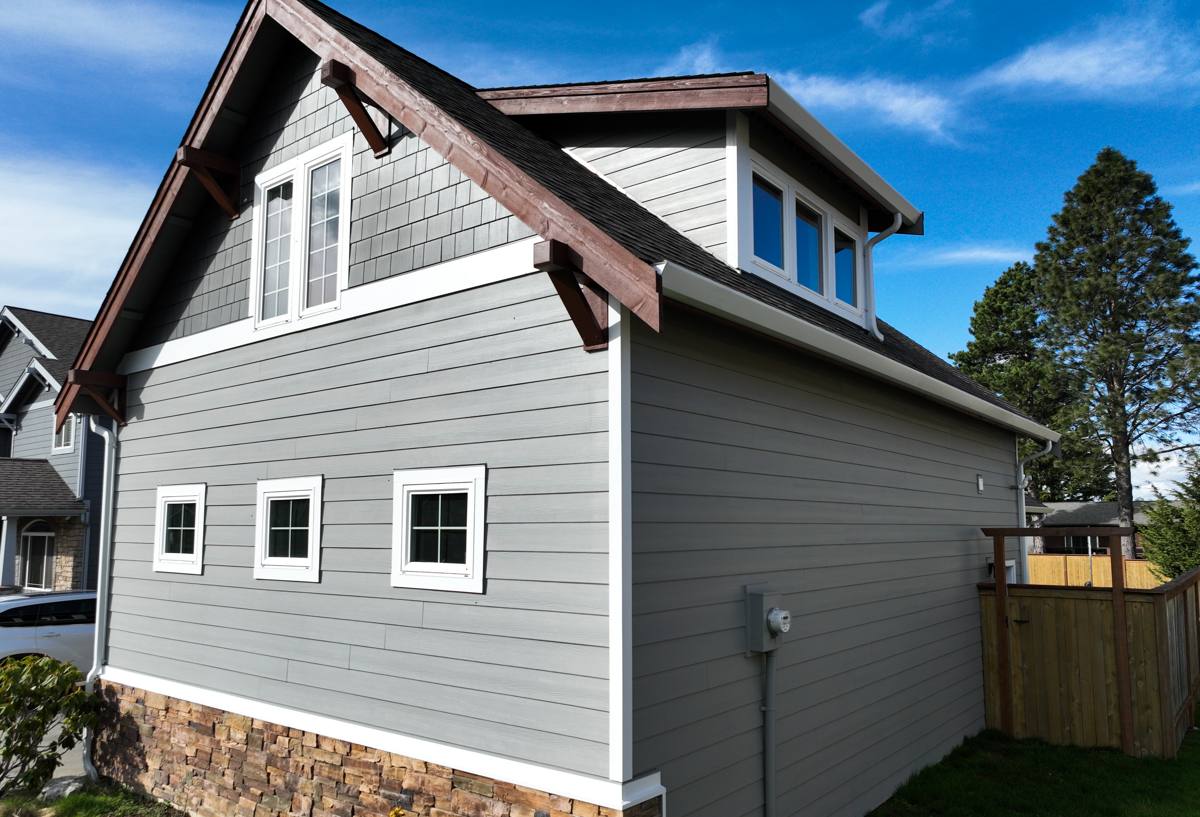
 Siding Built for Cordata's Whatcom County Climate
Homes in the Cordata area sit in one of the wetter, greener corners of Washington State, and the exterior of a house here works harder than it does almost anywhere else in the country. Between the salt-laden air drifting in off the Salish Sea, long stretches of driving rain through fall and winter, and a moss and mildew season that can run eight months or more, siding in this part of Whatcom County is under near-constant attack from moisture. It's not dramatic weather — no hail, no hurricanes — but it's relentless, and relentless is what actually wears siding out.
We've been replacing siding, roofing, windows, and decks across Whatcom County long enough to see exactly which products hold up here and which ones don't. That experience is why our company made a deliberate decision years ago to install only James Hardie fiber cement siding. This page walks through what Cordata homes are actually up against, how our process works, and why we won't put anything but Hardie on a house we stand behind.
What the Cordata Climate Does to Exterior Siding
Salt Air and Coastal Moisture
Even set back from the water, homes throughout this stretch of Whatcom County pick up salt-carrying moisture on prevailing winds. Salt air accelerates corrosion on fasteners and trim, and it works into any small gap or seam in siding, carrying moisture with it. Materials that swell, wick, or absorb water are especially vulnerable — repeated wetting and drying cycles near salt air speed up decay far faster than the same exposure would inland.
Driving Rain and Wind-Driven Wet
Rain here doesn't just fall straight down — a lot of it comes in sideways during winter storms, which means siding faces constant pressure at seams, laps, and butt joints. Any siding product with weak water-shedding detailing or a tendency to absorb moisture at the cut edges is going to show problems years before it should: cupping, soft spots, paint failure, or rot starting from the inside out.
Moss, Mildew, and Long Shade Seasons
With overcast skies common much of the year and plenty of mature trees shading roofs and walls throughout Cordata and the surrounding Ferndale area, moss and mildew get a long head start every season. Moss holds moisture against a surface for days at a time. On a material that can't tolerate sustained dampness, that's a slow-motion failure. On a material engineered for it, it's a cosmetic issue you power-wash or gently clean off.
Why We Standardized on James Hardie Fiber Cement
Fiber cement is cement, sand, and cellulose fiber pressed and cured into a dense, stable board. It doesn't absorb water the way wood-based or wood-adjacent products do, it doesn't feed rot, and it's non-combustible — a real consideration given Washington's wildfire seasons have been creeping closer to the west side in recent years. James Hardie is the manufacturer we trust to deliver that fiber cement performance consistently, batch after batch, install after install.
ColorPlus Factory Finish
Rather than field-painting siding after installation — which is where a lot of moisture and adhesion problems start — James Hardie's ColorPlus finish is baked on at the factory in multiple coats under controlled conditions. That finish is engineered specifically to resist fading and cracking in exactly the kind of damp, low-sun climate Cordata sits in, and it carries its own finish warranty separate from the substrate warranty.
HZ5 Climate Engineering
James Hardie makes different formulations for different climate zones, and homes in this region qualify for the HZ5 product line, engineered for areas with significant moisture exposure and freeze-thaw cycling. That's not a marketing distinction — it affects how the board is formulated to perform against the specific weather Whatcom County actually gets.
Warranty Backing
James Hardie backs its siding with a long, transferable limited warranty — a meaningful detail for resale, since a new owner inherits the coverage rather than starting from zero. Combined with a manufacturer with real staying power and a well-documented installation spec, that warranty is worth something. A warranty is only as good as the company behind it and the correctness of the install underneath it.
What We Deliberately Don't Install — and Why
We get asked regularly about vinyl siding, LP SmartSide, and other engineered wood or lower-cost cement-board alternatives like Cemplank or Allura. Every one of these has legitimate selling points — lower upfront cost, lighter weight, easier handling. We don't refuse to install them because they're bad products across the board; we refuse because we've evaluated the trade-offs against this specific climate and decided we're not willing to put our name on installs that we believe will underperform here over a 20- or 30-year horizon.
- Vinyl siding expands and contracts significantly with temperature swings, and its seams and J-channels give wind-driven rain more opportunities to get behind the cladding over time.
- LP SmartSide and other engineered wood products use wood strand substrates that, however well treated, are still wood-based — meaning sustained moisture exposure at cut edges and butt joints is a long-term vulnerability in a climate this wet.
- Primed spruce and cedar require an ongoing maintenance commitment — recoating, caulking, and vigilant upkeep — that most homeowners underestimate until the siding is already showing damage.
- Lower-cost fiber cement alternatives may share the basic cement-board formula but don't carry the same climate-specific engineering or factory finish system we've come to rely on.
None of this means those products fail immediately or universally. It means that, weighing decades of moisture exposure against decades of expected service life, we've concluded Hardie is the more honest recommendation for this area — and we'd rather turn down a job than install something we don't believe in.
How a Siding Replacement Project Works
Assessment and Estimate
We start with a walk-around of the home to check current siding condition, look for moisture intrusion or rot at trim and penetrations, and evaluate the underlying wall sheathing and weather barrier. That inspection shapes an honest estimate — one that accounts for what's actually under the existing siding, not just a surface-level guess.
Tear-Off and Moisture Barrier
Old siding comes off, and we inspect and repair sheathing as needed before installing a new weather-resistant barrier. This step matters more in a climate like this one than almost anywhere — a compromised barrier behind good siding still leads to problems down the road.
Installation to James Hardie Spec
Correct fastening, clearances, caulking, and flashing details are what make fiber cement perform the way it's designed to. James Hardie publishes a detailed installation manual for a reason — deviations from that spec are where most fiber cement failures actually originate, not from the material itself.
Final Walkthrough
We finish with a walkthrough covering trim, caulking lines, and any transition points around windows, doors, and rooflines, so the homeowner knows exactly what was done and what to expect going forward.
Cost Factors for Siding Replacement
Every home is different, but the variables that move a siding project's price are consistent. This table covers the major factors we walk through with homeowners during an estimate.
| Factor | Why It Matters |
|---|---|
| Home size and wall complexity | More square footage and more corners, gables, and dormers mean more material and labor time |
| Existing siding condition | Rot or hidden moisture damage found during tear-off adds sheathing repair scope |
| Siding profile and color | Lap width, shingle-style panels, and ColorPlus color selection affect material cost |
| Trim and accessory work | Fascia, soffits, corner boards, and window trim are often replaced alongside siding |
| Access and site conditions | Multi-story sections, tight lot lines, or landscaping can affect labor and staging |
Roofing, Windows, and Decks: The Whole Exterior Envelope
Siding doesn't work in isolation. A roof that's shedding water improperly, windows with failed seals, or a deck ledger board with hidden rot can all undermine even a perfect siding install by feeding moisture into the wall assembly from somewhere else. Because we handle roofing, windows, and decks in addition to siding, we look at the whole exterior envelope during an assessment rather than treating each component as a separate problem. In a climate that stays damp as much of the year as this one does, that whole-envelope perspective catches issues a siding-only contractor might miss entirely.
Why a Local Crew Matters in Cordata
Exterior work in Whatcom County isn't the same job as exterior work in eastern Washington or drier parts of the state. A crew that works this region regularly knows how to sequence a project around the rainy season, how to detail flashing for wind-driven rain rather than just vertical rainfall, and which failure points show up first on homes exposed to salt air. That local knowledge shows up in the small decisions — where extra flashing goes, how tight the caulking schedule needs to be, which details get extra attention — that separate an installation that lasts 10 years from one that lasts 40.
Before scheduling any project, homeowners should feel comfortable asking a few direct questions:
- Is the crew factory-trained or certified specifically on James Hardie installation?
- Will they show you the condition of the sheathing and weather barrier once old siding is removed?
- What does the written estimate include — tear-off, disposal, trim, and paint or ColorPlus finish?
- What warranty coverage applies to labor, separate from the manufacturer's material warranty?
- Do they carry current licensing and insurance appropriate for exterior contracting in Washington State?
Ready to Talk About Your Home's Siding?
If you're noticing cupping, soft spots, fading, or moss buildup that won't clean off, it's worth having a straightforward conversation about what's actually happening to your siding and what it would take to fix it right. We offer free, no-pressure estimates for homeowners in Cordata and throughout the surrounding Ferndale and Whatcom County area — reach out using the form below to get started.