 Ferndale Siding
 Living With the Water in Sandy Point
Homes in and around Sandy Point sit close enough to the water that the weather isn't an abstract idea — it's something you deal with every week. Wind carries salt spray off the water and onto exterior walls, rain comes in sideways more often than most inland Whatcom County neighborhoods, and the mild, wet winters that make this part of Washington so livable also make it one of the harder places in the state to keep a house exterior looking good year after year. If you've owned a home out here for more than a few years, you've probably already noticed which walls fade first, which corners stay damp longest, and where the moss keeps coming back no matter how many times it gets washed off.
We're a local Ferndale-based crew, and Sandy Point is part of our regular service area — not a stretch assignment. That matters more than it sounds like it should, because coastal Whatcom County properties don't behave like siding jobs twenty miles inland, and a crew that doesn't work out here regularly can miss details that matter.
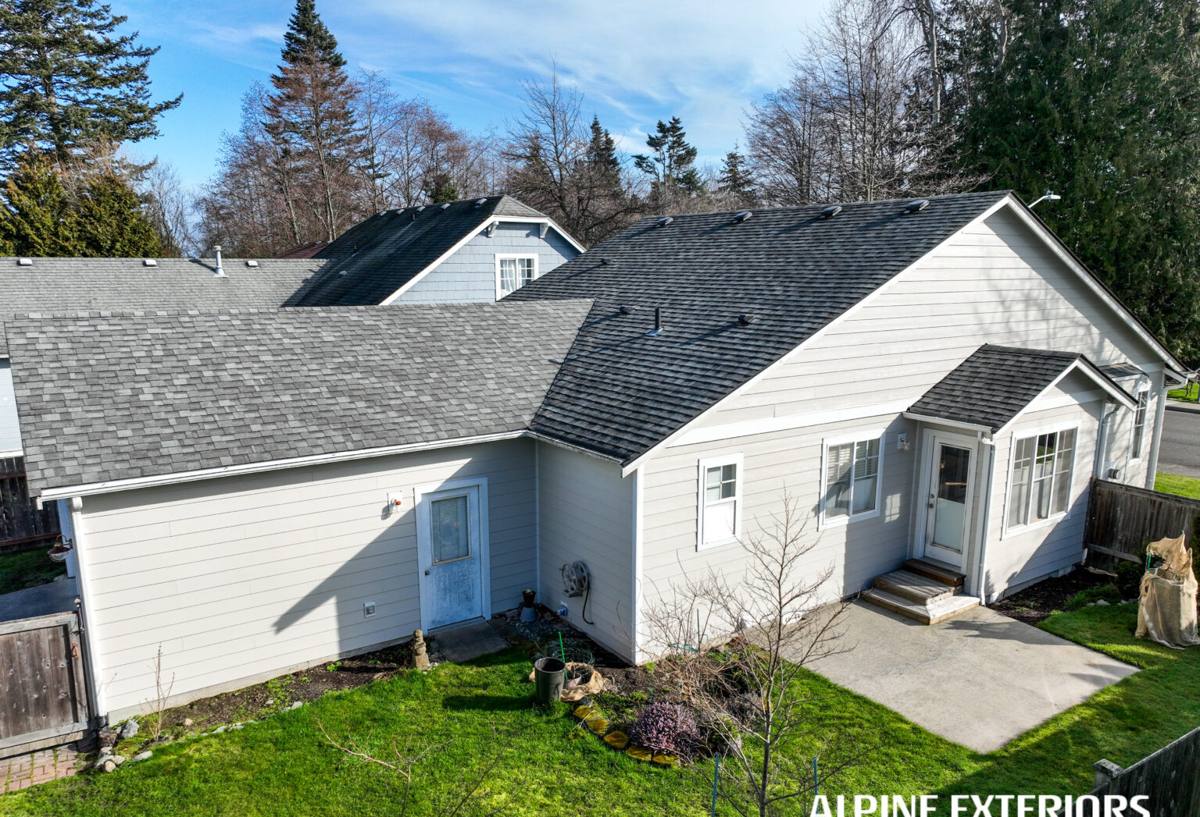
What Salt Air, Rain, and Moss Actually Do to a House
Salt and Wind-Driven Moisture
Salt-laden air doesn't just sit on a surface — it works into seams, fastener heads, and any gap in a coating or caulk line. Combined with wind-driven rain, it pushes moisture into places a calmer, drier climate would never test. Over years, that combination is what separates siding products that were engineered for coastal exposure from products that were only ever tested for a general national market.
Moss and Algae on Shaded Walls
North-facing and tree-shaded walls in this part of Whatcom County rarely get a full dry-out between rain events for much of the year. That's exactly the environment moss and algae need. On some siding materials this is mostly cosmetic; on others, sustained moss growth traps moisture against the surface and accelerates rot, swelling, or coating failure underneath.
Fastener and Trim Corrosion
Salt air is hard on metal. Nail heads, flashing, and trim fasteners that would last decades inland can start showing rust streaks or corrosion much sooner near the water. This is one of the most common early warning signs we look for on an inspection — it usually shows up well before the siding field itself looks obviously bad.
Why We Install Only James Hardie Fiber Cement
We made a deliberate decision as a company to install James Hardie fiber cement siding exclusively. We don't offer vinyl, LP SmartSide, Cemplank, Allura, primed spruce, or cedar as alternatives — not because those products don't have a place in the market, but because after years of doing this work in a marine climate, we don't think they hold up to our own standard for what we're willing to put our name behind.
Non-Combustible Material
Fiber cement is made primarily from sand, cement, and cellulose fiber. It doesn't burn, which matters in Washington regardless of coastal or inland location, and it gives homeowners a meaningfully different risk profile than wood-based or foam-backed products.
ColorPlus Factory Finish
James Hardie's ColorPlus finish is baked on in a controlled factory environment rather than sprayed or rolled on site. That process produces a more consistent, more UV- and moisture-resistant finish than field-applied paint, and it comes backed by its own finish warranty separate from the substrate warranty.
HZ5 Engineering for the Pacific Northwest
James Hardie engineers its products by climate zone. The HZ5 line is formulated for the wetter, cooler regions of the country — which includes Whatcom County — with moisture and freeze-thaw performance suited to what a Sandy Point or Ferndale exterior actually experiences over a Pacific Northwest winter.
A Warranty That Transfers
James Hardie backs its siding with a long, transferable limited warranty. That transferability is worth pointing out specifically for a coastal community like Sandy Point, where waterfront and near-waterfront properties often turn over between owners who care a great deal about documented exterior condition.
Why We Don't Install the Alternatives
None of the products below are bad products in every application. Our position is narrower than that: given what we see coastal Whatcom County homes go through, we don't think they're the right call for the houses we're asked to put our name on.
| Product | What It Does Well | Why We Don't Install It Here |
|---|---|---|
| Vinyl siding | Low upfront cost, low maintenance in mild climates | Can warp or become brittle with temperature swings and UV exposure over time, and seams give wind-driven salt moisture more entry points |
| LP SmartSide | Engineered wood, easier to work with than solid lumber | Wood-based core is more sensitive to sustained moisture exposure and cut-edge sealing than fiber cement |
| Cemplank / Allura | Also fiber cement, generally lower cost | We standardized on one manufacturer's engineering, finish process, and warranty structure rather than mixing systems |
| Primed spruce / cedar | Traditional look, renewable material | Highest ongoing maintenance burden — repainting, caulking, and moisture monitoring — of anything on this list in a marine climate |
The trade-off with any of these isn't that they'll fail immediately. It's maintenance burden, moisture sensitivity, and long-term appearance in exactly the conditions Sandy Point deals with every winter. We'd rather install one product system well than offer several we'd have reservations about.
Beyond Siding: Roofing, Windows, and Decks in a Marine Climate
Siding doesn't work in isolation — it's one part of a building envelope that also includes the roof, windows, and any exterior decking, and all of them face the same salt air and driving rain.
Roofing
A roof system that's compromised at flashing, valleys, or penetrations will send water down behind even well-installed siding. We look at roof condition as part of any siding conversation, not as a separate, unrelated project.
Windows
Window flashing and sealant are common failure points in wind-driven rain, and they're directly tied into how the siding around them is installed. Replacing siding is often the right time to address aging window flashing rather than working around it.
Decks
Decking exposed to salt air and standing moisture ages differently than decking further inland. Fastener corrosion and board cupping show up faster here, and it's worth planning deck maintenance or replacement with that reality in mind.
What a Local Ferndale Crew Means in Practice
Working this area regularly means we already know what to expect before we get on a ladder: which wall orientations tend to hold moss, how far salt exposure typically reaches inland from the water, and what wind-driven rain does to a poorly flashed corner. That's not something a crew commuting in from outside the region has necessarily seen firsthand. It also means we're not guessing at Whatcom County or Ferndale permitting requirements, and we're a known, findable local business if you have a question two years after the job is done.
Our Process, Start to Finish
Every project starts with an honest look at the house, not a sales pitch.
- On-site inspection of existing siding, trim, flashing, and any visible moisture or moss issues
- Straight talk about what's actually needed versus what can wait
- Written estimate covering material, labor, and any additional carpentry or flashing repair
- Removal of old siding with attention to what the sheathing and framing underneath look like
- Correct installation per James Hardie's fastening, clearance, and flashing specifications
- Final walkthrough so you know what was done and what to watch for going forward
Cost Factors for a Sandy Point Siding Project
Every house is different, but the same handful of factors drive most of the variation in price on projects out here.
| Factor | Why It Matters |
|---|---|
| House size and wall complexity | More corners, gables, and cutouts mean more labor and material waste |
| Condition of the sheathing underneath | Rot or moisture damage found during tear-off adds repair scope |
| Siding profile and color | Lap width, board-and-batten, and custom ColorPlus selections vary in cost |
| Trim and flashing scope | Full trim replacement costs more than reusing sound existing trim |
| Access and site conditions | Waterfront lots, slopes, or tight access can affect equipment and labor time |
We give real, written numbers after we've actually looked at your house — not a phone-quote guess.
Keeping a Coastal Exterior Looking Good Long-Term
Even the right materials need basic upkeep in this climate. A periodic rinse to keep salt film and moss spores from building up, prompt attention to any caulk or trim gaps, and keeping gutters clear so water isn't sheeting down walls will all extend the life of a well-installed exterior. None of this is difficult, but it's easy to overlook until moss or staining is already established.
If you're weighing a siding, roofing, window, or deck project for a Sandy Point home, we're glad to come take a look and give you a straight, no-pressure estimate — just fill out the form below.