 Ferndale Siding
 Two Very Different Materials, One Big Decision
If you're re-siding a home in Ferndale, you've almost certainly narrowed the field to two materials: vinyl and fiber cement. Both show up on siding contractor bids, both come in dozens of colors, and both get installed on homes all over Whatcom County every year. But they are not close substitutes for each other. They're made from different materials, they age differently, and they respond to our climate differently. This page walks through both, honestly, so you know what you're actually choosing between before you sign a contract.
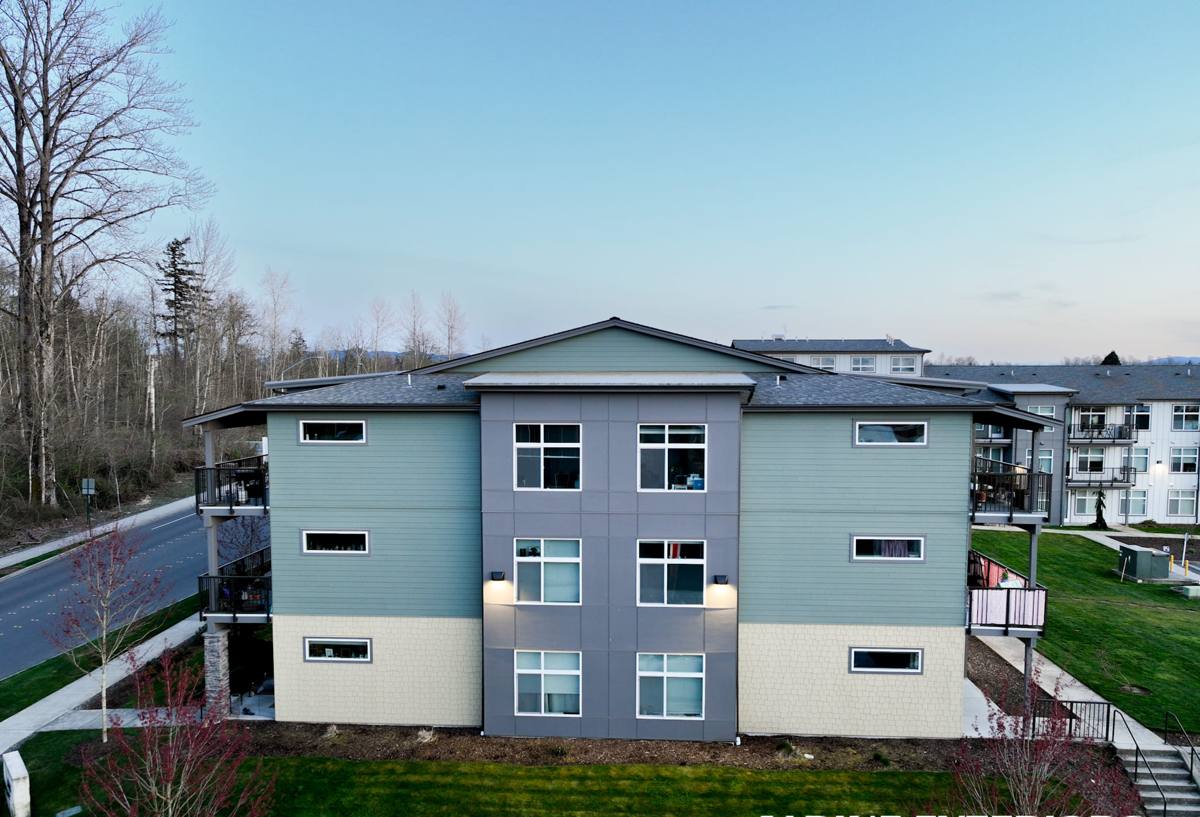
What Vinyl Siding Gets Right
Vinyl siding earned its market share for real reasons, and it's worth naming them plainly. It's inexpensive relative to most other siding materials. It's lightweight, which speeds up installation and lowers labor cost. It never needs painting, and the color runs through the material, so a surface scratch doesn't necessarily show bare substrate underneath. For a homeowner working with a tight budget who needs a functional, weather-resistant exterior, vinyl does the job it's designed to do.
Where Vinyl Comes Up Short
The trade-offs show up over time, not on installation day. Vinyl is a thin plastic product, and it moves — it expands and contracts with temperature swings more than any other common siding material, which is why it's installed with slotted nail holes instead of fixed fasteners. That movement, combined with panels that are hung rather than truly fastened tight, leaves seams and laps where wind-driven rain can work its way behind the cladding. Vinyl also softens and can warp or melt near heat sources (grills, reflected sunlight off certain low-E windows), and it becomes brittle and prone to cracking in a hard, cold snap. It doesn't rot, but it doesn't stop water either — it's a rain-screen material, not a moisture barrier, and it depends entirely on what's behind it to keep a wall assembly dry. And because color and texture are baked into a plastic sheet, it reads as plastic up close; it rarely fools anyone into thinking it's a different material.
What Fiber Cement Gets Right
Fiber cement is a blend of Portland cement, sand, and cellulose fiber, pressed and cured into a dense, rigid plank. It is dimensionally stable — it doesn't expand and contract the way vinyl does, so seams stay tighter over the life of the siding. It's non-combustible, which matters more every wildfire season in the Pacific Northwest even though our fire risk here is lower than east of the Cascades. It holds paint and factory finish far better than wood, resists impact damage from hail or a stray baseball better than vinyl, and it doesn't attract the insects or rot fungi that plague untreated wood siding. Correctly installed with proper flashing, house wrap, and clearances, it's one of the longer-lived claddings on the market.
Where Fiber Cement Has Real Trade-Offs
It's heavier and more labor-intensive to install than vinyl, which shows up in the bid. It requires cutting with proper dust control (silica dust from dry-cutting fiber cement is a genuine job-site hazard, not a footnote), and it must be painted or ordered with a factory finish — field-cut edges need to be sealed and touched up per the manufacturer's instructions. It's also less forgiving of a rushed or careless install: gaps at butt joints, missing flashing, or panels installed too close to grade or a roofline can let water in, and because the material itself is dense and doesn't flex, poor installation shows up as cracking rather than quietly self-correcting the way a slightly loose vinyl panel might. In short, fiber cement rewards a careful installer and punishes a sloppy one more visibly than vinyl does.
How Each Performs in Ferndale's Climate
This is where the comparison stops being theoretical. Ferndale sits close enough to the Strait of Georgia and Bellingham Bay that salt-laden air is a real factor on siding, trim, and fasteners, especially on homes with west or northwest exposure. Add Whatcom County's long stretch of driving rain from fall through spring, plus a moss season that can run most of the year on shaded north-facing walls, and you've got a climate that tests a siding system's ability to shed water and resist organic growth, not just look good on a sunny install day.
Vinyl doesn't feed moss the way wood does, but its lap-and-seam design gives wind-driven rain more opportunity to get behind the panel over time, especially on exposed gable ends. Once moisture gets behind vinyl, it's trapped against the house wrap and sheathing with no way to dry from the front, since vinyl itself isn't a moisture-managing material — it just hangs there. Fiber cement's tighter, more rigid assembly resists wind-driven rain intrusion better when installed to spec, and factory-applied finishes (like James Hardie's ColorPlus) are formulated to resist the kind of mildew and moss staining that shows up on shaded, damp walls in this region. Neither material is immune to Ferndale's moss season — algae and moss will grow on almost any surface that stays damp and shaded long enough — but a dense, well-flashed fiber cement wall gives it less to hold onto than a slightly gapped vinyl seam.
Cost Comparison
| Factor | Vinyl Siding | Fiber Cement Siding |
|---|---|---|
| Material cost | Lower | Moderate to higher |
| Installation labor | Faster, less labor-intensive | Slower, more skill-dependent |
| Expected service life (correct install) | 20-30 years, variable | 30-50+ years |
| Maintenance | Occasional washing; replace cracked/warped panels | Periodic caulk/paint check on field-cut edges; washing |
| Resistance to wind-driven rain intrusion | Depends heavily on install quality | Strong when flashed and installed to spec |
| Fire resistance | Combustible plastic | Non-combustible |
The numbers above are general ranges, not a quote — actual cost depends on your home's size, trim complexity, and current wall condition. But the pattern holds across the industry: vinyl wins on upfront price, fiber cement wins on lifespan and durability per dollar spent over 20-30 years.
Installation Sensitivity: Why the Installer Matters as Much as the Material
Both materials can fail early — and both can last decades — depending almost entirely on how they're installed. Vinyl needs to be hung loose enough to allow for thermal movement; over-nailing it tight is one of the most common vinyl installation mistakes, and it causes buckling. Fiber cement needs correct fastener placement, proper joint flashing, factory or field-sealed cut edges, and clearance from grade, roofing, and decks so it never sits in standing water. Neither material is "install-proof." A skilled crew on vinyl will outperform a rushed crew on fiber cement, and vice versa. This is exactly why the manufacturer's installation instructions exist and why they matter more than the marketing on the box.
Warranty and Longevity
Vinyl siding typically carries a manufacturer's limited warranty, and terms vary widely by product tier — some are prorated, meaning the payout shrinks as the siding ages, and many exclude labor for removal and reinstallation after the first several years. Fiber cement warranties, James Hardie's in particular, are typically structured as a longer, non-prorated limited warranty on the substrate, with a separate finish warranty on factory-applied color. Warranty terms change, so always read the current manufacturer documentation for the specific product line rather than relying on a general summary — but as a category, fiber cement warranties tend to track the material's longer expected service life.
Curb Appeal and Resale
Both materials come in a wide range of colors and profiles, including lap, shingle, and board-and-batten styles. Up close, vinyl's flex and seam pattern read as plastic to most buyers; fiber cement's rigidity and factory finish read closer to painted wood. For resale purposes, several national buyer-preference surveys have ranked fiber cement siding replacement among the higher return-on-investment exterior projects, though actual resale impact varies by market and should never be the only reason to choose a material.
Why We Only Install James Hardie Fiber Cement
We made a decision a long time ago to stop installing vinyl, along with a few other products, and put every siding job on James Hardie's fiber cement system instead. It's not that vinyl is a scam or that every vinyl job fails — it's that, given what Ferndale and the rest of Whatcom County throw at a house over 30 years, we don't think it's the product that gives homeowners the best outcome for what they're spending. Hardie's engineered-for-climate HZ5 product line, factory-applied ColorPlus finish, non-combustible core, and stronger long-term warranty structure line up with how we want our work to hold up a decade or two after we've left the job site. We'd rather install one product extremely well and stand behind it than offer a menu of materials we're less confident about.
Questions to Ask Any Siding Contractor Before You Choose a Material
- What warranty am I actually getting — is it prorated, and does it cover labor after the first few years?
- Who installs the flashing at windows, doors, and butt joints, and can you show me the manufacturer's install spec?
- What's the expected maintenance schedule for this material over the next 10 years?
- How does this product handle wind-driven rain and salt exposure on a west- or north-facing wall?
- Is the color factory-applied or field-painted, and what's the touch-up process for cut edges?
- Can I see the manufacturer's written installation instructions for my specific siding profile?
Making the Right Call for Your Home
There's no material that's right for every house or every budget, and an honest contractor should be able to explain the real trade-offs of whatever they sell — not just the upside. If you want to talk through what fiber cement would look like on your specific home, including realistic cost and timeline, we're happy to walk the property and give you a straightforward, no-pressure estimate.