 Ferndale Siding
 Why Board & Batten Keeps Showing Up in Whatcom County
Board and batten has been a fixture on Pacific Northwest homes for generations, and it's having a real moment again — on farmhouses, on modern builds, and as an accent over garages and entries. Part of the appeal is simple: the vertical lines read as clean and intentional, and the style hides a multitude of sins on a home that's been through a few decades of Whatcom County weather. But the look is only half the story. What separates a board and batten job that still looks sharp in fifteen years from one that's cupping, staining, and rotting at the base by year five comes down to two things: the material underneath those battens, and how it was actually installed.
We install James Hardie fiber cement exclusively, and board and batten is one of the styles where that choice matters the most. Vertical siding traps and channels water differently than horizontal lap, and in a climate that gets driving rain off the Strait of Georgia, salt air blowing in from Bellingham Bay, and a moss season that can run eight months out of the year, the underlying panel material has to be able to take that punishment without swelling, delaminating, or feeding mold.
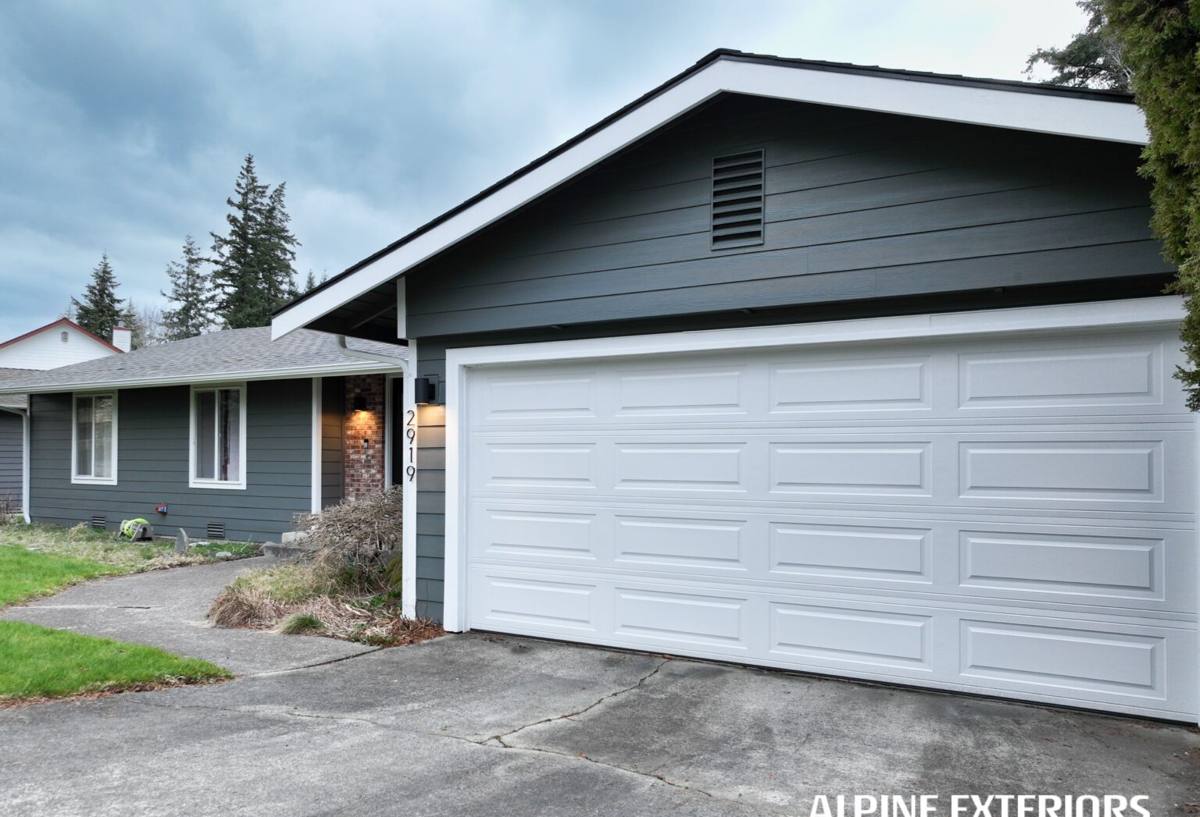
What Board & Batten Actually Is
Board and batten is a two-layer siding assembly: wide flat panels (or boards) installed vertically, with narrower strips — the "battens" — fastened over the seams between them. Historically this was solid wood, and the batten's job was purely functional: cover the gap where two boards met and block wind-driven rain from getting behind the wall.
With James Hardie's panel system, the same visual result is achieved with engineered fiber cement panels and Hardie batten trim, installed over a properly flashed and often rainscreen-vented wall assembly. The look is identical to traditional board and batten from the curb. What's different is what happens when water inevitably hits the wall, which in Ferndale is not an occasional event — it's a weekly one for a good chunk of the year.
Panel vs. Individual Board Installation
There are two ways to build a board and batten look with Hardie products:
- Hardie Panel + Batten: Large sheet panels (typically 4x8 or 4x10) installed vertically, with 1x battens fastened over the seams. This is the more common and more moisture-tolerant approach, since it minimizes the number of horizontal and vertical joints in the field.
- Hardie Board (Artisan or Board & Batten trim) as individual "boards":
Most of what gets built in this region uses the panel approach, because fewer field joints means fewer places for water to find a way in — which is exactly the vulnerability that matters most here.
The Climate Problem Board & Batten Has to Solve
Vertical siding styles are more exposed to certain failure modes than horizontal lap siding, and it's worth being honest about that rather than glossing over it:
- Water running down a vertical panel face moves faster and in higher volume at any given point than water shedding off a horizontal lap course.
- Battens create a shadow line and a fastening point directly over a seam — if that seam isn't flashed and caulked correctly, it becomes a wick point instead of a water break.
- The bottom few inches of any vertical siding system sit closest to splash-back from grade, roof runoff, and irrigation — the zone where Ferndale's wet-season saturation does the most damage over time.
- Salt-laden air moving inland off the water accelerates corrosion of fasteners and hardware that aren't rated for it, and accelerates the breakdown of finishes that aren't engineered for coastal exposure.
None of this means board and batten is a bad choice for this area. It means the material and the installation method have to be chosen with these specific failure modes in mind, not just for the way it looks in a photo.
Why We Use HardiePanel and HZ5 Formulation Here
James Hardie engineers its fiber cement in region-specific formulations, and the HZ5 line is built for exactly the kind of climate Whatcom County sits in — high moisture exposure, freeze-thaw cycling, and coastal humidity. That's not a marketing detail; it changes how the product behaves over a 20-30 year timeline.
| Property | Why It Matters in Ferndale |
|---|---|
| Fiber cement core (non-combustible) | Doesn't rot, doesn't feed insects, doesn't swell from repeated wetting the way wood or wood-based composites can |
| HZ5 climate formulation | Engineered for freeze-thaw and high-moisture regions rather than a generic national spec |
| Factory-applied ColorPlus finish | Baked-on finish resists the fading and chalking that field-applied paint suffers under regular UV and salt air exposure |
| Dimensionally stable panel | Minimal expansion/contraction means batten seams stay tight instead of opening gaps over time |
What Correct Installation Actually Involves
The single biggest driver of board and batten failures isn't the siding material — it's what's happening behind it. This is true of every fiber cement product on the market, and it's the part of the job that's invisible once the battens go up, which is exactly why it gets skipped by installers in a hurry.
The Wall Assembly, Not Just the Panel
- Weather-resistive barrier: A continuous, properly lapped house wrap or building paper behind every panel, with no gaps at penetrations.
- Rainscreen gap: A furring strip or drainage mat that creates a small air gap between the back of the siding and the wall, letting any moisture that does get through drain and dry instead of sitting against the sheathing.
- Flashing at every horizontal seam, window, and door: Panel joints are not just butted and caulked — they need Z-flashing or a properly lapped joint so water is directed out, not in.
- Batten fastening pattern: Battens fastened per Hardie's published spacing and fastener spec, into framing, not just into the panel face.
- Bottom clearance: Proper gap between the bottom of the siding and grade, decks, and roof lines, so splash-back and standing water don't sit against the panel edge.
- Corner and trim treatment: Outside corners and trim boards installed with the same flashing discipline as the field, since corners are a common leak origin point.
A homeowner can't see most of this after the job is done. That's exactly why it's worth asking a contractor to walk through their wall assembly before they start, not after.
Color and Finish Options for Board & Batten
James Hardie's ColorPlus Technology finishes are factory-baked onto the panel and batten trim under controlled conditions, which gives more even, more durable color than field-painting the same boards on site. For board and batten specifically, a lot of homeowners in this area go with a solid, saturated color on the field panels and either a matching or contrasting trim color on the battens and window casings — it's a style that rewards a bit of contrast because the vertical lines are already doing visual work.
Because the finish is factory-applied, it also comes with a separate finish warranty from Hardie in addition to the substrate warranty, which matters more in a coastal-influenced climate where paint failure — not the substrate itself — is often what triggers a repaint on other siding types.
Maintenance Expectations, Honestly
Board and batten in James Hardie fiber cement is low-maintenance, not no-maintenance. In Ferndale's climate, plan on:
- An annual visual check of caulking at window and door trim, and at any exposed seams — caulk is the one component that ages faster than the siding itself.
- Periodic gentle washing to keep moss and algae from getting a foothold, especially on north-facing walls and anywhere shaded by trees or fences.
- Keeping gutters and downspouts functioning, since concentrated roof runoff onto any vertical siding accelerates wear at that specific point.
- Watching bottom clearance over time as landscaping, mulch, or deck surfaces get added or built up against the wall.
What This Costs to Think About
Board and batten typically runs a modest premium over standard horizontal lap in labor, mainly because of the batten installation step and the added flashing detail at every seam. Material cost between the two styles in James Hardie products is close. The bigger cost variable is almost always the condition of the existing wall assembly underneath — if house wrap, flashing, or sheathing need to be addressed during tear-off, that's where a bid changes, not in the siding style itself.
Getting an Honest Look at Your Home
Board and batten done right is a genuinely good match for this region's architecture and its weather, but "done right" is doing a lot of work in that sentence. The panel matters, the installation behind it matters more, and in a place that sees as much sustained moisture as Whatcom County does, cutting corners on either one shows up faster than it would somewhere drier.
If you're considering board and batten for a home in Ferndale or anywhere nearby, we're happy to come take a look, walk you through what your specific wall assembly needs, and put together a straightforward, no-pressure estimate. There's a form below to get that started.