 Ferndale Siding
 Birch Bay Sits Right at the Edge of the Weather
Birch Bay is about as exposed as exterior siding gets in Whatcom County. Homes here sit close to the water along the Strait of Georgia, which means they take on a combination that inland Ferndale properties don't deal with nearly as much: salt-laden air blowing off the water, wind-driven rain that hits siding at an angle instead of falling straight down, and a moss and algae season that stretches for much of the year thanks to the Pacific Northwest's damp, mild climate. None of that is exotic or rare — it's just consistent, and consistency is what wears exteriors down over time.
We're based out of Ferndale and work Birch Bay regularly, which matters more than it sounds like. A crew that only shows up here occasionally doesn't build the instinct for where water tends to collect on a waterfront lot, which siding details fail first in salt air, or how a Birch Bay roofline behaves differently than one a few miles inland. That local pattern recognition is part of what you're paying for when you hire a contractor who actually works the area.
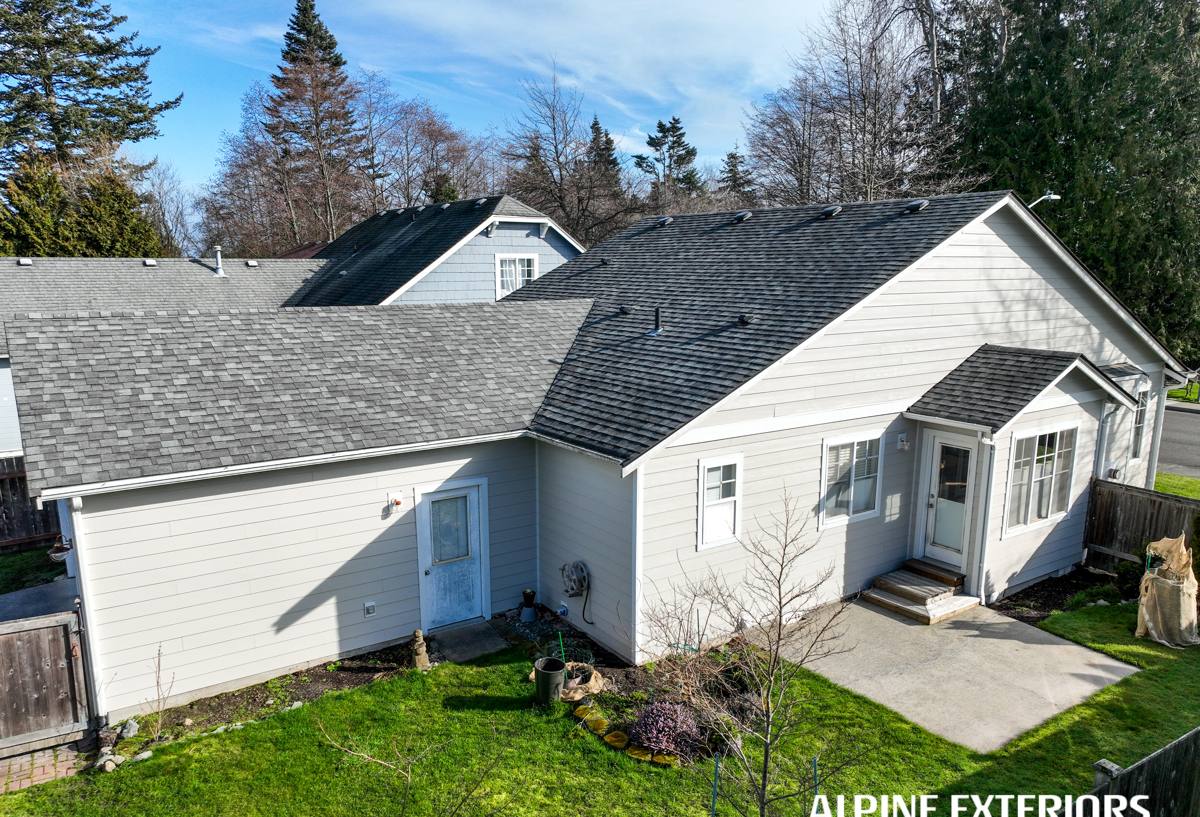
Why Salt Air and Coastal Moisture Matter for Siding
Salt air isn't just an inconvenience — it's chemically active. Airborne salt accelerates corrosion on fasteners and metal flashing, and it can degrade certain coatings and finishes faster than the same product would wear in a drier, non-coastal setting. Combine that with Whatcom County's rain totals and the humidity that lingers along the water, and you get an environment where any weakness in a siding product — a coating that chalks, a substrate that swells when it takes on moisture, seams that aren't detailed correctly — shows up sooner rather than later.
Moss and algae growth is the other half of the equation. Shaded, north-facing walls and anything near mature trees or close to grade stay damp longer here than they would in a drier climate, and organic growth on siding isn't just cosmetic — sustained moisture against a wall surface is exactly the condition that causes long-term problems if the material underneath can't handle it.
What This Means in Practice
- Fastener and flashing corrosion happens faster near the water than a few miles inland
- North- and west-facing walls tend to hold moss and algae longer through the wet season
- Wind-driven rain pushes water into laps, seams, and trim joints that see less pressure on inland homes
- Coatings and finishes that aren't engineered for coastal exposure fade or chalk noticeably faster
Why We Install Only James Hardie Fiber Cement
We don't install LP SmartSide, vinyl, Cemplank, Allura, primed spruce, or cedar. That's not a marketing line — it's a standard we've held to because of what we've seen play out on real homes over time, especially in exposed coastal settings like Birch Bay.
Fiber cement's core advantage is that it's not wood-based and it's not a thin plastic profile — it's a cement, sand, and cellulose fiber composite that doesn't swell, rot, or feed pests the way wood-based products can, and it holds its shape and fastening in wind and moisture conditions that stress vinyl and engineered wood siding differently. James Hardie specifically builds regional HZ5 product lines engineered for the kind of wet, marine-influenced climate the Pacific Northwest coastline delivers, and its ColorPlus finish is a factory-applied, baked-on coating system designed to hold color and resist fading and chalking better than field-applied paint typically does over the same span of years.
That's the whole reason we standardized: in a climate that includes salt air, sustained rain, and a long moss season, the product needs to be engineered for exactly that combination, not just tolerant of it. James Hardie's climate-specific engineering, non-combustible composition, and transferable warranty are why it's what goes on every home we side — Birch Bay included.
Siding, Roofing, Windows, and Decks — One Envelope
Siding doesn't work in isolation. On a coastal property especially, siding, roofing, windows, and decking all interact at the same joints and flashing details, and a weakness in one usually shows up as damage in another. A roof edge that doesn't shed water properly can drive moisture behind siding at the eave line. A window that isn't flashed correctly can let wind-driven rain track down inside a wall cavity. A deck ledger attached without proper flashing is one of the more common sources of hidden rot on Pacific Northwest homes.
We handle all four trades for that reason. When we're on a Birch Bay project, we're looking at the whole exterior envelope — not just swapping siding panels and leaving adjacent details as they are.
What We Cover
| Service | What We Look At on Coastal Homes |
|---|---|
| Siding | James Hardie fiber cement install, replacement, and repair, with attention to lap details and fastening for wind exposure |
| Roofing | Roof condition, flashing, and how the roofline sheds water onto or away from siding below |
| Windows | Window flashing and sealant integrity, a common entry point for wind-driven rain |
| Decks | Ledger flashing and structural connections where decks tie into the house |
What a Birch Bay Project Typically Looks Like
Every home is different, but the general process holds steady:
- Walkthrough and assessment. We look at existing siding condition, moisture signs, trim and flashing details, and how exposed the home is to prevailing wind and salt air.
- Scope and estimate. We give you a clear picture of what's being replaced, what James Hardie products and colors make sense for the home, and a written estimate.
- Prep and moisture check. Before new siding goes up, we check the sheathing and framing underneath for hidden damage — this is especially important on older coastal homes where a slow leak may have gone unnoticed.
- Installation to manufacturer spec. James Hardie's warranty coverage depends on correct installation — proper clearances, fastening patterns, and flashing details. We install to that spec, not around it.
- Final walkthrough. We go over the finished work with you before calling the job done.
Cost Factors for Birch Bay Siding Projects
We don't publish blanket pricing because every home's size, siding condition, and access differ, but these are the factors that generally move the number:
| Factor | Why It Matters |
|---|---|
| Home size and complexity | More wall area, corners, and trim detail means more material and labor |
| Existing siding removal | Tear-off and disposal of old siding adds time versus a bare-wall install |
| Sheathing repair | Hidden moisture damage found during prep adds scope, but it's not optional to skip |
| Product line and color | Hardie's various HZ panel styles and ColorPlus colors carry different costs |
| Site access | Waterfront lots, slopes, or tight access near Birch Bay's shoreline can affect staging and labor time |
Why a Local Crew Matters on the Water
A contractor based in Ferndale who regularly works Birch Bay has already seen how homes here age — which walls take the worst of the weather, where moss tends to establish first, and which older siding jobs in the area are holding up versus which ones aren't. That's not something you can fully substitute with a general contractor coming from outside the region. It also means straightforward things like scheduling around weather windows and being reachable if a question comes up after the job is done are easier when the crew isn't driving in from far away.
Whatcom County's coastline, from Birch Bay down through Ferndale, shares a lot of the same climate stresses, but Birch Bay's closer proximity to open water and its mix of full-time and seasonal homes make exterior maintenance easy to fall behind on. Regular exposure to the trade in this exact area is part of why we've built our whole install standard around what actually holds up out here.
Maintenance Checklist for Coastal Homes
Whatever siding a home has, a few habits go a long way in a Birch Bay climate:
- Rinse siding periodically to clear salt residue, especially on walls facing the water
- Keep gutters clear so water isn't overflowing directly down the siding face
- Trim back vegetation that shades walls and keeps them damp longer than they need to be
- Check caulking and trim joints annually — coastal wind and moisture work these loose faster than an inland home
- Address any moss or algae growth early rather than letting it establish
- Have flashing at windows, doors, and roof-to-wall intersections checked if you notice staining or soft spots
Let's Look at Your Home
If you're in Birch Bay and dealing with aging siding, moss buildup, or just want an honest read on where your exterior stands, we're happy to take a look. There's no pressure and no obligation — just a straightforward assessment from a crew that works this coastline regularly. Fill out the form below to request a free estimate.