 Ferndale Siding
 Everson sits inland along the Nooksack River in Whatcom County, a farm-and-river town with a different rhythm than the coastal side of the county. But the weather that rolls off the Pacific and up the Salish Sea corridor still reaches Everson every winter: driving rain that comes sideways for days at a time, a long stretch of gray months where nothing on the north side of a house really dries out, and moss and algae that find a foothold on any siding that stays damp too long. Homes here deal with all of it, whether they're older farmhouses that have weathered fifty winters or newer construction going up as the town grows.
We're based out of Ferndale and work the surrounding Whatcom County towns, including Everson, on a regular basis. That matters more than it sounds like it should. A crew that knows how water moves through this specific climate — how long moss takes to establish on a north wall here, how hard the winter rain actually hits, how humid the growing season gets along the river bottom — makes different decisions on your job than a crew passing through from out of the area.
What Everson's Climate Does to Exterior Siding
Whatcom County as a whole sits under a marine-influenced weather pattern — moist air off the water, long wet winters, and short dry summers. That regional pattern shapes conditions even for river-valley towns like Everson that aren't right on the coast. The practical result on a house is moisture that doesn't leave. Rain soaks into anything porous, humidity keeps surfaces damp between storms, and the sun doesn't do much work drying things out from October through April.
The Specific Failure Points We See
- Moss and algae growth on north- and east-facing walls, especially near trees, fences, or anything that shades the siding from what little sun there is
- Swelling and softening at butt joints, corners, and anywhere caulk has failed and let water behind the siding
- Paint failure on older wood or engineered wood siding, where repeated wet-dry cycling breaks the paint film down faster than the label promises
- Delamination on composite and OSB-based products, where the layered structure separates once water gets inside
- Trim and fascia rot at roof lines and window heads, where water concentrates before it ever reaches the wall field
None of this is unique to any one product — every siding material has to survive the same weather. What differs is how each material responds to years of that exposure, and that's the core of the decision homeowners in Everson need to make when it's time to replace.
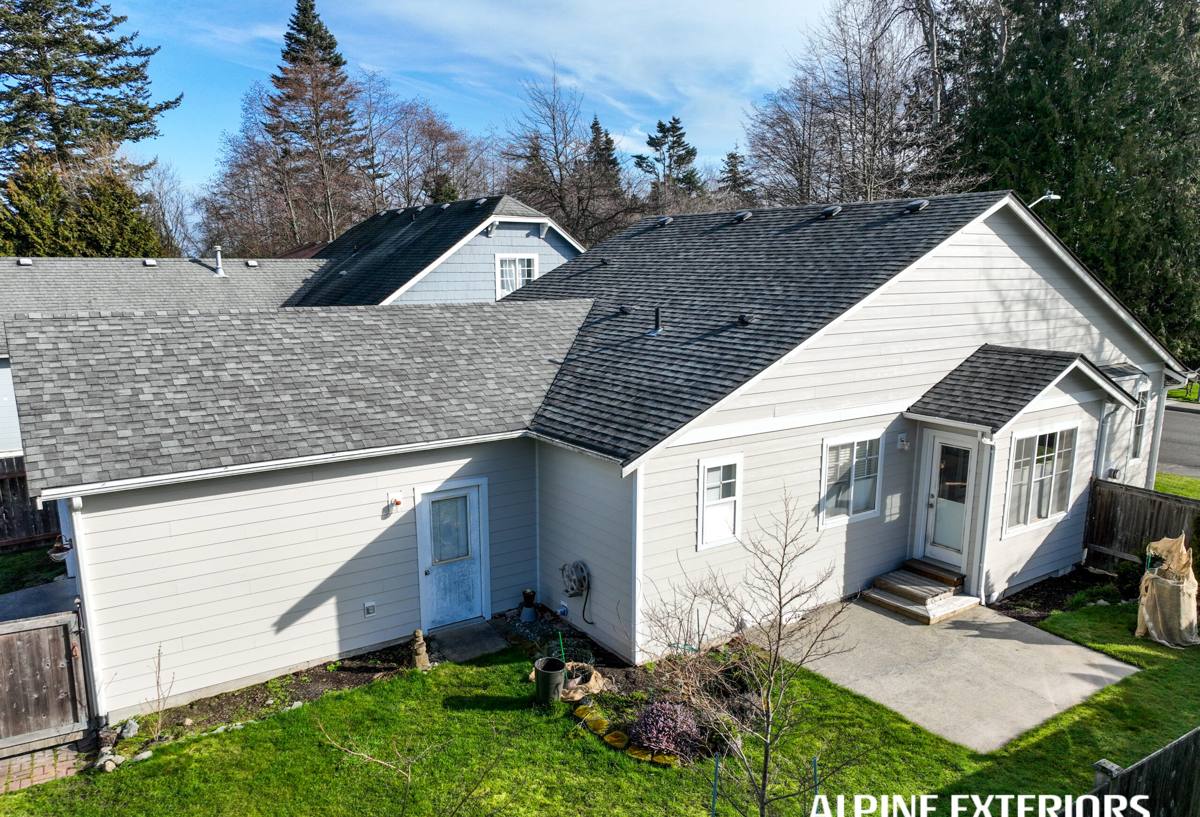
Why We Install Only James Hardie Fiber Cement
We get asked why we don't offer vinyl, LP SmartSide, or other engineered wood products, and it's a fair question — those are legitimate, widely used materials. Our answer is simple: after years of doing exterior work in this exact climate, we standardized on James Hardie fiber cement because it holds up to sustained moisture exposure better than the alternatives, and we'd rather install one product well than offer several and hope each one performs.
What Fiber Cement Does Differently
James Hardie siding is cement, sand, and cellulose fiber — not wood, and not vinyl. That composition means it doesn't swell, warp, or rot the way wood-based products can when they take on water repeatedly. It's also non-combustible, which matters increasingly for Washington homeowners as wildfire risk gets more attention statewide, even in the wetter western counties.
Hardie's ColorPlus finish is baked on at the factory under controlled conditions, not brushed or sprayed on-site. That factory process produces a more consistent, longer-lasting finish than field-applied paint, which is one of the first things to fail on older siding in a climate like ours. Hardie also builds region-specific product lines — HZ5 for the Pacific Northwest — engineered around the exact moisture and temperature swings this area sees.
What We're Honest About
Fiber cement is heavier than vinyl or engineered wood and costs more upfront. It requires proper fastening and factory-primed or pre-finished cut edges to perform as designed — installation quality matters more with this material than with some others, which is exactly why we treat installation, not just the product, as part of what we're selling. We won't cut corners on flashing, gapping, or fastener patterns to save time, because that's where premature failures actually start.
| Material | Moisture Resistance | Finish Durability | Long-Term Maintenance |
|---|---|---|---|
| James Hardie Fiber Cement | Does not swell or rot; engineered for wet climates | Factory-baked ColorPlus finish, long service life | Occasional wash; repaint only if desired, not required |
| Vinyl Siding | Sheds water but can warp/buckle with heat and age | Color molded in but fades over time; can't be repainted easily | Low, but panels crack and are hard to match when replaced |
| Engineered Wood (e.g. LP SmartSide) | Treated to resist moisture but still wood-based | Field or factory finish; edge sealing is critical | Moderate; edge and seam inspection matters over time |
| Cedar / Primed Spruce | Natural material, absorbs and releases moisture | Paint or stain needs regular renewal | Higher; repainting and moisture checks every few years |
How a Siding Project Works, Start to Finish
For an Everson home, our process starts with a walk-around to look at the whole exterior envelope, not just the siding surface. We check trim, flashing, window and door transitions, and the condition of whatever's underneath the current siding, since that's often where the real story is.
Typical Project Steps
- On-site inspection and measurement, including a look at moisture-prone areas like north walls and roof-to-wall transitions
- Written estimate covering material, labor, disposal of old siding, and any necessary trim or flashing repair
- Removal of existing siding and inspection of the sheathing and weather barrier underneath
- Repair of any water-damaged sheathing or framing found during tear-off
- Installation of new weather-resistant barrier and flashing details at all penetrations
- James Hardie siding installation to manufacturer fastening and clearance specifications
- Final walk-through and cleanup
Tear-off often reveals more than a homeowner expects, especially on older Everson homes where the original siding has been patched or painted over more than once. We'll show you what we find and price any additional repair clearly before doing the work — no surprise change orders after the fact.
Beyond Siding: The Rest of the Exterior Envelope
Siding doesn't fail in isolation. Roofing, windows, and decks all interact with the same moisture that's testing your walls, and problems in one area often show up as damage in another. We handle all four because they're connected, and it's more efficient — and often more affordable — to address them together rather than hiring separate contractors who aren't looking at the whole picture.
Where These Systems Overlap
- Roofing: A roof that's shedding water improperly at the eaves or valleys will soak the top course of siding underneath it, regardless of how good that siding is
- Windows: Failed window flashing is one of the most common sources of hidden water intrusion behind siding, and it's invisible until the siding comes off
- Decks: Ledger board attachments and deck flashing where a deck meets the house are a frequent rot point, especially on older homes built before current flashing standards
If you're planning a siding project, it's worth having us take a quick look at these adjacent systems at the same time, even if you're not ready to replace them yet. Catching a small flashing issue during a siding job is far cheaper than fixing water damage after the fact.
What to Look For When Hiring a Siding Contractor
Whatcom County has a lot of exterior contractors, and not all of them do the same quality of work or carry the same standards. A few things worth checking before you hire anyone for a siding project in Everson or the surrounding area:
- Washington state contractor license and current insurance, verifiable through the state's L&I lookup
- Manufacturer training or certification for the specific siding product being installed, not just general carpentry experience
- A written estimate that itemizes tear-off, repair, materials, and installation separately
- A clear answer on who handles moisture damage found during tear-off, and how that's priced
- Local references or a track record of work in the immediate area, since climate-specific installation experience shows up in the details
Planning for a Siding Project
A few factors drive cost and timeline on most Everson siding jobs: the size and complexity of the home, how much trim and detail work is involved, the condition of the sheathing underneath the existing siding, and how much of the original siding needs full removal versus partial repair. We won't quote a number without seeing the house, but we'll walk you through what's driving the estimate so it's not a black box.
Timing also matters in this climate. We schedule tear-off and install to minimize the number of days a wall is open to weather, and we won't start a full tear-off during a stretch of forecast heavy rain if it can reasonably be avoided.
If your Everson home's siding is showing moss, soft spots, peeling paint, or you're just past due for a look, we're happy to come out for a free, no-pressure estimate. There's a form below — reach out and we'll take a look at what your home actually needs.