 Ferndale Siding
 Two Fiber Cement Products, One Very Different Track Record
When homeowners in Ferndale start comparing siding options, they're often surprised to learn that Cemplank and James Hardie are both fiber cement products — made from the same basic recipe of Portland cement, sand, and cellulose fiber. On paper, that makes them sound interchangeable. In practice, after years of installing, inspecting, and repairing siding across Whatcom County, we made a deliberate decision to install only James Hardie products. This page explains why, honestly and without exaggerating anything about the competing product.
Fiber cement as a category is the right call for this part of Washington. It doesn't rot, it resists the moisture that vinyl traps and wood absorbs, and it holds up to the salt-laden air rolling off Bellingham Bay and the Strait of Georgia. The question isn't "fiber cement or not" — it's which manufacturer's version of fiber cement we're willing to put our name behind.
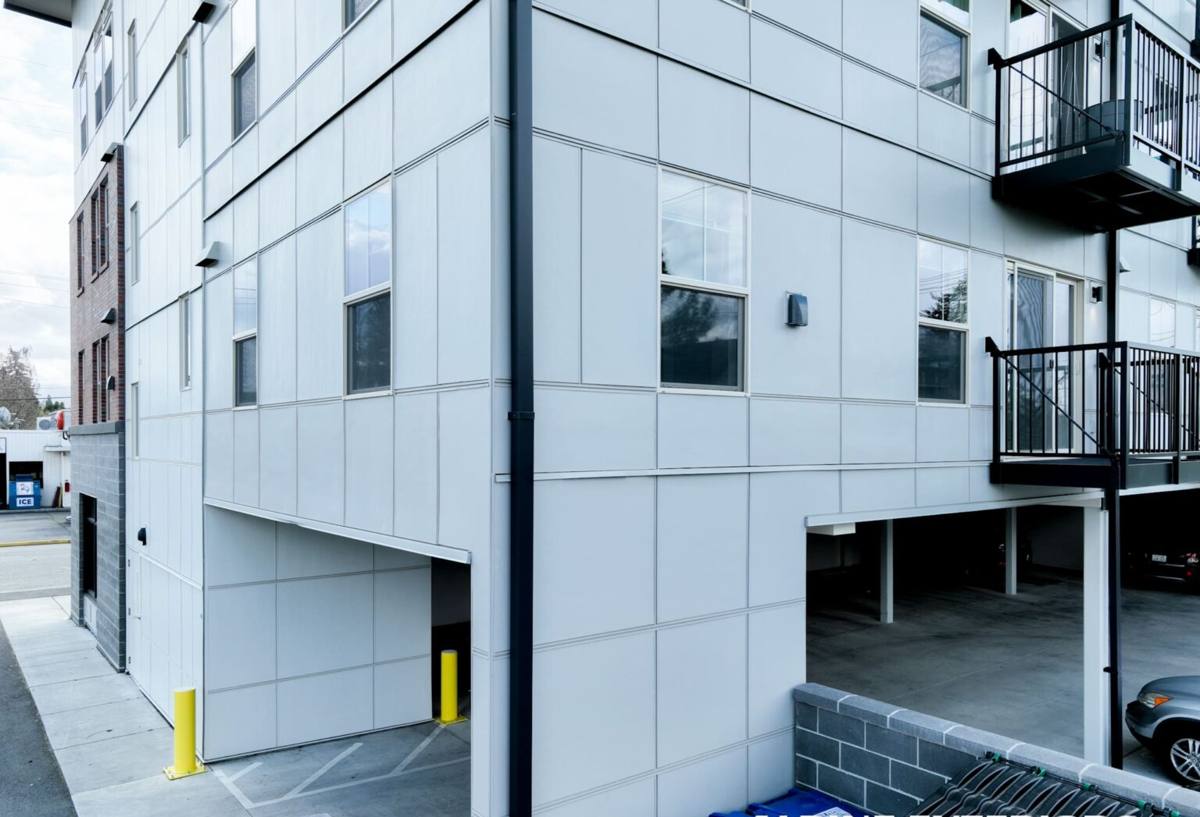
What Cemplank Gets Right
We'll start with the fair part, because a "why-not" page that pretends a competitor has no redeeming qualities isn't honest, and isn't useful to you. Cemplank is a genuine fiber cement product manufactured by Nichiha, and it shares the core benefits of the category: it's non-combustible, it doesn't support pest infestation the way wood does, and it holds paint better than vinyl over the long run. For homeowners on a tighter budget who still want to move away from wood or vinyl, Cemplank is a legitimate step up from cheaper cladding.
Where it falls short, in our experience, isn't the base material — it's everything built around that material: the engineering behind regional formulations, the factory finish system, the warranty structure, and the manufacturer support that stands behind a product for the 30-plus years it's expected to be on a wall.
Climate Engineering: One Difference That Actually Matters Here
Why "fiber cement" isn't a single spec
James Hardie formulates its siding differently depending on the climate it's shipped to — its HZ5 product line is engineered specifically for regions with prolonged moisture exposure, which describes most of western Washington for a good chunk of the year. That means the cement formulation, the moisture-resistance additives, and the installation guidance are tuned for exactly the conditions Ferndale sees: long wet winters, coastal humidity, and freeze-thaw cycles that aren't severe but are frequent.
Cemplank does not offer that same regionally engineered tier. It's a solid general-purpose fiber cement product, but it isn't built with a Pacific Northwest-specific formulation the way Hardie's HZ5 line is. For a coastal county where siding sits wet more days per year than it sits dry, that distinction isn't marketing — it's the difference between a product designed for our climate and one that simply tolerates it.
Salt air, driving rain, and moss: the local reality
Whatcom County siding doesn't fail because of one dramatic storm. It fails from cumulative exposure — salt-laden air drifting inland from the bay, driving rain that hits west- and south-facing walls at an angle for days at a time, and a moss season that can run from October through May on shaded elevations. Any siding product has to survive that cycle year after year without the finish chalking, the panels swelling, or moisture finding its way behind the cladding. This is the exact scenario climate-engineered fiber cement is built to handle, and it's a major reason we won't install a general-purpose version when a regionally engineered one exists.
The Factory Finish: Where Long-Term Appearance Is Decided
Most fiber cement failures homeowners actually notice aren't structural — they're cosmetic. Chalking, fading, and peeling finish are the complaints we hear about most, and the factory finish is what determines whether those show up in year 5 or year 20.
James Hardie's ColorPlus finish is baked on in a controlled factory environment through multiple coats and a curing process designed to resist UV fade and moisture intrusion at the finish level, backed by its own dedicated warranty coverage. Cemplank ships primed, which means the topcoat is typically applied on site or shortly after installation, under field conditions rather than a factory-controlled process. Field-applied finishes are more exposed to weather timing issues during application, and they don't carry the same integrated, factory-backed finish warranty. In a climate where UV exposure is modest but moisture exposure is constant, we've found the factory-cured finish holds its color and its seal noticeably longer.
Installation Sensitivity: Why the Installer Matters As Much As the Product
Fiber cement siding of any brand is only as good as its installation. Both products require correct fastening patterns, proper clearances from grade and roof lines, sealed joints, and adherence to manufacturer flashing details. Get any of that wrong and moisture will find a way behind the panel regardless of whose name is on the box.
The difference is in the support structure around installation. James Hardie maintains detailed, climate-specific installation instructions, a network of certified contractors, and a manufacturer warranty that is tied to correct installation practices being followed and documented. That accountability loop — installer certification plus a warranty that actually depends on doing the job right — gives homeowners a real backstop if something goes wrong. Cemplank's installation guidance and contractor network are less developed, which shifts more of the long-term risk onto whichever crew happened to install it, with less manufacturer-level recourse if a defect shows up years later.
What correct fiber cement installation should include
- Minimum 6-inch clearance between siding and grade, and 2-inch clearance from roof lines, to keep splash-back and standing water off the bottom edge
- Correctly sized starter strips and consistent fastener placement per manufacturer spec, not "close enough"
- Rain screen or drainage plane behind the siding so any moisture that does get past the cladding can drain and dry
- Factory-cut or properly scored field cuts, with cut edges sealed before installation
- Caulked and backed joints at butt seams, corners, and penetrations — never left to rely on the siding alone
- Manufacturer-approved fasteners driven flush, not overdriven, which crushes the material and creates a moisture entry point
Warranty Structure: What You're Actually Covered For
Warranty length is the number homeowners usually compare first, but the structure behind that number matters more. A long warranty with narrow coverage or heavy exclusions for finish issues isn't worth as much as it sounds.
| Factor | James Hardie | Cemplank |
|---|---|---|
| Substrate warranty | Long-term, non-prorated coverage on the fiber cement material itself | Standard manufacturer coverage on the substrate |
| Finish warranty | Separate, factory-backed ColorPlus finish warranty covering fade and peel | No equivalent factory finish warranty — finish is field-applied |
| Transferability | Transferable to a new owner if the home sells within the coverage window | Varies; typically more limited transfer terms |
| Installation tie-in | Backed by a certified installer network with documented install requirements | Less formalized certification and installer accountability |
For a coastal home that may change hands at least once in the decades that siding is expected to last, the transferability piece alone is worth taking seriously — it protects resale value, not just your own ownership period.
Cost: Where the Numbers Actually Land
Cemplank typically installs for somewhat less than James Hardie, and we won't pretend otherwise — the price gap is real and it's the main reason some homeowners consider it. But the comparison isn't just sticker price on install day; it's cost over the life of the siding.
| Cost factor | What to weigh |
|---|---|
| Upfront material and install | Cemplank generally runs lower; James Hardie carries a premium tied to its finish and engineering |
| Repainting timeline | Field-applied finishes tend to need repainting sooner than factory-cured ColorPlus finishes, adding a recurring cost Hardie owners largely avoid |
| Warranty claim exposure | Narrower finish coverage means finish issues are more likely to come out of your pocket rather than the manufacturer's |
| Resale positioning | James Hardie is widely recognized by buyers and appraisers in this region, which can matter at resale in a way a less-known product doesn't |
When we run the math on a 20- to 30-year horizon rather than just the install invoice, the gap narrows considerably, and in a lot of cases the lower long-term maintenance cost of Hardie's factory finish offsets a meaningful share of the upfront premium.
Why We Standardized on James Hardie
We're not required to pick one brand. We chose to because standardizing lets us do the job the same reliable way on every house — the same flashing details, the same clearances, the same certified training, and a warranty structure we can stand behind when we tell a homeowner their siding is built for this climate. Splitting our crews' expertise across multiple fiber cement brands, each with its own finish system and installation quirks, is how corners get cut on a jobsite. We'd rather be excellent at one system than average across three.
Hardie's HZ5 climate-engineered line, factory-cured ColorPlus finish, and warranty structure line up with what Ferndale homes actually need: siding that shrugs off salt air, sheds driving rain without staining, and doesn't turn into a moss magnet on the north-facing wall. That's not brand loyalty — it's a professional standard we set after seeing what holds up out here and what doesn't.
Get a Straight Answer for Your Home
Every house on your street sits at a slightly different angle to the weather, and the right siding decision depends on your home's exposure, age, and current condition — not just a general comparison. If you'd like an honest look at what your siding needs and a no-pressure estimate for a James Hardie install, we're happy to walk your property with you and explain exactly what we'd recommend and why.