 Ferndale Siding
 An Honest Look at LP SmartSide, Not a Sales Pitch Against It
If you're researching siding options for a home in Ferndale, chances are LP SmartSide has come up in at least one conversation with a contractor or a neighbor. It's a well-known product, backed by a major manufacturer, and it's installed on plenty of homes across Whatcom County. This page exists because homeowners deserve a straight answer about what it is, what it does well, and where it tends to struggle in this specific climate, before they sign a contract for it.
We don't install LP SmartSide. That's stated plainly up front so you know where this page is coming from. But refusing to install a product isn't the same as saying it's a bad product everywhere, for everyone. It's a statement about our professional standard for homes near the Salish Sea, where salt air, driving rain, and a moss season that runs most of the year put real, sustained pressure on any exterior material. Read the rest of this page and decide for yourself whether that standard makes sense for your project.
What LP SmartSide Actually Is
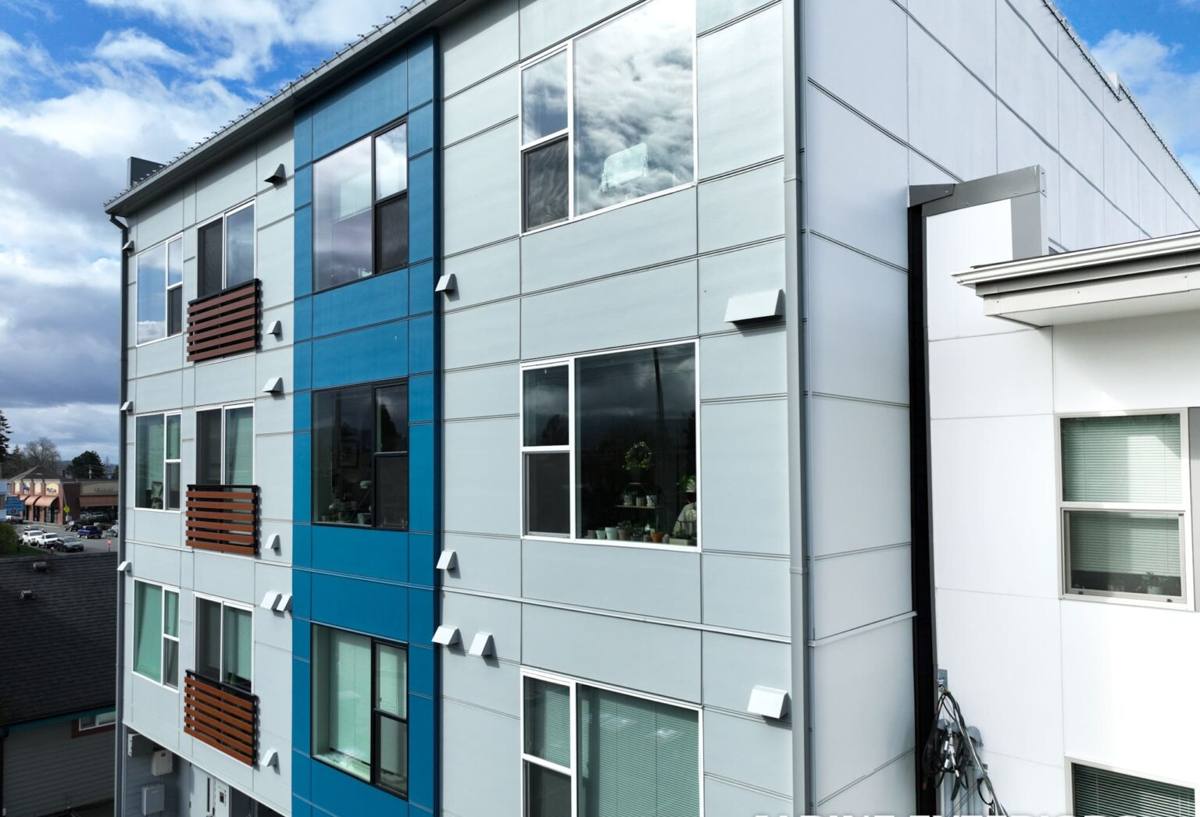
LP SmartSide is an engineered wood siding product. Strand-based wood fiber is combined with resins and wax, then pressed into panels under heat and pressure. The panels go through a zinc-borate treatment process designed to resist moisture absorption and deter insects, and they arrive pre-primed or pre-finished depending on the product line. It's sold in lap, panel, trim, and soffit profiles, which makes it flexible for a range of architectural styles.
Compared to fiber cement, it's meaningfully lighter, which means less strain on a crew during installation and, in some cases, lower labor time on the job. It also cuts more easily with standard woodworking tools, which some installers appreciate. Those are real advantages, and they're a big part of why the product has a solid foothold in the national siding market, including plenty of drier regions where it performs well over its expected service life.
What Makes It a Wood Product at Its Core
The part that matters most for a coastal home is what's under the treated, coated surface: strand wood fiber. The zinc-borate treatment and the factory finish are what stand between that wood fiber and the water in the air around it. As long as that protective layer stays fully intact for the life of the siding, the product behaves close to its marketing. The question we kept coming back to, working on homes in this county, was how realistic it is to expect that layer to stay fully intact, uninterrupted, for twenty or thirty years of Whatcom County weather.
Where the Protective Layer Gets Tested
Every siding installation involves cutting, fastening, and joining panels, and every one of those steps is a place where a factory coating can be interrupted.
- Field cuts around windows, doors, corners, and trim expose raw wood fiber at the cut edge, and a typical re-side involves dozens of these cuts.
- Every nail or screw penetration is a small breach in the coating that has to be sealed correctly and stay sealed.
- Lap joints and butt seams depend on caulk, and caulk has a service life measured in years, not decades, which means it's a recurring maintenance item rather than a one-time install detail.
- Any nick or scrape in the factory finish during shipping, handling, or installation needs to be caught and touched up before the panel goes up, or it becomes a weak point.
None of this means the product is defective. It means its long-term performance depends on two things staying close to perfect for decades: the installer's detail work on day one, and the homeowner's follow-through on maintenance every few years after that. In a drier inland climate, a missed detail or a skipped caulk touch-up might not matter much for a long time. In Ferndale, where wet weather is the rule rather than the exception, that margin for error gets a lot thinner.
Why Whatcom County's Climate Is a Harder Test for Any Wood-Based Product
Salt Air Off the Sound
Ferndale sits close enough to the water that salt-laden air is a routine part of the exposure here, not an occasional event, even for homes set back from the immediate shoreline. Salt speeds up the breakdown of exterior finishes and accelerates corrosion on fasteners and trim hardware. A coating system that performs well in a drier, inland market doesn't automatically get the same service life once salt exposure becomes a daily condition instead of a rare one.
Driving, Wind-Pushed Rain
Rain in this part of Whatcom County rarely falls straight down for long. Wind pushes it sideways into lap joints, under trim, and into any gap in the water management details behind the siding. That's a tougher, more sustained test on caulked seams and cut edges than an annual rainfall total suggests, and it's exactly the condition where a wood-based product's dependence on an intact seal stops being a minor concern and starts being the deciding factor in how the siding ages.
A Moss and Mildew Season That Runs Most of the Year
Mild temperatures, consistent moisture, and plenty of shaded, tree-lined lots add up to a moss and mildew season that's active across most of the calendar in this part of Whatcom County. Any organic-based siding surface that stays damp for extended stretches becomes a growth surface, and that growth traps additional moisture against the wall, which compounds whatever moisture issue started it in the first place.
LP SmartSide vs. James Hardie Fiber Cement
| Factor | LP SmartSide | James Hardie Fiber Cement |
|---|---|---|
| Core material | Treated strand wood fiber (organic) | Cement, sand, cellulose fiber (inorganic) |
| Behavior at cut edges | Exposes untreated wood; needs field sealing on every cut | Inorganic core doesn't swell or absorb water the same way |
| Dependence on caulk maintenance | High; joint upkeep is a recurring, ongoing task | Lower; joints still need attention, but the core doesn't feed off moisture |
| Combustibility | Combustible, treated wood product | Non-combustible |
| Finish system | Factory-primed or pre-finished; field touch-up needed at cuts | ColorPlus factory-baked finish available on most product lines |
| Weight and installation speed | Lighter, generally faster to cut and hang | Heavier, more labor-intensive to install correctly |
| Typical warranty structure | Limited, with defined installation and maintenance requirements | Long-term, often transferable when installed to manufacturer spec |
The weight and installation-speed row is a real advantage for SmartSide, and if labor cost were the only variable in the decision, it would be a reasonable one to lean toward. The rest of the comparison is why our standard points the other direction for homes in this climate.
The Warranty Details Homeowners Rarely Read Closely
LP's manufacturer warranty, like most engineered wood siding warranties, comes with specific conditions: minimum clearances from grade and roofline, particular caulking and priming steps at every field cut, and defined maintenance intervals for repainting and joint inspection. Fall behind on that schedule, or skip a required step during installation, and it's possible to find the warranty doesn't cover damage that shows up years later. That's printed in the documentation, not hidden, and it's not unusual for a warrantied siding product to work this way. But it does mean the homeowner is signing up to track and maintain something on a schedule for the next two or three decades, and in practice, that kind of long-term follow-through is easy to let slide once the initial excitement of a re-side has worn off.
Why We Standardized on James Hardie Instead
Our decision to install only James Hardie fiber cement wasn't about ruling out every alternative on principle. It came down to what we wanted to be able to stand behind on a coastal Whatcom County home for the long haul. Hardie's fiber cement core is inorganic, so it doesn't rely on an unbroken coating to keep from absorbing and swelling with water the way a wood-fiber core does. That gives more margin for error on both ends: ours during installation, and yours if a maintenance task gets pushed back a year or two. Hardie's HZ5 product line is engineered specifically for regions with heavy moisture exposure and freeze-thaw cycling, which lines up closely with the conditions Ferndale sees off the Sound. Add in the factory-applied ColorPlus finish, which cuts down on field touch-up, and a warranty structure that's typically transferable to a new owner, and it's the system we're willing to put our name on.
If You Already Have LP SmartSide on Your Home
This page isn't telling every SmartSide homeowner in Ferndale to panic or replace their siding early. A well-installed, well-maintained system can still have real service life left. A few things are worth checking yourself before calling anyone out:
- Look closely at horizontal lap joints and any spot where caulk has cracked, shrunk, or pulled away entirely.
- Check panel edges around windows, doors, and corners for soft spots, swelling, or a spongy feel when you press on them.
- Watch for darker discoloration or bubbling finish, especially on north-facing or heavily shaded walls where moisture sits longest.
- Note when the siding was last repainted or recaulked. Problems often surface once that maintenance falls a few years behind schedule.
- If you find soft or spongy spots, don't wait to have it looked at. Wood-based siding damage tends to spread along the panel once moisture gets past the treated surface.
Making the Decision for Your Own Home
There isn't a single right answer for every homeowner or every property. A home tucked well away from wind exposure, on a south-facing lot with good roof overhangs, is a different situation than a home sitting exposed to prevailing weather off the water. Budget matters too, and SmartSide's lower material and labor cost is a legitimate factor for some projects. What we'd rather you avoid is choosing a siding product without understanding the maintenance commitment attached to it, because that's the piece that tends to get glossed over in a sales conversation and matters most a decade or two down the road.
Whatever you decide, it's worth having a contractor walk your specific property and talk through your site conditions, your budget, and your long-term plans for the home, rather than applying a generic recommendation to every house on the block.
Get a Free, No-Pressure Estimate
If you're weighing siding options for a Ferndale home, whether you're leaning toward LP SmartSide, already have it and want it evaluated, or want to hear more about why we install James Hardie fiber cement instead, we're glad to walk the property and give you a straight, specific answer. Reach out using the form below to schedule a free estimate, no pressure and no upsell script attached.