 Ferndale Siding
 Fairhaven Sits Where Whatcom County Weather Gets Serious
Fairhaven's location on Bellingham Bay puts it in a different exposure category than homes further inland. The water brings salt-laden air, wind-driven rain off the Strait of Georgia, and a marine layer that lingers on north-facing walls and rooflines long after the rest of the county has dried out. Add in the tree cover common to older Whatcom County neighborhoods, and you get a climate that's genuinely harder on a home's exterior than most manufacturers' warranty language accounts for.
We're based out of Ferndale and work throughout Whatcom County, and Fairhaven is one of the areas where we see the clearest evidence of what coastal exposure does to siding, trim, roofing, and decking over time. This page walks through what that exposure actually means for a home in this area, and how our siding, roofing, window, and deck work is built around it.
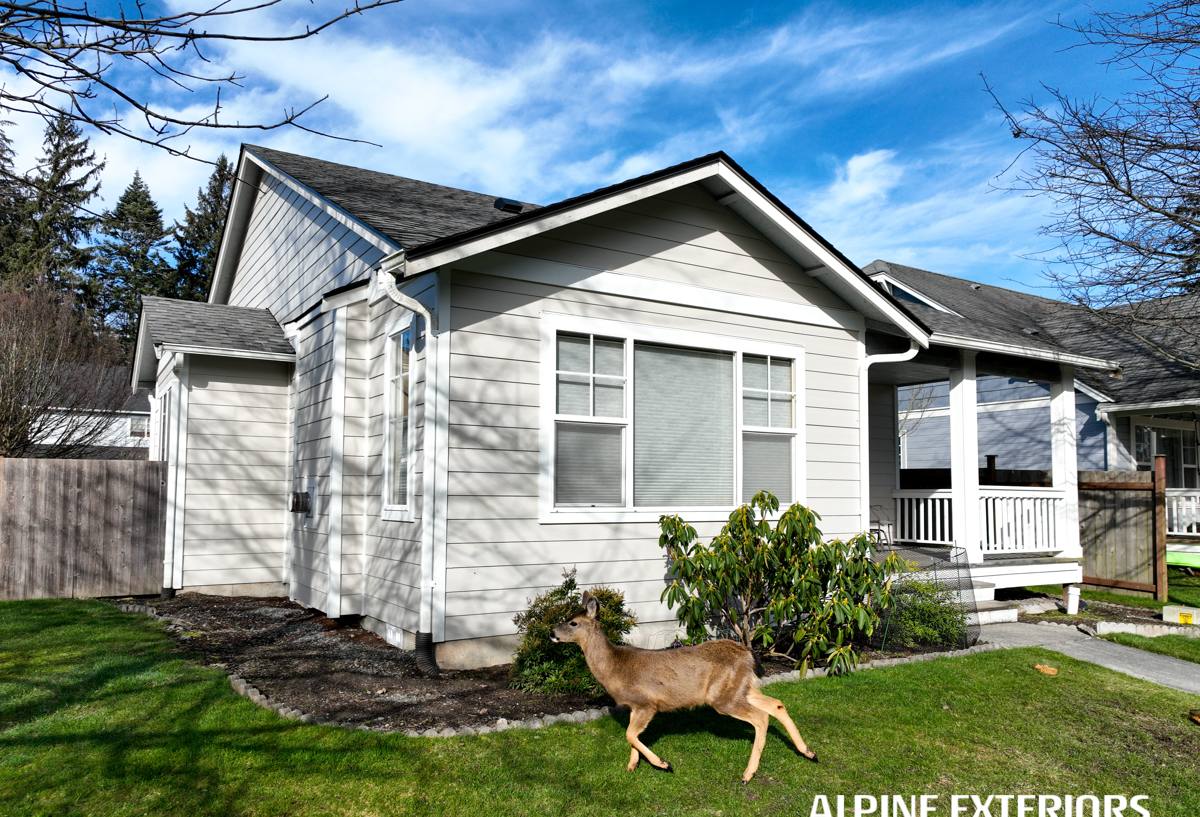
What Salt Air and Driving Rain Actually Do to a House
It's worth being specific about the mechanisms, because "salt air is tough on houses" is true but vague. Here's what's actually happening on a Fairhaven exterior over the course of a normal year:
Salt and Moisture Together
Airborne salt from Bellingham Bay settles on siding, trim, and roofing as a fine residue. On its own it's mostly cosmetic. Combined with the region's rain — especially driving rain that gets pushed sideways into wall assemblies during winter storms — that salt residue accelerates corrosion of fasteners, flashing, and any metal components in the building envelope. It also holds moisture against the surface longer than plain rainwater would, which matters a great deal for anything wood-based.
The Long Moss Season
Moss doesn't need much to get established here: shade, moisture, and time, and Fairhaven's tree canopy and bay-driven humidity supply all three for most of the year. Moss on a roof holds water against shingles and underlayment. Moss and algae on siding hold water against the substrate and finish. On wood-based siding products, that sustained moisture contact is where rot starts — usually at seams, butt joints, and anywhere caulk has begun to fail.
UV and Wind Cycling
Coastal homes also get more wind-driven wet-dry cycling than sheltered inland homes. Siding and trim swell when saturated and shrink as they dry, over and over, all winter. Materials that don't handle dimensional movement well eventually show it as cracked caulk lines, cupped boards, or paint failure at the joints.
Why This Changes What We Recommend for Siding
We install James Hardie fiber cement siding exclusively, and coastal neighborhoods like Fairhaven are a big part of why. Fiber cement doesn't absorb water the way wood-based products do, and it isn't a food source for the moss and algae that take hold so readily in this climate. It also holds its dimensional stability through the wet-dry cycling that's a fact of life this close to the bay, which means fewer failed caulk joints and less paint stress at the seams over the years.
James Hardie's HZ5 product line is specifically engineered for cold, wet, coastal-type climates, and it's what we spec for Fairhaven and the rest of our bay-adjacent service area. The factory-applied ColorPlus finish also matters here more than it would somewhere dry: it's baked on under controlled conditions rather than applied on-site, so it holds up better against the moisture and salt exposure that wear down field-applied paint faster near the water.
We won't install vinyl, LP SmartSide, cedar, or primed spruce as a matter of professional standard — not because those products can't work anywhere, but because we've made a call about what performs reliably in this specific climate, and fiber cement is it. If a homeowner wants to talk through why, we're glad to have that conversation honestly rather than just pointing at a brochure.
Siding Installation for Fairhaven Homes
A lot of the difference between siding that lasts and siding that fails early in this climate comes down to installation details that don't show up in a sales pitch:
- Correct fastener spacing and type — coastal exposure calls for fasteners rated to resist the corrosion salt air accelerates
- Proper house wrap and flashing sequencing so wind-driven rain is directed out, not trapped behind the cladding
- Rain screen gap where conditions call for it, giving moisture a path to drain and dry instead of sitting against the substrate
- Caulk only where Hardie's install specs call for it — over-caulking traps moisture just as badly as under-caulking lets it in
- Field-cut edges sealed per manufacturer spec, since a raw cut edge is the fastest way to compromise fiber cement's moisture resistance
These aren't upgrades — they're the baseline for doing the job correctly in a marine climate. Skipping any of them is usually invisible for a year or two and then shows up as exactly the kind of failure the siding was supposed to prevent.
Roofing, Windows, and Decks: The Rest of the Envelope
Siding is only part of how a Fairhaven home holds up against the bay. We also handle roofing, windows, and decks, and the same coastal logic applies to all three.
Roofing
Roofs take the brunt of driving rain and the worst of the moss problem. Proper underlayment, flashing at every penetration and valley, and ventilation that keeps the deck dry from underneath as well as above all matter more here than in a drier inland area. Moss prevention starts with the install — good ventilation and sun exposure where possible — not just periodic treatment after the fact.
Windows
Window flashing and sealant are common failure points on older Fairhaven homes, many of which have gone through multiple remodels and window swaps over the decades. Wind-driven rain finds gaps at the window-to-wall interface faster here than almost anywhere else in the county, so correct flashing integration with the siding system is not optional.
Decks
Decks face near-constant moisture cycling and, depending on tree cover, significant shade — a combination that accelerates both rot in wood structural members and surface deterioration in decking boards. Proper fastener selection, ledger flashing, and drainage details underneath the deck all matter for longevity in this environment.
Moss and Weather: What Actually Helps
| Issue | What's Happening | What Helps |
|---|---|---|
| Moss on roofing | Shade + moisture + time establishes growth that holds water against shingles | Zinc or copper strips at the ridge, tree trimming for sun exposure, periodic gentle cleaning |
| Algae/mildew on siding | Sustained moisture and shade feed surface growth, especially on north-facing walls | Fiber cement siding resists it as a food source; occasional soft washing keeps finish clean |
| Salt residue buildup | Airborne salt from the bay settles on all exterior surfaces | Periodic rinse-down; factory-cured finishes hold up better than field-applied paint |
| Wind-driven rain intrusion | Storms push rain sideways into wall and window assemblies | Correct flashing sequencing and rain screen detailing at install, not after the fact |
Cost Factors for a Fairhaven Exterior Project
Every home is different, but a few things consistently move the number for coastal Whatcom County projects:
| Factor | Why It Matters Here |
|---|---|
| Home age and existing siding | Older Fairhaven homes may need substrate repair or moisture remediation before new siding goes on |
| Access and site conditions | Tree cover, slope, and lot layout affect equipment access and labor time |
| Trim and detail complexity | Historic-style homes often carry more trim work, window casings, and architectural detail |
| Scope — siding only vs. combined with roofing, windows, or decks | Bundling exterior work can reduce redundant setup and access costs |
| Product line and finish selection | HZ5 panels and ColorPlus finish options vary in material cost |
We give straightforward numbers based on an actual look at the house, not a phone-estimate range. There's no cost to having us come take a look.
Why a Local Crew Matters for a Bay-Adjacent Home
A crew that mostly works dry, inland jobs doesn't always carry the same instincts about flashing details, rain screen gaps, and fastener corrosion resistance that a bay-adjacent home actually needs. Working throughout Whatcom County, including Fairhaven and the rest of the Bellingham Bay area, means we see these conditions repeatedly and build our install process around them rather than treating them as an exception.
When you're evaluating a contractor for exterior work on a Fairhaven home, a few things are worth checking regardless of who you hire:
- Ask specifically how they handle flashing and rain screen detailing for coastal exposure — a vague answer is a red flag
- Confirm they're licensed and insured in Washington, and ask for proof rather than taking it on faith
- Ask what siding, roofing, and decking materials they install and why — a contractor who installs everything usually hasn't standardized on what performs best
- Get the warranty terms in writing, including what's covered on labor versus materials
- Ask how they sequence work around weather — a marine climate means schedule flexibility matters
Let's Take a Look at Your Home
If you're dealing with early moss growth, siding that's showing its age, or you're just planning ahead for a home that sits close to the bay, we're happy to come take a look and talk through what we'd actually recommend — no pressure, no scare tactics. Use the form below to request a free estimate, and we'll walk the exterior with you and give you a straight answer about what your home needs.