 Ferndale Siding
 Marietta's Windows Work Harder Than Most
Marietta sits low and close to the water on the edge of Bellingham Bay, in Whatcom County, and that location shapes what a window has to survive here. Salt-laden air moves in off the bay and settles on glass, frames, and hardware. Wind-driven rain doesn't just fall straight down — it gets pushed sideways into wall assemblies and window openings during winter storms. And the long, wet, low-sun stretch from fall through spring keeps north- and west-facing walls damp long enough for moss and algae to take hold on sills, trim, and anything with a horizontal ledge. None of that is dramatic on its own, but stacked together over years, it's exactly the combination that ages windows faster than a homeowner expects.
A window that would coast along for decades in a dry inland climate can start failing in half that time in Marietta if it wasn't installed with this environment in mind. That's the difference we're solving for — not just swapping old glass for new, but replacing windows in a way that actually holds up to salt air, driving rain, and moss season, year after year.
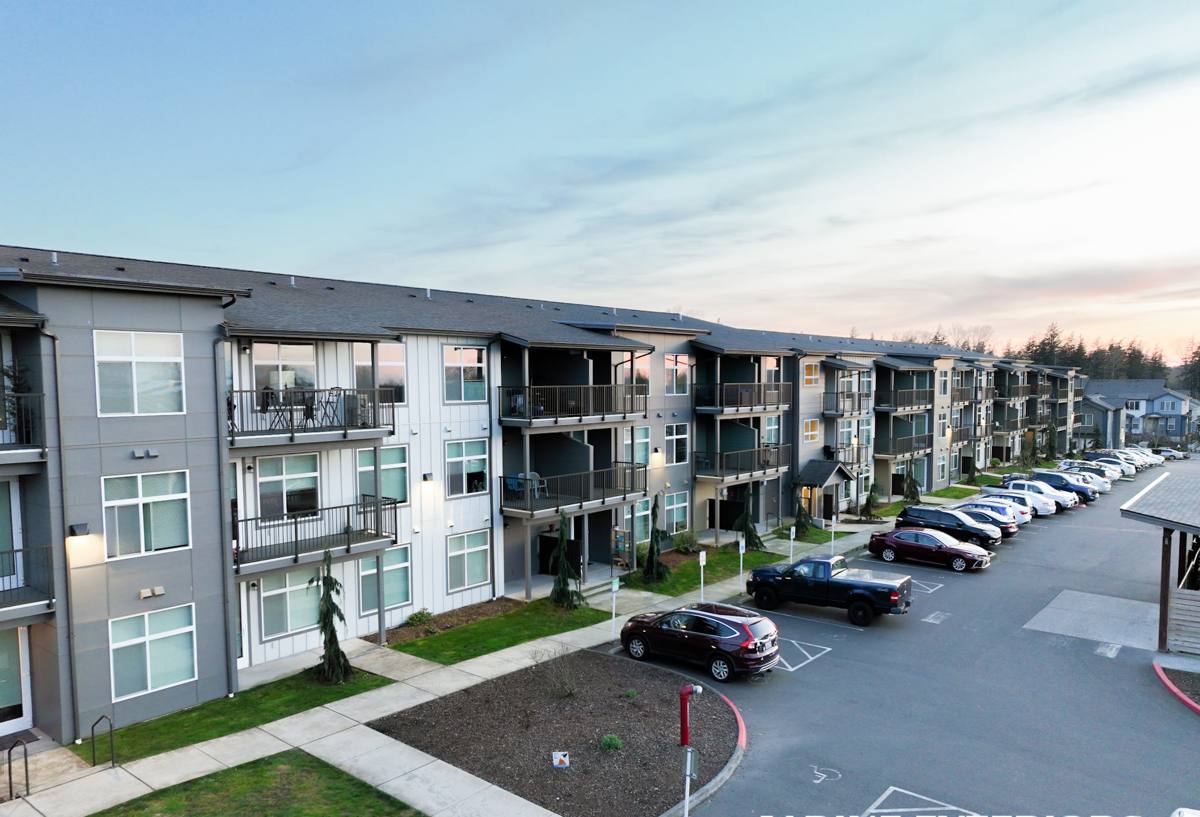
Signs a Marietta Home Needs Window Replacement
Some warning signs are obvious. Others show up gradually and get written off as "just an old house." Here's what we look for when we walk a property in Marietta:
- Fogging or a permanent haze between the panes — the seal has failed and the gas fill is gone
- Wood sills or frames that feel soft, spongy, or discolored, especially on the north and west sides
- Visible corrosion or pitting on aluminum frames or hardware from long-term salt exposure
- Moss or dark streaking building up on sills and lower trim faster than you can keep it clean
- Drafts you can feel at the frame edge, or a noticeable difference in indoor temperature near the window
- Windows that are hard to open, close, or lock — frames can swell and warp from repeated wetting
- Paint or finish that's bubbling, peeling, or won't hold no matter how often it's redone
- Rising heating bills with no other explanation, especially in older single-pane or early dual-pane units
Any one of these can be a minor fix. Several together, especially on an older window, usually means the frame or seal integrity is gone and replacement is the more honest answer than another round of caulk and paint.
What a Correct Window Replacement Actually Involves
The window unit itself is maybe half the job. The other half — the part that determines whether you're back here in five years — is how it's tied into the wall. In a climate that pushes rain sideways, the flashing and moisture management around the opening matter as much as the glass.
The details that matter most locally
When we install or replace a window in Marietta, we're paying close attention to a few things that generic installation guides gloss over:
- Sill pan flashing at the bottom of the rough opening, so any water that gets past the window has a sloped path back outside instead of soaking into the wall
- Proper shingle-lap sequencing of flashing tape and building wrap around the opening — top piece last, so water is always directed outward and down, never trapped behind a layer
- Corrosion-resistant fasteners and hardware, since standard fasteners can rust and stain in a salt-air environment faster than inland homes ever see
- Backer rod and quality exterior sealant at the frame perimeter, sized and tooled correctly rather than just caulked over gaps
- Shimming and squaring the unit so the sash operates smoothly and the seal isn't stressed unevenly, which is what causes premature failure
Skip any of these and you can end up with a brand-new window that looks great for a year or two and then starts showing the same rot, drafts, or fogging as the one it replaced — just with a bigger price tag attached.
Full-Frame vs. Insert Replacement
There are two basic approaches to replacing a window, and which one makes sense depends on the condition of the existing frame and sill. Both have a place — the key is being honest about which one your house actually needs.
| Factor | Insert (Pocket) Replacement | Full-Frame Replacement |
|---|---|---|
| What it involves | New window unit installed inside the existing frame | Existing frame removed down to the rough opening; new flashing and window installed |
| Best for | Frames and sills that are still sound and dry | Frames with rot, water damage, or visible corrosion |
| Access to sill flashing | Limited — relies on the existing flashing still being sound | Full — sill pan and flashing can be rebuilt correctly |
| Typical cost | Lower | Higher, due to added carpentry and flashing work |
| Long-term fit for coastal exposure | Fine on protected elevations with dry frames | Usually the better call on north/west walls with wind-driven rain exposure |
We won't sell you a full-frame job you don't need, and we won't recommend a quick insert replacement over a frame that's already compromised. Once we open things up during the estimate, we'll tell you plainly which category your windows fall into.
Material and Glass Choices That Make Sense Here
Frame materials
Vinyl windows are the most common choice for good reason — they don't rust, they don't need repainting, and modern vinyl frames handle moisture well. Fiberglass is a step up in stiffness and dimensional stability, which matters on larger openings. We generally steer homeowners away from bare aluminum frames on exposed elevations in this area — not because aluminum is a bad material everywhere, but because it conducts cold and is prone to pitting and corrosion under sustained salt-air exposure, which is exactly the maintenance burden we're trying to design out of the job.
Glass packages
Dual-pane, low-E glass with an argon fill is the practical standard for this climate — it cuts heat loss, reduces condensation on cold mornings, and helps with the glare off the water on clear days. For rooms facing prevailing weather, a slightly upgraded low-E coating or a warm-edge spacer system is worth the small added cost, since it improves both comfort and how long the seal holds up under repeated temperature swings.
Hardware and finish
Look for stainless or corrosion-resistant locks, hinges, and cranks. In a salt-air environment, this is one of the cheapest upgrades that pays off the most — standard hardware can start showing rust streaks on the sill within a couple of years, while corrosion-resistant hardware simply doesn't.
Our Process, Start to Finish
- On-site walkthrough — we look at every window from both sides, check for soft framing, and assess drainage around the foundation and sills
- Honest scope — we tell you which windows need full-frame replacement, which can take an insert, and which don't need to be touched yet
- Straightforward quote — itemized by window, with material and labor separated so you can see where the money goes
- Removal and prep — old units and any damaged framing come out; we inspect the opening before anything new goes in
- Flashing and moisture barrier work — sill pans, tape sequencing, and building wrap integration done to hold up to sideways rain
- Window installation — shimmed, squared, fastened with corrosion-resistant hardware, and sealed properly at the perimeter
- Interior and exterior finish — trim, caulking, and touch-up so the job looks finished, not just functional
- Final walkthrough — we operate every window with you before we call it done
What Affects the Cost
Every quote should be specific to your house, but these are the main variables that move the price up or down on a Marietta project:
| Factor | Impact on Cost |
|---|---|
| Insert vs. full-frame replacement | Full-frame costs more due to added carpentry and flashing work |
| Existing rot or water damage | Adds framing repair before a new window can go in correctly |
| Window size and type (fixed, slider, casement, bay) | Larger and operable units with more hardware cost more than simple fixed units |
| Frame material (vinyl, fiberglass) | Fiberglass typically runs higher than vinyl for a comparable size |
| Glass upgrades (extra low-E coatings, tempered glass where required) | Modest upcharge per unit, often worth it on exposed walls |
| Number of windows done at once | Bundling multiple windows in one visit usually lowers the per-window labor cost |
| Access and elevation | Second-story or hard-to-reach windows take more time and equipment |
As a broad range, straightforward vinyl insert replacements tend to run toward the lower end of typical regional pricing, while full-frame replacements with repair work climb from there. We'll give you real numbers for your specific house at the estimate, not a guess.
Why a Crew That Already Works Marietta Matters
Window installation isn't one-size-fits-all, and a crew that only sees this kind of coastal, wet-climate exposure occasionally is more likely to miss the details that matter here — the sill pan flashing, the fastener choice, the hardware grade. We work in Ferndale and the surrounding Whatcom County communities regularly, which means we're not guessing at how driving rain behaves against a wall here, or how fast moss builds up on an unmaintained sill through a wet winter. We've seen what happens when those details get skipped, and we build our process specifically to avoid it.
There's also a practical side to hiring local: shorter travel time means we can schedule efficiently, get back out quickly if you have a question after the install, and stand behind the work without a multi-hour drive being part of the equation.
After Your Windows Are Replaced
New windows still need basic upkeep in this climate — it's just far less than what an old, failing window demands. A simple seasonal routine keeps them performing the way they should:
- Rinse sills and tracks periodically to keep salt residue and moss from building up
- Check that weep holes on the exterior track stay clear so water can drain out
- Wipe down hardware occasionally, especially on windows facing prevailing weather
- Inspect exterior caulking once a year and touch up any spots that have opened up
- Trim back vegetation or moss growth on nearby siding and trim before it spreads onto the window frame
None of this is heavy maintenance — it's the kind of five-minute check that keeps a properly installed window performing for decades instead of years.
If your Marietta home has windows showing any of the signs above, or you just want an honest read on their condition, we're happy to come take a look. The estimate is free, there's no pressure, and you'll get a straight answer about what your windows actually need — use the form below to get started.