 Ferndale Siding
 Why Lynden Homes Need Siding Built for This Climate
Lynden sits in a stretch of Whatcom County that takes more weather abuse than most homeowners realize until they're dealing with the damage. You've got moisture moving in from two directions — the marine air pushing in off the Salish Sea brings salt-laden humidity, and the Nooksack valley setting means fog and dew linger longer on north- and shade-facing walls than they would just a few miles inland. Add a moss season that can run from October through April in a wet year, and you've got a wall assembly that's under near-constant low-grade attack for more than half the calendar.
Most siding materials aren't built with that combination in mind. They're built to survive an "average" American climate, and Lynden's climate isn't average. Wood-based products absorb moisture and swell. Vinyl contracts and expands with temperature swings and lets water track behind it at the seams. Whatever's on your walls has to shed water fast, resist organic growth, and hold its shape through decades of freeze-thaw cycles and driving rain — not just look good on installation day.
What "Driving Rain" Actually Does to a Wall
Driving rain isn't just rain that falls harder — it's rain pushed sideways by wind, which means it hits siding at an angle and drives water up under laps, around trim, and into any gap in the weather barrier. A siding system that relies on tight seams and perfect caulk lines to stay dry will eventually fail here, because caulk is a maintenance item, not a permanent seal. What holds up is a material that doesn't care much if a small amount of moisture reaches it — because it doesn't swell, rot, or delaminate when it gets wet.
Why We Only Install James Hardie in Lynden
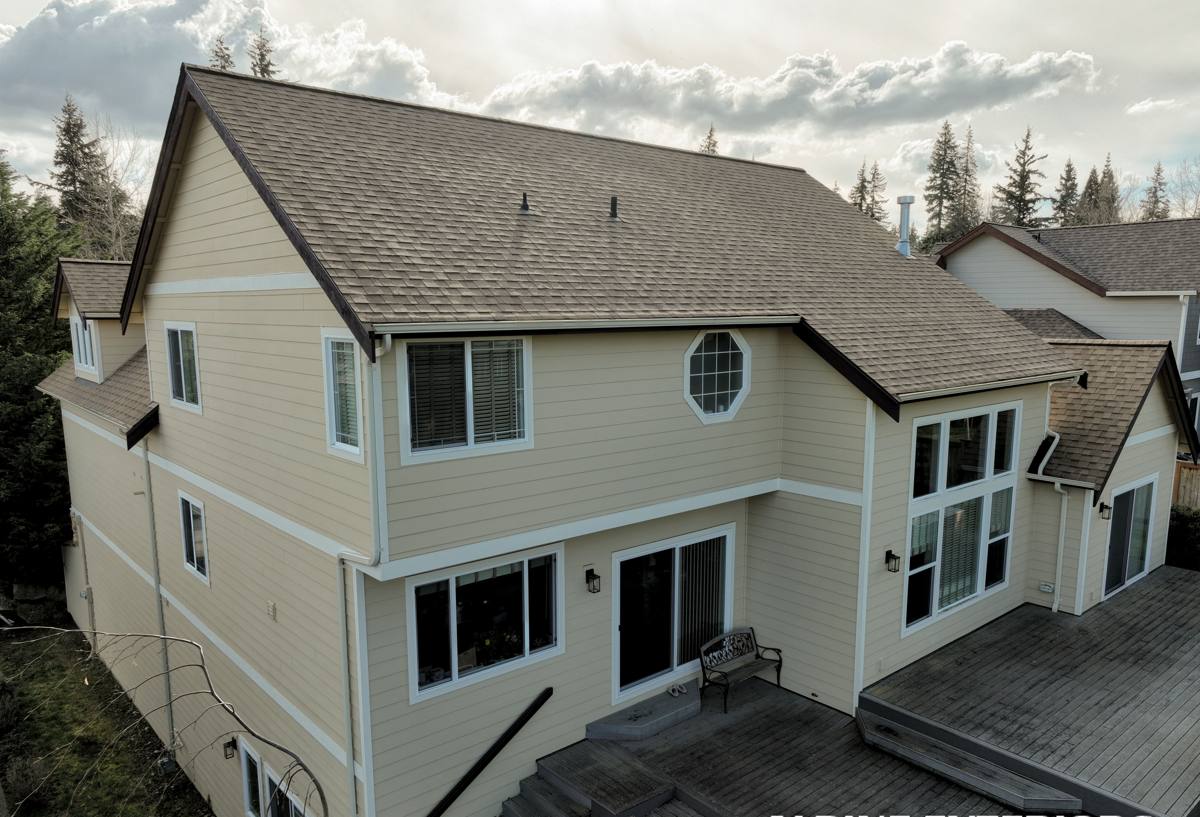
We made a decision a long time ago to stop installing anything other than James Hardie fiber cement siding, and jobs in Lynden are exactly why. Hardie's fiber cement is engineered from cement, sand, and cellulose fibers — there's no wood pulp to absorb water and rot, and no vinyl resin to go brittle in the cold or soften in the heat. It's also non-combustible, which matters more every year as wildfire smoke and dry-season fire risk creep further into western Washington's conversation, even in a generally wet county like ours.
We're not going to pretend every other siding product is worthless — plenty of them have a place. But we won't put our name on a job where we know the material is fighting the climate instead of working with it. Lynden's moisture load, moss pressure, and salt air are a hard combination, and we'd rather install one product exceptionally well than five products adequately.
The Product Lines We Use
James Hardie makes several siding lines engineered for different climate zones (HZ5 and HZ10, depending on the region), and we spec the products built for the Pacific Northwest's moisture-heavy conditions rather than a generic national product. Depending on the look a homeowner wants, that usually means:
- HardiePlank lap siding — the classic horizontal lap look, available in several profiles and textures, and the most common choice for Lynden's mix of traditional farmhouse-style and newer construction homes.
- HardiePanel vertical siding — often used as an accent on gables, dormers, or modern-style builds.
- HardieTrim — fiber cement trim boards that match the siding's moisture resistance, used around windows, corners, and fascia so the whole envelope is consistent rather than mixing a durable field material with a vulnerable trim material.
All of it comes with the ColorPlus factory finish option — a baked-on finish that's more consistent and more fade- and chip-resistant than field-applied paint, which also cuts down on the repainting cycle that drives up the lifetime cost of most other sidings.
What Correct Installation Looks Like
Fiber cement siding is only as good as the installation underneath it. Hardie itself will tell you that most siding failures aren't material failures — they're installation failures. In a climate like Lynden's, the install details matter even more than usual because there's less margin for error before trapped moisture becomes a real problem.
The Details We Don't Skip
- Weather-resistive barrier and rainscreen gap — a proper drainage plane behind the siding lets any moisture that does get past the cladding drain and dry out instead of sitting against the sheathing.
- Correct fastener placement and type — Hardie specifies nailing patterns and fastener types precisely; over-driving or under-driving nails, or using the wrong fastener, is one of the most common shortcuts that shows up as problems years later.
- Proper clearances — Hardie's own installation instructions call for minimum clearances from grade, roofing, and decks so the bottom edge of the siding isn't sitting in standing water or snowmelt runoff.
- Caulked and flashed penetrations — every window, vent, and fixture penetration gets flashed and sealed correctly, because a single missed penetration is enough to let water behind a wall that otherwise would have performed for decades.
- Butt joint and seam treatment — seams get backed and sealed per spec rather than just butted and caulked, which matters a lot more here than in a dry climate.
None of this is exotic. It's just following the manufacturer's installation manual closely instead of treating it as a suggestion — which is exactly where a lot of siding jobs go wrong.
Moss, Algae, and the Lynden Shade Problem
A lot of Lynden lots have mature trees, and mature trees mean shaded north walls that stay damp for days after a storm. That's prime territory for moss and algae growth on siding, especially anything with a porous or textured surface that gives spores something to grab onto. Fiber cement doesn't eliminate the risk entirely — nothing does in this climate — but its dense, factory-cured surface and factory finish give organic growth a lot less to hold onto than wood-based sidings, and it holds up to the occasional gentle wash without the surface degrading the way painted wood or some composite panels can.
Simple Maintenance That Actually Matters
Owners who keep their Hardie siding looking its best in this climate generally do a few simple things: rinse the siding once or twice a year (especially shaded sides), keep gutters clean so overflow isn't running down the wall, trim back vegetation that's holding moisture against the siding, and check caulking at trim and penetrations every couple of years. None of that requires a contractor visit — it's the kind of upkeep that keeps a good installation performing for its full lifespan instead of fighting an uphill battle from day one.
Our Process for Lynden Siding Projects
We treat every siding job the same way, and it starts before we ever pick up a nail gun.
1. Inspection and Assessment
We look at the existing siding, the wall assembly underneath if it's exposed, trim condition, window flashing, and any signs of moisture intrusion already present — soft spots, staining, or bulging siding. This tells us whether we're dealing with a straightforward re-side or whether there's sheathing repair needed first.
2. Removing Guesswork from the Estimate
We measure the actual wall area, account for trim and accent work, and walk the homeowner through product and color choices before we ever talk numbers, so the estimate reflects the real job rather than a rough square-footage guess.
3. Prep and Weather Barrier
Old siding comes off, the sheathing gets inspected and repaired where needed, and a proper weather-resistive barrier and drainage plane go in before a single piece of Hardie siding is hung. This is the step that gets skipped most often on cut-rate jobs, and it's the step that determines whether the siding lasts 10 years or 40.
4. Installation to Manufacturer Spec
Fastening, clearances, flashing, and seams are all done to Hardie's published installation guidelines — not shortcuts, not "close enough."
5. Final Walkthrough
We walk the finished job with the homeowner, point out anything worth knowing for future maintenance, and make sure everything matches what was agreed to before we call it done.
Cost Factors for a Lynden Siding Project
Every home is different, but the variables that move the price are consistent. Rather than quote a number that won't mean much without context, here's what actually drives cost on a real project:
| Factor | Why It Matters |
|---|---|
| Wall area and home shape | More corners, gables, and dormers mean more cutting, trim, and labor time than a simple rectangular footprint. |
| Existing sheathing condition | Rot or moisture damage found during tear-off adds repair scope before new siding can go on. |
| Product line and profile | Plank width, texture, and vertical accent panels vary in material cost and installation time. |
| ColorPlus vs. field-painted | Factory-finished ColorPlus costs more upfront but removes the repainting cycle from long-term maintenance. |
| Trim scope | Full HardieTrim replacement around windows and corners costs more than reusing sound existing trim, but keeps the moisture performance consistent. |
| Site access | Fencing, landscaping, tree cover, and how close the house sits to property lines all affect labor time. |
Questions to Ask Before Hiring Anyone for Siding Work
Whatcom County has plenty of contractors who'll put siding on a wall. Fewer of them will do it in a way that holds up against Lynden's specific climate pressures. A homeowner comparing bids should ask:
- Do you install a weather-resistive barrier and drainage gap, or just siding directly over the existing wrap?
- What's your fastening schedule, and is it the manufacturer's spec or your own shortcut?
- Are you installing manufacturer-matched trim, or mixing in a cheaper trim product?
- Will you inspect and repair sheathing before installation, or side over whatever's underneath?
- Are you factory-certified or trained on the specific product you're installing?
A contractor who already works regularly in Lynden and the surrounding Ferndale area will have answers to all of this without hesitating, because they've already run into the moisture and moss issues specific to this stretch of Whatcom County and adjusted their process accordingly.
Ready to Talk About Your Home
If your current siding is showing moss staining, soft spots, or you're just tired of repainting every few years, it's worth getting a straight assessment of what's actually going on behind the surface. We'll take a look, tell you honestly what we see, and put together a clear estimate for a James Hardie siding system built for Lynden's climate — no pressure, no obligation.