 Ferndale Siding
 Siding Replacement for Blaine Homes, Done by a Crew That Works This Coastline
Blaine sits close enough to the water that salt air, wind-driven rain, and a long moss season are just part of owning a home here. Whatcom County's marine climate is milder than a lot of the country, but "mild" doesn't mean "gentle" on a house. It means near-constant moisture exposure, months at a time without a real drying window, and siding materials that have to shed water instead of absorbing it. When a homeowner in Blaine calls us about siding replacement, we're not guessing at what the building envelope has been through — it's the same weather pattern we see on every job in this corner of the county.
This page is specifically about siding replacement in Blaine: what local homes actually need, what a correct installation involves, and how our process works from first look to final walk-through. We install one product — James Hardie fiber cement — and we'll explain why later on, but the bulk of this page is about the job itself.
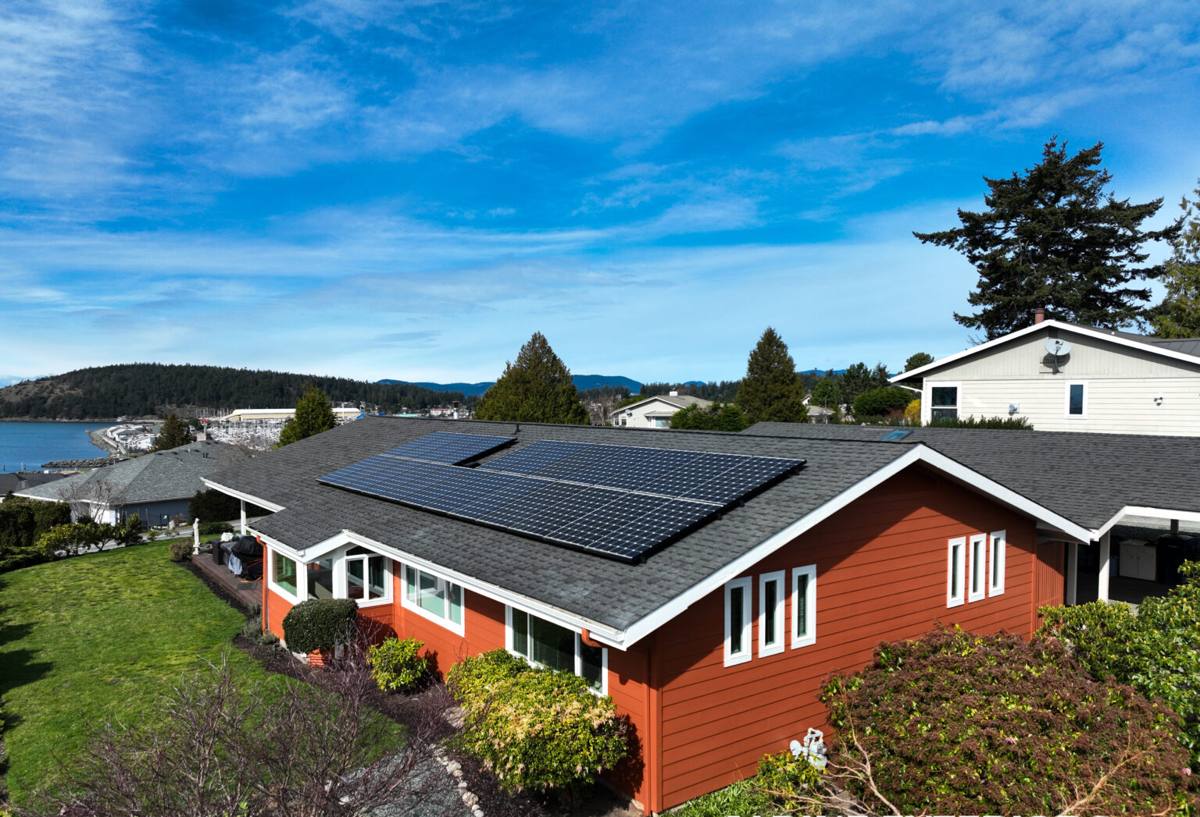
What Blaine's Climate Does to Siding Over Time
A few conditions show up over and over on homes near the water in this part of Washington:
- Salt-laden air: Coastal moisture carries salt that accelerates corrosion on fasteners, flashing, and any metal trim that isn't properly rated or protected.
- Driving rain: Wind off the water pushes rain sideways into wall assemblies, not just straight down. Siding that relies on gravity alone to shed water — and house wraps or flashing details that assume vertical rainfall — get overwhelmed.
- Extended damp season: Fall through spring, homes here can go weeks without a real drying stretch. Any siding material that absorbs moisture (rather than shedding it) stays wet longer, which is exactly the condition mold, rot, and moss favor.
- Moss and algae growth: Shaded walls, north faces, and anything under tree cover develop moss and green staining faster here than in drier inland areas. That's a maintenance issue on some materials and largely a non-issue on others, depending on the surface and finish.
None of this is unique to Blaine specifically — it's the Whatcom County coastal pattern — but it's worth spelling out because it directly shapes what "correct" siding replacement looks like here.
Why This Matters More Than the Siding Color
Homeowners often start the conversation with color and style. Those matter, but the decisions that actually determine whether siding lasts 10 years or 40 happen underneath: the water-resistive barrier, the flashing at every penetration, the gap behind the siding for drainage and airflow, and the fasteners holding it all together. Get those right and the visible siding just has to do its job on top of a sound assembly. Get them wrong and no amount of premium siding material will save the wall from moisture damage.
What a Correct Siding Replacement Involves
Siding replacement isn't just stripping off old material and nailing up new panels. Done right, it's a full envelope inspection and rebuild of the water management system. Here's the sequence we follow on a typical Blaine home:
- Tear-off and sheathing inspection: Remove the old siding and inspect the sheathing underneath for soft spots, rot, or prior water intrusion — especially around windows, doors, and any wall penetrations.
- Repair before cover-up: Any damaged sheathing or framing gets repaired or replaced. Covering rot with new siding just hides a problem that keeps getting worse.
- Water-resistive barrier: A new weather barrier goes on correctly lapped (upper courses over lower, always shedding water downward) with all seams and penetrations properly sealed.
- Flashing at every opening: Windows, doors, hose bibs, vents, and any other penetration get flashed so water is directed out and away from the wall assembly — not just caulked and hoped for.
- Drainage plane / rainscreen gap: A gap between the siding and the water barrier lets any moisture that does get behind the cladding drain out and lets the wall breathe, instead of trapping dampness against the sheathing.
- Siding installation to manufacturer spec: Correct fastener type, spacing, and penetration depth; proper clearances at grade, roof lines, and butt joints; factory-primed or factory-finished cut edges sealed as specified.
- Trim, caulking, and final detailing: Corner boards, trim, and joints sealed with products rated for the exposure, not generic caulk that will fail in a couple of seasons.
Skip or rush any one of these steps and the finished wall might look fine for a year or two before problems start showing up — usually right where a shortcut was taken.
Signs a Blaine Home Needs Siding Replacement (Not Just Repair)
Not every siding issue means a full tear-off. Here's a rough guide to when repair makes sense versus when replacement is the honest answer:
| Condition | Repair Likely Sufficient | Replacement Recommended |
|---|---|---|
| Isolated cracked or damaged panel | Yes, if the rest of the siding is sound | — |
| Soft or spongy sheathing found during inspection | — | Yes — indicates ongoing moisture intrusion |
| Persistent moss/algae staining across large wall areas | Cleaning may help short term | Consider if it keeps returning — often a drainage or material issue |
| Paint failing or siding warping in multiple spots | — | Yes — usually a sign of moisture cycling through the material |
| Original siding is 20+ years old and failing broadly | — | Yes — patch repairs won't match aging material or fix the underlying assembly |
| Single storm-damaged section on otherwise healthy siding | Yes | — |
When in doubt, an honest inspection is the right first step — not a sales pitch for a full replacement you don't need.
Our Process, Start to Finish
1. On-Site Assessment
We walk the exterior with you, look at the current siding condition, check for soft spots or signs of moisture behind the cladding where accessible, and talk through what you're seeing and what concerns you. This is where we tell you honestly whether you need a full replacement, targeted repair, or something in between.
2. Written Scope and Estimate
You get a clear breakdown of what's included — tear-off, sheathing repair allowances, water barrier, flashing, siding material and profile, trim, and finish — so there are no surprises once work starts.
3. Scheduling Around Weather
In a climate like this, timing matters. We plan tear-off and dry-in stages to minimize how long your wall assembly sits exposed, and we don't open up more wall than we can properly protect or close in during a work stretch.
4. Installation
Tear-off, sheathing repair, water barrier, flashing, siding, and trim — installed in that order, to manufacturer specification, with attention to the details that actually determine how the wall performs in coastal weather.
5. Final Walk-Through
We walk the finished job with you, point out what we did and why, and make sure you're satisfied before we call it done.
Why a Local Crew Matters for This Job
Siding replacement isn't a product you buy off a shelf — it's an installation, and installation quality is what actually determines how the siding performs over the next few decades. A crew that works Whatcom County's coastal conditions regularly already knows:
- How much drying window to expect between rain systems, and how to sequence tear-off and dry-in around it
- Which flashing details actually hold up against driving rain versus which ones look fine on paper but fail here
- What fastener and trim materials resist salt-air corrosion long-term versus what corrodes early
- Which wall orientations and shaded areas are most prone to moss and need extra attention to drainage detailing
That's the practical value of hiring a crew based in Ferndale that works Blaine and the surrounding area regularly, rather than a crew unfamiliar with this specific coastal exposure.
Why We Install Only James Hardie Fiber Cement
We standardized on James Hardie fiber cement siding for every job we do, including here in Blaine, and we think that decision matters enough to explain rather than just assert.
Fiber cement is dimensionally stable and doesn't absorb and swell with moisture the way some wood-based and engineered-wood products can, which matters directly in a climate that stays damp for extended stretches. It's non-combustible, which is a real consideration as wildfire smoke and dry-season risk have become a bigger part of Pacific Northwest summers even in traditionally wet areas. Hardie's ColorPlus factory finish is baked on under controlled conditions rather than field-applied, which gives it better long-term color retention and resistance to the kind of paint failure that shows up on repainted siding after a few damp seasons. And Hardie's HZ5 product line is specifically engineered for climates with more moisture exposure — which describes Whatcom County's coastline well.
We're not going to tell you every other siding product is bad — vinyl, engineered wood, and other fiber cement brands all have legitimate uses. But we made a decision as a company to install one product we can stand behind fully, install to spec every time, and back with a strong transferable warranty, rather than juggle multiple product lines with different installation requirements and different long-term track records in this climate. For Blaine homes dealing with salt air, driving rain, and moss season year after year, that's the product we're comfortable putting our name on.
What to Expect Cost-Wise
Siding replacement cost depends on a handful of real factors, not a flat per-square-foot number pulled from a national average. The table below covers what actually moves the estimate:
| Factor | Why It Matters |
|---|---|
| Home size and wall complexity | More corners, gables, and dormers mean more cutting, trim, and labor time |
| Sheathing condition | Rot or moisture damage found during tear-off adds repair scope you can't fully know until walls are opened |
| Siding profile and finish | Lap width, texture, and factory-finish color all affect material cost |
| Trim and detail work | Corner boards, window trim, and fascia detailing add labor beyond flat wall coverage |
| Access and site conditions | Multi-story walls, tight lot lines, or landscaping that limits staging area affect labor time |
A firm number only comes from an on-site look at your specific home — anything else is a guess.
A Quick Checklist Before You Hire Anyone
- Ask what happens if they find damaged sheathing during tear-off — is repair included or handled as a change order with your sign-off?
- Ask specifically how they detail flashing at windows and penetrations — this is where most future leaks originate
- Confirm whether the water-resistive barrier and drainage gap are included, not just "new siding over what's there"
- Get the manufacturer warranty terms in writing, including what voids it
- Ask how they sequence work around wet weather — an honest contractor plans for it rather than hoping around it
If your Blaine home's siding is showing its age or you just want an honest read on its condition, we're glad to take a look. Reach out for a free, no-pressure estimate using the form below.