 Ferndale Siding
 Fiber Cement Siding for Custer Homes
Custer sits in the stretch of Whatcom County between Ferndale and the Canadian border, close enough to Birch Bay and the Strait of Georgia that salt-laden air is a fact of life, not an occasional nuisance. Add in the open farmland wind exposure that much of the Custer area shares with the rest of northwest Whatcom County, and you have a climate that is genuinely harder on exterior siding than what homes fifty miles inland deal with. We install James Hardie fiber cement siding for homeowners in Custer because it is the one product line we trust to hold up to that combination year after year without turning into a maintenance project of its own.
This page is specifically about fiber cement siding installation for Custer properties — what the local climate demands from a siding system, what a correctly done installation actually involves, and why it matters that the crew doing the work already knows this part of the county.
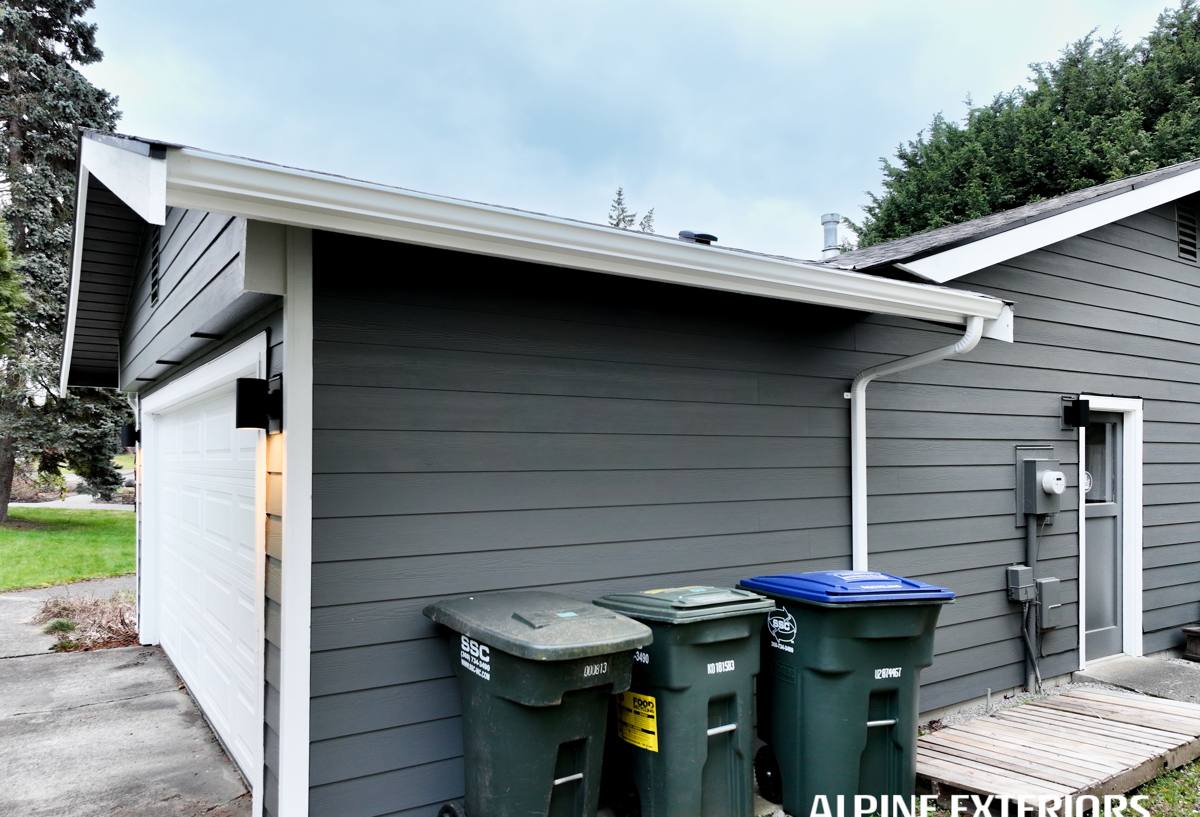
What Custer's Climate Does to Siding
Three things define exterior conditions in the Custer/Ferndale corridor, and each one puts a different kind of stress on siding.
Salt Air
Proximity to the Strait of Georgia and Birch Bay means airborne salt is a constant, low-level presence, especially on west- and northwest-facing walls. Salt air accelerates corrosion of exposed metal fasteners and trim, and it degrades weaker paint films faster than inland exposure does. Siding with a factory-applied finish engineered to resist this kind of exposure holds its color and integrity far longer than field-painted alternatives.
Driving Rain
Whatcom County gets wind-driven rain off the Strait, and Custer's open, less-sheltered terrain means that rain often hits walls at an angle rather than falling straight down. That matters enormously for siding performance — water forced sideways into laps, seams, and butt joints is what causes rot and hidden moisture damage, not rain falling straight onto a roof. A siding system's water-shedding detailing (not just the panel material itself) is what determines whether a home stays dry.
Moss and Prolonged Dampness
Northwest Washington's long wet season, low winter sun angle, and tree cover common on rural Custer lots create ideal conditions for moss and algae growth on north-facing and shaded walls. Materials that absorb moisture stay damp longer and give moss more to grow on. Siding that resists moisture absorption at the core, not just at the surface, is far less hospitable to that growth.
Why We Install Only James Hardie Fiber Cement
We don't install vinyl, LP SmartSide, primed wood, cedar, or off-brand fiber cement products like Cemplank or Allura. That's not a marketing position — it's a standard we hold because of what we've seen these materials do (and not do) in exactly this kind of climate.
- Vinyl can warp and become brittle with repeated wet-dry and freeze-thaw cycling, and its seams give wind-driven rain more opportunities to work behind the panel.
- Engineered wood products like LP SmartSide use a wood-strand substrate that is vulnerable at cut edges and fastener penetrations if the field coating isn't maintained exactly to spec — a real risk in a climate where those edges stay damp for long stretches.
- Primed wood and cedar require an ongoing paint and caulk maintenance cycle that most homeowners underestimate, and any lapse shows up fast in this rain.
- Other fiber cement brands are a legitimate category, but we've standardized on Hardie's specific engineering, factory finish, and warranty structure rather than mixing brands across jobs.
James Hardie fiber cement is a non-combustible cement-and-cellulose composite that doesn't absorb moisture the way wood-based products do, doesn't corrode, and holds paint and factory finish far longer than field-applied coatings on other materials. Hardie also engineers regional HZ5 product formulations specifically for climates like ours, where sustained moisture exposure is the dominant stress rather than extreme heat or freeze depth.
ColorPlus Factory Finish
Most Custer installs we do use Hardie's ColorPlus finish — a factory-applied, baked-on finish that's more consistent and more weather-resistant than job-site painting, with touch-up product available for any nicks from installation or later work. In a salt-air, high-moisture environment, that factory finish is doing real work that a field-painted product simply can't match over time.
What a Correct Fiber Cement Installation Involves
Fiber cement siding is only as good as the installation behind it. The panel itself resists moisture well, but a home stays dry because of the water management system built underneath and around it — house wrap, flashing, fastening, and clearances all have to be right.
Weather Barrier and Flashing
Every installation starts with a continuous weather-resistive barrier, correctly lapped so water is directed outward and down, never trapped behind the siding. Flashing gets installed at every window, door, and horizontal trim transition — the spots where wind-driven rain most often finds a way in if flashing is skipped or done wrong.
Fastening to Spec
Hardie panels have specific nailing patterns and fastener requirements, and getting them wrong is one of the most common causes of siding failure we see on homes that had this work done by a crew unfamiliar with the product. Corrosion-resistant fasteners matter especially here given the salt air — the wrong fastener can start rusting and staining within a few seasons this close to the water.
Clearances and Ventilation
Hardie's installation instructions specify minimum clearances from grade, roofing, and other surfaces, plus proper gapping at butt joints for expansion. These clearances exist to keep the bottom edge of the siding from sitting in standing moisture — a real risk on Custer lots with less slope or drainage away from the foundation.
Caulking and Joint Treatment
Correct sealant at trim joints and penetrations, using products compatible with the ColorPlus finish, keeps water from tracking behind the panel at the seams — the most common entry point in wind-driven rain conditions.
| Install Element | Why It Matters in Custer's Climate |
|---|---|
| Weather-resistive barrier & flashing | Directs wind-driven rain out and down instead of behind the siding |
| Corrosion-resistant fasteners | Salt air accelerates rust on the wrong fastener type |
| Proper clearance from grade | Keeps siding edges out of standing moisture on flatter, less-drained lots |
| Correct nailing pattern | Prevents panel movement and cracking under wind loading |
| Joint caulking with compatible sealant | Seals seams against sideways-driven rain |
| Adequate ventilation gap | Reduces trapped moisture that feeds moss and rot |
Our Process for Custer Projects
1. On-Site Assessment
We walk the property, check the current siding and any moisture or rot damage already present, note the wall orientations most exposed to wind-driven rain and salt air, and look at drainage and grade around the foundation.
2. Product and Line Selection
We help you choose the right Hardie product line, panel style, and color for your home and exposure — a north-facing shaded wall and a west-facing wall taking direct weather off the Strait may call for different considerations even on the same house.
3. Tear-Off and Prep
Old siding comes off, the sheathing underneath gets inspected for hidden moisture damage (common on older homes in this area), and any repairs happen before new material goes up — covering a compromised wall with new siding just hides the problem.
4. Installation to Manufacturer Spec
Weather barrier, flashing, fastening, clearances, and joint treatment all follow Hardie's published installation requirements — not shortcuts, because shortcuts are what fail first in this climate.
5. Final Walkthrough
We go over the finished work with you, including basic care and what to watch for, before calling the job done.
Maintenance in a Salt Air, Moss-Prone Climate
Correctly installed Hardie siding is genuinely low-maintenance, but "low-maintenance" isn't "no-maintenance" anywhere in this climate. A simple annual routine goes a long way:
- Rinse off salt residue and grime once or twice a year, especially on walls facing open water or prevailing wind
- Check and clear any moss or algae starting on shaded, north-facing walls before it spreads
- Inspect caulking at trim and joints every year or two and re-caulk if it's cracking or pulling away
- Keep gutters clear so overflow isn't running down the siding face
- Trim back vegetation that keeps a wall shaded and damp longer than it needs to be
Why Hiring a Crew That Works Custer Already Matters
Siding installation guidance in a manufacturer's manual is written for a generic climate. Knowing which walls on a Custer property take the worst of the wind-driven rain, which lots have drainage issues that affect bottom-edge clearance, and how aggressively moss takes hold on a shaded north wall near tree cover — that comes from having done this work on homes in this exact area, not from reading a spec sheet. A crew that already understands Whatcom County's coastal exposure will flash a window differently than one used to a drier, more sheltered climate, and that difference shows up in how the siding performs ten and twenty years out, not on day one.
What to Expect Cost-Wise
Fiber cement siding costs more upfront than vinyl and is generally in a similar range to or somewhat above quality engineered wood siding, largely due to the material's weight, the labor involved in correct installation, and the factory finish. The tradeoff is a longer service life, a stronger warranty, and far less repainting and repair over time — which matters more in a climate that's actively working against lower-grade materials. Exact pricing depends on the size and complexity of the home, how much of the existing siding and sheathing needs replacement, and the product line and finish chosen. We give straightforward, itemized estimates rather than vague ranges once we've seen the property.
If you're weighing a siding replacement in Custer or anywhere around Ferndale, we're glad to take a look at your home, walk you through what Hardie fiber cement would involve for your specific walls and exposure, and put together a free, no-pressure estimate — no obligation, just straight information.