 Ferndale Siding
 Windows Built for the Cordata Climate
Cordata sits close enough to Bellingham Bay and the Salish Sea that salt-laden air is a real factor in how exterior materials age here, and it combines with Whatcom County's long wet season to create conditions that are genuinely hard on windows. Homes in this part of Ferndale and north Bellingham deal with driving rain that comes in sideways during winter storms, months of damp shade that feeds moss and algae growth on north-facing walls, and enough salt content in the air to accelerate corrosion on unprotected metal components. A window that's a perfect fit for a drier inland climate can underperform here if it wasn't chosen and installed with these conditions in mind.
Window installation isn't just picking a product out of a catalog. It's matching frame material, glazing, and flashing detail to how water actually moves across your specific wall, then installing it so that water sheds instead of pooling. In Cordata, where many homes were built across a range of decades with different sheathing types and window rough openings, that fit-and-flash work is where most long-term water problems either get prevented or get built in.
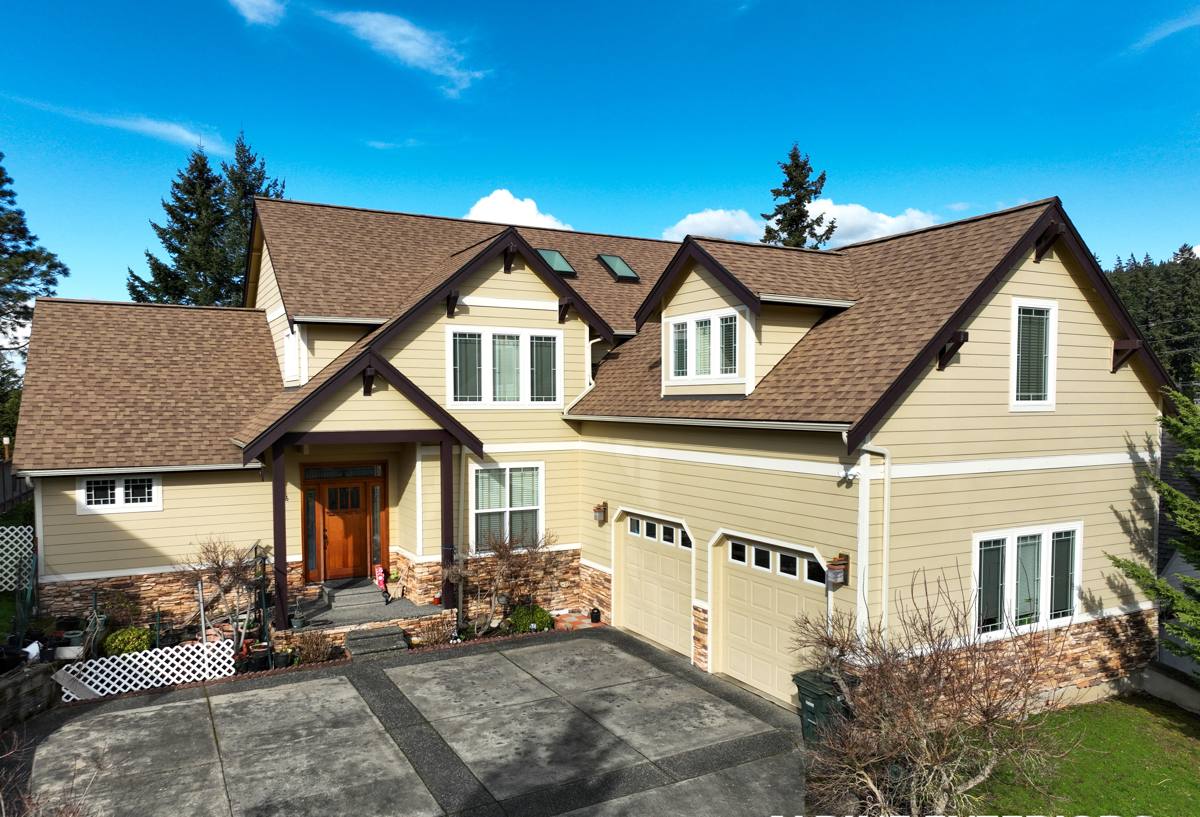
What Correct Window Installation Actually Involves
A window replacement is only as good as the parts nobody sees once the trim goes back on. The window itself matters, but the installation sequence is what determines whether that window keeps water out for the next twenty-plus years.
The Sequence We Follow
- Remove the old window and inspect the rough opening for rot, soft sheathing, or prior water damage before anything new goes in
- Repair or replace any compromised framing — installing a new window into a wet or rotten opening just hides the problem, it doesn't fix it
- Install a sloped sill pan so any water that does get past the window drains outward, not into the wall cavity
- Apply flashing tape and housewrap integration in the correct shingle-lap order so water always moves down and out, never behind the next layer
- Set the window plumb, level, and square, then fasten per manufacturer specification — not just "close enough"
- Insulate the gap around the frame properly, without overpacking it in a way that bows the frame
- Seal and trim the exterior with materials rated for our climate, and finish the interior to match
Skipping or rushing any one of those steps is how a brand-new window ends up with a rot problem behind the wall five years later, even though it still looks fine from the street.
Why Driving Rain Changes the Approach
Whatcom County storms don't just bring rain straight down — wind off the water pushes it sideways into west- and southwest-facing walls, which is exactly the kind of load that exposes a weak flashing job. Wind-driven rain finds any gap in the water-resistive barrier and pushes through it under pressure, rather than just sitting there and evaporating. That's why the sill pan and flashing tape integration matter more here than they would in a calmer climate. We treat every Cordata installation as if that wall will see driving rain at some point, because it will.
This also affects which window styles make the most sense on exposed elevations. Casement windows, which seal by compressing against the frame when cranked shut, generally resist wind-driven rain better than double-hung windows, which rely on two sliding sashes meeting at a horizontal rail. Double-hungs still have their place — they're often the right call for matching an existing home's look or for rooms where you want the classic operation — but on a wall that takes the brunt of winter storms, we'll talk through the trade-off with you rather than assume one style fits every elevation.
Moss, Shade, and Long-Term Trim Condition
Cordata's tree cover and the region's extended overcast season mean north- and east-facing walls stay damp longer after every rain. That's ideal moss and algae territory, and it's tough on wood trim and unprotected fasteners. Over time, moss holds moisture directly against caulk lines and trim boards, which shortens their service life and can mask early signs of a failing seal.
We factor this into trim material and fastener choice on shaded elevations — favoring materials and coatings that hold up under sustained damp conditions rather than ones that look good on day one and need attention again in a few years. It's a small decision at install time that saves a maintenance headache later.
Frame Material: What Actually Holds Up
| Frame Material | Salt Air / Moisture Behavior | Maintenance | Where It Fits Best |
|---|---|---|---|
| Vinyl | Good — won't rot or corrode; UV can affect color over many years | Low — occasional cleaning | Most residential replacements; strong value |
| Fiberglass | Excellent — very stable, resists moisture and temperature movement | Low | Exposed elevations, larger openings, long-term durability priority |
| Wood (clad exterior) | Interior wood needs protection from any moisture intrusion; exterior clad shell handles weather | Higher — interior finish upkeep | Homes prioritizing a wood-frame interior look |
| Aluminum | Prone to corrosion in salt air unless well-finished; conducts cold | Moderate | Limited residential use in this climate; we'll discuss trade-offs directly |
We don't push one material on every job. The right call depends on your home's exposure, budget, and how the existing trim and siding are detailed. What we won't do is install a frame material we know performs poorly against salt air and driving rain just because it's cheaper up front — that's a maintenance and warranty headache we'd rather you avoid.
Glazing and Energy Performance
Most homeowners in this area do fine with a standard dual-pane, low-E insulated glass unit — it's a solid balance of cost and performance for our winters. Triple-pane glass adds cost and weight, and it makes the most sense on north-facing rooms with heavy heat loss or where street noise is a real concern, not as a default upgrade for every opening. We'll walk you through what actually pays off for your specific rooms rather than upselling glass you don't need.
What to Check Before You Choose
- U-factor — lower is better for keeping heat in during our cool, wet winters
- Solar heat gain coefficient — matters more on south- and west-facing rooms that get direct sun
- Air leakage rating — affects draftiness and how hard your heating system has to work
- NFRC label on the actual window you're buying, not just a general product line rating
Our Process, Start to Finish
1. On-Site Assessment
We look at each window opening individually — sun exposure, wind exposure, current condition of trim and sheathing, and how water currently drains around that wall. Cordata homes vary enough in age and construction that a walkthrough beats a phone estimate every time.
2. Straightforward Quote
You get a written scope covering frame material, glazing package, flashing approach, and any framing repairs we expect to need, so there are no surprises once the crew is on site.
3. Careful Removal and Opening Prep
Old windows come out carefully to protect interior finishes, and we inspect and repair the rough opening before installing anything new.
4. Installation to Manufacturer Spec
Sill pan, flashing, fastening schedule, and insulation all done in the correct order — not shortcuts to save an hour.
5. Final Walkthrough
We check operation, weatherstripping, and finish work with you before we consider the job done.
A Pre-Install Checklist Worth Reviewing
- Confirm whether your current window problems are the glass/frame or the surrounding wall — replacing glass alone won't fix a flashing failure
- Ask any contractor how they detail the sill pan and flashing lap order, not just what brand of window they sell
- Check for soft or discolored trim and siding near existing windows before work starts — it's cheaper to address now than after new windows go in
- Decide which rooms actually need upgraded glazing versus standard dual-pane
- Ask what warranty covers labor and installation, separate from the manufacturer's product warranty
Why a Crew That Knows Cordata Matters
General window installers who mostly work drier inland markets sometimes underbuild the water-management details because they've never had to answer for a wind-driven rain failure. A crew that regularly works Ferndale and the Whatcom County coastline treats sill pans, flashing sequence, and material choice as non-negotiable, because we've seen what happens when they're skipped — not hypothetically, but as a pattern in homes we get called to fix. That local pattern recognition is worth more than a lower bid from a crew unfamiliar with what this climate does to a wall over time.
If you're weighing a window replacement for a Cordata home, we're glad to walk the property, look at what's there now, and give you a straight assessment — no pressure, no upsell. Use the form below to request a free estimate and we'll get back to you to schedule a time that works.