 Ferndale Siding
 Building Decks for the Sumas Area, Not a Generic Deck
A deck built for the Sumas area of Whatcom County has to answer to a different set of conditions than a deck built somewhere dry. Long stretches of driving rain, humid air that carries salt from the coast, and a moss season that can run half the year all work on wood, fasteners, and finishes in ways a lot of national "deck building" advice never accounts for. We build decks for homeowners in and around Sumas the same way we build them everywhere in our Ferndale service area: with the local climate treated as a design input, not an afterthought.
This page is about deck building specifically for the Sumas area — what the climate demands, what a correctly built deck actually involves below the decking boards, and why it matters to hire a crew that already works this part of Whatcom County rather than one passing through.
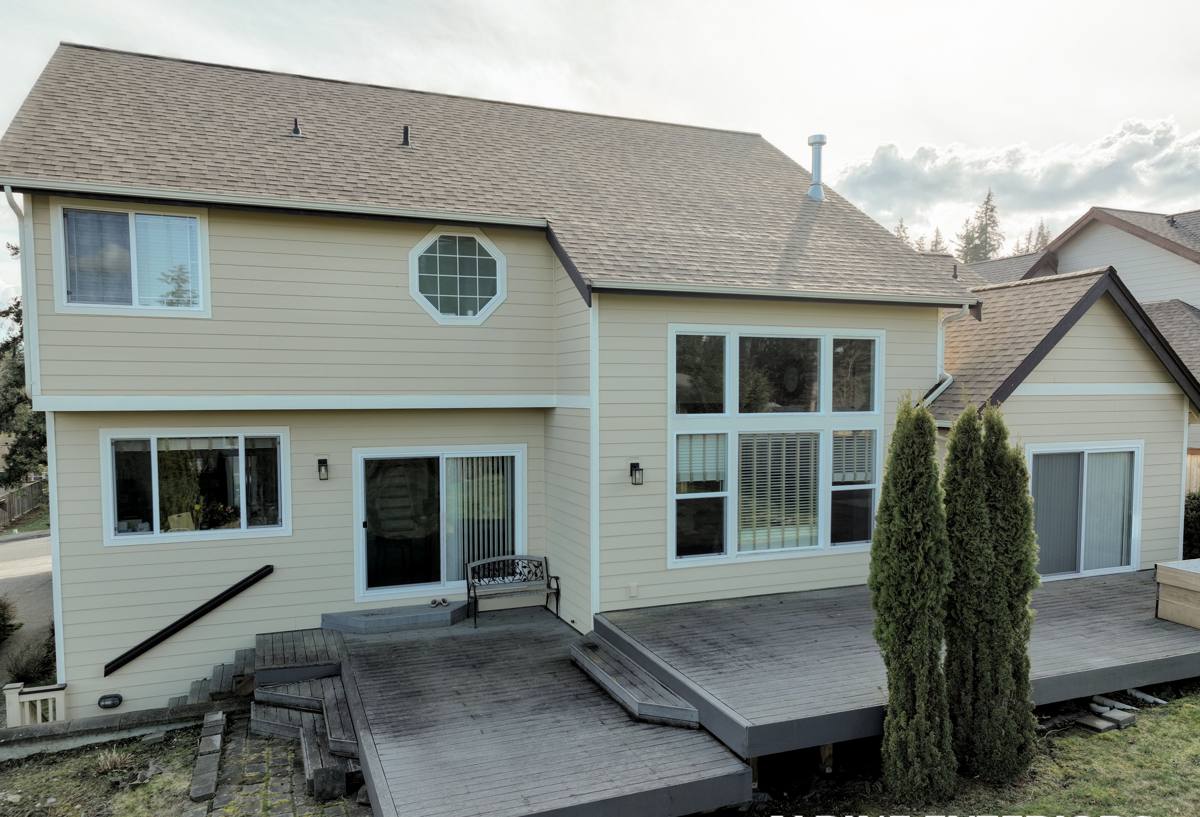
What the Sumas Climate Actually Does to a Deck
Three things drive most of the deck problems we get called out to fix in this region, and they all show up eventually in Sumas as well.
Sustained Rain, Not Just Occasional Storms
The issue isn't a single hard rain — it's weeks of steady, low-intensity moisture that never fully lets a deck dry out between events. Wood that stays damp for days at a time is wood that's set up for rot at every joint, fastener hole, and place where two pieces of material touch.
Salt-Bearing Air
Whatcom County sits close enough to the coast that salt-laden air reaches inland properties, including Sumas. Salt accelerates corrosion in fasteners, hardware, and any metal connector used in framing. A deck that looks fine on top can have compromised joist hangers or bolts underneath if the wrong hardware grade was used.
Moss and Organic Growth
Shade, moisture, and mild temperatures are exactly what moss and algae need. Left unchecked, moss holds water against decking boards and stair treads, turns them slick, and speeds up surface wear. A deck design that ignores drainage and airflow is inviting a moss problem from year one.
Framing and Fasteners: Where Deck Failures Actually Start
Most deck problems we're asked to repair in this climate didn't start on the surface — they started in the framing, where nobody looks until something gives.
- Hot-dip galvanized or stainless fasteners — standard electro-galvanized screws and nails corrode faster in humid, salt-influenced air and can fail years before the wood around them does.
- Joist hangers rated for the actual load and exposure — using an interior-grade connector outdoors, or undersizing it for the span, is a shortcut that shows up as sag or squeak within a few seasons.
- Proper flashing at every ledger and post connection — any place framing meets the house or meets grade is a place water wants to collect.
- Blocking and bracing sized for real wind and live loads, not just what "feels" solid during construction.
We build the frame first for the 15- and 20-year picture, since that's the part of the deck nobody re-does without tearing the whole thing apart.
Ledger Boards and Flashing: The Single Most Common Failure Point
If a deck attaches to the house — and most residential decks do — the ledger board connection is the highest-risk detail on the entire structure. Water that gets behind a poorly flashed ledger doesn't just damage the deck; it can travel into the house's rim joist and wall framing, which turns a deck repair into a structural repair.
A correct ledger installation includes flashing that directs water out and away from the house at every layer — behind the siding, over the ledger, and down past the deck framing — plus a small gap between the ledger and the wall to let air circulate and let any moisture that does get through actually dry out instead of sitting trapped. This is the detail we check first on any deck built by someone else that's showing soft spots, staining, or a spongy feel near the house.
Footings and Ground Conditions
Whatcom County ground conditions vary property to property — some lots drain well, others hold water longer than you'd expect, especially in low spots or areas with heavier clay content. Footings need to be sized and set to local frost depth and bear on soil that can actually support the load year-round, not just when it's dry.
We don't guess at footing depth or size based on what "usually works." Every deck gets footings appropriate to its span, height, and the ground it's actually sitting on, inspected before backfill.
Choosing Decking Material for a Wet, Shaded Climate
There's no single "best" decking material — there's a best material for a given budget, sun exposure, and maintenance appetite. Here's how the common options actually compare in this climate:
| Material | How It Handles Rain & Moss Season | Maintenance | Typical Lifespan |
|---|---|---|---|
| Pressure-treated wood | Good if gapped and finished correctly; prone to moss and graying without upkeep | Annual cleaning, periodic re-stain/seal | 15–20 years with upkeep |
| Cedar | Naturally rot-resistant, but still needs sealing to resist moisture and moss in constant shade | Regular sealing, moss treatment | 15–25 years with upkeep |
| Composite decking | Handles moisture well; can still get slick with moss if never cleaned | Periodic washing, minimal sealing | 25–30+ years |
| PVC decking | Best moisture resistance of the group; sheds water and resists moss growth best | Occasional washing | 30+ years |
We won't push a homeowner toward composite or PVC across the board — a well-built and well-maintained cedar or treated-wood deck is a perfectly sound, honest choice, and it's often the right one on a tighter budget. What matters more than the brand name is whether the material is installed with the gapping, fastening, and ventilation this climate requires.
Our Process for a Sumas-Area Deck Project
- On-site assessment. We look at drainage, sun/shade exposure, existing structure if it's a rebuild, and how the deck ties into the house.
- Design and material selection. We walk through material trade-offs honestly, based on your budget and how much upkeep you want to take on.
- Permitting. Deck projects in Whatcom County and the City of Ferndale generally require a permit once they exceed certain size or height thresholds — we handle that process rather than leaving it to you to sort out.
- Footings and framing. Built to the ground conditions and loads on your specific property, inspected before decking goes down.
- Ledger flashing and waterproofing details. Done before any decking board is installed, since this is the part that can't be fixed later without tearing into the deck.
- Decking, railing, and finish work. Installed with the gapping and fastening appropriate to the chosen material.
- Final walkthrough. We go over maintenance expectations specific to your material and site conditions before we consider the job done.
Permits and Code Considerations Around Ferndale and Whatcom County
Deck permitting requirements depend on size, height above grade, and attachment to the structure, and requirements can differ slightly between unincorporated Whatcom County and inside Ferndale city limits. Rather than assume, we confirm the applicable requirements for your specific property before work starts. Skipping this step is one of the more common ways homeowners end up with a deck that causes problems at resale or insurance time.
Maintaining a Deck Through a Whatcom County Moss Season
No deck in this climate is maintenance-free, regardless of material. A short annual routine keeps a well-built deck performing for decades instead of just a handful of years.
- Sweep debris and standing leaves off the deck surface regularly, especially in fall
- Clean moss and algae off boards and stairs before they build up a slick layer
- Check that gaps between boards haven't closed up with debris, which traps moisture
- Inspect fasteners and hardware for rust staining or looseness once a year
- Re-seal or re-stain wood decking on the schedule appropriate to the product used
- Confirm gutters or downspouts near the deck aren't dumping extra water onto it
Why Hiring a Crew That Already Works the Sumas Area Matters
A deck builder who works this part of Whatcom County regularly has already seen what fails here and why — which ledger connections rot first, which fastener grades hold up, where moss takes over fastest, and which footing approaches actually hold on local ground. That's knowledge that comes from doing the work here repeatedly, not from a general deck-building checklist written for a different climate. It shows up in the small decisions made during construction that a homeowner would never think to ask about but that determine whether the deck is still solid in fifteen years.
If you're planning a new deck or replacing one that's showing its age in the Sumas area, we're happy to take a look and talk through what your property actually needs. Reach out for a free, no-pressure estimate using the form below.