 Ferndale Siding
 Roof Repair Built for Kendall's Weather, Not a Generic Climate
Kendall sits inland from Ferndale in the foothills of Whatcom County, and that location comes with its own mix of weather stress on a roof. Homes here deal with the same marine-influenced rainfall pattern that soaks the rest of northwest Washington, plus the elevation and tree cover that push moss and needle debris onto roofs faster than in more open, lower areas. A roof repair approach that works fine on a stripped-down suburban lot doesn't always hold up the same way under a stand of conifers a quarter mile from a creek bed. We treat Kendall roof repairs as a distinct job, not a copy-paste of what we'd do closer to the water.
The short version of what local roofs are up against: long stretches of steady, low-intensity rain that finds every gap over time; wind-driven rain during winter storms that pushes water sideways under flashing and shingle laps that would stay dry in a straight-down rain; and a moss and algae season that runs longer here than in drier parts of the state because shaded, damp roof sections rarely get a full dry-out between storms. None of these are dramatic, one-time events. They're slow, cumulative pressure, and that's exactly the kind of pressure that turns a $400 flashing fix into a $4,000 sheathing replacement if it sits unaddressed for a couple of seasons.
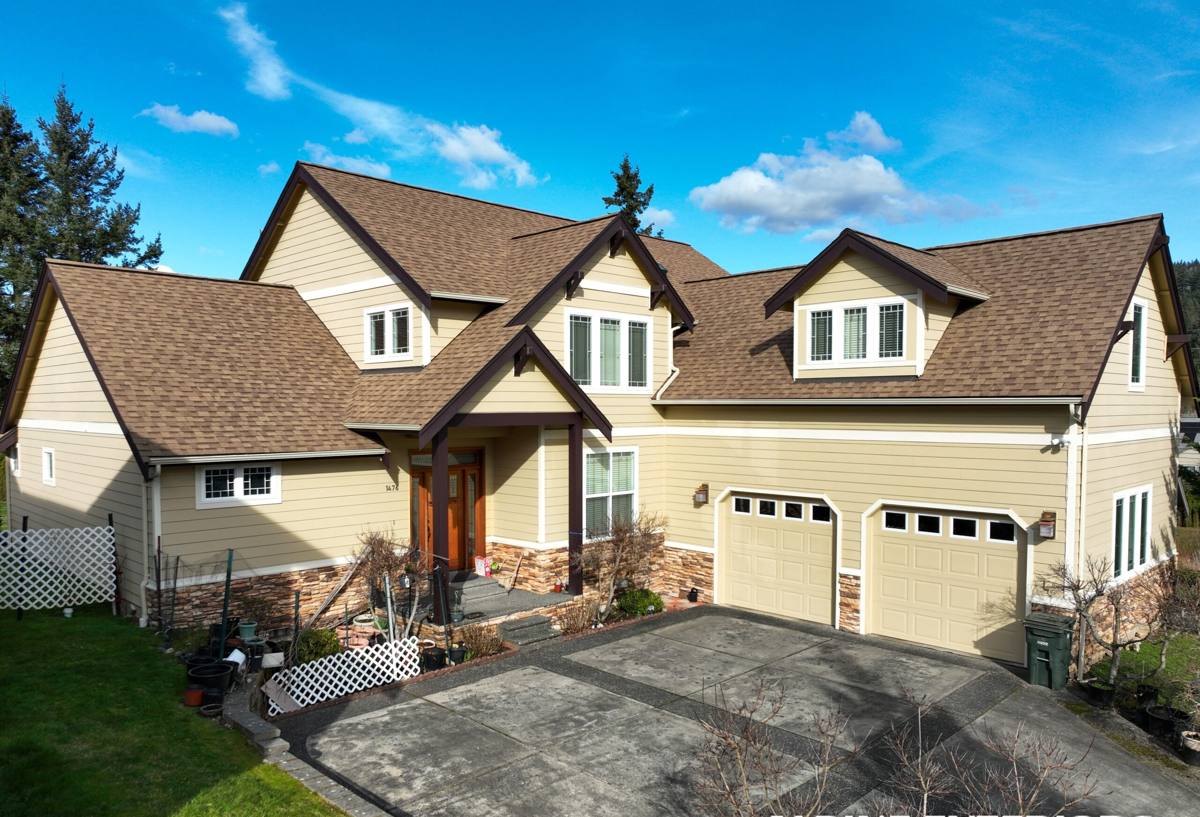
What "Correct" Roof Repair Actually Means Here
A lot of roof repair work in this region is really moisture management dressed up as shingle work. The shingles themselves are rarely the actual point of failure — they're usually just the visible symptom. The real work is in the details underneath and around them:
- Flashing first. Step flashing at wall intersections, valley flashing, and chimney or vent-pipe flashing fail long before field shingles do. Wind-driven rain finds these transitions before it finds a flat, open shingle field.
- Underlayment condition. If the underlayment beneath a damaged section is brittle, torn, or already water-stained, replacing shingles over it just delays the same leak by a season or two.
- Ventilation and moisture escape. A roof deck that can't breathe stays damp longer after every rain event, which accelerates rot and gives moss more time to establish itself.
- Moss and organic growth removal, not just shingle patching. Moss holds moisture against the roof surface and lifts shingle edges as it grows, so a repair that ignores moss on and around the damaged area is treating half the problem.
We diagnose before we patch. That means getting on the roof (or using a close visual and moisture check where access is limited) to trace a leak back to its actual entry point rather than assuming the stain on the ceiling is directly below the hole in the roof — water travels along rafters and sheathing before it drips, so the visible interior damage is often several feet from where the water is actually getting in.
Common Kendall-Area Repair Triggers We See
- Valley flashing corrosion or debris buildup, especially where roof valleys collect needles and moss under tree cover
- Wind-lifted or cracked shingles after winter storm systems, particularly on more exposed roof faces
- Moss-related shingle granule loss and lifted edges on shaded, north-facing roof sections
- Nail pops and sealant failure around vent boots and pipe penetrations as materials age and flex with temperature swings
- Gutter and edge flashing issues that back rainwater up under the first course of shingles
Our Roof Repair Process, Step by Step
Homeowners generally want to know two things before they commit to a repair: is this actually fixed, and what did I pay for. Here's how we structure the work so both answers are clear.
1. Inspection and Diagnosis
We start by identifying the actual source of the leak or damage, not just the symptom. This includes checking flashing, underlayment condition, ventilation, and the general age and wear of the roofing system around the problem area — because a repair on a roof with 3-4 remaining years of life gets scoped differently than one on a roof with a decade or more left.
2. Honest Scope and Estimate
We tell you plainly whether this is a contained repair or whether it's a symptom of broader wear that's going to need attention soon. We'd rather lose a small job today than have you pay for a patch that fails again next winter.
3. The Repair Itself
Damaged materials come out — shingles, underlayment, flashing, and any compromised decking — and get replaced with materials matched as closely as possible to your existing roof. Flashing gets properly integrated with surrounding courses, not just caulked over, since sealant is a backup, not a primary water barrier.
4. Cleanup and Final Check
Debris, old materials, and stray fasteners get cleared from the roof and gutters before we consider the job done. We also do a basic check of adjacent roof areas so we're not missing a second problem while we're already up there.
Repair vs. Replacement: How We Help You Decide
Not every roof issue in Kendall needs a full replacement, and not every leak is a quick patch. The honest answer usually comes down to age, extent of damage, and how many separate problem areas exist.
| Situation | Repair Usually Makes Sense | Replacement Worth Discussing |
|---|---|---|
| Roof age | Under 15-18 years, otherwise sound | Approaching or past typical material lifespan |
| Damage extent | Localized — one valley, one flashing point, a small wind-damaged section | Multiple areas failing independently, widespread granule loss |
| Moss/algae condition | Present but hasn't compromised the deck | Long-term moss growth with soft or spongy deck areas underneath |
| Underlayment condition | Intact outside the repair zone | Brittle or failing broadly, not just at the damaged spot |
| Recent repair history | First or second repair on this roof | Repeated repairs to the same or nearby areas over a few years |
If a roof is genuinely a repair candidate, we'll say so and won't push a full replacement just to increase the job size. If a roof has reached the point where repair is just deferring the inevitable, we'll explain why in plain terms — deck condition, remaining material life, and how the numbers actually compare over a 3-5 year horizon.
Why a Local Crew Matters More Than It Sounds Like It Should
Roof repair is one of those services where local knowledge genuinely changes the outcome, not just the marketing pitch. A crew that regularly works in and around Ferndale and Whatcom County knows which manufacturers' shingles and flashing systems hold up to this specific combination of moisture and moss, understands typical roof pitches and framing approaches used in homes built during the area's different growth periods, and isn't guessing at what "normal wear" looks like on a roof that's been through 20 winters of Pacific Northwest weather. That matters when the difference between a correct repair and a recurring leak often comes down to details most homeowners never see once the shingles are back down.
There's also a practical side: a crew already working in the area can typically get to a Kendall roof repair faster than one dispatching a truck from well outside the county, which matters when a leak is active and every rain event adds more water damage. And because we're not a one-time drive-through operation, we have a reason to make sure the repair actually holds — a callback on a leak we supposedly fixed costs us more than doing it right the first time.
Moss and Algae: Prevention Alongside Repair
Because moss season runs long in this part of Whatcom County, especially on shaded and tree-covered lots common around Kendall, a repair visit is a good opportunity to address moss proactively rather than waiting for it to cause the next leak. This isn't a separate sales pitch — it's part of doing the repair right, since moss growing right next to a freshly repaired section will undermine that work within a season or two if left alone.
What we typically recommend, based on roof condition and your preference:
- Manual removal of established moss growth rather than aggressive pressure washing, which can strip granules and shorten shingle life
- Treatment appropriate to the roofing material to slow regrowth, applied without damaging surrounding plants or gutters
- Clearing debris from valleys and gutters where moss tends to establish first, since these areas hold moisture longest
- A general conversation about tree trimming or roof airflow if shading is a major contributing factor — we won't tell you to cut down trees you like, but we'll tell you honestly if shade is driving repeat moss problems
What to Check Before You Call Anyone About a Roof Leak
A little homeowner-level information before we arrive helps us diagnose faster and gives you a better sense of urgency. Here's a practical pre-call checklist:
- Note where the interior stain or drip is located, but don't assume the roof damage is directly above it
- Check the attic (if accessible) for daylight, dampness, or dark staining on the underside of the decking
- Look at recent weather — did the leak start or worsen after a specific windstorm or heavy rain event
- Check gutters and downspouts for visible clogging or overflow near the affected area
- Avoid climbing on the roof yourself to inspect — wet, moss-covered roofing is genuinely dangerous footing, and it's not worth the risk
- If the leak is active and significant, place a container to catch water and avoid using electrical fixtures nearby until it's addressed
Materials and Workmanship Standards We Hold To
We match repair materials to your existing roof system where possible rather than mixing incompatible products, since inconsistent materials can create their own moisture and expansion problems at the seams. On flashing specifically, we prioritize proper mechanical integration — flashing tucked and layered correctly with the surrounding roofing — over relying heavily on sealant, because sealant degrades with UV exposure and temperature cycling well before quality flashing does. Where a repair involves matching shingle color or style to an older roof, we'll be upfront if an exact match isn't available anymore; that's a real trade-off of aging materials, not something we can always solve.
Get a Straight Answer on Your Roof
If you're dealing with a leak, storm damage, or moss buildup on a Kendall-area roof, we'll take a look, explain what we find in plain language, and give you a free, no-pressure estimate on what it actually takes to fix it right. There's no obligation, and if it turns out to be a smaller job than you expected, we'll tell you that too. Fill out the form below to get started.