 Ferndale Siding
 Bellingham Sits in a Tough Microclimate for Siding
Bellingham and the surrounding Whatcom County communities get hit with a combination that most siding products were never really built for: salt-laden air off Bellingham Bay and the Salish Sea, long stretches of driving rain pushed in off the water, and a moss and algae season that can run most of the year on shaded north- and west-facing walls. Any one of those factors will shorten the life of the wrong exterior product. Together, they're exactly why we standardized on James Hardie fiber cement and don't install anything else.
This page is about one job specifically: James Hardie siding installed correctly on Bellingham-area homes, by a crew that already works this part of Whatcom County and understands what the local weather actually does to a wall system over time.
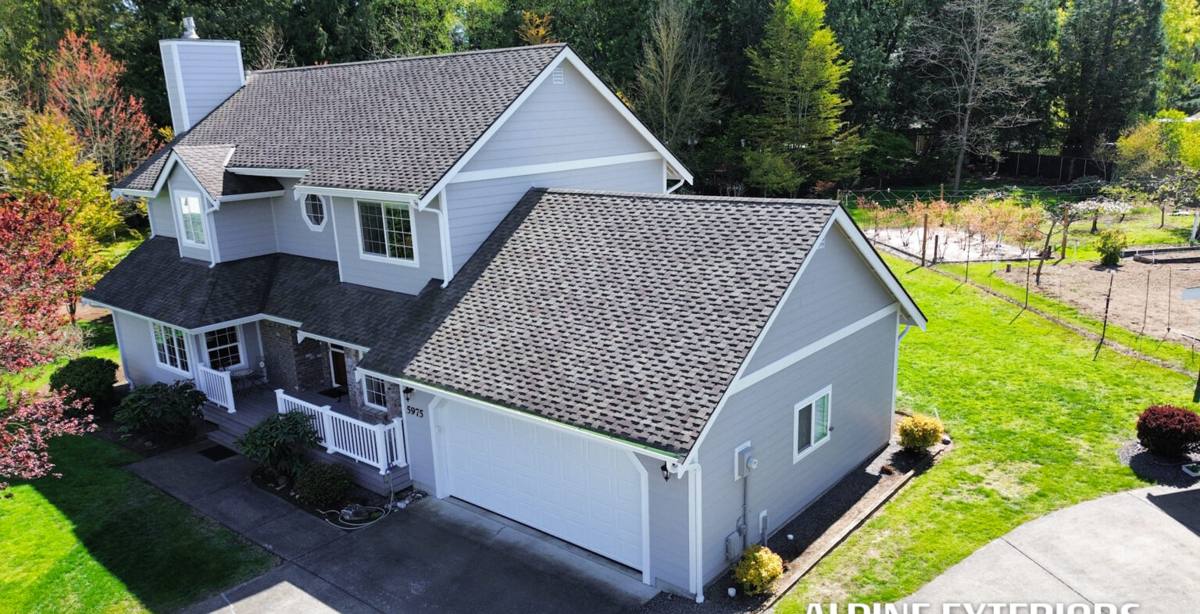
What Salt Air, Rain, and Moss Actually Do to Siding
Salt Air
Homes closer to the water deal with airborne salt that settles on exterior surfaces and accelerates corrosion on fasteners, flashing, and any exposed metal trim. It also breaks down cheap paint films faster than inland areas, which is why a lot of siding painted for "20 years" starts chalking and fading well ahead of schedule near Bellingham Bay.
Driving Rain
Wind-driven rain off the water doesn't just fall on a wall — it gets pushed sideways into laps, seams, and butt joints. Any siding product with a weak water-shedding detail, or that relies on face-sealed caulk joints instead of proper flashing and drainage, eventually lets moisture behind the cladding. Once water gets behind siding in a wet climate like this, it rarely gets a chance to fully dry out between storms.
Moss and Algae
Shaded, north-facing, and tree-lined walls around Bellingham stay damp for extended periods, especially through fall and winter. That constant moisture feeds moss, algae, and mildew growth on any porous or organic siding surface. It's a cosmetic problem at first, but sustained moisture at the surface is also a long-term durability problem for the material underneath.
Why James Hardie Is the Product We Put on These Walls
James Hardie fiber cement is engineered specifically to resist the three problems above better than wood, vinyl, or wood-composite alternatives:
- Non-combustible and dimensionally stable — it doesn't expand, contract, warp, or rot the way wood-based products can when they take on repeated moisture cycles.
- ColorPlus factory finish — a baked-on finish applied under controlled conditions, which holds up to UV and salt exposure far better than field-applied paint that has to cure in Whatcom County's damp weather.
- HZ5 product engineering — Hardie's HZ5 line is formulated for climates with more moisture exposure and freeze-thaw cycling, which fits the Pacific Northwest better than Hardie's product designed for hot, dry regions.
- Rigid, non-organic surface — fiber cement doesn't feed moss and algae growth the way wood fibers or organic composite surfaces can, which matters a lot on shaded Bellingham lots.
We install only James Hardie. We don't offer LP SmartSide, vinyl, Cemplank, Allura, primed spruce, or cedar as alternatives, because every one of those products asks a homeowner in this climate to accept a maintenance burden, a moisture risk, or a shorter realistic lifespan that we don't think is a fair trade for what they cost.
What a Correct Bellingham-Area Hardie Job Actually Involves
The siding board itself is only part of the system. In a high-moisture, salt-air, wind-driven-rain climate, the installation details are what actually determine whether the wall stays dry for the next 30-plus years. A correct job includes:
Water Management Behind the Siding
Proper house wrap or weather-resistive barrier, correctly lapped and taped at seams, with a rainscreen or drainage gap where conditions call for it. This gives any moisture that does get past the siding face a way to drain and dry instead of sitting against the sheathing.
Flashing at Every Penetration
Windows, doors, hose bibs, light fixtures, vents, and deck ledgers all need proper flashing details, not just caulk. Caulk is a maintenance item that fails over time; flashing is a permanent water-shedding detail. In a climate with this much driving rain, skipping flashing in favor of sealant is one of the most common causes of hidden rot we see on older homes.
Manufacturer-Spec Fastening and Clearances
James Hardie publishes specific requirements for fastener type, spacing, and minimum clearance from grade, decks, roof lines, and other siding. Getting these wrong doesn't just risk cosmetic problems — it can void the product warranty, which defeats the point of choosing Hardie in the first place.
Factory-Finished Cut Edges Sealed
Every field cut exposes raw fiber cement that needs to be sealed with Hardie's touch-up product before installation. Skipped or rushed edge-sealing is a common shortcut that shows up years later as moisture staining at butt joints.
Cost Factors for a Bellingham-Area Hardie Project
| Factor | Why It Matters Locally |
|---|---|
| Wall exposure (waterfront vs. inland) | Homes closer to the bay may need more attention to fastener corrosion resistance and flashing at exposed elevations |
| Existing wall condition | Hidden rot from prior moisture intrusion, common on older siding near the water, adds sheathing repair before new siding goes on |
| Siding profile chosen | Lap siding, shingle-style panels, and board-and-batten all have different install labor and trim requirements |
| Trim and accessory package | Corner boards, frieze boards, and window trim in matching ColorPlus finish add cost but keep the color-matched system intact |
| Access and site conditions | Tree cover, tight lot lines, and multi-story walls common in Bellingham neighborhoods affect staging and labor time |
We give real, project-specific numbers after a walkthrough — not a phone estimate — because wall condition and access vary a lot from one Bellingham property to the next.
Our Process, Start to Finish
- Walkthrough and assessment — we look at existing siding condition, check for hidden moisture damage, and measure the actual wall areas and elevations.
- Written estimate — a clear scope covering tear-off, sheathing repair if needed, water-resistive barrier, flashing details, Hardie product line and profile, and trim package.
- Tear-off and inspection — old siding comes off and sheathing gets inspected before anything new goes up. Any rot or damage gets addressed before we move forward, not covered over.
- Water management install — house wrap, flashing, and drainage details go in first, to manufacturer and code specifications.
- Hardie installation — siding installed to James Hardie's fastening and clearance specs, with cut edges sealed as we go.
- Trim, caulking, and final detail — color-matched trim, touch-up on any exposed fasteners, and a final walkthrough with the homeowner.
Why Hiring a Crew That Already Works Bellingham Matters
A crew that only occasionally works this far north in Whatcom County may not have a feel for how much this specific stretch of coastline changes the job. A crew that regularly works Bellingham and Ferndale knows:
- Which wall orientations on local lots tend to hold moisture and need extra attention to drainage details
- How local moss and algae patterns show up seasonally, and how to detail siding to shed water instead of holding it against the surface
- What existing construction from different eras in this area typically has behind the old siding, so tear-off surprises are handled efficiently instead of derailing the schedule
- Which James Hardie profiles and colors read well against the region's typical home styles and lot conditions
That local familiarity translates into fewer surprises mid-project and a wall system that's actually built for the climate it's going on, not a generic installation applied the same way it would be in a dry inland region.
Maintenance After Installation
One of the practical advantages of James Hardie in this climate is how little upkeep it asks for compared to wood or wood-composite siding. A correctly installed Hardie exterior in the Bellingham area typically needs:
- Periodic rinsing to keep salt residue and surface grime from building up, especially on walls closer to the water
- An occasional gentle wash on shaded, moss-prone elevations to keep growth from taking hold on the surface
- Visual checks of caulking at trim joints and penetrations every year or two, since caulk is a maintenance item even on a well-flashed wall
- No repainting on the ColorPlus factory finish for many years — it's engineered to hold color and resist fading far longer than field-applied paint
That's a meaningfully lower maintenance load than wood siding needs in a climate this wet, and it's part of why we think the upfront investment in Hardie pays off over the life of the home.
Warranty Protection That Matters in This Climate
James Hardie backs its siding with a strong, transferable limited warranty, and ColorPlus finishes carry their own separate finish warranty. That matters more here than in a mild, dry climate, because the conditions that void a lot of warranties — improper fastening, missing clearances, unsealed cut edges — are exactly the shortcuts that are tempting to take on a rushed job. Installing to spec isn't just good practice; it's what keeps the manufacturer warranty intact if something ever does go wrong.
Ready to Talk About Your Bellingham Home?
If you're weighing a siding replacement on a Bellingham-area home and want an honest look at what your walls actually need in this climate, we're happy to come take a look. We'll walk the property, point out anything we find, and put together a straightforward written estimate — no pressure, no obligation. Use the form below to request a free estimate.