 Ferndale Siding
 Why Everson Homes Need Windows Built for This Climate
Everson sits inland from the coast but still lives under the same weather pattern that shapes the rest of Whatcom County: long stretches of low-pressure systems rolling in off the water, driving rain that comes in sideways more often than straight down, and a damp season that can stretch from October well into April. Salt-tinged marine air moves inland on the wind more than most homeowners realize, and combined with constant moisture, it's hard on anything with a seal, a sill, or exposed wood trim. Windows take the brunt of it because they're a hole in the building envelope by design — every seam, sealant joint, and flashing detail either sheds that water or lets it find a way in.
A long moss season doesn't just affect roofs. Moss and algae growth on north-facing walls and around window trim holds moisture against the building for weeks at a time, which accelerates wood rot, breaks down caulk faster than manufacturers rate it for, and hides early signs of water intrusion behind a green film that looks cosmetic but isn't. Windows installed without this climate in mind — using shortcuts that work fine in a drier region — tend to show problems in Everson within a handful of years instead of a couple decades.
What "Custom" Actually Means for an Everson Home
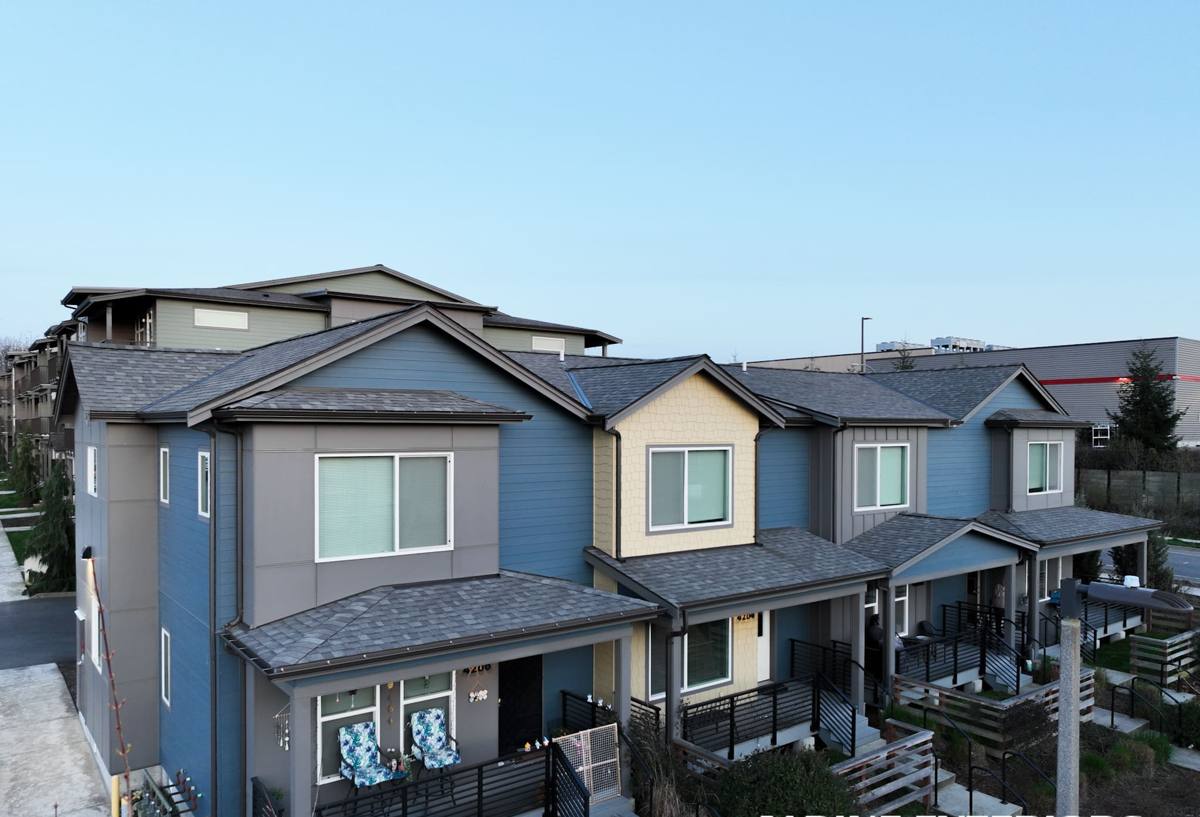
Custom windows aren't about unusual shapes or high-end trim packages, though we do those too. For most Everson homes, custom means the window is built and installed to match the actual rough opening, the actual wall assembly, and the actual exposure of that specific wall — not a generic size pulled off a shelf and shimmed to fit. Older Everson homes, especially anything built before the 1990s, often have openings that have shifted slightly over decades of settling, or trim details that don't match modern standard sizes. Forcing a stock window into an opening it wasn't measured for is one of the most common ways a "new" window ends up leaking within a year or two.
Custom also means matching the window to the wall's actual job. A window on a south or southwest wall that takes the brunt of storms coming off the water needs different flashing detail and sealant strategy than a sheltered window under a deep eave on the north side of the house. We size, spec, and flash each opening based on what that wall actually faces, not a one-size-fits-all install sheet.
What a Correct Installation Involves
- Removing the old window down to the rough framing and inspecting the sill and header for hidden rot before anything new goes in
- Correcting any water damage found in the opening — never installing a new window over a compromised sill
- Installing sill pan flashing so any water that does get past the window sheds outward, not into the wall cavity
- Layering flashing tape and house wrap in the correct shingle-lap order (top piece always overlapping the one below it)
- Setting the window level, plumb, and square, then insulating the gap around the frame without over-packing it
- Sealing the exterior with a compatible sealant rated for the siding material, not just whatever's on the truck
- Verifying interior and exterior trim is sealed and won't trap moisture against the frame
Signs Your Everson Home's Windows Are Overdue
Most window failures don't announce themselves with a flood. They show up as small, easy-to-dismiss signs first:
- Condensation building up between the panes of a double-pane window — a sign the seal has failed and the insulating gas is gone
- Soft or discolored wood on the interior or exterior sill
- Windows that are noticeably harder to open, close, or lock than they used to be
- Visible daylight or a draft you can feel around the frame on a windy day
- Paint or caulk that's cracking and peeling faster than it should, especially on south- and west-facing walls
- A musty smell near a window that doesn't go away with cleaning
- Moss or dark staining creeping onto the trim around the window itself, not just the siding nearby
Any one of these on its own isn't an emergency. Several of them together, especially on a wall that takes direct weather, usually means the window's seals and flashing are past their working life and moisture is getting into places it shouldn't.
Material and Glass Options
There's no single "best" window material — the right choice depends on the wall's exposure, the home's age and style, and how much upkeep you want to take on. Here's how the common options actually compare for a wet, moss-prone climate like this one.
| Frame Material | Moisture Performance | Maintenance | Typical Fit |
|---|---|---|---|
| Vinyl | Good — won't rot, minimal expansion/contraction issues | Low — occasional cleaning | Most standard replacements, budget-conscious projects |
| Fiberglass | Excellent — very stable in wet/temperature swings | Low | Homes wanting a stiffer frame or paintable finish, longer-term ownership |
| Wood (clad exterior) | Good on the exterior face, but interior wood is vulnerable if seals fail | Higher — exterior clad is low-upkeep, but any wood exposure needs monitoring | Older or historic-style homes where the look matters |
| Aluminum | Poor in this climate — conducts cold, prone to condensation | Moderate | Generally not recommended for Whatcom County exteriors |
For glass, a dual-pane, low-E coated unit with argon gas fill is the practical standard for this area — it cuts heat loss and condensation risk without the added cost of triple-pane, which rarely pays for itself in a marine climate this mild in temperature (even if it's hard on moisture). We'll walk through the actual trade-offs for your specific walls rather than push one package for the whole house.
Our Window Replacement Process
- On-site assessment — we look at each window individually, not just the house as a whole. Exposure, framing condition, and existing damage all factor into the plan.
- Honest scope and quote — you'll know before we start whether any openings need repair work beyond a straight swap, and what that adds to cost and timeline.
- Ordering to the actual opening — we measure and order custom to fit, not the other way around.
- Removal and inspection — every old window comes out down to the framing so we can see and fix what's underneath before it's covered back up.
- Correct flashing and sealing — the part that determines whether the window performs for two decades or fails in two years.
- Final check and walkthrough — operation, seals, and trim are checked with you before we call it done.
Common Mistakes That Cause Problems Later
Most window failures we get called out to inspect trace back to a handful of shortcuts, not a bad product. Skipping sill pan flashing is one of the most common — without it, any water that gets behind the window has nowhere to go but into the wall. Caulking over a gap instead of properly flashing and insulating it is another; caulk is a first line of defense, not a substitute for correct water management, and it's the first thing to fail in a climate with this much sustained moisture. Reusing old trim or siding that's already water-damaged around a new window is a third — it looks fine on install day and causes problems within a season or two once moisture already trapped in that material starts moving again.
We won't install a window into an opening with unresolved rot or skip flashing steps to save time, even if it means the job takes longer. It's a standard we hold regardless of the product going in.
Cost Factors to Understand
Every quote depends on the specifics of the home, but the main variables that move the number are consistent across most Everson projects:
| Factor | Why It Matters |
|---|---|
| Window size and count | Larger openings and whole-house projects have different labor and material scaling than a single replacement |
| Frame material chosen | Vinyl, fiberglass, and clad-wood carry different material costs |
| Hidden framing repair | Rot found once the old window is out adds labor that can't always be predicted beforehand |
| Access and wall height | Second-story or hard-to-reach openings take more time and equipment |
| Trim and finish work | Matching existing interior/exterior trim vs. a simpler finish changes the scope |
Broadly, single-window replacements tend to run a few thousand dollars depending on size and material, while whole-house projects scale from there. We'll give you a real number after seeing the actual openings — not a phone estimate.
Maintenance Through a Long Moss Season
Even a correctly installed window benefits from a little seasonal attention in this climate. Keeping gutters and downspouts clear prevents overflow from running down onto window heads. Brushing moss or algae off trim and sills before it builds up keeps moisture from sitting against the frame for weeks at a stretch. A quick visual check each fall — looking for cracked caulk lines, soft spots in exterior trim, or condensation between panes — catches small issues while they're still small. None of this takes long, but skipping it is how a well-installed window still ends up with an avoidable repair a few years down the road.
Why a Crew That Already Works Everson Matters
A contractor who works this specific area regularly has already seen how the local weather pattern plays out on real homes over real years — which walls take the worst of it, which older construction details need extra attention, and which shortcuts show up as callbacks two winters later. That's different from general familiarity with "Pacific Northwest weather." It's knowing what a particular exposure in Whatcom County does to a particular assembly over time, and building the install around that instead of a generic checklist.
If your Everson home's windows are showing their age, or you're planning a renovation that includes new openings, we're happy to take a look and give you a straight assessment — no pressure, no upsell, just what we'd actually recommend for your home. Reach out for a free estimate using the form below.