 Ferndale Siding
 Window Installation for Sudden Valley Homes
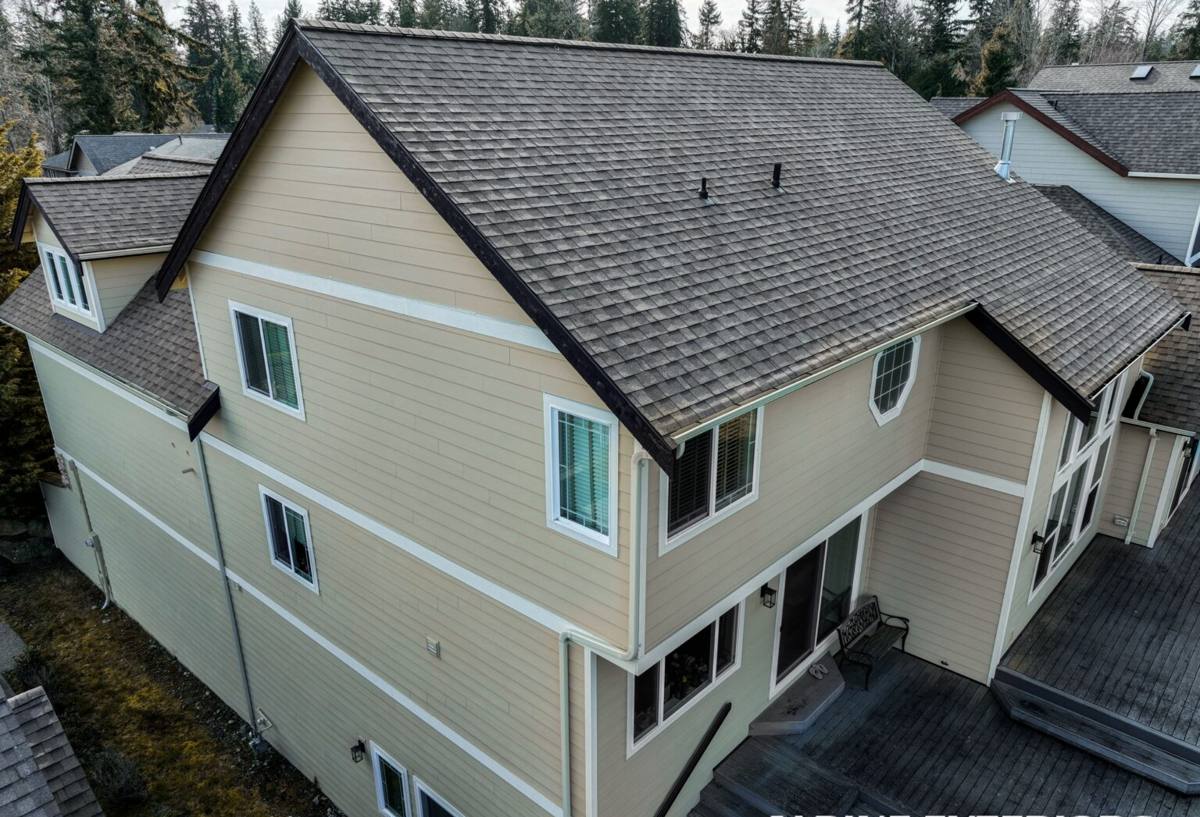
Sudden Valley sits on the south shore of Lake Whatcom, a heavily wooded residential community with its own private road network and homeowners association, roughly a half-hour's drive from our Ferndale base. It's a different kind of exterior environment than the open, flatter lots closer to Ferndale itself — dense second-growth forest, homes tucked at a range of elevations along hillsides above the lake, and a lot of wall surface that gets very little direct sun for most of the year. Windows are the part of a house that takes the brunt of that environment first, because every window is a seam in the building envelope, with moving parts and joints that a solid wall doesn't have. Get the installation wrong and Sudden Valley's shade and moisture will find the gap; get it right and a window can perform for decades without a callback.
We're a Ferndale-based crew that works siding, roofing, windows, and decks across Whatcom County, and Sudden Valley is one of the areas we return to regularly. That matters more than it might sound — a window installer who only sees a property once doesn't build the pattern recognition that comes from watching how a specific neighborhood's homes actually age.
What Sudden Valley's Climate Does to Windows
Persistent Shade From Tree Cover
Most Sudden Valley lots sit under significant canopy, and it's common for at least one elevation of a house to stay damp for days after a storm because it never gets a real stretch of direct sun to dry it out. Windows on those shaded walls hold moisture around the frame and sill longer than windows on an open, sun-exposed lot would, which is exactly the condition that turns a minor flashing gap into a slow, ongoing leak instead of a one-time nuisance.
Driving Rain Off the Lake and Hillside Terrain
Lake Whatcom adds humidity on top of Whatcom County's normal rainfall, and Sudden Valley's hilly terrain means wind can drive rain into one wall of a house far harder than another, depending on orientation and elevation relative to the lake and surrounding ridgelines. A flashing detail that would be adequate on a sheltered wall can be exactly the spot that fails on an exposed one, which is why we look at each elevation of a house separately rather than assuming uniform exposure around the whole building.
A Long Moss and Mildew Season
Shade, humidity, and mild temperatures are the recipe for moss and mildew, and that recipe stays active most of the year under Sudden Valley's tree cover. Window sills, trim, and the framing around older units are common places it takes hold, especially where debris collects or water sits instead of draining. It's rarely the glass that goes first — it's the wood trim and framing around it, quietly holding moisture longer than it should.
Condensation and Older Glazing
Homes with original or early-generation replacement windows commonly show fogging between panes, water pooling on interior sills, or persistent condensation during cold snaps. That's a sign of a failed seal or an aging glazing package, not just a cosmetic issue, and it tends to show up earlier on homes carrying more sustained moisture exposure than average — which describes a lot of Sudden Valley.
Signs a Sudden Valley Window Needs Attention
- Fogging or visible moisture trapped between panes on a double-pane window
- Drafts or cold spots near the frame even when the window is fully closed and locked
- Sills or trim that feel soft, look discolored, or show visible rot
- Windows that stick, won't stay open, or are hard to latch the way they used to
- Visible gaps or daylight where the frame meets the surrounding siding or trim
- Moss or dark staining building up on trim faster than on the rest of the exterior
- Paint or finish peeling or bubbling around the window before it does elsewhere on the house
Flashing: What Actually Determines a Window's Lifespan Here
We spend more time on flashing detail than on window brand, because in Sudden Valley's shaded, moisture-heavy setting, flashing is the difference between a window that stays dry for decades and one that starts leaking within a few wet seasons. Done correctly, flashing laps over the weather-resistive barrier in the right sequence, directs water out and away from the rough opening instead of trapping it behind the trim, and every seam gets sealed with materials rated for sustained damp exposure — not just caulked over as an afterthought.
The Mistake We Find Most Often on Older Homes
On repair calls in and around Sudden Valley, the water damage we find rarely traces back to the window unit itself. It traces back to flashing that was never lapped correctly the first time, or caulk that was used as a substitute for flashing instead of a supplement to it. Caulk alone cracks and shrinks over time — it was never designed to be the sole barrier against wind-driven rain, and on a shaded wall that stays damp longer, a cracked bead of caulk gets exploited faster than it would somewhere drier.
What a Correct Installation Involves
Assessing the Opening
Before anything comes out, we check the existing rough opening for square, level, and hidden rot in the surrounding framing — common on older Sudden Valley homes where a wall has stayed damp for years without anyone noticing. Skipping this step and installing a new window into a compromised opening just seals the problem inside the wall instead of fixing it.
Removal Without Collateral Damage
Old units come out carefully enough to avoid tearing up siding or trim that's staying, and we address anything we find in the opening — soft framing, failed old flashing, evidence of past leaks — before the new window goes in, not after.
Setting and Shimming
A window that's shimmed unevenly will bind, leak, or perform poorly regardless of how good the unit is. We set and shim to keep the frame square and true to the opening, which also matters for how well the sash operates for years afterward.
Flashing Sequence
This is the step that matters most given the local climate. Flashing goes in a specific order — sill pan first, then side flashing, then the weather-resistive barrier lapped over the top flashing — so that any water that does get past the window sheds outward instead of working its way into the wall. On a shaded, exposure-variable elevation like a lot of Sudden Valley's, we don't shortcut this regardless of how routine the window looks.
Trim and Finish Integration
The new window's trim needs to tie cleanly into the surrounding siding, both for water management and appearance. We plan that integration as part of the job rather than treating it as a separate afterthought once the window is already in.
Choosing Windows for This Environment
We install vinyl and fiberglass window systems suited to the Pacific Northwest's wet, mild conditions and walk homeowners through the honest trade-offs rather than defaulting to one brand for every job. What matters most for a Sudden Valley property is a tight, well-engineered frame, a glazing package that handles both energy performance and interior condensation, and hardware that holds up to sustained damp exposure — not a name printed on the frame.
- Frame material: Vinyl and fiberglass both resist rot in a way uncladded wood frames don't, which matters given how much sustained moisture a shaded Sudden Valley lot holds through the year.
- Glazing package: Double or triple-pane options with low-E coatings help with both energy performance and the condensation problems that show up on older single-pane and early double-pane units.
- Hardware grade: Corrosion-resistant hardware holds up longer against Whatcom County's damp, lake-influenced air than standard-grade hardware.
- Warranty structure: A manufacturer warranty only covers the unit itself — installation is a separate warranty, and we stand behind our labor independently of the product coverage.
Replacement vs. Repair: How We Make the Call
Not every window on a Sudden Valley property needs to come out. A window with a failed seal but a sound frame and working hardware is often a reasonable repair or reglaze candidate. A window with rotted framing, a warped sash, or hardware that's been failing for years usually isn't — at that point the labor spent patching it keeps adding up until a proper replacement would have cost less overall.
| Condition | Repair Usually Makes Sense | Replacement Usually Makes Sense |
|---|---|---|
| Fogged glass, sound frame | Yes — reglaze or seal replacement | Only if the frame is also compromised |
| Stiff or broken hardware | Yes — hardware replacement | Not on its own |
| Soft or rotted wood framing | Rarely a lasting fix | Yes |
| Persistent drafts despite sealing | Sometimes, if flashing is the actual cause | Yes, if the unit itself is the source |
| Single-pane, no storm window | Possible short-term patch | Yes, for real energy and comfort gains |
| Moss or staining building up on trim | Yes, if frame and sill are still sound | Only if the moisture has reached the framing |
What Drives Cost on a Sudden Valley Window Job
| Factor | Why It Matters |
|---|---|
| Opening condition | Hidden rot or old flashing failures add repair work before the new unit goes in |
| Number of windows | A whole-house or multi-window project typically has better per-unit economics than a single window |
| Frame material and glazing | Vinyl, fiberglass, and glazing packages vary in both material cost and long-term maintenance |
| Access and elevation | Sudden Valley's hillside lots sometimes mean harder access or taller ladder work on upper floors |
| Trim and siding integration | Matching new trim to existing siding adds labor beyond a bare window swap |
| Structural changes | Enlarging an opening or adding an egress window involves framing work beyond a like-for-like replacement |
How Windows Fit Into the Rest of the Building Envelope
Windows rarely fail on their own. A window replacement done without attention to the surrounding siding, trim, and drainage plane can look fine for a season or two and still leak, because water that gets past a poorly integrated window travels into the wall assembly instead of showing up where anyone can see it. We handle siding, roofing, windows, and decks throughout Whatcom County, which means the person flashing your window understands exactly how that flashing needs to tie into the siding and roof-to-wall details around it — not a separate crew guessing at how someone else's work was done.
Why a Crew That Already Works Sudden Valley Matters
Manufacturer installation instructions are written for average conditions, and Sudden Valley's shaded, hillside, lake-adjacent lots are anything but average. A crew that has actually worked this community — driven the private roads, seen how a particular elevation stays wet longer than the rest of the house, pulled old trim and found exactly where a decades-old flashing job started failing — knows which parts of the standard install guidance are non-negotiable here and where extra time on flashing or sill detail is worth it even when a manufacturer's minimum spec wouldn't require it. That knowledge doesn't come from a training manual. It comes from doing the work in this specific stretch of Whatcom County, season after season.
It also matters for something more practical: Sudden Valley's HOA and private road access mean a crew unfamiliar with the community can lose real time just figuring out logistics. We already know how to get in, get set up, and get to work.
A Simple Checklist Before Hiring for Window Work in Sudden Valley
- Ask specifically how they handle flashing integration with your existing siding, not just which window brand they sell
- Confirm they'll check the rough opening for rot and hidden moisture before installing, not just after a problem shows up
- Get a clear answer on whether the window unit and the installation labor carry separate warranties
- Ask whether they work Sudden Valley regularly or would be learning the property's exposure conditions on your job
- Confirm how trim and finish will be matched to the rest of your exterior
- Ask for a written scope before work starts, not a verbal estimate that changes once the crew is on site
Ready for a Straight Answer on Your Windows
If a window in your Sudden Valley home is fogging, drafting, sticking, or showing soft trim, it's worth having someone look at it before the damage spreads into the surrounding wall. We offer free, no-pressure estimates for window installation and replacement throughout Sudden Valley and the rest of Whatcom County — use the form below to get a time on the schedule.