 Ferndale Siding
 Windows Built for the Sudden Valley Climate
Homes around Sudden Valley deal with a specific combination of weather that most window manufacturers never test for in their marketing brochures: salt-laden air drifting in off the water, wind-driven rain that hits siding and window frames sideways rather than straight down, and a long stretch of the year — often five or six months — where surfaces stay damp enough for moss and algae to take hold. Windows sit at the center of all three problems. They're penetrations in the building envelope, they're full of seams and hardware that corrode, and they're often the first place a homeowner notices something's wrong, whether that's a draft, a foggy pane, or paint peeling off a sill.
We install and replace energy-efficient windows for homes in this area regularly, and the work is different from a window job in a drier inland climate. It's not just about picking a good window — it's about how it's flashed, sealed, and detailed against the specific way water moves across a Whatcom County exterior.
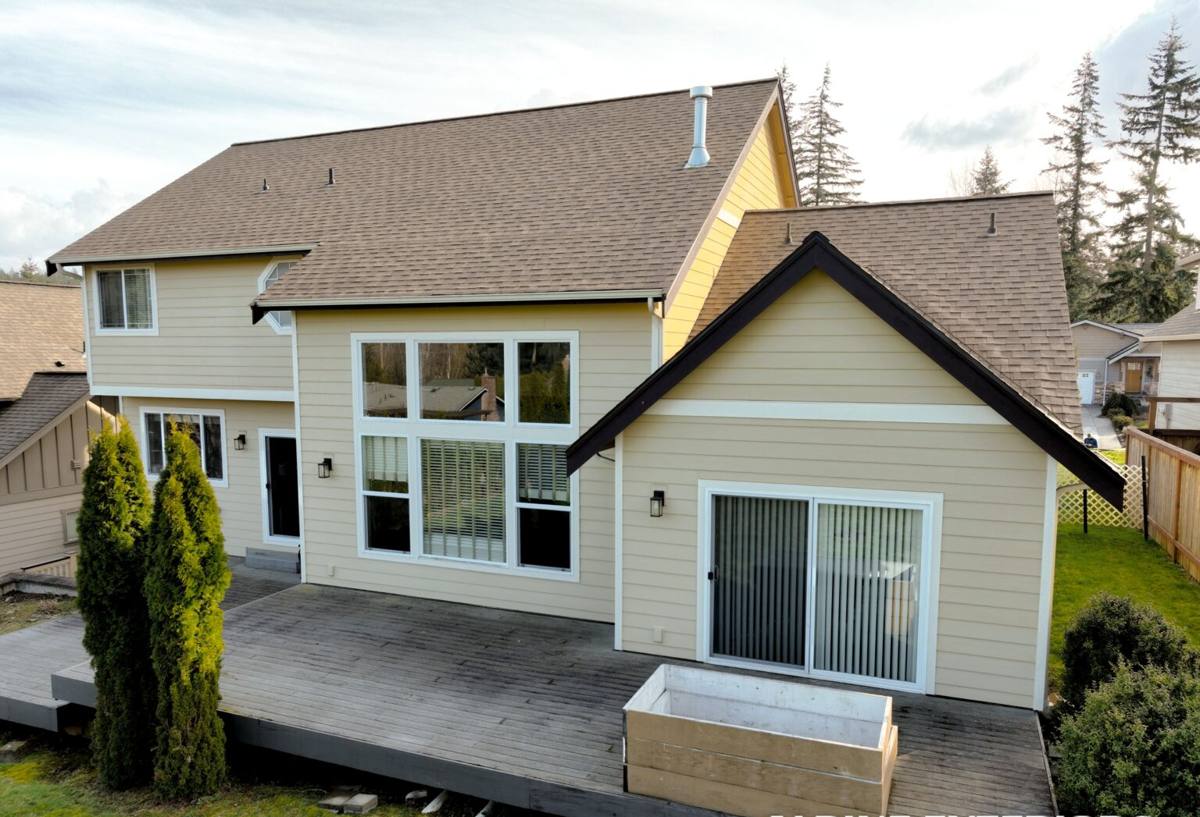
What This Climate Actually Does to Windows Over Time
Salt Air
Airborne salt accelerates corrosion on anything metal — window hardware, screen frames, and especially lower-quality fasteners used in the original installation. Over years, this shows up as pitted or seized hardware, stained aluminum trim, and finishes that fail faster than the manufacturer's warranty assumed.
Driving Rain
Wind-driven rain doesn't just fall on a window — it gets forced sideways and upward under trim and behind flashing that was only designed for straight-down water. Most window failures we find aren't glass failures at all; they're water intrusion problems where flashing was missing, reversed, or improperly lapped during the original install.
Moss and Prolonged Dampness
Extended damp periods keep wood sills, trim, and exterior caulk joints wet longer than they were designed to tolerate. Moss and algae don't just look bad — they hold moisture against the surface, which is exactly the condition that leads to rot in wood-frame windows and premature caulk failure around any window type.
What "Energy-Efficient" Should Mean Here
Energy efficiency in this region isn't primarily about keeping out extreme heat or extreme cold the way it might be in other parts of the country. It's about controlling moisture, condensation, and steady heat loss through a mild but consistently wet, breezy climate. That changes what actually matters in a window:
- Low-E glass coatings that reduce heat loss without sacrificing the natural light homeowners want on gray days
- Warm-edge spacers in the glass unit, which reduce condensation risk on interior glass during cold, damp mornings
- Properly sized U-factor for our climate zone rather than a window rated for a different region
- Weatherstripping and hardware that will actually hold up to salt air and repeated wet-dry cycling
- Frame material chosen for how it handles sustained moisture exposure, not just its price point
A window with a great efficiency rating on paper but poor installation detailing will still leak air and water in this climate. The install matters as much as the product.
Signs Your Current Windows Are Costing You Money
| What You Notice | What It Usually Means |
|---|---|
| Condensation between glass panes | Seal failure in the insulated glass unit — the window has lost its gas fill and insulating value |
| Drafts you can feel near the frame | Failed weatherstripping or gaps in the original air-sealing |
| Soft or discolored sill or trim | Water intrusion, often from flashing that wasn't detailed for wind-driven rain |
| Hardware that's stiff, corroded, or won't latch fully | Salt-air corrosion on locks, hinges, or balance mechanisms |
| Visible moss or persistent black streaking near the frame | Prolonged moisture retention — a sign the area isn't drying out between rain events |
| Noticeably higher heating bills over a few years | Gradual air-seal and glass-performance degradation |
How We Approach a Window Job in Sudden Valley
1. On-Site Assessment
We look at each opening individually, not just the glass. That includes the condition of the existing flashing, the sheathing behind the trim if it's accessible, and how water currently sheds off the wall above and around the window. A window that fails in five years usually failed because of what was happening around it, not the unit itself.
2. Removal and Prep
Old windows come out carefully so we can inspect the rough opening for hidden rot or moisture damage before anything new goes in. Finding and fixing a soft spot now is far cheaper than discovering it later behind a brand-new window.
3. Flashing and Moisture Management
This is the step that matters most in our climate. Proper flashing integrates with the water-resistive barrier so that any water that does get behind the trim is directed back out, not trapped against the frame or sheathing. We follow a shingle-lap sequence — each layer overlapping the one below it — so water always has a path down and out.
4. Installation
Windows are set level, plumb, and square, shimmed correctly to avoid stressing the frame, and fastened per manufacturer specification so the warranty stays valid. Low-expansion foam and backer rod are used at gaps rather than caulk alone, which seals better and lasts longer.
5. Finish and Sealing
Exterior trim, caulking, and paint or stain are finished to shed water rather than trap it. We use sealants rated for exterior exposure and movement, not general-purpose caulk that will crack within a season or two of freeze-thaw and wet-dry cycling.
Frame and Glass Options: Honest Trade-Offs
| Frame Material | How It Handles This Climate | Maintenance |
|---|---|---|
| Vinyl | Won't rot or corrode; good moisture resistance; solid value | Low — occasional cleaning |
| Fiberglass | Very stable through wet-dry and temperature cycling; strong long-term performance | Low |
| Wood-clad | Attractive interior wood look, but the exterior cladding and any exposed wood joints need consistent upkeep in a damp, salty climate | Moderate to high |
| Aluminum | Prone to corrosion and thermal transfer in salt air; we don't recommend it for this area's exposure | Moderate |
We steer most Sudden Valley homeowners toward vinyl or fiberglass for the exterior-facing frame, not because wood or aluminum can't work, but because the maintenance burden of keeping wood joints sealed or aluminum hardware from corroding is a real, ongoing cost that a lot of homeowners underestimate up front.
What Affects the Cost of a Window Project Here
| Factor | Why It Matters |
|---|---|
| Number and size of openings | Larger and more numerous windows increase material and labor time |
| Frame material chosen | Vinyl is typically the most budget-friendly; fiberglass and wood-clad cost more upfront |
| Condition of the rough opening | Hidden rot or water damage found during removal adds repair scope before the new window can go in |
| Flashing and trim complexity | Homes with more elaborate trim details take more time to flash and finish correctly |
| Access | Second-story or hard-to-reach openings take longer and may require additional equipment |
We give a firm, itemized estimate after walking the property — not a phone-quote guess — because the condition behind the existing trim is often the biggest cost variable, and that's only visible on site.
Why It Matters to Hire a Crew That Already Works This Area
A contractor who mostly works drier inland climates can install a technically correct window and still get the flashing sequence wrong for wind-driven rain, because it's simply not a problem they deal with often. Whatcom County's coastal exposure, the specific way rain hits a wall near Sudden Valley, and the long damp season all call for detailing habits that only come from doing this work locally, season after season. We know which corners of a house take the worst weather, what the salt air does to hardware over a five-year span, and how to sequence a flashing job so moss and standing water don't undo it within a couple of winters.
Keeping New Windows Performing Long-Term
- Rinse salt residue off frames and glass periodically, especially after storms with onshore wind
- Clear moss and debris from sills and tracks before it holds moisture against the frame
- Check exterior caulk lines yearly and re-seal any that have cracked or pulled away
- Exercise locks and hardware occasionally so corrosion doesn't set in unnoticed
- Keep gutters and downspouts clear so roof runoff isn't dumping extra water onto window heads
- Address any soft trim or discoloration right away — it's far cheaper to fix early than after rot spreads
If your windows are drafty, fogged, or just past their useful life, we'll walk your home, point out what we actually see — no upsell, no scare tactics — and give you a clear, free estimate for the work involved. Fill out the form below and we'll get in touch to schedule a time to take a look.