 Ferndale Siding
 Windows Take a Different Beating Near the Water
Homes in the Fairhaven area sit close enough to the water that their windows deal with a different set of stresses than a house ten miles inland. Salt-laden air corrodes hardware and dulls finishes faster than it does elsewhere in Whatcom County. Wind-driven rain off the Salish Sea doesn't just fall straight down — it gets pushed sideways into gaps that a calmer climate would never expose. And the long moss season here means anything horizontal, including window sills and the trim around them, stays damp for months at a stretch. None of this means windows are doomed near the coast. It means the installation has to account for it from the start, not as an afterthought.
We install windows on homes throughout the Ferndale area, including properties in and around Fairhaven, and the biggest difference between a window that lasts 20+ years here and one that fails in five isn't usually the window itself — it's whether the flashing, sealant, and frame prep were done for this climate specifically.
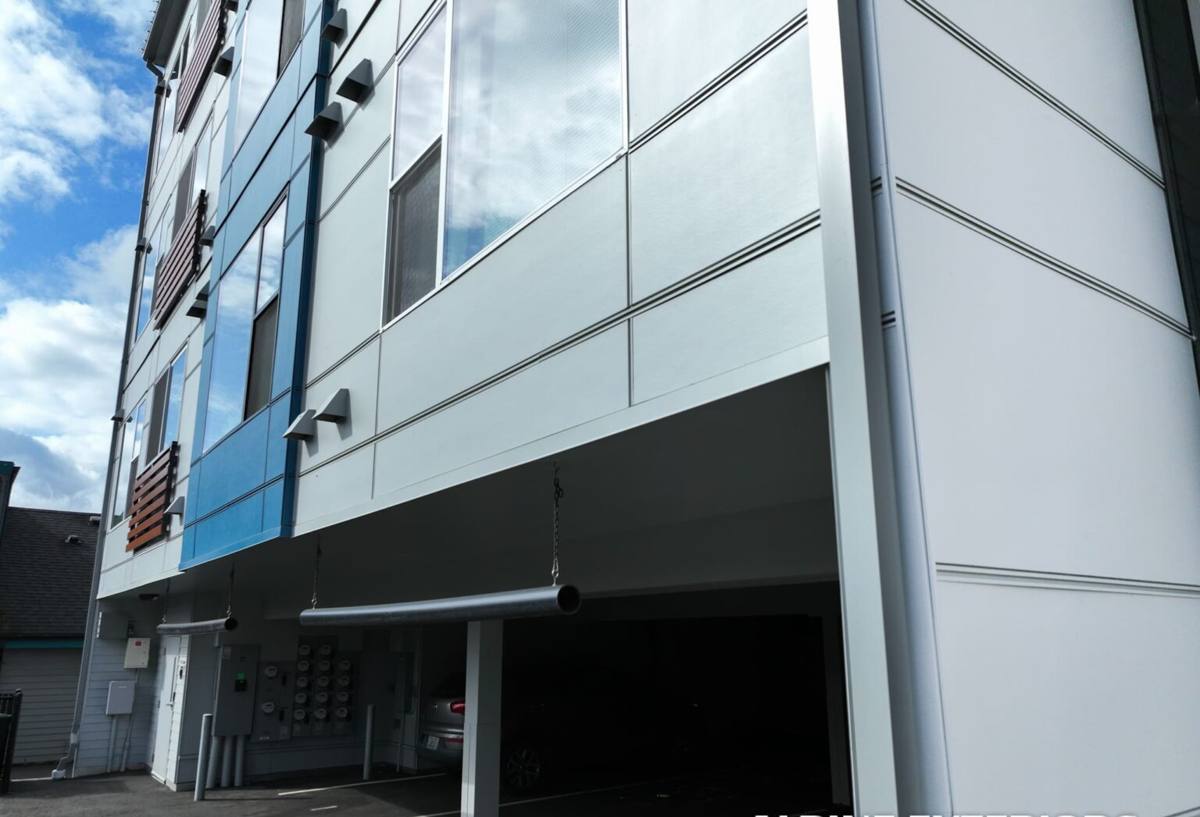
Signs Your Current Windows Are Losing the Battle
Coastal exposure tends to show up in predictable ways. If you're seeing any of the following, it's worth having the windows looked at before small problems become structural ones:
- Fogging or a hazy film between panes — the seal has failed and the insulating gas is gone
- Visible corrosion, pitting, or a chalky white residue on aluminum or steel hardware
- Soft or discolored wood at the sill or lower corners of the frame
- Moss or dark green growth building up on horizontal sill surfaces
- Noticeable drafts or a cold spot when you stand near the window on a windy day
- Windows that stick, won't latch fully, or have visibly warped out of square
Any one of these on its own might just mean a repair. Several at once, or wood rot at the frame, usually means the window and possibly some of the surrounding wall assembly need to come out.
What a Correct Installation Actually Involves
It's Not Just the Window — It's What's Behind It
A window is only as good as the opening it sits in. In a driving-rain climate, most leaks that show up years later trace back to flashing and moisture barrier work that was skipped or done wrong during the original install, not to the window unit itself. A correct install means the rough opening gets sloped sill flashing, proper head flashing that integrates with the house wrap, and side flashing that laps in the right order — bottom to top — so water is always directed outward, never trapped behind the siding.
Sealant Is a System, Not a Bead
We use exterior-grade sealant at the right points, but sealant alone is never the primary defense against water — it's backup. If a house is relying on caulk to keep a window dry, the flashing underneath wasn't done right. We treat sealant as the last line, not the first.
Shimming and Squaring
A window that's out of square by even a small margin will bind, won't seal evenly, and puts stress on the frame that shortens its life. Every unit gets shimmed and leveled on all four sides before it's fastened, checked for square, and tested for smooth operation before we move on to finish work.
Choosing the Right Window for a Coastal Property
Frame material matters more here than in a drier, inland location. The table below covers the trade-offs we walk homeowners through most often.
| Frame Material | Salt Air / Moisture Behavior | Maintenance | Typical Cost Position |
|---|---|---|---|
| Vinyl | Won't corrode or rot; performs well in coastal exposure | Low — occasional cleaning | Most affordable |
| Fiberglass | Excellent stability, resists warping and doesn't corrode | Low | Mid to upper range |
| Wood-clad | Good if the cladding stays intact; exposed wood is vulnerable near salt air | Higher — cladding and any exposed wood need monitoring | Upper range |
| Bare aluminum | Prone to pitting and corrosion in salt air over time | Higher — hardware and finish need attention | Varies |
Our standard for exposed coastal locations is vinyl or fiberglass framing with corrosion-resistant hardware. We'll still install wood-clad units when a homeowner wants that look, but we're upfront that it's a higher-maintenance choice this close to the water — that's a trade-off to go in with eyes open on, not a reason to avoid the product.
Glass Package
Double-pane, low-E glass is the baseline we recommend for this climate — it cuts down on heat loss during the wet, gray stretch of the year and helps limit condensation on the interior glass surface, which is a common complaint in humid coastal homes. Triple-pane is worth discussing for north-facing rooms or homes right along the water where wind exposure is highest, though it comes with added cost and weight.
Our Installation Process
1. On-Site Assessment
We look at each opening individually — sill condition, existing flashing (or lack of it), and any signs of past water intrusion. Coastal homes don't always show damage evenly window to window, so we don't assume one opening tells you about the rest.
2. Measurement and Ordering
Exact measurements per opening, since older homes settle unevenly and openings are rarely perfectly uniform even within the same wall.
3. Careful Removal
Old units come out with attention to the surrounding wall — we check the sheathing and framing underneath for rot before anything new goes in. If we find hidden damage, we'll show you and talk through the repair before proceeding, not after the fact.
4. Flashing and Weatherproofing
This is the step that determines whether the install holds up. Sill pan flashing, integrated head flashing, and correct shingle-lap sequencing with the house wrap, every time.
5. Setting, Shimming, and Insulating
The window is set, shimmed square, fastened per manufacturer spec, and the gap between frame and rough opening is insulated — not overpacked, which can bow the frame.
6. Exterior and Interior Finish
Trim, sealant, and paint or caulk lines are finished clean. We test every window for smooth operation and a full seal before we call the job done.
7. Walkthrough and Cleanup
We walk the finished work with you, and the site is cleaned up — old windows and debris hauled off.
Why Local Experience in the Ferndale and Fairhaven Area Matters
Wind and rain exposure isn't uniform across Whatcom County. A crew that mostly works inland can do fine work but may not default to the flashing detail and frame choices that coastal exposure calls for — because they don't need to most of the time. Working regularly in and around Ferndale, including waterfront and near-waterfront properties like those in the Fairhaven area, means we're not guessing at how much wind-driven rain a given wall will see or how fast salt air will chew through the wrong hardware. It also means we're familiar with the permitting expectations for the jurisdictions we work in, and we can coordinate window work with siding or trim repair on the same visit when a home needs both — which coastal homes often do, since the same moisture exposure tends to hit siding and window trim at the same time.
Living With New Windows in a Coastal Climate
Even a well-installed window benefits from a little seasonal attention here. A short annual check keeps small issues from becoming replacements:
- Rinse sills and frames periodically to clear salt residue, especially after storms
- Keep moss and organic buildup off horizontal sills and nearby trim
- Check that weep holes (the small drainage openings at the base of the frame) stay clear of debris
- Look at exterior caulk lines once a year and touch up if they've started to crack or pull away
- Operate each window through its full range a few times a year so hardware doesn't seize
None of this is heavy maintenance — it's the kind of thing that takes an afternoon and adds years to the life of the install.
What to Expect Cost-Wise
Pricing depends on frame material, glass package, window size and count, and how much flashing or sheathing repair is needed once the old units come out. Homes with prior water damage around the openings will cost more to do right than ones where the wall assembly is sound. We give a firm, itemized quote after the on-site assessment — not a ballpark over the phone — because guessing on a coastal home's condition before we've opened anything up isn't a service to the homeowner.
If you're weighing whether your windows need attention, or you already know it's time, we're happy to take a look and put together a free, no-pressure estimate. Use the form below to get started.