 Ferndale Siding
 Why Sandy Point Roofs Take a Different Kind of Beating
Sandy Point sits right up against the water, and that changes what "storm damage" means for a roof out here. A roof a few miles inland in Ferndale deals with wind and rain like any Whatcom County home. A roof in Sandy Point deals with all of that plus near-constant salt air off the Strait, exposure with fewer wind breaks between the home and open water, and driving rain that hits shingles at an angle instead of falling straight down. None of that is exotic or rare — it's just the normal weather pattern for a waterfront community — but it means the damage shows up differently and the repair needs to account for it, not just patch it and move on.
We've done storm repair work on and around Sandy Point long enough to know the difference between a roof that got unlucky in one bad blow and a roof that's been slowly losing ground to salt exposure for years before the storm finally exposed it. Both need fixing. They don't need the same fix.
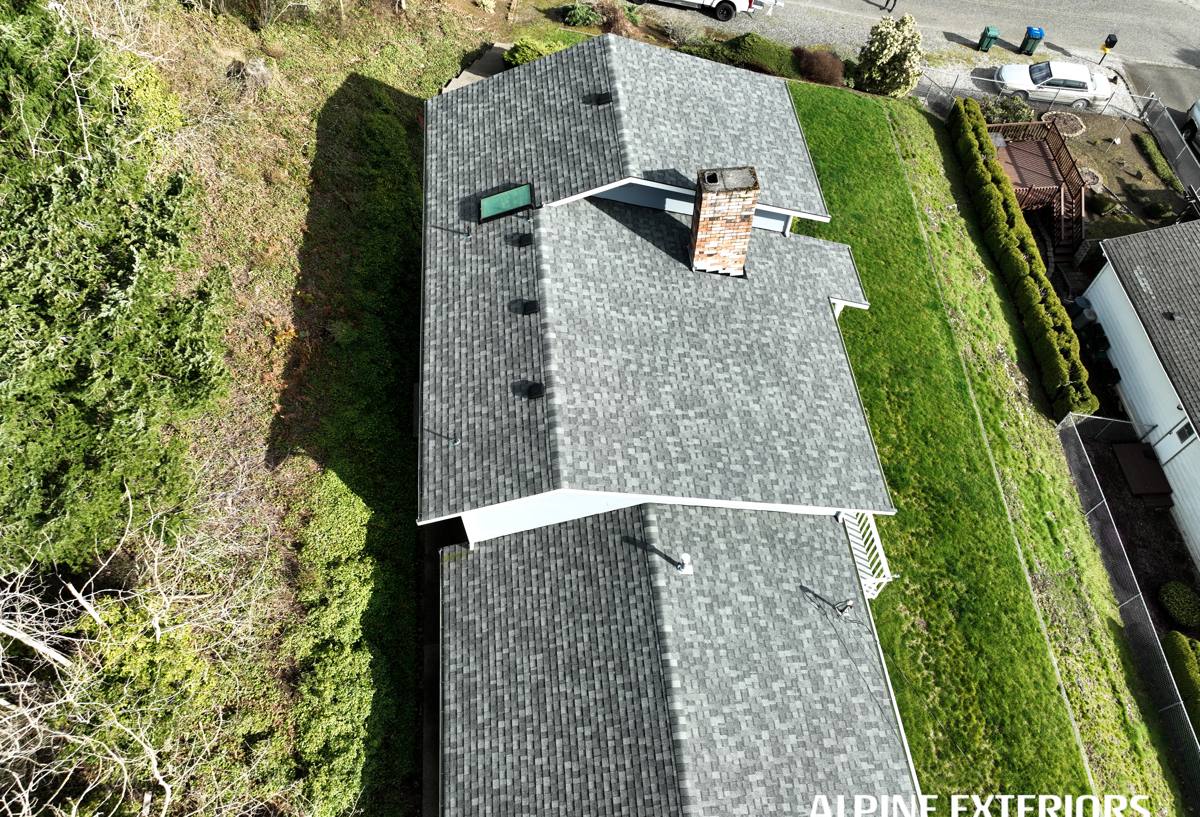
What Storm Damage Actually Looks Like on a Sandy Point Roof
After wind events, we typically find a mix of the obvious and the easy-to-miss:
- Lifted or missing shingles along ridges, hips, and roof edges — the spots that take the most direct wind load
- Cracked or torn shingle tabs where wind flexed material that was already brittle from sun and salt exposure
- Flashing pulled loose around chimneys, vents, and skylights, especially where sealant had already started to fail
- Fastener backout — nails or screws working their way up as wind rocks the roof deck, common where corrosion has already weakened the grip
- Debris punctures from branches or wind-carried material, which can look minor from the ground but open a real path for water
- Water intrusion at seams that only shows up as a stain days later, once rain has had time to find its way through a compromised spot
The tricky part is that the damage you can see from the ground is rarely the whole story. A missing shingle is obvious. A dozen fasteners that backed out a quarter-inch, or a flashing seam that opened up just enough to let water track sideways under the felt, are not — and those are the ones that turn into interior damage weeks after the storm has passed.
The Salt Air Factor: How Coastal Exposure Changes the Repair
Salt air is corrosive to metal, and a roof has metal in more places than most homeowners realize — nails, screws, flashing, drip edge, valley metal, vent housings. In a waterfront setting like Sandy Point, standard galvanized fasteners and flashing corrode faster than they would a few miles inland. Once corrosion starts, it doesn't just look bad — it weakens the fastener's grip and shortens the service life of the flashing seal, which is exactly what fails first in a storm.
This is why we don't treat a storm repair on a coastal property the same as one on an inland roof, even when the visible damage looks identical. We check the condition of fasteners and flashing near the repair area, not just at the damage point, because a storm that pulled one section loose is often the first visible sign that corrosion had already been undermining the roof's grip more broadly.
Signs Salt Exposure Is Already a Factor
- Rust streaking below nail heads or flashing seams
- Pitted or discolored metal flashing, vent caps, or gutter hardware
- Fasteners that back out or spin freely when tested
- Sealant around penetrations that's gone brittle and cracked faster than expected for its age
Moss, Debris, and the Long Wet Season
Whatcom County's moss season runs long — mild, wet winters and shaded roof sections give moss and algae months to establish themselves, and Sandy Point's proximity to trees and marine humidity doesn't slow that down. Moss isn't just cosmetic. It holds moisture directly against the shingle surface, works its way under tabs and edges, and gradually lifts material that wind can then catch and tear during the next storm. A roof with an established moss problem is more vulnerable to storm damage, not less, because the moss has already been prying at the shingle edges before the wind ever shows up.
When we're repairing storm damage, we always look at the surrounding roof for moss and debris buildup, especially in valleys and behind chimneys where organic material collects and drains poorly. A clean repair on a roof that's still holding moss against the deck is a short-term fix. We'll flag it and explain the options rather than just patching around the problem.
Our Storm Damage Repair Process
1. Fast, Honest Assessment
We start with a full roof inspection, not just a look at the spot you called about. That includes checking the deck for soft spots, tracing any interior stains back to their actual entry point (which is often not directly above the stain), and checking fastener and flashing condition near the damage.
2. Temporary Protection If Needed
If there's an active leak or exposed decking, we'll get it covered and weathertight before we talk through the full repair. Stopping ongoing water intrusion matters more than getting the permanent fix scheduled perfectly.
3. Written Scope, No Guesswork
You get a clear explanation of what's damaged, what caused it, and what the repair involves — including whether we found early signs of salt corrosion or moss undermining nearby areas that should be addressed at the same time.
4. The Repair Itself
Matching shingles and flashing profiles as closely as possible, replacing corroded fasteners rather than reusing them, resealing penetrations with materials rated for the exposure, and checking that the repaired section ties into the surrounding roof cleanly so water sheds the way it's supposed to.
5. Final Check
We walk the completed repair with you, point out what we did and why, and let you know what to keep an eye on going forward.
Repair vs. Replacement: How We Make the Call
Storm damage doesn't automatically mean a new roof, and it doesn't automatically mean a quick patch is enough either. The right call depends on the roof's age, how widespread the damage is, and what we find once we're actually up there.
| Factor | Leans Toward Repair | Leans Toward Replacement |
|---|---|---|
| Roof age | Under 12-15 years, otherwise in good condition | Nearing or past expected shingle lifespan |
| Damage extent | Isolated to one section or a few spots | Widespread across multiple roof planes |
| Fastener/flashing condition | Solid, minimal corrosion found nearby | Corrosion or backed-out fasteners found broadly |
| Moss/algae history | Minor, manageable with cleaning | Established growth already lifting shingles |
| Underlying deck | Dry, solid when checked | Soft spots or rot found during inspection |
We'll always give you the honest read on which side of that line your roof falls on, and why — not just the option that's easiest for us to schedule.
Materials We Use for Coastal Storm Repairs
For homes in a salt-air setting, we favor materials chosen for that exposure rather than whatever's cheapest to source:
- Corrosion-resistant fasteners in place of standard galvanized nails wherever exposure and budget make it practical
- Algae-resistant shingle products in areas already showing moss or algae staining, to slow regrowth rather than just clean it once
- Properly lapped and sealed flashing at every penetration, since flashing failure is the single most common source of storm-driven leaks we find
- Compatible replacement shingles matched to the existing roof's profile and age as closely as the market allows
We don't push premium materials on every job — a straightforward, well-executed repair with standard materials is the right call plenty of the time. But on a waterfront property, we'll tell you plainly when the corrosion-resistant option is worth the modest upcharge, and when it isn't.
Working With Insurance After a Storm
Most storm-related roof claims move faster and more smoothly when the damage is documented clearly and tied to a specific weather event. We provide a written description of what we found, photos of the damage areas, and an explanation of likely cause that you can hand to your adjuster. We're not a public adjuster and we won't promise a claim outcome, but a clear, honest scope from a contractor who's actually been on the roof tends to carry weight and cuts down on back-and-forth.
A Post-Storm Checklist for Sandy Point Homeowners
After a windstorm, here's what's worth checking from the ground before you call anyone — none of it requires getting on a ladder:
- Shingle pieces or granules in the yard or gutters
- Visible gaps, curling, or discoloration along roof edges and ridges
- Flashing that looks bent, lifted, or missing around chimneys and vents
- New water stains on interior ceilings or upper walls
- Gutters pulling away from the fascia or sagging with debris
- Any debris — branches, siding pieces — that landed on the roof itself
If you see any of these, it's worth getting a professional look sooner than later. A small opening left through a wet Whatcom County winter turns into a much bigger repair by spring.
Why Hire a Crew That Already Works Sandy Point
A roofer who mostly works inland can do a technically fine repair and still miss the coastal-specific issues — the corroding fastener two feet from the visible damage, the flashing that's due for an upgrade because of salt exposure, the moss pattern that tells you where water's actually been sitting. We work this stretch of Whatcom County regularly, so we're not guessing at how salt air, wind exposure, and the long moss season interact on a waterfront roof — we've seen the pattern enough times to know what to check beyond the obvious damage.
That local familiarity also means faster response. We know the area, we're not routing a crew in from across the county for the first time, and we can usually get a look at storm damage quickly rather than putting you at the back of a long queue.
If your roof took a hit in a recent storm — or you just want a professional look before the next one — we're happy to come out for a free, no-pressure estimate. No obligation, just an honest read on what your roof actually needs.