 Ferndale Siding
 A Different Window Problem in a Different Kind of Place
Point Roberts sits in a spot most window manufacturers never design for. It's a small peninsula community that hangs off the bottom of Whatcom County, cut off from the rest of Washington by water and by the Canadian border. Homes here take a steady beating from marine air, wind-driven rain off the Strait of Georgia, and a damp, moss-friendly climate that doesn't let up for long stretches of the year. Windows that would hold up fine in a drier inland town can start failing years early out here — fogging between panes, swelling sashes, corroded hardware, drafts that show up the first cold snap of fall.
Energy-efficient window replacement in Point Roberts isn't just about lowering a heating bill, though that matters. It's about picking materials, glass packages, and installation details that can actually take what this stretch of coastline throws at them, year after year, without needing to be redone in a decade.
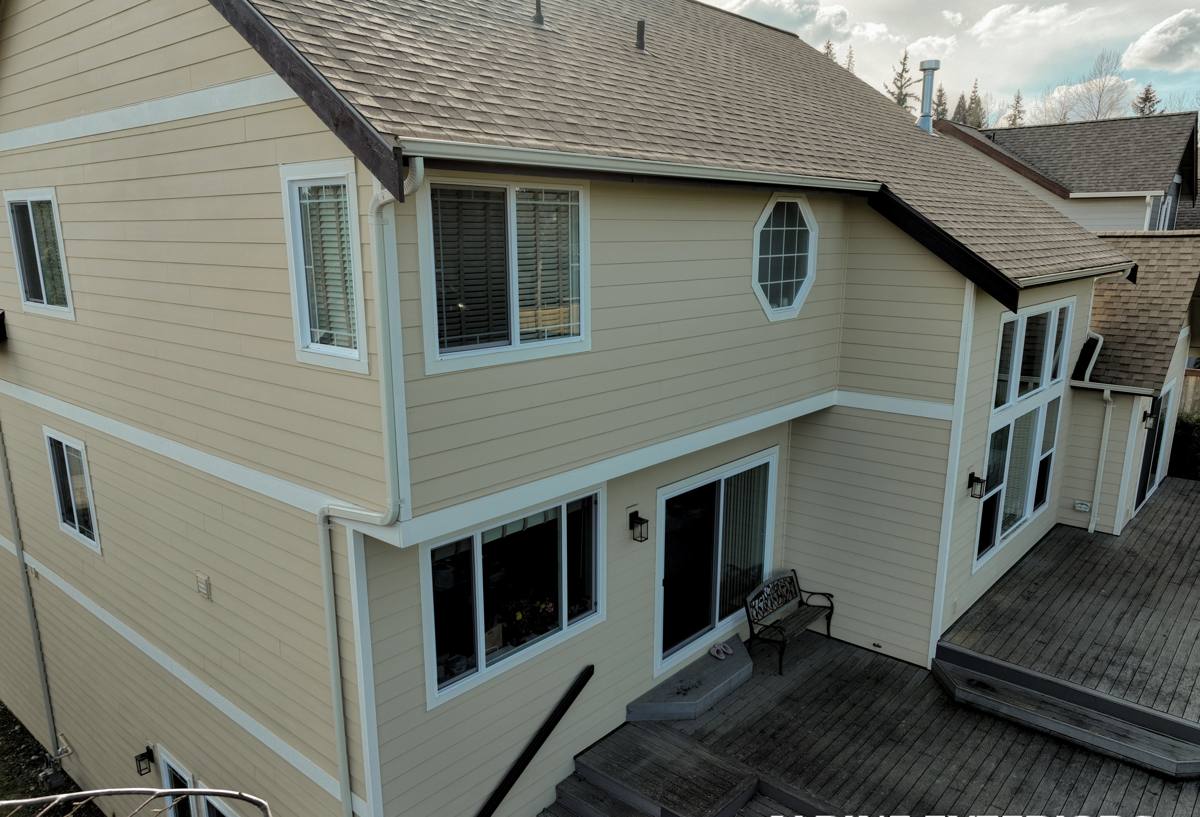
What the Local Climate Does to Windows
Salt Air
Being surrounded by saltwater on three sides means airborne salt is a constant, low-grade attacker on anything metal. Aluminum frames, uncoated hardware, and cheap fasteners corrode faster near the water than they would even a few miles inland. Pitting and white oxidation on hardware, sticky or seized locks, and streaking on frames are common early signs.
Driving Rain
Storms coming off the water don't just fall straight down — wind pushes rain sideways into siding and window openings. A window that's watertight in a light shower can still leak under wind-driven rain if the flashing, sill pan, and sealant details weren't done right. Most of the water problems we find around older windows here trace back to installation shortcuts, not the window unit itself.
Moss and Constant Dampness
Long stretches of overcast, damp weather keep humidity high around window openings, especially on north- and west-facing walls that don't get much sun to dry out. Moss and mildew can take hold in wood trim, sills, and any gaps where water sits instead of draining. Over time, this rots wood components and breaks down caulking and weatherstripping faster than in a drier climate.
What "Energy-Efficient" Should Mean Here
In the Pacific Northwest coastal climate, an energy-efficient window is judged on a few specific numbers and features, not just a sticker that says "Energy Star."
- U-factor — measures heat loss through the window. Lower is better for our cool, wet winters. This is usually the most important number for a Whatcom County home.
- Solar Heat Gain Coefficient (SHGC) — measures how much solar heat passes through the glass. Point Roberts doesn't get intense sun exposure most of the year, so this matters less here than in a hot, sunny climate, but it still affects comfort on west-facing rooms in summer.
- Low-E coatings — a microscopically thin coating that reflects heat while letting light through. Standard on any window worth installing in this region.
- Gas-filled sealed units — argon or krypton gas between panes improves insulation value over plain air-filled glass.
- Weatherstripping and hardware quality — in a salt-air environment, this is where cheap windows fail first, regardless of how good the glass package is.
Frame Material: What Holds Up on This Coastline
Frame material choice matters more here than in a lot of inland Washington towns, because the frame is what takes the direct hit from salt air and moisture cycling.
| Frame Material | How It Handles Salt Air & Rain | Maintenance | Notes |
|---|---|---|---|
| Vinyl | Doesn't corrode or rot; handles moisture well | Low — occasional cleaning | Good value; wide range of quality tiers, so specify a heavier-gauge product |
| Fiberglass | Excellent — very stable, resists warping and corrosion | Low | Higher upfront cost; strong long-term performer in coastal climates |
| Wood / Wood-Clad | Vulnerable if cladding or finish fails; interior wood needs protection from condensation | Higher — finish upkeep, sealant checks | We can install these, but they need a homeowner willing to keep up maintenance |
| Aluminum | Prone to corrosion and pitting near salt water unless marine-grade and properly coated | Moderate to high | We generally steer clients away from standard aluminum for this location — it's a poor fit for the salt exposure |
We're not tied to one brand or material for every job. The right call depends on your home's exposure, your budget, and how much upkeep you want to take on. What we won't do is put a frame material in a spot where we know from experience it's going to fight the environment and lose.
Hardware and Fasteners
Even a good frame can be let down by cheap locks, hinges, or screws. For homes with direct exposure to marine air, stainless steel or corrosion-resistant hardware is worth the small upcharge — it's one of the most common failure points we see on windows installed with standard hardware in this area.
The Logistics of Working in an Exclave
Point Roberts isn't reachable by road from the rest of Washington without crossing into Canada and back. That's a real factor in how a window replacement project gets planned and run, not just a geography trivia fact.
- Material delivery has to be scheduled around border crossing logistics, not just a supplier's normal delivery window.
- Crew scheduling works better in full-day or multi-day blocks rather than quick single trips, since a crew crossing the border to do a two-hour job isn't practical.
- Permitting still runs through Whatcom County, and it helps to have already worked through that process for this specific area rather than learning it on your project.
- Weather windows for installation — you want a crew that plans around this coastline's rain patterns, not a generic regional forecast.
A contractor who already has a rhythm for working in Point Roberts can plan a job efficiently — batching material orders, timing crossings, and scheduling installation days back-to-back. A crew making its first trip out has to figure all of that out on your project's timeline, which usually means delays or rushed work.
How a Correct Installation Actually Works
- On-site assessment — we check each opening for rot, water damage, and how the wall assembly is put together before recommending anything.
- Measurement and product selection — exact sizing, plus matching frame material and glass package to that specific wall's sun and rain exposure.
- Removal of the old window — done carefully to check the condition of the framing and sheathing underneath, since hidden rot is common in older coastal homes.
- Repair of any damaged framing before the new window goes in — installing a new window over rotten framing just hides the problem.
- Flashing and sill pan installation — this is the step that determines whether the window stays watertight under driving rain. It's also the step most often shortcut by less careful installers.
- Setting and sealing the window — shimmed level and plumb, insulated around the frame, and sealed with products rated for this climate.
- Interior and exterior trim finishing to match your home.
- Final inspection — checking operation, seal, and water management before we call the job done.
Signs Your Current Windows Are Costing You
Before deciding whether to replace, repair, or wait, it helps to know what to look for. Any of these point to windows that are underperforming for this climate:
- Visible fog or moisture trapped between glass panes (a failed seal)
- Drafts you can feel near the frame on a windy day
- Wood trim or sills that feel soft, or show moss/mildew growth
- Windows that are hard to open, close, or lock — often a sign of corroded hardware or a warped frame
- Visible corrosion or pitting on metal frames or hardware
- Condensation forming on the inside of the glass regularly in cold weather
- Noticeably cold spots near windows compared to the rest of the room
- Paint or finish peeling on interior trim near the window, suggesting moisture intrusion
What Affects the Cost of a Window Project
Every home is different, but a few factors consistently drive the price of a window replacement project here:
| Factor | Why It Matters |
|---|---|
| Number and size of windows | Straightforward — more openings and larger units cost more |
| Frame material | Vinyl, fiberglass, and wood-clad carry different price points and long-term maintenance costs |
| Extent of hidden damage | Rotten framing found during removal adds repair work before the new window can go in |
| Access and exposure | Upper-story or hard-to-access windows take more time and equipment |
| Glass package | Upgraded Low-E coatings and gas fills add cost but improve efficiency and comfort |
We'll always give you a real number for your specific home rather than a generic per-window average, since the variables above swing the cost meaningfully from house to house.
Living With Windows on This Coastline
Even a well-installed, quality window benefits from a little upkeep in a salt-air, high-moisture environment. Rinsing frames and hardware periodically to clear salt buildup, keeping weep holes clear of debris and moss, and checking exterior caulking once a year go a long way toward getting the full lifespan out of a window investment. We're happy to walk you through what to watch for on your specific product after installation.
Why Local Experience in Point Roberts Matters
Window replacement isn't a one-size-fits-all job anywhere, but the margin for error is smaller in a place with this much salt exposure, rain, and logistical complexity. A crew that already understands the border crossing logistics, the Whatcom County permitting process, and how this specific stretch of coastline behaves in a storm is going to plan your project better and catch problems a first-time visitor might miss. That local familiarity is part of what you're paying for when you hire a contractor who already works this area regularly, not an extra.
If your windows are drafty, fogged, hard to operate, or just due for an honest look, we're glad to come take a look and put together a straightforward, no-pressure estimate using the form below.