 Ferndale Siding
 Roof Repair in Semiahmoo: Built for a Coastal Climate
Semiahmoo sits right where Whatcom County's marine air meets the water, and that location shapes everything about how a roof ages here. Homes just a few miles inland in Ferndale deal with rain and moss too, but Semiahmoo roofs also take on salt-laden air, wind-driven rain that gets pushed sideways under normal flashing details, and long stretches of damp shade that never fully dry out between storms. A roof repair here isn't just patching a leak — it's addressing the specific way this environment attacks shingles, flashing, and fasteners over time.
We work on homes throughout the Ferndale area, and Semiahmoo's waterfront and near-waterfront properties get a different repair approach than a roof on a sunny, wind-sheltered lot. If your roof is leaking, losing granules, growing moss faster than it should, or showing rust streaks near flashing and fasteners, that's usually the coastal climate doing what it does — and it's fixable when it's caught and repaired correctly.
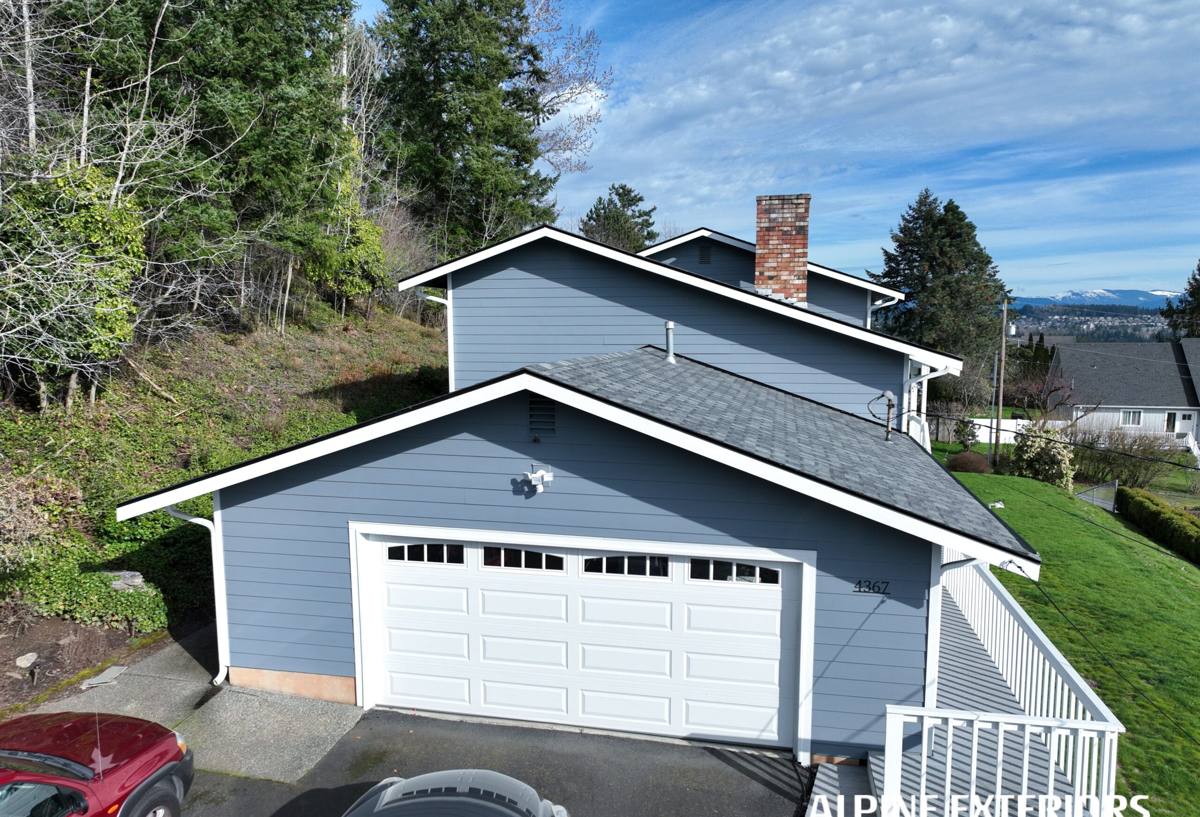
Why Semiahmoo Roofs Wear Differently Than Inland Roofs
Three things combine here that don't show up together nearly as much a few miles inland:
Salt Air and Metal Fatigue
Airborne salt accelerates corrosion on exposed metal — flashing, nail heads, vent stacks, and gutter hardware. A fastener that would last decades inland can start rusting and losing its grip years earlier this close to the water. Once a fastener corrodes, the seal around it fails long before the surrounding roofing material does, and that's often the actual source of a "mystery leak."
Driving Rain
Storms off the water don't just fall straight down — wind pushes rain sideways and up under laps, ridge caps, and step flashing that would shed water fine in a calm rain. Repairs in this area need to account for wind-driven moisture, not just gravity, which is why flashing detail and underlayment condition matter more here than on a typical inland re-roof.
Extended Moss and Shade Season
Whatcom County's damp, mild climate already favors moss, and Semiahmoo's tree cover and marine humidity extend the window even further. Moss holds moisture against the roofing surface long after a storm has passed, which softens shingles, lifts edges, and works its way under laps and around penetrations. A roof that looks intact from the ground can have real moisture damage building underneath a healthy-looking patch of moss.
Common Roof Repair Needs We See in Semiahmoo
Every roof and every property is different, but these are the issues that come up repeatedly on repair calls in this area:
- Flashing failures around chimneys, skylights, and roof-to-wall intersections, often from corroded fasteners or displaced step flashing
- Moss-related shingle lifting and granule loss, especially on north-facing and tree-shaded slopes
- Leaks that appear only during wind-driven storms, pointing to lap or ridge details rather than a simple puncture
- Rusted or failing fasteners on metal roofing and flashing components
- Gutter and downspout backups that push water under the roof edge instead of away from it
- Ventilation issues that trap moisture in the attic, accelerating decking and underlayment breakdown from underneath
What a Correct Roof Repair Actually Involves
A roof repair that holds up in this climate takes more than sealing the spot where water is visibly coming through. Water travels — it can enter at a flashing seam and show up as a stain several feet away, following the path of least resistance along the decking or underlayment. That means a proper repair starts with tracing the actual entry point, not just treating the symptom.
Diagnosis Before Repair
We inspect the roofing surface, flashing, penetrations, and — where accessible — the attic side, to confirm where water is actually getting in and how far it's traveled. On a coastal roof, we're specifically checking fastener condition, flashing laps, and any areas where moss or debris have held moisture against the surface.
Addressing the Root Cause, Not Just the Symptom
If the underlying cause is corroded flashing, we replace the flashing — not just caulk over the gap. If it's moss that's lifted shingle edges, we remove the moss, assess the shingles underneath for damage, and replace what's compromised rather than resealing over material that's already softened. Caulk and sealant have a place in roof repair, but they're a short-term fix when used as a substitute for replacing failed material — and on a coastal roof, that shortcut tends to fail again within a season or two.
Matching Materials and Technique to the Environment
Where corrosion-resistant fasteners and flashing are appropriate for the exposure, we use them. Where a repair area needs better drying capacity because of shade and moss history, we address that as part of the fix rather than leaving the same conditions in place to cause the same failure again.
Our Roof Repair Process
- Assessment and estimate: We inspect the roof, identify the source of the problem, and explain what we find in plain terms — including whether a repair makes sense or a section is beyond a reasonable patch.
- Written scope: You get a clear description of what will be repaired and why, so there's no ambiguity about the work.
- Repair work: We remove and replace failed material — shingles, flashing, fasteners, or underlayment sections as needed — rather than layering a patch over a problem.
- Cleanup and debris removal: Moss, old material, and fasteners are cleared from the roof and gutters as part of the job, not left for you to deal with afterward.
- Final check: We confirm the repair area is sealed and draining correctly before we consider the job done.
Repair vs. Replacement: How We Help You Decide
Not every roof issue calls for a full replacement, and not every leak can be permanently solved with a patch. Here's the general logic we walk homeowners through:
| Factor | Repair Usually Makes Sense | Replacement Worth Discussing |
|---|---|---|
| Age of roofing material | Well within expected service life | Near or past expected lifespan for the material |
| Extent of damage | Isolated to one area or penetration | Spread across multiple slopes or recurring in different spots |
| Decking condition | Solid, no soft spots | Soft, stained, or spongy decking found during inspection |
| Moss and shade history | Manageable with cleaning and spot repair | Chronic moss damage across large areas |
| Flashing and fasteners | Isolated corrosion or displacement | Widespread corrosion consistent with the roof's age |
We'll always give you a straight answer on which category your roof falls into, and why — including if that answer is "this is a repair, not a replacement," even when a replacement would be the bigger job for us.
Materials We Use for Repairs
Repair materials should match what's already on your roof whenever possible, both for appearance and for how the materials perform together. For coastal-exposed properties in areas like Semiahmoo, we pay particular attention to:
- Flashing metals and fasteners suited to salt-air exposure rather than standard-grade hardware
- Underlayment condition in the repair area, since a compromised underlayment undermines even a well-done surface repair
- Shingle or roofing material that matches the existing roof's type, color, and wear pattern closely enough that the repair doesn't stand out
- Sealants rated for exterior, weather-exposed use rather than general-purpose products
We explain our reasoning if we recommend against a particular quick-fix product for your situation — usually because of how it holds up under repeated wetting and drying, not because of any brand issue. The goal is a repair that performs the same way in year five as it did on day one.
Moss, Algae, and Salt Air: A Maintenance Checklist
Between repairs, a few habits go a long way toward keeping a Semiahmoo roof out of trouble, especially through the long wet season:
- Clear moss and debris from the roof surface before it has a chance to hold moisture against shingles
- Keep gutters and downspouts flowing freely so water isn't backing up under the roof edge
- Trim back tree cover where it's keeping sections of the roof shaded and slow to dry
- Check flashing and fastener areas for early rust or staining after major storms
- Have the roof looked at after any significant windstorm, even if you don't see an active leak yet
- Watch for granule buildup in gutters, which signals shingle wear worth having assessed
Why It Matters That We Already Work in Semiahmoo
A crew that's worked roofs throughout Whatcom County and the Ferndale area knows what a coastal exposure does differently than a general roofing outfit that mostly works inland. We're not guessing about how salt air treats flashing or how long moss season really runs here — we see it repeatedly and repair for it specifically. That means fewer repeat visits for the same underlying problem, because the first repair addresses the actual cause instead of just the visible symptom.
We also know this isn't a climate you can treat casually. A roof repair that would hold up fine in a drier, more sheltered part of the region can fail within a season on a property that's catching wind-driven rain and salt air day after day. We build that reality into how we diagnose and repair every roof we work on in this area.
Getting a Roof Repair Estimate
If you're dealing with a leak, visible moss damage, or just want a roof checked before winter storms roll in, we're happy to take a look and give you an honest read on what's going on — repair, monitor, or replace, whichever is actually true for your roof. There's a free, no-pressure estimate form below whenever you're ready.