 Ferndale Siding
 Fiber Cement Siding for Lynden Homes
Lynden sits in the farmland corridor of Whatcom County, a part of the state that stays wet for months at a stretch. Homes here deal with long stretches of driving rain, heavy valley humidity, and the kind of persistent dampness that lets moss and algae get a foothold on anything that stays damp too long. Siding in this part of Washington isn't decorative — it's the first line of defense against a climate that rarely lets a house dry out completely between storms. That's why the siding material and the installation quality matter more here than they would in a drier climate.
We install James Hardie fiber cement siding exclusively, and this page covers what that means specifically for a Lynden-area home: what the local weather asks of your siding, what a correct installation actually involves, and why the crew doing the work matters as much as the product itself.
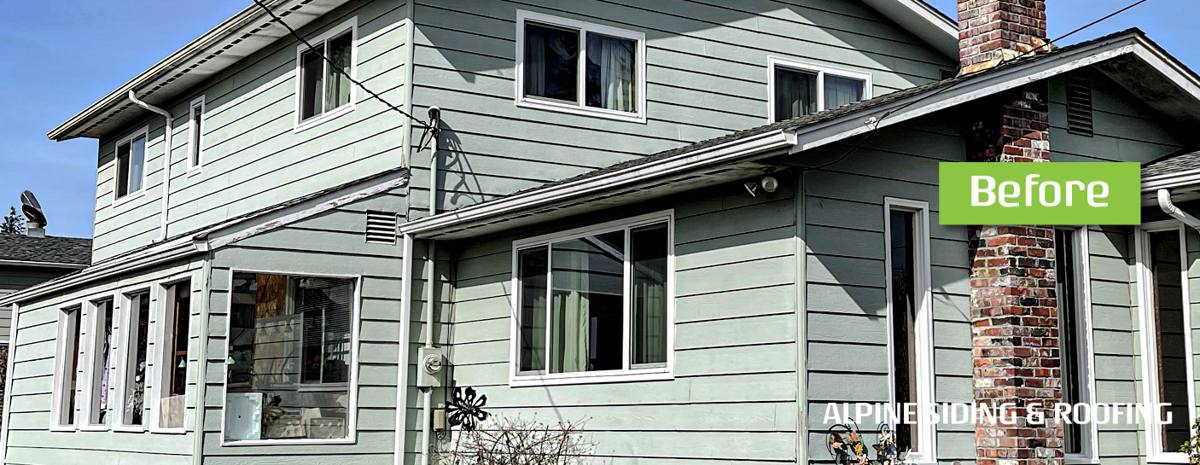
What Whatcom County Weather Does to the Wrong Siding
Whatcom County's climate is defined by moisture — rain that comes in low and steady rather than in short bursts, cool temperatures that slow drying, and a moss and algae season that can run most of the year on a shaded north wall. Add in the salt-tinged air that moves through this part of the Puget Sound region, and you have conditions that are hard on wood-based and composite siding products that weren't built with this climate in mind.
Wood-based siding — cedar, primed spruce, and engineered wood products like LP SmartSide — relies on an intact factory coating and careful field caulking to keep water out. Once that coating is compromised at a cut edge, a nail hole, or a seam that wasn't sealed correctly, wood fiber absorbs moisture and starts to swell, delaminate, or rot from the inside. In a climate that gives a house weeks of drying time between storms, that's manageable. In Lynden's climate, where the drying window is short and moss retains moisture against the wall, that same flaw becomes a much bigger problem, much faster.
Vinyl siding avoids the rot issue but brings its own set: it expands and contracts more than fiber cement, it can warp or bow under prolonged damp-cold cycling, and it doesn't hold up as well against the kind of blunt impact that's common around farm equipment, trailers, and outbuildings in this area. It also can't be painted a darker color without risking heat warp, which limits homeowners who want a specific look.
Why We Install Only James Hardie Fiber Cement
We made a decision as a company: we only install James Hardie fiber cement siding. We don't install vinyl, LP SmartSide, Cemplank, Allura, primed spruce, or cedar. That's not a marketing position — it's a standard we hold because we've seen what each of those products does over ten and twenty years in this exact climate, and fiber cement built to Hardie's HZ climate specifications performs the most consistently.
Fiber cement is non-combustible, which matters given the wildfire smoke and dry-season fire risk that's become a bigger part of Pacific Northwest summers. It doesn't feed insects or rot from moisture absorption the way wood-based products can. And Hardie's ColorPlus factory finish is baked on and warrantied, so you're not relying on a field-applied coat of paint to be the only thing standing between your wall and the rain.
None of that means other products are junk — cedar looks the way it looks for a reason, and LP SmartSide has a following. But those products ask more of the installer and the homeowner in a climate like this: more caulk maintenance, more repainting, more vigilance about moisture at the joints. We'd rather put a product on your house that tolerates this climate with less babysitting, and that's fiber cement engineered for the region.
HardiePlank Lines Suited to This Climate
James Hardie makes region-specific HZ5 product for the Pacific Northwest, engineered around freeze-thaw cycling and sustained moisture exposure rather than the hot, dry conditions their HZ10 line is built for. That distinction matters — it's the difference between a product tested for your actual weather and one that just happens to be sold in the same store. For a Lynden home we're typically specifying HardiePlank lap siding in a smooth or cedarmill texture, with HardieTrim for corners and window surrounds, and HardiePanel where a vertical board-and-batten look is called for on gables or accent walls.
What a Correct Fiber Cement Installation Involves
Fiber cement is only as good as the installation behind it. A huge share of the siding failures we get called out to inspect — regardless of brand — trace back to installation shortcuts, not the material itself. In a climate that gives water this many chances to find a way in, those shortcuts show up faster.
Moisture Barrier and Prep
Before a single piece of siding goes up, the wall needs a continuous, properly lapped weather-resistive barrier with flashing integrated at every window, door, and penetration — top-down, so water sheds outward at each layer rather than getting trapped behind the cladding. Any existing sheathing damage from prior leaks gets identified and repaired before we close the wall back up. Skipping this step is the single most common cause of hidden rot behind siding that looks fine from the curb.
Fastening and Clearances
Hardie specifies exact fastener type, spacing, and placement, along with minimum clearances from grade, roofing, and abutting surfaces so water has somewhere to go instead of wicking up into the plank. Nailing too high, too low, or too tight — a common shortcut on a rushed job — can void the manufacturer warranty and lead to buckling or cracking down the line.
Trim, Caulking, and Touch-Up
Cut edges get sealed, factory finish gets touched up with matched paint at every cut, and joints get caulked with a product rated for the finish system, not whatever's on the truck. This is detail work, and it's where a lot of the long-term weather resistance actually lives.
- Continuous, properly lapped weather-resistive barrier with integrated flashing at every opening
- Sheathing inspected and repaired before siding goes on, not covered up
- Correct fastener type, spacing, and depth per Hardie's installation spec
- Proper clearance from grade, roofing, decks, and adjoining surfaces
- All cut edges sealed and factory-matched touch-up applied
- Joints and penetrations caulked with a compatible, warrantied sealant
- Rigid-mounted items (light fixtures, hose bibs, vents) flashed individually, not just caulked over
What Affects the Cost
Every Lynden home is a little different, and we won't quote a number without seeing the house, but these are the factors that move the price up or down on most jobs we do in this area:
| Factor | Why It Matters |
|---|---|
| Tear-off vs. new construction | Removing and disposing of old siding, plus repairing any hidden sheathing damage found underneath, adds labor |
| House size and story height | More square footage and taller walls mean more material, more scaffolding or lift time, and more labor hours |
| Trim complexity | Gables, dormers, and multiple roof planes require more custom trim cuts and detail flashing |
| Siding profile and texture | Lap widths, panel siding, and shake-style accents carry different material and install costs |
| Color | Standard ColorPlus colors are typically less costly than custom-matched finishes |
| Existing moisture damage | Rot repair discovered during tear-off is priced separately since it isn't visible until the old siding comes off |
How We Work in Lynden
We start with an in-person walk-around, not a phone estimate — fiber cement pricing depends on details you can't see from a photo, like the condition of the sheathing and how many corners and openings need trim. From there we put together a written scope covering material, prep work, and any repair contingencies, so there are no surprises once tear-off starts. During the job, we protect landscaping and outbuildings, remove old material as we go, and inspect the sheathing before anything new goes up — if we find damage, we show it to you before we cover it, not after. When the siding is up, we walk the whole house with you before calling the job done.
Why Hire a Crew That Already Works This Area
A crew that's put Hardie siding on homes throughout Whatcom County has already seen how this specific climate treats a wall over time — where moss builds up on shaded elevations, where wind-driven rain hits hardest on exposed gables, and where farm-adjacent dust and moisture combine to age a finish faster. That local pattern recognition shows up in small decisions during the job: where to add extra flashing attention, which elevations need tighter caulk joints, how to sequence the work around the wet stretches of a Whatcom County winter. It's the difference between a crew installing siding correctly on paper and a crew installing it correctly for this specific place.
Maintenance After Installation
Fiber cement asks less of you than wood-based siding, but it isn't zero-maintenance. A short annual routine keeps it performing the way it's designed to:
- Rinse the exterior yearly, and more often on shaded, moss-prone elevations
- Keep gutters clear so water sheets off the roof instead of running down the wall face
- Trim back plants and shrubs so siding can dry between rain events
- Re-caulk joints if you notice cracking or gaps, rather than waiting for a leak
- Touch up any deep scratches or chips promptly with matched ColorPlus touch-up paint
If your Lynden-area home needs new siding or you're not sure whether your current siding is holding up the way it should, we're happy to take a look and give you a straightforward, no-pressure estimate — just fill out the form below.