 Ferndale Siding
 Deck Replacement Built for Sumas Conditions
Sumas sits close enough to the border and the foothills that its weather pattern runs a little differently than the rest of Whatcom County — colder overnight temperatures in winter, more frost events, and long stretches of damp, low-sun days that keep wood decks wet for days at a time. Add in the driving rain that comes through the valley and the moss season that seems to stretch longer every year, and you've got a climate that is genuinely hard on outdoor structures. A deck that would hold up fine in a drier inland climate can fail early here if it wasn't built with this specific combination of moisture, freeze-thaw, and organic growth in mind.
We work throughout Ferndale and the surrounding Whatcom County communities, including Sumas, and we see the same failure patterns on older decks over and over: soft ledger boards where the deck meets the house, rusted or corroded fasteners, joists that look fine on top but are rotting from underneath, and surface boards that have cupped or split from repeated wet-dry cycles. A proper replacement addresses the causes, not just the symptoms.
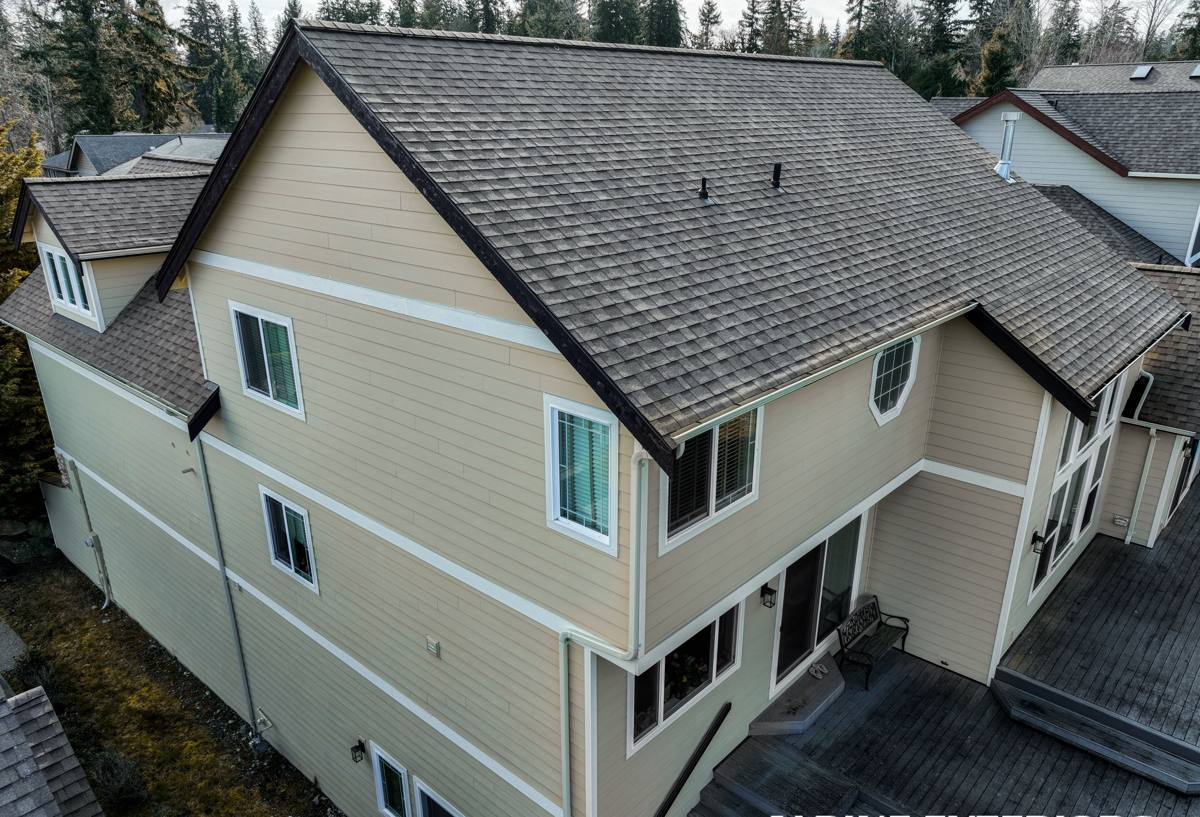
Why Decks Fail Faster in This Part of Whatcom County
Most premature deck failures aren't really about the age of the wood — they're about moisture management. Here's what we consistently find working on decks in this area:
- Trapped moisture at the ledger board — where the deck attaches to the house is the single most common rot location, especially without proper flashing.
- Moss and algae buildup on horizontal surfaces that stay shaded or don't get full sun exposure, which holds moisture against the wood far longer than rain alone.
- Freeze-thaw cracking in fasteners, connectors, and any wood that absorbed water before a cold snap.
- Under-deck drainage problems where water pools instead of shedding away from the house foundation.
- Inadequate ventilation beneath low-clearance decks, which slows drying between rain events.
None of these are exotic problems — they're standard Pacific Northwest deck issues. But they compound in areas like Sumas where the growing season for moss is long and the temperature swings between wet fall/winter and drier summer create repeated expansion and contraction in materials.
What a Correct Deck Replacement Actually Involves
It Starts Below the Surface
A deck replacement that's done right isn't just swapping old boards for new ones. The substructure — ledger board, flashing, joists, beams, and footings — is what determines whether the new deck lasts 10 years or 25. If we're replacing a deck, we inspect and typically rebuild this structure, because reusing a compromised frame under new decking just hides the problem for a season or two.
Ledger Board and Flashing
This is the connection point between your house and the deck, and it's the place most inspectors and contractors focus on first for a reason. Proper flashing — installed correctly, in the right sequence with your siding or house wrap — keeps water from running behind the ledger and into your rim joist or framing. This detail alone accounts for a large share of the structural deck failures we see.
Framing and Fasteners
We use fasteners and structural connectors rated for the exposure they'll actually see — exterior, wet-climate conditions, not general-purpose hardware. Galvanized or standard fasteners that aren't rated for treated lumber contact can corrode faster than the wood around them, which is a quiet failure point that isn't visible until the connection is already weak.
Decking Material
The surface material is where homeowners have the most choice, and where the trade-offs matter most in this climate.
| Material | Moisture Behavior | Maintenance | Typical Lifespan |
|---|---|---|---|
| Pressure-treated wood | Absorbs and releases moisture; prone to cupping/splitting if not sealed regularly | Annual cleaning, periodic sealing/staining | 10–15 years with upkeep |
| Cedar | Naturally moisture- and insect-resistant, but still an organic material | Periodic sealing to maintain color and resistance | 15–20 years with upkeep |
| Composite decking | Minimal moisture absorption; resists rot and splitting | Occasional washing, no sealing/staining needed | 25+ years, varies by product warranty |
We don't push one material on every homeowner — the right choice depends on your budget, how much upkeep you want to do, and how the deck is situated relative to sun and shade. What we won't do is install a decking product on a substructure that isn't built to support it properly, or skip flashing details to save time. Those shortcuts are exactly what lead to the early failures we get called out to fix.
Our Process for a Sumas Deck Replacement
- On-site assessment. We look at the existing deck's framing, ledger connection, footings, and drainage, not just the surface boards, so you know what's actually driving the need for replacement.
- Honest scope and options. We explain what has to be replaced structurally versus what's a material or upgrade choice, and walk through decking options with realistic maintenance expectations.
- Demolition and disposal. Old decking, framing, and hardware removed and hauled off — we don't leave debris piled on-site.
- Structural rebuild. New ledger flashing, joists, beams, and footings as needed, built to current code for your setback and height.
- Decking installation. Surface material installed with proper spacing for drainage and expansion, using fasteners matched to the material.
- Railings and finish details. Code-compliant railings, stairs, and any lighting or finish touches you've chosen.
- Final walkthrough. We go over the finished deck with you, including care recommendations specific to the material you chose.
Permits and Code Considerations
Deck replacement in Whatcom County, depending on size, height, and whether the footprint is changing, may require a permit and inspection. Structural elements — footings, ledger attachment, railing height, and stair geometry — all have code requirements that exist specifically because deck failures can be dangerous, not just cosmetic. We handle the permitting conversation as part of the project so you're not left guessing whether your new deck is actually compliant.
Signs Your Deck Needs Replacing, Not Just Repair
Not every deck needs a full replacement — sometimes board replacement or a hardware upgrade is enough. But there are signs that point toward a full rebuild rather than a patch:
- Soft or spongy spots anywhere in the decking or framing when you press on them
- Visible rot or discoloration at the ledger board or post bases
- Rust streaks running down from fasteners or connectors
- Noticeable movement, bounce, or sway when walking on the deck
- Persistent moss or algae growth that returns quickly after cleaning
- Gaps or separation forming between the ledger and the house
If you're seeing more than one of these, it's usually a sign the structure has been compromised for a while, and a repair will only be a temporary fix.
Why Local Experience with Sumas Homes Matters
A deck built for a drier climate, or built by a crew that doesn't regularly work in Whatcom County's wet, mossy conditions, tends to skip the details that matter most here — proper flashing sequencing, drainage planning, and fastener selection suited to sustained moisture exposure. We work this region regularly, which means we're not guessing at how a deck will hold up through a Whatcom County winter — we've seen what fails and why, and we build to avoid those specific failure points from the start.
We also know that homes in and around Sumas vary quite a bit — some sit on sloped lots, some have decks tied closely to grading and drainage patterns that affect how water moves around the foundation. Getting the structural plan right for your specific site is part of doing the job correctly, not an afterthought.
What to Expect on Cost
Deck replacement cost depends on size, framing complexity, decking material, railing style, and whether footings need to be replaced or relocated. Composite decking costs more upfront than pressure-treated wood but requires less ongoing maintenance, which is worth weighing against the annual cleaning and sealing that wood decks need to hold up in this climate. Rather than quote a broad range that doesn't mean much without seeing your deck, we prefer to walk the site and give you real numbers based on what your project actually needs.
Ready to Talk About Your Deck?
If your deck in Sumas is showing signs of wear, rot, or structural movement, it's worth having it looked at before another wet season adds to the damage. We offer free, no-pressure estimates — we'll walk the existing deck with you, explain what we find, and give you straight options for moving forward. Fill out the form below to get started.