 Ferndale Siding
 Deck Repair Built for Nooksack's Weather
Decks in and around Nooksack take a beating that decks in drier climates never see. Whatcom County's combination of long wet winters, heavy morning dew, and shaded tree cover keeps deck surfaces damp for days at a stretch, and that moisture works its way into every joint, fastener hole, and board gap on the structure. We repair decks in this area regularly, and the failures we find almost always trace back to water that had nowhere to go and nowhere to dry.
This page covers deck repair specifically — not new deck builds — for homeowners in the Nooksack area. If your deck is sagging, spongy, mossy, or just tired-looking, this is what a correct repair actually involves and how we approach it.
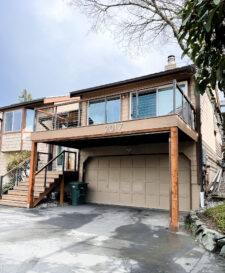
What This Climate Does to a Deck
Whatcom County sits in a maritime climate zone, and that shapes everything about how a deck ages here. A few specific patterns show up over and over on the decks we inspect:
Driving Rain and Standing Moisture
Rain here doesn't just fall straight down — wind-driven rain gets pushed sideways into ledger boards, under railings, and into any gap where flashing was skipped or installed wrong. Combined with our long stretch of wet months, wood surfaces can stay damp for extended periods, which is exactly the condition rot and fungal growth need to take hold.
A Long Moss Season
Shaded decks and north-facing decks in this area grow moss for a good chunk of the year. Moss isn't just cosmetic — it holds moisture directly against the decking surface, keeps boards from drying between rain events, and accelerates the exact wood breakdown that leads to soft spots and structural repair down the road.
Salt Air Exposure
Homes closer to the coast get a steady dose of salt-laden air that accelerates corrosion on fasteners, hardware, and metal railings. Nooksack sits farther inland than the immediate coastline, so the salt exposure here tends to be lighter than it is right along the water — but it's not zero, and it's one more reason we don't cut corners on fastener quality on any deck repair in this region.
Freeze-Thaw Swings
Whatcom County doesn't get brutal winters, but it does get repeated freeze-thaw cycling — nights near or below freezing followed by wet, thawed days. Water that's worked into a crack or a fastener hole expands when it freezes, which widens the damage a little more each cycle.
Signs a Deck in Nooksack Needs Repair
Some deck problems are obvious. Others hide underneath boards or railings until they've gotten serious. Here's what we tell homeowners to check for or watch for between inspections:
- Boards that feel soft, spongy, or flex noticeably when you walk on them
- Visible moss, algae, or dark staining on the deck surface or underneath the structure
- Railings or posts that wiggle or feel loose when pushed
- Gaps opening up between the deck and the house at the ledger board
- Rust streaks running down from screws, bolts, or metal connectors
- Stair stringers that feel uneven or bounce underfoot
- Standing water that doesn't drain off the surface within an hour or two after rain
- Fasteners backing out, or screw heads that spin freely without biting
- A grayed, splintering surface on boards that used to be smooth
Any one of these on its own might just mean routine maintenance. Several of them together, especially near the ledger board or support posts, usually means it's time for a real inspection.
What a Correct Deck Repair Actually Involves
A lot of deck "repairs" we get called out to fix were really just board swaps that ignored the structure underneath. A repair that holds up in this climate has to address what's actually happening below the surface, not just what's visible from the top.
Structural Framing First
Before we touch a single deck board, we check the joists, beams, and posts for rot, cracking, or undersized connections. A deck can look fine on the surface and still have a compromised joist or a post base that's been sitting in standing water. We never resurface over a structural problem.
The Ledger Board Connection
The ledger board — where the deck attaches to the house — is the single most common source of serious deck failure, and it's almost always a moisture problem, not a strength problem. Missing or improperly installed flashing lets water get behind the ledger and into the rim joist of the house itself. We check this connection on every repair, even when the homeowner's concern is somewhere else on the deck entirely.
Fasteners and Hardware
Old nails, undersized screws, and non-corrosion-rated hardware are one of the most common weak points we find. In a climate that keeps wood damp for long stretches, the wrong fastener corrodes, loses its grip, and eventually lets a board or a structural connection work loose. We use corrosion-resistant, code-rated fasteners and structural connectors sized for what they're actually holding.
Drainage and Airflow
A repair that doesn't improve how water sheds off and out from under the deck is a repair that will need doing again. That can mean adjusting board spacing, clearing blocked airflow under low decks, or correcting a slope that's letting water pool against the house instead of running off the outer edge.
Repair or Replace: How to Think About It
Not every deck problem calls for a full rebuild, and not every deck is worth patching. This is the honest breakdown we walk homeowners through during an inspection.
| Factor | Repair Usually Makes Sense | Replacement Usually Makes Sense |
|---|---|---|
| Framing condition | Joists and posts are sound; damage is isolated | Rot or damage is widespread through the structural frame |
| Ledger board | Connection is solid, flashing just needs correcting | Ledger is rotted or pulling away from the house |
| Decking boards | A handful of boards are bad, rest are sound | Most boards are cracked, cupped, or soft |
| Age of the deck | Under 15-20 years, built to a reasonable standard | Original construction is old or was never built to code |
| Railings/stairs | Loose but structurally attached | Posts are rotted at the base or undersized for current code |
When a deck is a genuine mix — sound framing but tired decking, for example — a targeted repair is almost always the more cost-effective path. When the frame itself is compromised, patching the surface just delays a bigger problem.
How Our Deck Repair Process Works
1. On-Site Inspection
We walk the entire deck, check underneath it when access allows, test the ledger connection, and probe suspect boards and posts for soft spots. This is where we tell you honestly whether you're looking at a repair or something bigger.
2. A Clear, Specific Plan
You get a written scope of what needs to happen — which boards, which connections, which hardware — not a vague estimate. If we find something during teardown that changes the scope, we tell you before we proceed, not after.
3. The Repair Itself
We replace what's actually failed, correct flashing and drainage issues at the source, and upgrade fasteners and hardware to corrosion-resistant, code-appropriate materials. We don't fasten new boards over old problems.
4. Cleanup and Walkthrough
We clear debris, sweep the work area, and walk the finished repair with you so you know exactly what was done and what to keep an eye on going forward.
Materials: What We Use and Why
Material choice matters more here than in drier climates, because everything on a deck spends more time wet than dry.
Framing Lumber
Pressure-treated lumber rated for ground contact or structural use is the standard for framing repairs in this climate. It's the right tool for hidden structural members that need to resist moisture year-round without being seen.
Decking Surface Options
For visible decking boards, homeowners generally choose between pressure-treated wood, cedar, and composite. Each has real trade-offs: wood is more affordable up front but needs regular sealing and refinishing to keep moss and staining under control; composite costs more initially but sheds water differently and needs less annual maintenance, though it still needs proper airflow underneath to perform well. We'll walk you through which fits your deck, your budget, and how much upkeep you actually want to do.
Fasteners and Flashing
We use corrosion-resistant fasteners rated for treated lumber contact, and self-adhering or metal flashing at every connection point that meets the house. Skipping proper flashing is the single most common shortcut we see behind ledger board failures.
Why It Matters to Hire a Crew That Already Works in Nooksack
Deck repair looks straightforward from a distance, but the difference between a repair that lasts and one that fails again in two years usually comes down to details that aren't visible once the work is finished — flashing installed correctly the first time, fasteners rated for the exposure they'll actually see, drainage that accounts for how water moves on this specific site. A crew that works regularly in Whatcom County has already seen how local moisture, moss, and freeze-thaw cycling play out on decks like yours, and builds the repair around that instead of a generic checklist. That local experience shows up in the parts of the job you never have to think about again.
After the Repair: Keeping It That Way
A good repair still needs some upkeep in this climate. A few habits go a long way:
- Sweep debris and standing leaves off the deck surface, especially in fall
- Treat moss on shaded areas early, before it spreads and holds moisture against the boards
- Check the ledger board flashing and railings once a year for early signs of loosening
- Reseal wood decking on the manufacturer's recommended schedule, not just when it looks dry
- Keep gutters and downspouts near the deck clear so runoff isn't draining onto it
If you're in Nooksack or the surrounding Ferndale area and your deck has soft spots, moss buildup, loose railings, or just needs an honest structural check, we're glad to come take a look. The estimate is free, there's no pressure, and you'll get a straight answer about whether you're looking at a repair or something more — use the form below to get started.