 Ferndale Siding
 Composite Decking in Sudden Valley: Built for the Climate You Actually Live In
Sudden Valley sits in a part of Whatcom County where decks work hard for a living. Between salt-laden air moving in off the water, driving rain for a good chunk of the year, and a moss season that seems to start earlier and last longer every year, an outdoor deck here takes a beating that a lot of national decking guides never account for. Composite decking can hold up to all of that — but only if it's specified and installed with this climate in mind, not just bolted together the way a crew might do it in a dry inland market.
This page covers what a composite deck actually needs to survive in Sudden Valley, what separates a correct install from a shortcut one, and how we approach the job from first measurement to final walkthrough.
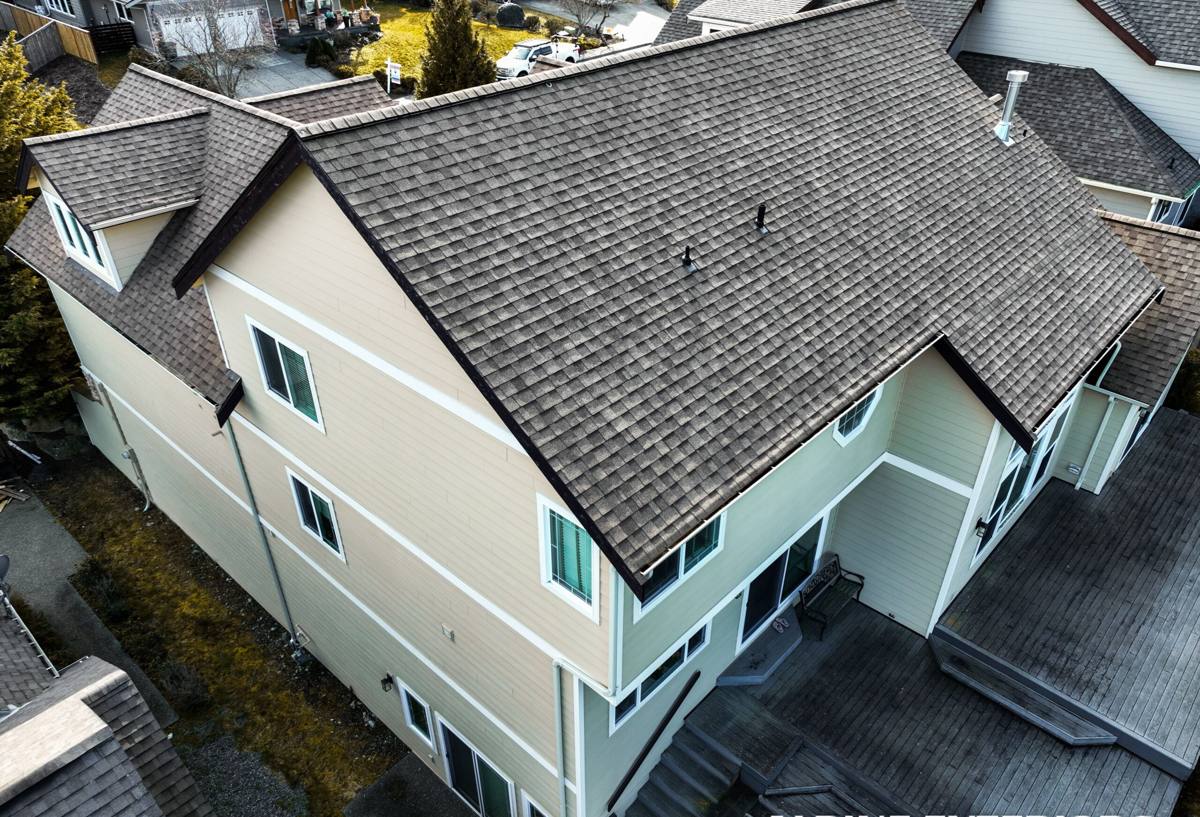
What the Local Climate Actually Does to a Deck
It's worth being specific about what "tough climate" means here, because it changes what you should be asking a contractor for:
- Moisture that never fully dries out. Long stretches of grey, damp weather mean a deck's underside and end-grain cuts stay wet far longer than in a sunnier climate, which is exactly the condition that breeds rot, mold, and algae.
- Moss and algae growth on horizontal surfaces. Anything shaded, north-facing, or under tree cover picks up a green film faster here than almost anywhere else in the state — and that film is slippery, not just unsightly.
- Salt air corrosion. Fasteners, brackets, and any exposed metal hardware degrade faster near the coast. Standard interior-grade screws or unprotected joist hangers will show rust within a season or two.
- Freeze-thaw cycling. Whatcom County doesn't get brutal winters, but it gets enough freeze-thaw swings to work water into any gap, crack, or improperly sealed connection over a few seasons.
None of this makes composite decking a bad choice — quite the opposite, it's one of the better-suited materials for this environment. But it does mean the installation details matter more here than they would in a drier region.
Composite vs. Wood vs. PVC: What Actually Makes Sense Here
We get asked to compare materials constantly, so here's an honest breakdown based on how each performs in a wet, moss-prone marine climate rather than a manufacturer's marketing sheet.
| Material | Upfront Cost | Moisture & Moss Resistance | Maintenance | Realistic Lifespan Here |
|---|---|---|---|---|
| Pressure-treated wood | Lowest | Poor to fair — absorbs water, feeds algae growth | Annual sealing/staining, regular cleaning | 10–15 years before major repair or replacement |
| Cedar | Moderate | Fair — naturally rot-resistant but still absorbs moisture over time | Sealing every 1–2 years, moss removal | 12–18 years with upkeep |
| Capped composite | Higher | Very good — capped shell resists moisture absorption and staining | Periodic washing, no sealing or staining | 25–30+ years, backed by manufacturer warranty |
| PVC decking | Highest | Excellent — fully synthetic, no organic material to feed mold | Occasional washing | 25–30+ years, but can look and feel less like natural wood |
For most Sudden Valley homeowners, capped composite hits the right balance: it resists the moisture and moss problems that plague wood decks in this climate, doesn't demand yearly sealing, and still has the warmth and grain texture people want underfoot. We install PVC when someone specifically wants zero organic content or has a shaded, moss-heavy site — but we're upfront that it comes at a real cost premium and a different look.
Why We Don't Push Uncapped Composite
Older-generation uncapped composite (a wood-plastic blend with no protective shell) is still on the market at a lower price point. Our professional standard is to steer clients away from it for this specific climate: without a capped surface, it absorbs moisture at the fiber level, which shows up as swelling, staining, and mold growth faster here than in drier regions. It's not that the product is worthless everywhere — it's that Sudden Valley's rain and moss season exposes its weak point.
What a Correct Composite Deck Install Actually Involves
Composite boards themselves are fairly forgiving. The framing and connection details underneath them are where a deck either lasts three decades or starts failing in five years. This is the part of the job that's invisible once the boards go down — and the part most likely to get rushed by a crew that doesn't specialize in this work.
Ledger Board and Flashing
Where the deck attaches to the house is the single most common failure point in this climate. Water that gets behind an improperly flashed ledger board has nowhere to go and will rot the rim joist and sheathing from the inside, often without any visible sign until the damage is severe. A correct install uses proper flashing, a water-resistant barrier between the ledger and the house, and code-compliant fasteners — not just lag screws driven through siding.
Framing, Joist Spacing, and Ventilation
Composite manufacturers specify tighter joist spacing than traditional wood decking allows — commonly 12" or 16" on-center depending on the brand and board profile, and often tighter still at angles, stairs, or picture-frame borders. Skipping this to save on lumber is one of the most common shortcuts we see, and it shows up as bounce and long-term sagging. We also leave adequate airflow underneath the deck so moisture doesn't sit trapped against the framing through the wet months.
Fasteners, Gaps, and Hidden Fastener Systems
Composite boards expand and contract with temperature and moisture more than people expect. Correct gap spacing between boards and at butt joints allows for that movement and lets water drain through rather than pool on the surface. We use corrosion-resistant, coated fasteners rated for the coastal environment and hidden fastener clip systems where the board profile supports it, which also gives a cleaner surface with no exposed screw heads to catch water or trap grime.
Footings and Drainage
Footings need to be set to proper frost depth and, just as important, positioned and sloped so water drains away from the posts rather than pooling around them. In a yard with heavy clay soil or poor natural drainage — common in parts of this area — that sometimes means additional grading or drainage work before the deck framing even starts.
Permits, Codes, and Sudden Valley Specifics
Deck permitting requirements depend on size, height, and attachment method, and most jurisdictions in Whatcom County require a permit for anything beyond a small, low, freestanding platform. We handle the permit process as part of the job rather than leaving it to the homeowner to sort out. Guardrail height, baluster spacing, and stair rise-and-run all have to meet current code — details that are easy to get wrong on a DIY or handshake-deal build and that inspectors will flag.
If your property in Sudden Valley falls under a homeowners' association or community covenants, there may also be guidelines around decking materials, colors, or railing style. We're happy to work from whatever design guidelines apply to your property — just have the documentation on hand when we come out for the estimate so we can plan the material selection around it up front instead of after ordering.
Our Process, Start to Finish
- On-site consultation and measurement. We walk the existing deck or build site, check drainage and sun/shade exposure, and talk through material and layout options.
- Material and color selection. We'll go over capped composite and PVC options, board profiles, and hardware finishes suited to a coastal, moss-prone site.
- Permit handling. We prepare and submit the permit package so you're not chasing paperwork.
- Demo, if replacing an existing deck. Old decking, and any compromised framing underneath, comes out before we build.
- Framing and structural work. Footings, ledger flashing, joists, and blocking are set to spec before a single composite board goes down.
- Composite installation. Boards, hidden fasteners, fascia, and railing go in with correct spacing and drainage in mind.
- Final walkthrough and cleanup. We inspect the finished deck with you, cover care basics, and leave the site clean.
Living With a Composite Deck Here: Maintenance That Actually Matters
Composite decking is marketed as "low maintenance," which is true relative to wood — but low maintenance isn't no maintenance, especially with this much moss and rain in the picture. A short seasonal routine keeps a capped composite deck looking and performing the way it should for decades:
- Sweep off leaves, needles, and organic debris regularly — trapped debris holds moisture against the board surface and is the main food source for moss and algae.
- Wash the deck surface at least once or twice a year with a soft-bristle broom and mild soap and water; a pressure washer on a low setting can help but should never be aimed directly at board seams or fastener points.
- Check that gaps between boards stay clear so water can drain through rather than sitting on the surface.
- Inspect railing posts and stair connections annually for looseness — connection points are the first thing to show movement if framing settles.
- Keep gutters and downspouts near the deck clear so roof runoff isn't dumping extra water onto or under the structure.
- Trim back overhanging branches where shade and moisture combine to accelerate moss growth.
What Affects Your Quote
Every deck is priced around a handful of real variables rather than a flat per-square-foot number:
| Factor | Why It Matters |
|---|---|
| Deck size and shape | Square footage, plus angles and picture-framed borders that require extra cutting and framing |
| Existing structure condition | Whether footings and framing can be reused or need to be rebuilt to current code |
| Height and stairs | Elevated decks and multi-step stairs add framing, railing, and code requirements |
| Material and board profile | Capped composite tiers and PVC vary in price; hidden fastener systems add labor but improve the finished look |
| Site access and drainage needs | Difficult access or poor soil drainage can add prep work before framing starts |
| Railing and lighting options | Composite, metal cable, or glass railing systems and integrated lighting are priced separately from the deck surface |
Why Hire a Crew That Already Works in Sudden Valley
Anyone can install composite decking on paper. What matters here is knowing how this specific stretch of Whatcom County behaves — where moss takes hold fastest, which framing details actually hold up to salt air over years rather than months, and what local permitting and any community design guidelines require before work starts. A crew that's already done decks in this neighborhood isn't guessing at any of that; we've seen what fails here and we build to avoid it, not to meet a generic national spec sheet.
If you're weighing a new composite deck or replacing a tired wood one in Sudden Valley, we're glad to come take a look and give you a straightforward, no-pressure estimate — just fill out the form below.