 Ferndale Siding
 Building Decks for the Nooksack Area's Real Conditions
Nooksack sits close enough to the water and the Nooksack River corridor that homes here deal with a specific mix of weather most decking contractors from outside the area don't plan for correctly: salt-laden air moving in off Bellingham Bay and the Strait of Georgia, long stretches of driving rain through fall and winter, and a moss season that can run eight months out of the year on anything shaded or north-facing. A deck built to a generic spec sheet from a big-box installer might look fine the first summer. By year three or four, you're often looking at corroding hardware, soft spots where water sat against untreated end grain, and a slick green film on the walking surface every morning from October through April.
We build decks for this specific stretch of Whatcom County, and that means every material choice and every detail — flashing, fasteners, footing depth, board spacing — gets picked for what actually holds up here, not what holds up in a drier climate.
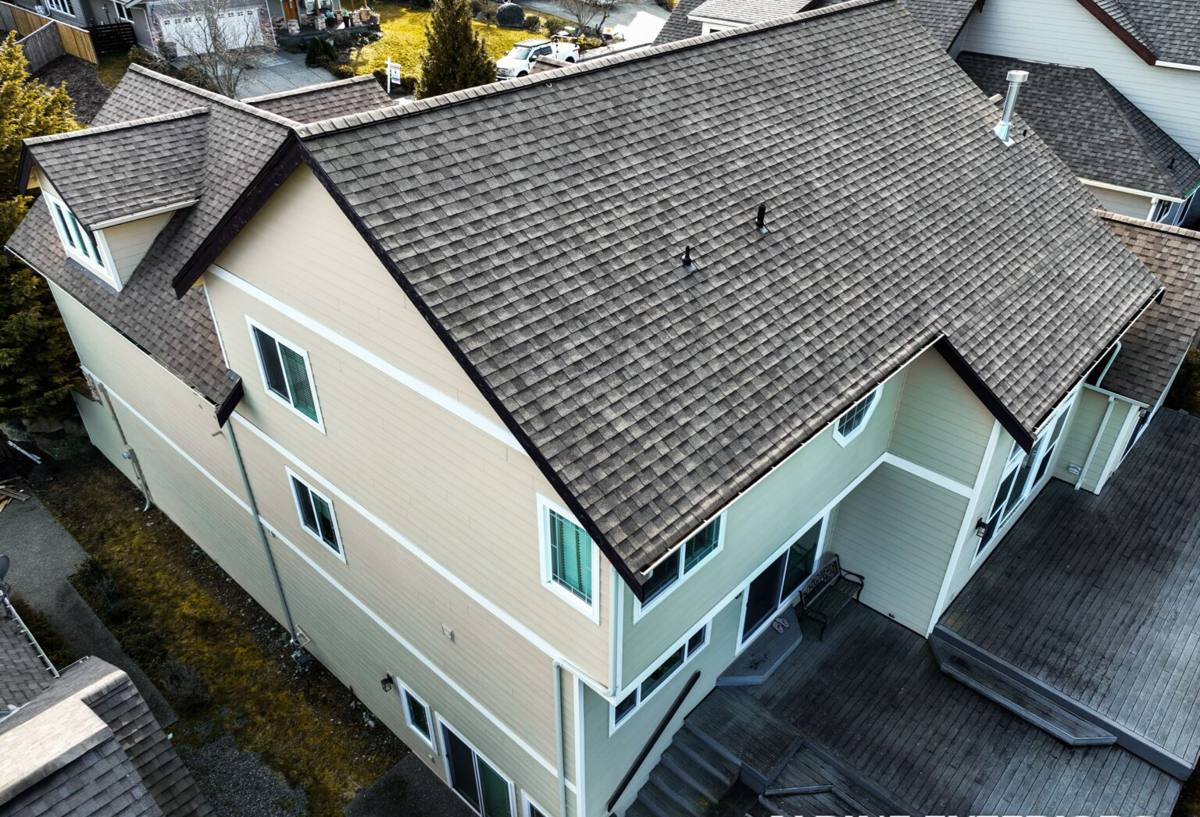
What Nooksack Homes Need From a Deck
Moisture Management First
Rain here doesn't just fall — it drives sideways during winter storms, and it lingers as fog and dew even on dry days. A deck attached to the house needs a ledger board that's properly flashed and separated from the siding with a drainage gap, so water shed off the roof or the wall doesn't wick into the house framing. This is one of the most common failure points we find when repairing older decks in this area: a ledger bolted flush to the wall with no flashing, slowly rotting the rim joist behind it for years before anyone notices.
Salt Air and Metal
Standard zinc-coated fasteners and brackets corrode faster near the coast than most homeowners expect, especially on decks with any elevation or wind exposure. Hardware that would last twenty years inland can show rust streaks and weakening within five to seven years here if it's the wrong grade. We spec stainless steel or heavy hot-dip galvanized hardware rated for coastal exposure on structural connections — joist hangers, ledger bolts, post bases — because that's where a failure actually matters.
Moss and Slip Resistance
Moss doesn't just make a deck look neglected — it makes it dangerous. Shaded decks, north-facing decks, and anything under overhanging trees (common on wooded Nooksack lots) will grow moss on smooth, low-drainage surfaces. Board spacing, surface texture, and airflow underneath the deck all affect how fast moss establishes and how easy it is to keep off.
Decking Material Comparison
There's no single "best" decking material — the right call depends on your budget, how much upkeep you want to do, and how shaded or exposed your specific lot is. Here's how the common options actually perform in this climate:
| Material | Moisture/Rot Behavior | Moss Resistance | Maintenance | Typical Lifespan Here |
|---|---|---|---|---|
| Pressure-treated fir/hem-fir | Good if sealed and re-sealed regularly; end grain is the weak point | Moderate — needs periodic cleaning | Annual wash, re-seal every 2-3 years | 15-20 years with upkeep |
| Cedar | Naturally rot-resistant, ages gracefully, but still needs sealing to hold color | Moderate | Cleaning + oil/stain every 1-2 years | 20-25 years |
| Composite (capped) | Excellent — doesn't absorb water or rot | Lower, but still needs washing to prevent surface film | Occasional wash, no sealing | 25-30+ years |
| Uncapped composite (older style) | Fair — can absorb moisture at cut edges over time | Similar to capped, less forgiving of scratches | Wash regularly | 15-20 years |
For a lot with heavy tree cover or a north-facing exposure, we'll often steer a homeowner toward capped composite even at a higher upfront cost, simply because the lower maintenance burden matters more when moss and moisture pressure are constant rather than seasonal.
Framing, Footings, and What's Underneath
The part of a deck nobody sees is the part that determines whether it's still solid in fifteen years. Footings in this area need to be set below frost depth and sized for the soil conditions on the specific lot — some Nooksack properties have heavier clay content that drains slower and needs larger or deeper footings to stay stable through repeated wet-dry cycles.
Joists and beams should be sized with real load calculations, not guesswork, and pressure-treated framing lumber rated for ground contact should be used anywhere it's within a few inches of soil or sits low to the ground where airflow is limited. Low-clearance decks — common on homes built into a slope — need extra attention to under-deck ventilation, because trapped moisture underneath is where rot starts even if the visible decking looks fine.
Post Bases and Connections
Posts should sit on metal post bases that keep the wood off the concrete footing entirely — wood-to-concrete contact holds moisture against the post and is one of the fastest ways to rot a structural post from the bottom up. Every structural connection (post-to-beam, beam-to-joist, ledger-to-house) should use hardware rated for the load and the exposure, not just whatever's cheapest at the lumber yard.
Railings, Stairs, and Fasteners
Railing posts take real lateral load — code requires them to resist a specific push force — so they need to be through-bolted into the framing, not just screwed to the rim joist. On a deck near the coast, exposed fasteners on railings and stair stringers are exactly the kind of hardware that shows corrosion first, since they're fully exposed to weather with no covering. We use corrosion-rated fasteners on every visible connection, and we cap or countersink screw heads where possible to reduce the surface area exposed to standing water.
Stair stringers deserve the same rot-resistance treatment as the framing — a stringer set directly on a concrete pad without a barrier or drainage path is a common spot we find early rot when doing repair work on older decks in the area.
Our Deck-Building Process
- On-site assessment. We look at sun exposure, tree cover, slope, soil, and how the deck will attach to the house before recommending materials.
- Design and material selection. We walk through the tradeoffs — decking material, railing style, footing layout — based on your budget and how much maintenance you want to take on.
- Permitting. We handle the permit application and inspections required for the project, sized correctly for the structure you're building.
- Footings and framing. Footings are dug to proper depth, framing is built with rated lumber and corrosion-resistant hardware, and the ledger is flashed correctly before anything else goes on.
- Decking, railings, and stairs. Installed with attention to fastener spacing, drainage gaps, and any code-required railing height and baluster spacing.
- Final walkthrough. We go over care and maintenance specific to the material you chose so the deck holds up the way it's built to.
Permits and Code Considerations
Most attached decks above a certain height, and any deck with a permanent roof structure, require a permit and inspection in Whatcom County. Requirements cover things like footing depth, railing height, baluster spacing (to keep gaps small enough that a child can't pass through), and stair rise/run dimensions. Skipping this step — or hiring someone who skips it — can cause real problems later: unpermitted structural work can complicate a home sale, and it means nobody with code expertise ever checked the footings or framing before it was covered up. We pull the permits and coordinate inspections as part of the job, not as an afterthought.
Maintenance That Actually Matters Here
Every decking material needs some upkeep in this climate — the difference is how much and how often. A short seasonal routine keeps most decks looking good and structurally sound for decades:
- Sweep debris and standing leaves off the deck regularly, especially in fall — trapped organic matter holds moisture and feeds moss growth.
- Wash the surface at least once a year (spring is ideal) with a deck cleaner appropriate to the material — pressure washing wood too aggressively can damage the surface fibers.
- Re-seal or re-stain wood decking every 1-3 years depending on sun and rain exposure — shaded areas need it more often, not less, because they stay damp longer.
- Check railing posts and stair connections annually for looseness or visible rust at fastener heads.
- Keep gutters and downspouts near the deck clear so runoff isn't dumping extra water onto or under the structure.
- Trim back overhanging branches where practical to cut down on moss-feeding shade and leaf litter.
Cost Factors to Expect
Every deck is priced around size, material, height off the ground, and site access, so a firm number only comes from a walkthrough. In general terms, these are the things that move the price the most:
| Factor | Why It Matters |
|---|---|
| Decking material | Composite runs higher upfront than pressure-treated wood but costs less over the deck's life in maintenance |
| Height and footing depth | A raised deck needs more substantial framing, railings, and often stairs, adding structural cost |
| Site access and slope | Sloped or tree-covered lots can complicate footing placement and equipment access |
| Railing style | Cable, glass, or custom railing systems cost more than standard baluster railing |
| Roof or cover addition | A covered deck adds structural requirements and typically a separate permit review |
We give a written estimate that spells out material and labor separately, so you can see exactly what's driving the number and adjust scope if needed before we start.
Why a Crew That Works Nooksack Regularly Makes a Difference
A lot of deck problems we get called to fix started with a builder who didn't work in this specific climate often enough to know where the failure points are — the ledger without flashing, the wrong-grade hardware, the footing that wasn't deep enough for the soil on that lot. Working regularly in Nooksack and the surrounding Ferndale area means we've already seen how salt air, driving rain, and moss actually affect decks here over time, not just in theory. That shows up in the small decisions — fastener grade, board spacing, drainage detailing — that a generic spec sheet doesn't account for.
If you're planning a new deck or replacing one that's showing its age, we're happy to come take a look and talk through what makes sense for your specific lot and budget. Reach out for a free, no-pressure estimate using the form below.