 Ferndale Siding
 Why Blaine's Climate Changes How Board and Batten Should Be Built
Blaine sits at the far northwest corner of Whatcom County, right where the Pacific Northwest's wet weather meets open water and salt air off the Salish Sea. That combination is harder on exterior materials than most inland Whatcom County towns ever see. Homes here deal with driving rain that comes in sideways during winter storms, a long moss season that can run from fall through spring, and airborne salt that speeds up corrosion on anything metal. Board and batten siding looks great in this setting — the vertical lines suit both older farmhouses and newer builds along the water — but the style only holds up if it's built for these conditions from the start, not just installed the same way you'd do it in a dry inland climate.
Our crew is based out of Ferndale and works this stretch of Whatcom County regularly, which matters more for board and batten than for most siding styles. It's a style with more seams, more trim, and more places for water to find a way in if the details are wrong.
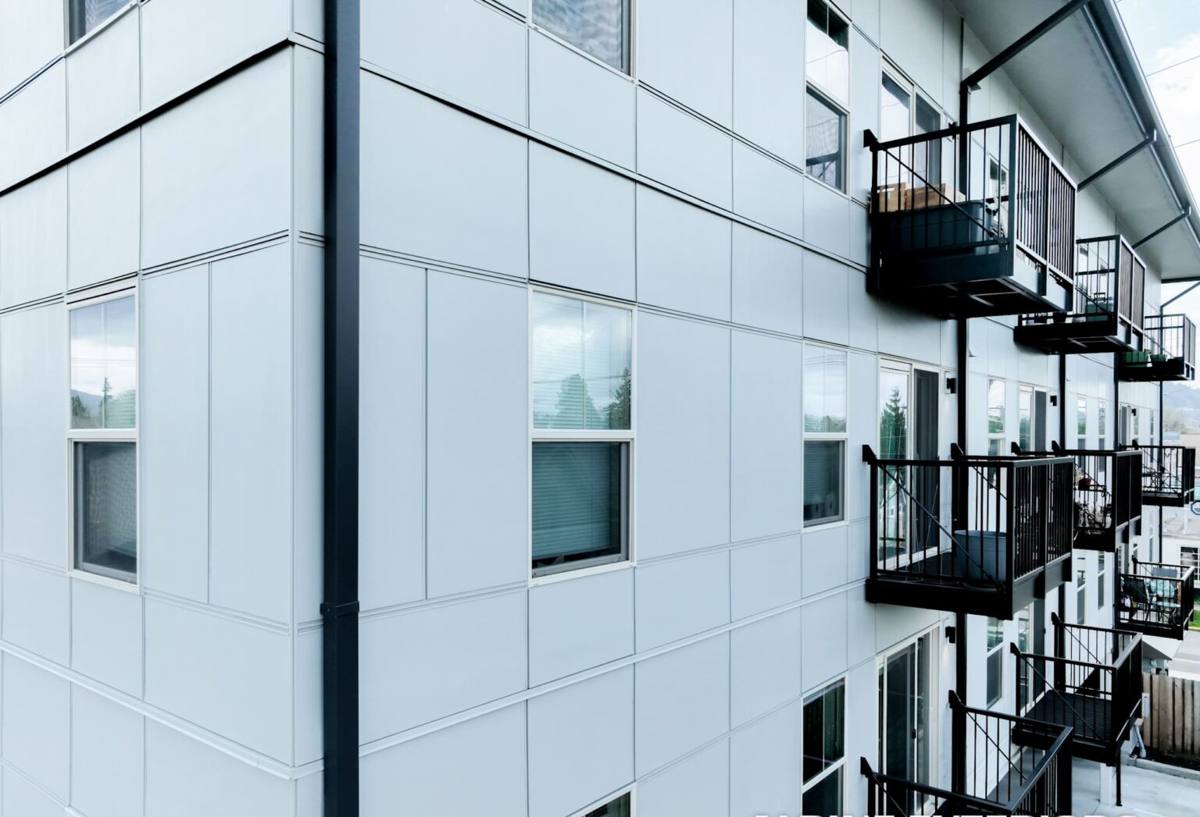
What Board and Batten Siding Actually Is
Board and batten is a vertical siding pattern: wide flat panels installed side by side, with narrow strips (battens) covering the seams between them. It's one of the oldest siding styles in American building, originally developed because it was a simple way to cover gaps in vertical wood planking. Today it's chosen almost entirely for how it looks — clean vertical lines, strong shadow lines from the battens, and a farmhouse or modern-craftsman character that horizontal lap siding doesn't give you.
The Look vs. The System Behind It
The visual pattern is simple, but what's happening behind the panels is what determines whether the siding lasts. Every seam under a batten is a place water can travel if the panel isn't sealed, fastened, and drained correctly. A board and batten wall is really a drainage system with a decorative pattern on top of it — and in a climate like Blaine's, the drainage system matters more than the pattern.
Why We Only Install This Style in James Hardie Fiber Cement
Board and batten shows up in several materials — vinyl, engineered wood, primed wood, and fiber cement — and we get asked fairly often why we don't offer more of them. The honest answer is that we've made a standard, not because the other products are worthless, but because of how they hold up specifically in this climate over the long run.
| Material | How It Handles Moisture Here | Maintenance Over Time | Long-Term Trade-Off |
|---|---|---|---|
| Vinyl | Sheds water but flexes and gaps in temperature swings; seams can loosen | Low upkeep but limited repair options if damaged | Can look thin against the shadow lines board and batten is supposed to show off |
| Engineered wood | Performs well if the finish stays intact; vulnerable at cut edges and seams | Needs caulk and paint upkeep to keep moisture out long-term | Edge swelling risk if maintenance lapses in a wet climate |
| Primed wood | Absorbs moisture readily; relies entirely on paint film | Repainting on a recurring cycle, especially with our rain and moss exposure | Highest ongoing maintenance burden of the group |
| James Hardie fiber cement | Non-combustible cement composite; dimensionally stable in wet/dry cycling | Factory ColorPlus finish reduces repainting needs | Higher upfront material cost, offset by lower maintenance |
James Hardie's fiber cement is engineered in formulations built for wetter, harsher climates, which is a real fit for Whatcom County's rain and marine air. Add in the ColorPlus factory finish — a baked-on finish rather than a field-applied paint job — and a strong transferable warranty, and it's the product we're willing to put our name behind for a style that lives or dies on how well its seams and edges are protected.
What We Don't Use, and Why That's Not a Knock on Anyone Else
We don't install vinyl, LP SmartSide or similar engineered wood products, Cemplank or Allura, or primed spruce or cedar board and batten. Some of those are decent products installed well by other contractors. We simply decided we'd rather stand behind one system we know inside and out, install to spec every time, and back with a warranty we're confident in, than offer five different systems at five different levels of long-term performance.
What a Correct Board and Batten Installation Involves
This is where most of the failures we get called out to fix actually start — not with the material, but with shortcuts taken during install. A correct job includes:
The Drainage Gap
Vertical siding should be installed over a rain screen — furring strips or a drainable house wrap that create a gap between the siding and the wall sheathing. That gap lets any water that does get behind the panels drain and dry out instead of sitting against the wall assembly. Skipping this is one of the most common corners cut on board and batten jobs, and it's invisible once the siding is up — which is exactly why it matters who's doing the work.
Fasteners and Flashing
In a salt-air environment, fastener choice isn't optional. Hardie specifies corrosion-resistant fasteners for a reason, and using the wrong ones is a slow-motion failure — you won't see rust streaks and loosening panels for a few years, but they'll come. Flashing at windows, doors, and any horizontal trim needs to be layered correctly so water sheds outward at every transition, not just at the obvious spots.
Batten Spacing and Panel Layout
Batten spacing has to account for the panel width, structural framing underneath, and expansion joints where panels meet. Panels need proper clearance at the bottom (away from grade and roof lines) and sealed, primed cut edges anywhere the factory finish has been cut into on site — an exposed raw edge is a moisture entry point waiting to happen.
- Rain screen or drainable wrap installed behind the siding, not skipped
- Corrosion-resistant fasteners rated for coastal/marine exposure
- Flashing integrated at every window, door, and horizontal trim transition
- All field-cut panel edges primed or sealed before installation
- Proper clearance maintained at grade, roofline, and any deck or patio surfaces
- Batten layout planned around structural framing, not just visual spacing
Local Factors That Change the Job in Blaine
Salt Air and Hardware Corrosion
Proximity to the water means airborne salt settles on every exterior surface, including fasteners, flashing, and any exposed metal trim. Standard hardware corrodes noticeably faster here than it would twenty miles inland. We factor that into fastener and flashing selection on every board and batten job in Blaine — it's a small line item that prevents a much bigger problem down the road.
Moss, Shade, and Moisture Cycling
Whatcom County's tree cover and long wet season create ideal conditions for moss and algae growth on north-facing and shaded walls. Board and batten's vertical battens create more surface texture and more shadowed seams than flat lap siding, which can hold moisture a little longer after rain if the drainage plane isn't doing its job. A correctly built rain screen and a factory finish that resists mildew growth both matter more here than they would in a drier climate.
Driving Rain Off the Water
Storms coming off open water tend to drive rain sideways into exposed walls rather than straight down. That puts more pressure on vertical seams and trim joints than a typical inland rainstorm would, which is exactly why flashing details and panel sealing can't be treated as optional extras on a Blaine job.
Our Process, Start to Finish
We keep the process straightforward and don't skip steps to move faster:
- On-site assessment of the existing siding, wall condition, and any moisture or rot already present
- Removal of old siding and inspection of the sheathing underneath before anything new goes up
- Repair of any damaged sheathing or framing found during tear-off
- Installation of a drainable house wrap or rain screen system behind the new siding
- Installation of James Hardie panels and battens to manufacturer spec, with proper fastening and flashing at every transition
- Final inspection of seams, trim, and edges before cleanup and walkthrough
Because we work this part of Whatcom County regularly, we're already familiar with the permitting expectations and typical wall conditions found on homes in and around Blaine, which tends to keep the job moving without surprises mid-project.
Cost Factors for a Board and Batten Project in Blaine
Every home is different, but the same handful of factors drive cost up or down on most board and batten jobs we quote in this area:
| Factor | Why It Matters |
|---|---|
| Square footage and wall complexity | More corners, gables, and dormers mean more trim and batten cuts |
| Existing siding removal | Tear-off and disposal add labor versus a bare wall |
| Sheathing condition | Rot or moisture damage found during tear-off requires repair before siding goes on |
| Batten pattern and spacing | Tighter batten spacing uses more material and labor per square foot |
| Color choice | Factory ColorPlus finish versus field-painted trim affects both cost and long-term upkeep |
| Access and site conditions | Waterfront lots, steep grades, or limited access can add setup time |
We walk through these factors during the estimate so there's no guessing about where the cost is coming from.
Maintaining Board and Batten Siding After Installation
Fiber cement board and batten is low-maintenance compared to wood, but "low" isn't "none" — especially in a climate that grows moss on nearly anything that sits still. A simple seasonal routine keeps a correctly installed system performing for the long haul:
- Rinse siding and remove built-up moss or algae on shaded, north-facing walls once or twice a year
- Check caulking at trim, window, and door joints annually and re-caulk if it's cracked or pulling away
- Keep gutters clear so overflow isn't running directly down siding walls
- Trim back vegetation and tree limbs that keep walls shaded and damp longer than they need to be
- Watch for any loose or corroded fasteners and have them addressed before they become a bigger repair
Why Hiring a Crew That Already Works Blaine Matters
Board and batten is unforgiving of installation shortcuts in a way that flat lap siding usually isn't — the extra seams and trim give water more opportunities to find a way in if the details are wrong. A crew that already works this part of Whatcom County has seen how local wall assemblies typically hold up, knows what the salt air and moss exposure actually do to a house over time, and installs with that experience built in rather than learning it on your home. That's the difference between board and batten siding that looks good for a few years and one that's still performing correctly well into its second decade.
If you're weighing board and batten for a home in Blaine, we're happy to take a look and walk you through what your specific house needs — no pressure, no obligation. Reach out below for a free estimate.