 Ferndale Siding
 Why Siding Repair Looks Different in Bellingham
Bellingham sits right up against Bellingham Bay, tucked into a corner of Whatcom County where marine air, heavy tree cover, and a rainy season that runs most of the year all combine to put unusual stress on exterior siding. Homes here don't fail the way siding fails in drier parts of the state. The damage patterns are specific: salt-laden air off the bay accelerates corrosion on fasteners and trim, wind-driven rain forces water sideways into laps and seams that were never designed to handle it, and a long, shaded moss season keeps north-facing and tree-covered walls damp for weeks at a time. A repair crew that doesn't understand these patterns tends to patch the visible symptom and miss the cause, which is why so many "repaired" walls fail again within a year or two.
When we get a repair call in Bellingham, we're not just looking at the board that's cracked or the panel that's buckled. We're looking at what let moisture in, how long it's likely been sitting there, and whether the surrounding material and structure underneath are still sound. That's the difference between a repair that holds and one that's a temporary cosmetic fix.
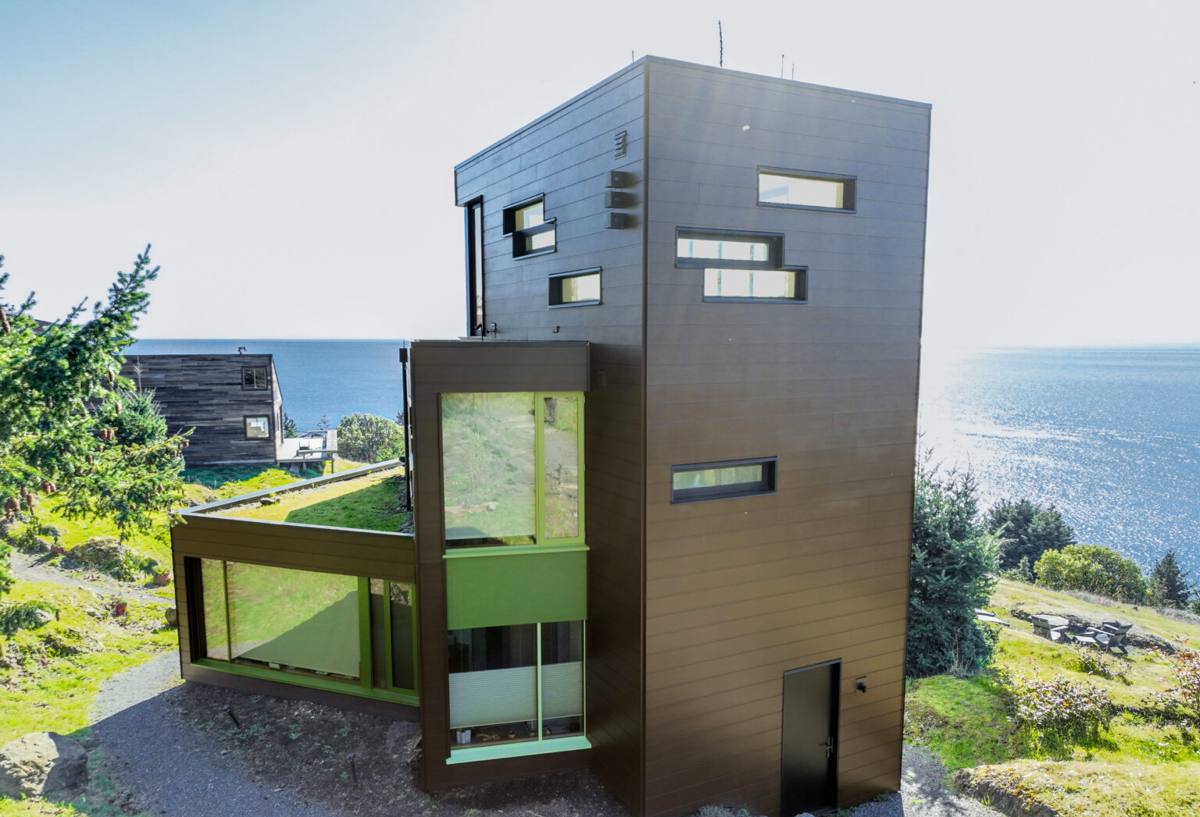
Signs Your Bellingham Home Needs Siding Repair
Some damage is obvious. A lot of it isn't — especially on shaded, tree-covered lots where moss and algae can mask what's happening underneath. Here's what we tell Bellingham homeowners to walk their exterior and check for, especially before the wet season sets in:
- Soft or spongy spots when you press on siding, especially near the bottom courses and around window and door trim
- Visible cracking, buckling, or warping — common where old caulk joints have failed and let water behind the board
- Persistent moss, algae, or dark streaking on north- and west-facing walls that doesn't wash off with a light rinse
- Peeling or bubbling paint, which almost always means moisture is trapped behind the finish, not just a paint failure
- Rust staining running down from nail heads or metal trim — a common sign of corrosion in Bellingham's salt-air exposure
- Gaps opening up at seams, corners, or where siding meets trim, flashing, or the foundation
- A musty smell or visible staining on interior walls that share an exterior wall with damaged siding
Any one of these on its own might be minor. Two or three together, especially clustered in one area, usually means water has been getting behind the siding for a while.
What a Correct Repair Actually Involves
A quick patch — caulk over a crack, a fresh coat of paint over a stain, a single board swapped without checking what's behind it — covers the problem for a season, maybe two, in Bellingham's climate. It doesn't fix it. A repair done right follows a few non-negotiable steps:
1. Find the actual water path
Cracked or rotted siding is a symptom. We trace back to how water got in — failed caulking, a flashing gap, a nail hole that opened up, siding installed too close to grade or a deck surface — because if that path isn't closed, the new material fails the same way the old one did.
2. Check what's behind the siding
Once boards or panels come off, we look at the house wrap, sheathing, and framing underneath. In Bellingham's wetter neighborhoods, we regularly find sheathing that's gone soft in a localized spot even though the siding itself looked repairable from the outside. That has to be addressed before anything new goes back up, or the repair is cosmetic only.
3. Match material and installation method correctly
Replacement pieces need to match thickness, profile, and finish — and be installed with proper clearances, fastening, and joint treatment, not just tacked into the gap. Sloppy installation at a repair site is one of the most common causes of repeat failures we see when we're called out to fix someone else's earlier patch job.
4. Re-seal and re-flash properly
Correct flashing and sealant at butt joints, corners, and penetrations (vents, hose bibs, light fixtures) matters as much as the siding material itself. This is the step that gets skipped most often on rushed repairs, and it's usually the first thing to fail again in the next driving rainstorm.
How Different Siding Materials Hold Up to Repair in This Climate
Not all siding repairs the same way, and it matters what's already on the house. Here's how the materials we commonly encounter on Bellingham homes tend to behave:
| Material | Common Damage in Bellingham's Climate | Repair Considerations |
|---|---|---|
| Cedar / wood lap | Rot at butt joints and lower courses, moss growth, paint failure from trapped moisture | Repairable if rot is localized; widespread softness usually means a larger section needs replacing, not patching |
| Vinyl | Cracking in cold snaps, warping near dryer vents or reflective heat, moss buildup in overlaps | Individual panels can often be swapped, but exact color/profile matches get harder to find as vinyl ages and fades |
| LP SmartSide (engineered wood) | Edge swelling and delamination where moisture gets into the composite core, especially at cut ends | Swollen or delaminated sections generally need full replacement — the composite material doesn't recover once it's absorbed water |
| Fiber cement (James Hardie) | Caulk joint failure, fastener corrosion in older installs, coating wear at high-exposure areas | The board itself resists moisture damage; most repairs are joint, fastener, or finish work rather than replacing water-damaged material |
This is a big part of why we install exclusively James Hardie fiber cement on new work: it holds up to Bellingham's moisture exposure in a way that keeps future repairs simpler and less frequent. When we do repair Hardie siding, we're rarely fighting rotted or swollen material — the problems are almost always at the joints, fasteners, or finish, which are far more straightforward and predictable to fix correctly.
Repair or Replace? How We Make the Call
Not every damaged section needs full replacement, and we're not going to tell you it does when a targeted repair will genuinely hold. But we're also not going to patch over a problem that's going to come back. The honest questions we walk through with a homeowner are:
- Is the damage isolated to one area, or is it showing up in multiple spots around the house?
- Is the sheathing and framing underneath still sound, or has water been sitting there long enough to compromise it?
- How old is the existing siding, and is it near the end of its realistic service life anyway?
- Would a repair leave a visible mismatch in material, color, or weathering that bothers you?
- Is the underlying cause (grading, gutters, flashing, ventilation) something that will just cause the same damage again nearby?
When damage is contained and the substrate is sound, a well-executed repair is the right call and the more cost-effective one. When we're finding soft sheathing, repeated failure points, or siding that's simply reached the end of what it can reasonably protect, we'll say so directly — and explain why, not just recommend a bigger job.
Our Process for a Bellingham Repair Call
- Inspection: We walk the full exterior, not just the spot you called about — problems in Bellingham's climate rarely show up in isolation.
- Diagnosis: We identify the actual water path and check what's happening behind the siding before quoting anything.
- Honest scope: We tell you plainly whether it's a repair, a larger section replacement, or something that should wait, with the reasoning behind it.
- Correct repair: Matched material, proper flashing and sealant, and fastening that accounts for this region's wind-driven rain — not a cosmetic patch.
- Walkthrough: We show you what we found and what we did, so you know the condition of your siding going forward.
Why We Only Work With James Hardie Fiber Cement
We don't install vinyl, LP SmartSide, Cemplank, Allura, or primed wood siding — on repairs or new installs. That's a deliberate standard, not a lack of options. In a climate like Bellingham's, with salt air off the bay, sustained driving rain, and shaded walls that stay damp through a long moss season, the materials that struggle most are the ones most sensitive to trapped moisture: engineered wood composites that swell and delaminate at damaged edges, and wood products that need consistent paint maintenance to keep water out at all. James Hardie fiber cement is non-combustible, holds its ColorPlus factory finish without the repaint cycle wood siding demands, and is engineered in HZ product lines built for wet regions like ours. It also comes with a strong transferable warranty when installed to Hardie's spec. When we do repair work on homes that already have Hardie siding, the fixes are almost always simpler and more permanent than what we see on other materials — which is exactly why we stand behind it as the only product we put on a house.
Why Hiring a Crew That Already Works Bellingham Matters
Siding repair isn't just carpentry — it's understanding how a specific climate attacks a specific wall. A crew that primarily works drier, inland areas may not think to check for salt corrosion on fasteners or recognize how far wind-driven rain can travel up a wall during a real Whatcom County storm. A crew that already works Bellingham knows which orientations hold moisture longest, which older neighborhoods tend to have specific siding vintages and quirks, and what a repair actually needs to hold up through another wet season rather than just look fixed for the photos.
If you're seeing cracking, staining, moss buildup, or soft spots on your Bellingham home's siding, we'll come take an honest look — no pressure, no upsell, just a clear read on what's actually going on and what it would take to fix it right. Request a free estimate below and we'll get you scheduled.