 Ferndale Siding
 Roofing for Kendall's Wooded, Wet Whatcom County Setting
Kendall sits inland from Ferndale toward the Mount Baker foothills, and that location shapes what a roof deals with all year. Homes out here tend to sit under more tree cover than properties closer to the water, which means more shade on the roof deck, more needle and leaf litter in the valleys, and slower drying after every storm. Add in the driving rain that rolls through Whatcom County for much of the fall and winter, plus the long moss season that shade and moisture create together, and you have a roofing environment that punishes shortcuts. An asphalt shingle roof installed correctly for this setting should shed water fast, resist moss colonization, and hold up to wind gusts funneling down through the foothills. One installed generically, without accounting for tree cover and drainage, tends to show moss and granule loss years before it should.
This page is specifically about asphalt shingle roofing for Kendall-area homes — not a general rundown of shingle types. If you're weighing a roof replacement or repair out here, this is what actually matters for your property.
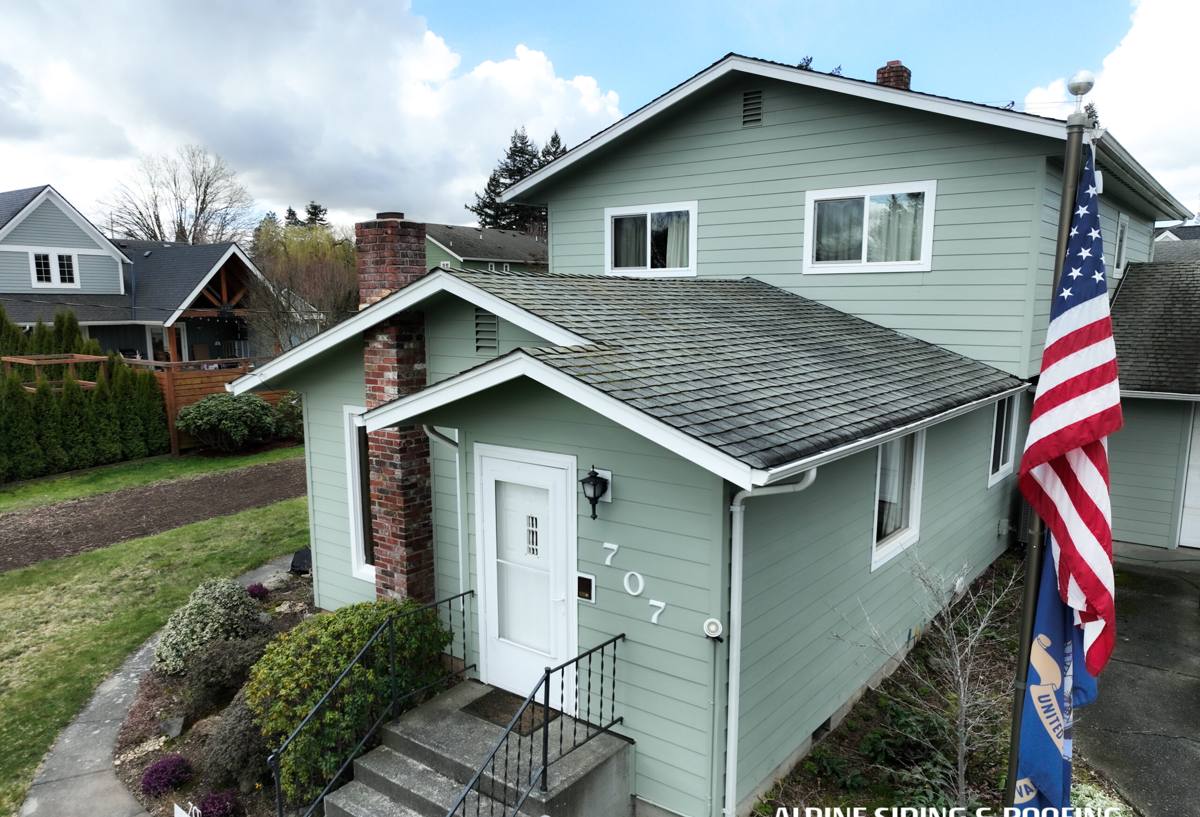
What Kendall's Climate Does to a Roof
Shade, Moisture, and Moss
Tree cover is the defining factor for most Kendall roofs. Shaded sections of a roof — typically the north-facing slopes or areas under overhanging branches — stay damp longer after rain than open, sun-exposed roofs closer to town. That extended moisture window is exactly what moss and algae need to establish. Once moss takes hold, it works under shingle tabs and lifts them slightly, which lets water find its way underneath instead of running off. Left alone through a wet Whatcom County winter, that's how a roof starts leaking years before the shingles themselves have worn out.
Driving Rain and Wind
Whatcom County storms don't just drop rain straight down — wind pushes it sideways, and roofs closer to the foothills can see gusty conditions funneling through the terrain. Driving rain finds every weak seam, every under-nailed shingle, every place where flashing was installed loose or caulked instead of properly integrated. A roof that looks fine in a light shower can still leak in a sideways downpour if the underlayment and flashing details weren't done right the first time.
Salt Air's Reach
Whatcom County's proximity to the Strait of Georgia and Bellingham Bay means salt-laden air travels further inland than people expect, especially on windier days. It accelerates corrosion on exposed metal — nail heads, flashing, vent caps — faster than it would in a dry inland climate. Kendall homes get less of this than waterfront properties, but it's still a factor worth building into material choices, particularly for flashing and fasteners.
Debris and Gutter Buildup
More trees means more debris. Needles and leaves collect in valleys and behind chimneys, holding moisture against the shingle surface and clogging gutters faster than on an open roof. That buildup is one of the most common, and most preventable, causes of premature shingle failure we see in wooded settings like this one.
What a Correct Asphalt Shingle Job Looks Like Here
A shingle roof built for Kendall's conditions isn't a different product than what's used elsewhere — it's the same shingle installed with attention to the details that matter most in a shaded, wet, wind-exposed setting.
- Algae-resistant shingles. Most major manufacturers offer a shingle line with copper-infused granules designed to resist algae and moss growth. Given the shade Kendall roofs deal with, this isn't optional upgrade territory — it's the baseline we recommend.
- Full synthetic underlayment. A continuous, properly lapped synthetic underlayment is the roof's real waterproof layer. Shingles shed most of the water; underlayment and flashing catch what gets past them, which matters more under tree cover where drying time is longer.
- Ice-and-water shield at vulnerable points. Valleys, eaves, and around penetrations get self-adhering membrane, not just underlayment, because these are the spots where driving rain and debris buildup cause the most trouble.
- Proper nailing pattern and fastener count. Wind resistance comes from correct nail placement and count per shingle, not just the shingle's rated wind speed. This is one of the most commonly cut corners in the trade, and it's invisible until a storm proves it.
- Flashing integrated, not caulked. Step flashing at walls and chimneys, and proper valley flashing, should be woven into the roofing system — not sealed over with caulk as a substitute. Caulk fails; integrated flashing doesn't rely on failing.
- Ventilation sized to the roof. Balanced intake and exhaust ventilation keeps the underside of the deck dry and helps shingles last their full service life, especially important where shade already slows surface drying.
Comparing Shingle Options for a Shaded, Wet Roof
| Factor | Standard 3-Tab Shingle | Algae-Resistant Architectural Shingle |
|---|---|---|
| Moss/algae resistance | None built in | Copper-infused granules resist growth |
| Wind rating (typical) | 60-70 mph | 110-130 mph, depending on install |
| Expected lifespan in shaded setting | Often shortened by moss and moisture retention | Closer to full rated lifespan with proper maintenance |
| Upfront cost | Lower | Moderate increase over 3-tab |
| Long-term cost in wooded areas | Higher, due to earlier moss-driven repairs | Lower, fewer moss-related callbacks |
For most Kendall properties under tree cover, the architectural, algae-resistant shingle earns its cost back in reduced maintenance and moss-related repair calls over the life of the roof.
Our Process for a Kendall Roof Replacement
1. On-Site Assessment
We walk the roof, check the deck condition, look at how much shade and debris the property actually deals with, and inspect flashing, vents, and any existing moss or moisture damage. This tells us whether it's a straightforward tear-off and re-roof or whether there's deck repair or ventilation work needed first.
2. A Straight Written Estimate
You get a clear scope of work and price before anything starts — what shingle and underlayment we're using, what flashing gets replaced versus reused, and a realistic timeline. No pressure, no surprise add-ons buried in fine print.
3. Tear-Off and Deck Inspection
Old roofing comes off down to the deck so we can actually see what's underneath. Any soft or water-damaged sheathing gets replaced before new underlayment goes down — covering a bad deck with a new roof just hides the problem.
4. Underlayment, Flashing, and Shingle Installation
We install synthetic underlayment and ice-and-water membrane at vulnerable points first, then integrate all flashing, then install shingles to manufacturer nailing specs. This order matters — it's the sequence that actually keeps water out.
5. Cleanup and Final Walkthrough
Site cleanup includes magnetic nail sweeps and debris removal, followed by a walkthrough so you can see the finished work and ask questions before we consider the job done.
Maintenance That Matters in a Wooded Setting
- Clear gutters and roof valleys of needle and leaf debris at least twice a year, more often if the property has heavy tree cover.
- Trim back branches that overhang the roofline to reduce shade, debris, and physical abrasion on shingles.
- Have moss treated and gently removed before it spreads, rather than after it's visibly widespread — early treatment is far less disruptive to the shingle surface.
- Check attic ventilation isn't blocked by insulation or debris, since poor airflow accelerates moisture problems from the inside.
- Schedule a roof inspection after major wind events, particularly if branches came down nearby.
Why Local Roofing Experience Matters in Kendall
A crew that regularly works Kendall and the surrounding Ferndale area already knows which parts of a roof take the worst of the shade, which flashing details fail first under driving rain, and how much moss pressure a given tree canopy creates. That's not something you get from a general contractor passing through once. It shows up in where we focus extra attention during installation, what we flag during an inspection, and how we set expectations for maintenance based on your specific property's tree cover and exposure — not a generic checklist.
It also matters for warranty and follow-up. A roofing crew based in the area is the one you can actually reach if something needs a look after a storm, not a name from out of town that's hard to track down a year later.
Signs Your Kendall Roof Needs Attention
- Visible moss growth on shaded slopes, especially near the roof edge or valleys
- Granules collecting in gutters or at downspout outlets
- Curling, cracking, or missing shingles after a windy storm
- Water stains on interior ceilings, particularly near chimneys or valleys
- Daylight visible through the attic roof deck
- Sagging areas on the roofline, which can indicate deck or structural moisture damage
If you're seeing any of these, it's worth getting a roof looked at before the next round of Whatcom County rain turns a small problem into a deck repair.
If you're weighing a roof replacement or want an honest read on how much life is left in your current shingles, we're happy to come take a look. Estimates are free, there's no pressure to book on the spot, and you'll get a straight answer about what your Kendall home's roof actually needs — just fill out the form below to get started.