 Ferndale Siding
 Why Sudden Valley Windows Wear Out Differently
Homes tucked into the trees around Sudden Valley deal with a different kind of wear than a house sitting out in the open. The tree cover and lake proximity keep humidity high for much of the year, and that moisture doesn't evaporate off wood and vinyl surfaces the way it would in a drier, sunnier spot. Add in Whatcom County's marine-influenced air, driving rain that comes in sideways during winter storms, and a moss season that can stretch from fall through spring, and you've got a recipe for windows that fail years before their rated lifespan.
We see the same pattern on most of the older homes we work on out here: the glass itself is usually fine, but the frames, seals, and the wall assembly around the window have taken the real damage. Wood sashes swell and stick. Aluminum frames sweat and corrode at the corners. Old aluminum or single-pane vinyl units fog up between the panes because the seal has failed. None of that is unusual for a lake-adjacent, tree-shaded property in this part of Washington — it's just what the climate does over time, and it's why a straight swap of "new window, same hole" isn't always the right fix.
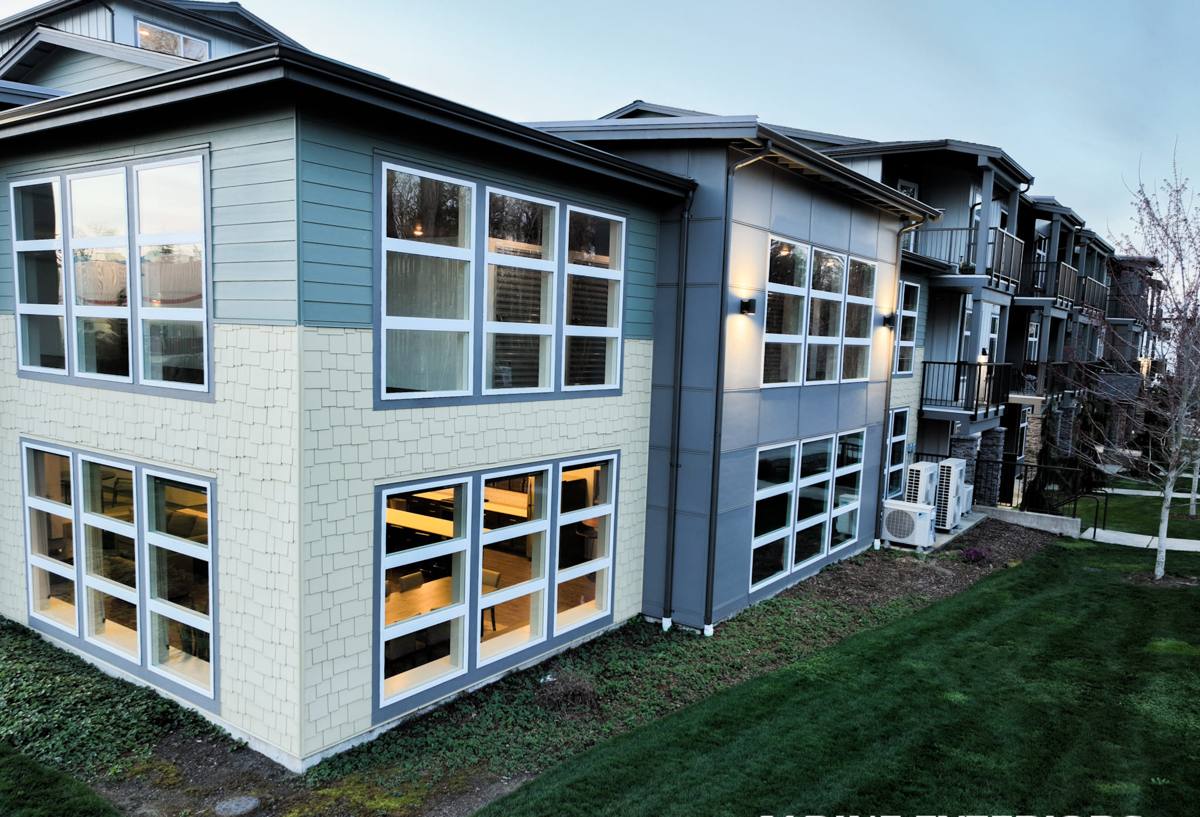
Signs It's Time to Replace, Not Just Repair
Not every problem window needs full replacement. But there are a few signs that tell us repair is just delaying the inevitable, especially on a property that gets the kind of moisture load Sudden Valley does.
- Fogging or a visible haze between panes — the seal is gone and can't be repaired, only replaced
- Soft or spongy trim, sills, or the wall surface directly below the window
- Windows that won't stay open, won't latch, or have swollen shut with the seasons
- Visible daylight, drafts, or a cold wall around the frame in winter
- Moss or dark streaking building up on the sill or the siding just below the window
- A noticeable jump in heating costs with no other explanation
If you're only seeing one of these and the frame is still solid, a targeted repair or reseal might be enough. Once you're seeing two or three together, that's usually a sign moisture has been getting behind the window for a while, and it's worth having someone look at what's happening in the wall, not just the glass.
What a Correct Window Replacement Actually Involves
A window replacement done right is mostly about what you can't see once the trim goes back on. In a climate that throws this much moisture at a house, the flashing and sealing details matter more than the brand of window you pick.
Removing the old window without hiding a problem
Before we set anything new, we pull the old unit and check the rough opening and sheathing for rot or soft spots. On homes with any history of the sticking, staining, or soft-sill symptoms above, this step is non-negotiable — installing a new window into a wet or rotted opening just locks the problem behind new trim.
Flashing that actually manages water
Correct flashing means water that gets behind the siding — and in this climate, some always will — has a clear path back out, never into the wall cavity. That means proper sill pans, flashing tape integrated with the house wrap in the right shingle-lap order, and head flashing that sheds water away from the opening rather than trapping it.
Sealing without sealing in moisture
We use exterior sealant at the right joints and leave the interior air seal doing the actual air-sealing job — sealing every seam solid on both sides can trap moisture inside the wall with nowhere to dry out, which causes exactly the rot we're trying to prevent.
Setting the window level, plumb, and properly shimmed
A window that's slightly out of square will bind, won't latch fully, and puts uneven stress on the seals — which shortens the life of exactly the components that are already under the most pressure in this climate.
Choosing the Right Frame Material for This Climate
There's no single "best" window material — the right choice depends on how much moisture exposure the window will see, how much upkeep you're willing to do, and your budget. Here's how the common options actually perform under the conditions Sudden Valley homes deal with.
| Material | Moisture & Humidity Handling | Maintenance | Typical Lifespan |
|---|---|---|---|
| Vinyl | Good — won't rot or corrode, handles humidity well | Low — occasional cleaning | 20-30 years |
| Fiberglass | Excellent — very stable, resists warping in swings between wet and dry | Low | 30-40 years |
| Wood (unclad) | Poor to fair — needs consistent upkeep to prevent swelling and rot | High — regular painting/sealing | Highly dependent on maintenance |
| Wood-clad (vinyl or aluminum exterior) | Good — exterior shell protects the wood core | Moderate | 25-35 years |
| Aluminum | Fair — prone to condensation and corrosion at joints over time | Moderate | 15-25 years |
For most Sudden Valley homes, we steer people toward vinyl or fiberglass for the bulk of their windows — both handle the humidity and rain cycles here with minimal upkeep. Wood-clad units still have their place where the homeowner wants a specific interior wood look, but we're upfront that it comes with a maintenance commitment unclad wood in this climate just doesn't reward.
Glass Packages Worth Discussing
The frame keeps water and air out, but the glass package affects comfort and condensation on the inside of the house — which matters in a humid, shaded setting where interior condensation on cold glass is a common complaint.
- Double-pane, low-E glass — the standard upgrade from old single-pane or aging double-pane units; cuts heat loss and reduces interior condensation noticeably
- Argon or krypton gas fill — improves insulation value without adding bulk to the frame
- Warm-edge spacers — reduce the cold spot at the edge of the glass where condensation and frost tend to form first
- Triple-pane — worth considering on north-facing or heavily shaded walls where cold-glass condensation is a recurring issue, though it adds cost and weight
Our Process, Start to Finish
- On-site assessment — we look at each window from both sides, check the condition of the trim, sill, and siding around it, and identify which units need full replacement versus repair
- Honest recommendation — we walk you through material and glass options that fit your budget and the actual exposure of each window, not a one-size-fits-all package
- Written estimate — clear pricing per window, no vague allowances
- Removal and inspection — old units come out, and we check the rough opening for hidden moisture damage before anything new goes in
- Repair as needed — any soft sheathing or framing found during removal gets addressed before the new window is set, not glossed over
- Installation — window set level and plumb, flashed and sealed correctly for this climate, insulated around the frame
- Trim and finish — interior and exterior trim reinstalled or replaced to match
- Final walkthrough — we check operation, sealing, and cleanup with you before calling the job done
What Drives the Cost of a Window Replacement
Every home is different, but the same handful of factors move the price up or down on most jobs we quote in this area.
| Factor | Why It Matters |
|---|---|
| Number of windows | Per-window cost typically drops as the total job size grows |
| Frame material | Vinyl is the most budget-friendly; fiberglass and wood-clad cost more upfront |
| Glass package | Triple-pane, upgraded spacers, and specialty coatings add cost but improve comfort and reduce condensation |
| Hidden rot or framing repair | Not knowable until removal — this is why we check the opening before quoting a final repair scope |
| Window size and type | Large picture windows, custom shapes, and operable units (casement, awning) cost more than standard sliders or double-hungs |
| Access and site conditions | Second-story windows, tight lake-lot access, or extensive tree cover can affect labor time |
We'd rather give you a real number after seeing the windows in person than a phone estimate that changes once we're on-site. If we find hidden damage during removal, we tell you before doing the work, not after.
A Checklist Before You Hire Anyone for This Job
- Do they inspect the rough opening for rot before quoting, or just measure the glass?
- Do they explain flashing and sealing details, or just talk about the window brand?
- Are they licensed and insured to work in Washington, and can they show it?
- Do they give a written, itemized estimate rather than a lump-sum guess?
- Have they worked on homes in your area before, with your specific exposure conditions?
- Do they explain trade-offs between materials honestly, instead of upselling the most expensive option?
Why Local Experience in Sudden Valley Matters
A window replacement crew that mostly works subdivisions on flat, open lots hasn't necessarily dealt with the specific combination of humidity, shade, and driving rain that lake-adjacent Whatcom County properties see. That experience shows up in small decisions — how much ventilation gap to leave, which sealant actually holds up through a wet winter here, whether a rough opening needs extra drying time before the new window goes in.
We work throughout Ferndale and the surrounding Whatcom County area, including communities like Sudden Valley, and we've built our process around what actually holds up in this specific climate rather than a generic install script. That's not a marketing line — it's the difference between a window that's still tight and operating smoothly in fifteen years and one that starts showing the same rot and fogging problems the old one had within five.
If your windows are showing any of the signs above, or you're just ready to stop fighting drafts and condensation through another Whatcom County winter, we're happy to come take a look. The estimate is free, there's no pressure to sign anything on the spot, and you'll get straight answers about what your home actually needs — use the form below to get started.