 Ferndale Siding
 Storm Damage Roofs Need a Different Kind of Repair
A roof that's been through a Whatcom County storm isn't dealing with ordinary wear. Wind-driven rain finds every weak seam, gusts lift shingles that looked fine the week before, and falling limbs or debris can crack a roof surface without leaving an obvious hole. Homes around Sudden Valley sit under heavy tree cover and catch wind funneling across the lake, which means storm damage here tends to show up in places a quick glance from the ground won't catch: ridge caps, valleys, flashing around chimneys and vents, and the lower courses of shingles near the eaves.
Repairing storm damage correctly means treating it as a diagnostic job first and a repair job second. Slapping a patch over the spot that's obviously damaged and calling it done is how homeowners end up with a second leak six months later, usually in the rainy stretch of late fall when nobody wants to be back on the roof.
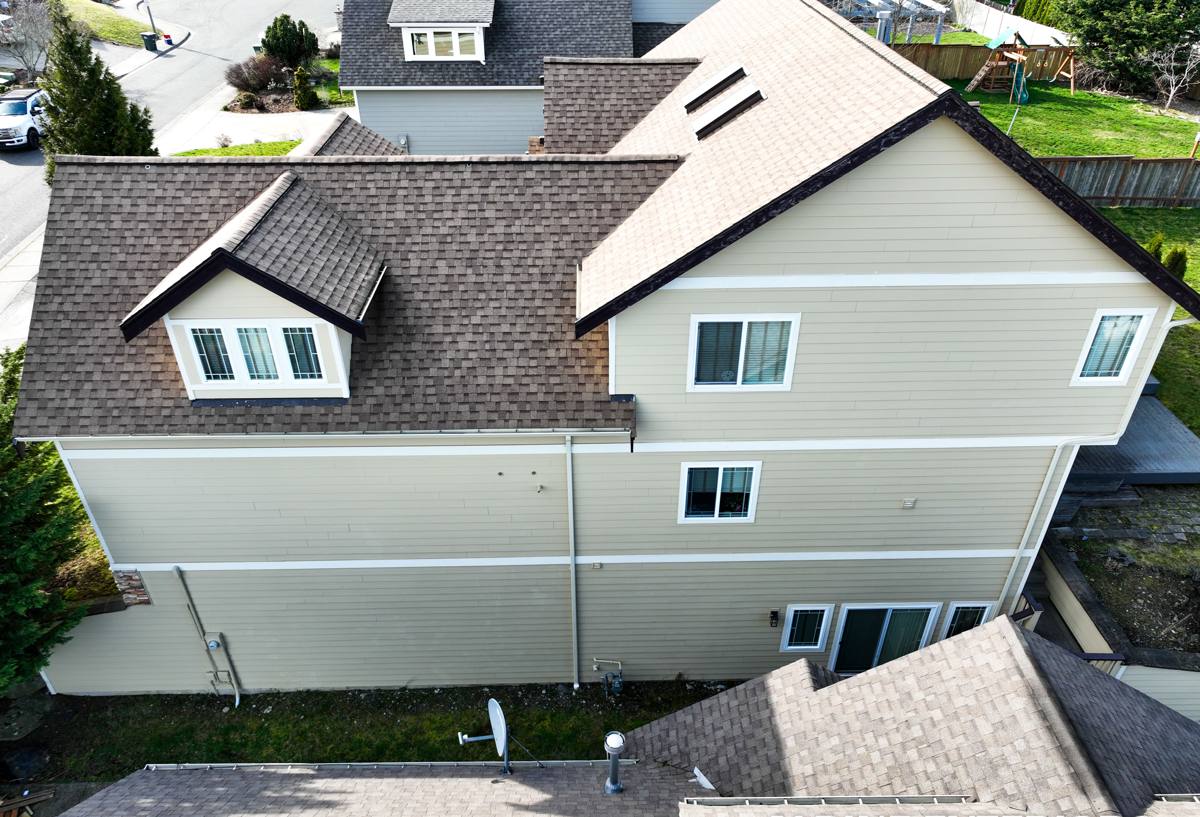
What Storms Actually Do to a Roof in This Area
Wind and Driving Rain
Storms moving through Whatcom County don't just drop rain straight down — wind pushes it sideways and underneath roof edges, ridge vents, and anywhere a shingle has started to lift. Once wind gets under a shingle tab, it can loosen the seal strip even if the shingle doesn't tear off outright. That loosened shingle may sit there looking almost normal until the next storm finishes the job.
Moss and Trapped Moisture
The moss season in this part of Washington is long, and a roof that's already stressed from wind or impact damage is more vulnerable to moss taking hold in the gap. Moss holds moisture against the roof surface, works its way under shingle edges, and accelerates rot in the decking underneath. A storm-damaged roof that also has moss growth needs both problems addressed — repairing the damage without dealing with the moss just buys a little time before the same section fails again.
Debris and Impact
Mature trees near many Sudden Valley properties mean storms bring more than wind and rain — limbs and debris come down too. Impact damage can crack shingles, dent flashing, or punch through decking in ways that aren't always visible from the ground. This is one of the reasons a proper storm inspection includes a walk on the roof, not just a look from the yard.
Signs You Have Storm Damage Worth Addressing
Some storm damage is obvious. A lot of it isn't, and the roofs that fail worst are usually the ones where a smaller sign got ignored for a season or two. Walk your property after any significant wind or rain event and watch for the following:
- Shingles that look curled, cracked, or slightly lifted at the edges, especially after a windy night
- Granules collecting in gutters or at the base of downspouts — a sign the shingle surface is being worn away
- Visible gaps or missing shingles, particularly near ridges, valleys, or the roof's edges
- Dented or bent flashing around chimneys, skylights, or vent pipes
- Water stains on ceilings or in the attic that appear or worsen after storms
- Moss buildup concentrated in one section rather than spread evenly, which can indicate a spot where water is sitting longer than it should
- Sagging or soft spots when walking the roof, which point to decking that's already absorbed moisture
None of these alone means the whole roof needs replacing. But each one is a reason to get a real inspection rather than waiting to see if it gets worse.
What a Correct Storm Damage Repair Actually Involves
A repair that holds up through the next storm season involves more steps than most homeowners expect, and skipping any of them is usually where cheap, fast repairs go wrong.
1. Full Roof Inspection, Not Just the Damaged Spot
We check the entire roof surface, not only the area that's obviously damaged. Storm stress often shows up in more than one place, and it's common to find a second weak spot near the original damage that hasn't failed yet but will soon.
2. Decking Assessment
If water has been getting under the shingles for any length of time, the plywood or OSB decking underneath may be soft, delaminating, or rotted. Repairing the surface over damaged decking doesn't hold — the decking has to be sound, or replaced in that section, before new material goes down.
3. Matching or Compatible Materials
Shingles fade and wear over time, so a brand-new patch can stand out next to older material. We aim for the closest reasonable match and explain honestly when an exact match isn't possible, rather than pretending it will blend perfectly.
4. Flashing and Underlayment
Flashing around chimneys, vents, and valleys is one of the most common failure points after a storm, even when the shingles themselves look fine. Underlayment — the water-resistant barrier beneath the shingles — also needs to be checked and replaced where it's torn or displaced, since it's the last line of defense if a shingle does fail again.
5. Proper Sealing
Every repaired section gets sealed and fastened to the same standard as a new installation. A repair that isn't fastened and sealed correctly is really just a temporary patch with a longer shelf life.
Temporary Patch vs. Proper Repair
| Approach | What It Solves | What It Doesn't Solve |
|---|---|---|
| Tarp or emergency patch | Stops active water intrusion right away | Underlying decking, flashing, and adjacent weak spots |
| Spot shingle swap only | Covers the visibly missing or torn shingles | Loosened seal strips nearby, soft decking, moss-trapped moisture |
| Full diagnostic repair | Damaged shingles, flashing, underlayment, and decking condition | Nothing left unaddressed in the repaired section |
A tarp is a legitimate short-term step right after a storm, especially if rain is still in the forecast. It should never be treated as the final fix.
Cost Factors for Storm Damage Repair
Every roof is different, and we won't quote a number without actually seeing the damage. In general, the price of a storm repair depends on a handful of factors:
| Factor | Why It Matters |
|---|---|
| Extent of shingle damage | A few shingles versus a whole slope changes labor and material significantly |
| Decking condition | Rotted or soft decking requires replacement before new shingles can go down |
| Flashing and valley work | Detail work around chimneys, vents, and valleys takes more time than open field shingle work |
| Roof pitch and access | Steeper roofs and limited access add time and safety considerations |
| Material match | Sourcing a close match to existing shingles can affect cost and timeline |
Most straightforward storm repairs on a home in this area land in a broad range of a few hundred to a couple thousand dollars, with anything involving decking replacement or larger sections running higher. We'll give you real numbers after a real look at the roof — not a phone estimate.
How Our Process Works
- Inspection. We walk the full roof, not just the reported damage area, and check the attic from inside where accessible.
- Honest assessment. We tell you what actually needs repair, what can wait, and what doesn't need attention at all.
- Written estimate. Clear scope and pricing before any work starts, with photos of what we found.
- Repair. Decking, flashing, underlayment, and shingles addressed in the correct order, not just the visible layer.
- Final check. We confirm the repair is sealed and sound before we consider the job finished.
Insurance Claims and Documentation
Storm damage repairs are often tied to a homeowner's insurance claim. We document what we find with photos and a clear written description of the damage, which gives you something solid to work from with your adjuster. We're not a public adjuster and don't negotiate your claim for you, but a thorough, honest inspection report makes that conversation a lot easier on your end.
Why It Matters to Hire a Crew That Knows Sudden Valley
Roofs around Sudden Valley face a specific combination of tree cover, wind patterns off the lake, and a long stretch of wet, mossy months — conditions that don't play out the same way everywhere in Whatcom County. A crew that regularly works this area knows to check the spots that tend to fail here first, understands how moss and moisture interact with storm damage in a way that's different from a drier climate, and isn't guessing at what "normal wear" looks like on a Ferndale-area roof versus storm damage that needs real repair.
We'd rather tell you a repair isn't necessary than talk you into work your roof doesn't need. That's the standard we hold ourselves to on every roof we look at, storm damage or otherwise.
Get a Free, No-Pressure Estimate
If your roof has been through a recent storm, or you're not sure whether what you're seeing is storm damage or ordinary aging, we're happy to take a look. Fill out the form below for a free estimate — no pressure, just an honest read on what your roof actually needs.