 Ferndale Siding
 Roofs in Sandy Point Work Harder Than Most
Sandy Point sits close enough to the water that every roof out here deals with a combination most inland Whatcom County homes don't face at the same intensity: salt-laden air, wind-driven rain coming off the Strait, and a moss season that can run most of the year in shaded, north-facing sections. None of that is unusual on its own. Together, over years, it changes how fast a roof ages and where it fails first.
We've done roof repair work throughout the Ferndale area long enough to know that a roof problem on a Sandy Point home often isn't the same problem you'd see a few miles inland. Fasteners corrode faster near the water. Moss holds moisture against shingles longer in the marine air. And flashing details that would hold up fine elsewhere sometimes aren't enough when rain is hitting the roof sideways instead of straight down.
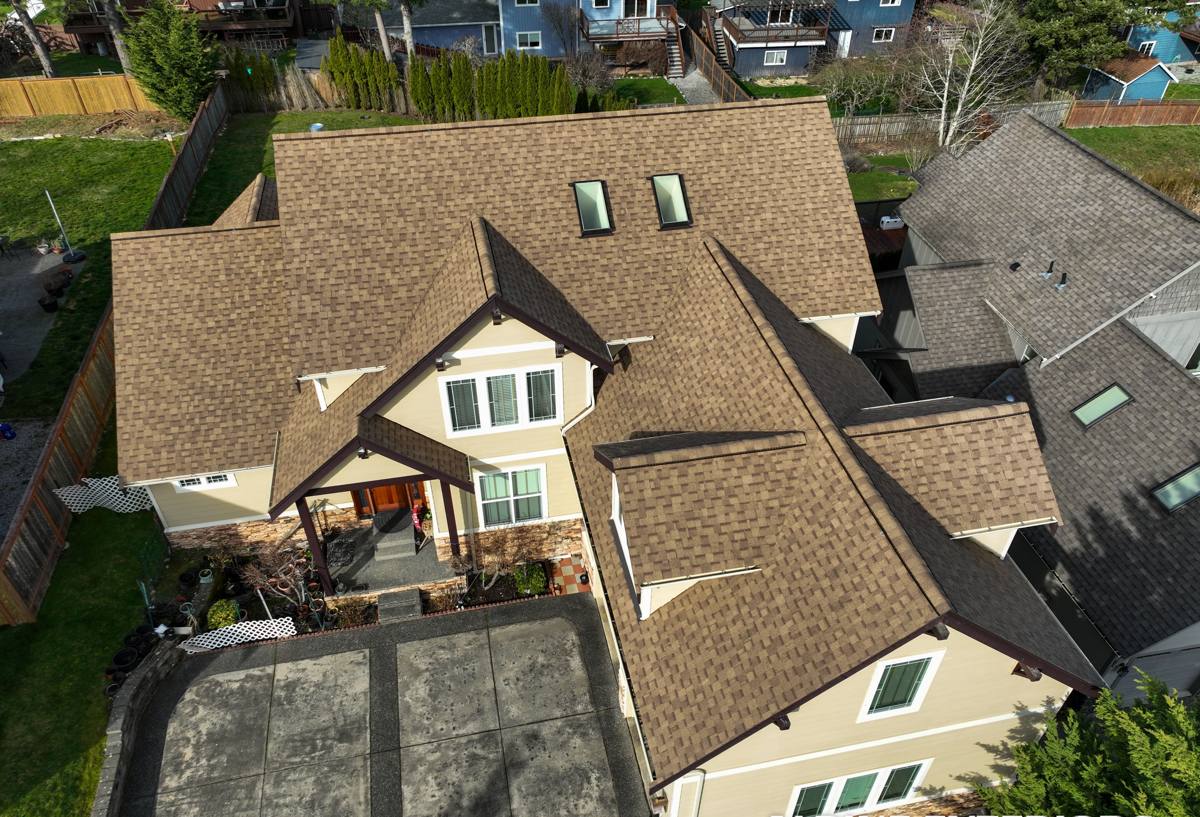
What Salt Air, Rain, and Moss Actually Do to a Roof
Salt air and metal components
Salt in the air accelerates corrosion on anything metal — nail heads, flashing, gutter fasteners, vent boots with metal collars. On composition shingle roofs, this usually shows up first as rust streaking near flashing or exposed fastener heads that have started to lift or weep. It's a slow process, but it's steady, and it's the reason roofs closer to the water often need flashing attention before the shingles themselves are due for replacement.
Driving rain and wind exposure
Open, waterfront-adjacent exposure means rain doesn't always fall straight down — wind pushes it sideways and up under laps, ridge caps, and flashing edges that would shed water fine in calmer conditions. This is why leaks in this area often trace back to a flashing detail or a lifted shingle edge rather than a worn-out field of shingles.
Moss and prolonged moisture
Whatcom County's long wet season gives moss plenty of time to establish, especially on shaded slopes and north-facing sections that don't get much sun to dry out between storms. Moss doesn't just look bad — it holds water against the shingle surface, works its way under tabs as it grows, and can lift shingles enough to let wind-driven rain in underneath. Left alone, a moss mat is one of the more common paths to a slow, hard-to-locate leak.
Signs a Sandy Point Roof Needs Repair
- Water stains on ceilings or upper walls, especially after a windy rainstorm rather than a calm one
- Granules collecting in gutters or at downspout outlets
- Shingles that look cupped, lifted at the edges, or missing after a windstorm
- Moss or dark streaking concentrated on shaded or north-facing slopes
- Rust staining around flashing, vent boots, or exposed fasteners
- Soft or spongy decking felt underfoot in the attic near valleys or chimneys
- Daylight visible around chimney, skylight, or plumbing vent flashing from inside the attic
Any one of these on its own might not mean much. Two or three together, especially near flashing details, usually means it's worth a closer look before the next big storm off the water finds the gap.
What a Correct Repair Actually Involves
A roof repair that holds up in this environment isn't just swapping a shingle or caulking a gap. We treat repair as diagnosis first, then a fix that addresses the actual water path — not just the spot where the stain showed up inside.
Finding the real entry point
Water travels. A stain on a ceiling can originate several feet away, often at a flashing seam, a valley, or a fastener that's backed out. We trace it from the attic side when possible, and from the roof surface, before opening anything up.
Flashing gets priority
Given how much of the leak risk here traces back to flashing and fasteners rather than shingle wear, we check step flashing, counter-flashing, valley metal, and vent boots as part of any repair — not just the shingles nearby. Corroded or undersized flashing gets replaced, not just re-sealed, because sealant alone doesn't hold up long against sustained wind-driven rain.
Matching materials, not just patching
Repairs use materials that match the existing roof's age, profile, and exposure as closely as possible, and underlayment or ice-and-water membrane is added at the repaired section where the original roof lacked it — a common gap on older roofs built before that detailing was standard practice.
Moss removal done without damaging the roof
Moss gets removed by hand and low-pressure methods rather than aggressive pressure washing, which can strip granules and shorten the life of the shingles it's supposed to be protecting. Where it makes sense, we'll talk through longer-term moss control options rather than just a one-time cleaning.
Our Roof Repair Process
| Step | What Happens |
|---|---|
| 1. Inspection | Roof surface and attic checked together to trace the actual leak path, not just the visible symptom |
| 2. Honest assessment | We tell you plainly whether this is a targeted repair, a larger repair, or a sign the roof is nearing replacement |
| 3. Written scope | Clear description of what's being fixed and why, before any work starts |
| 4. Repair work | Flashing, decking, underlayment, and shingles addressed as needed — not just surface patching |
| 5. Cleanup and check | Debris cleared, gutters checked, and the repaired area reviewed with you before we leave |
Repair or Replace? What Actually Decides It
| Factor | Leans Toward Repair | Leans Toward Replacement |
|---|---|---|
| Age of roof | Under 15-20 years, otherwise sound | Nearing or past expected lifespan for its material |
| Extent of damage | Isolated to one section or detail | Multiple areas, or damage spread across several slopes |
| Decking condition | Solid, no soft spots found | Soft or water-damaged decking found during inspection |
| Flashing condition | Sound elsewhere, isolated failure | Widespread corrosion from long-term salt air exposure |
| Moss/algae history | Recent, surface-level | Long-term, with granule loss and shingle lifting underneath |
We won't push a full replacement when a solid repair will genuinely hold up, and we won't recommend patching something that's only going to leak again in a different spot next winter. The goal is telling you which one you actually have.
Materials and Maintenance Worth Knowing About Near the Water
Standard composition shingles work fine in this area when properly flashed and maintained — the issue is rarely the shingle itself, it's the details around it. For roofs closer to the water's edge, we pay extra attention to fastener quality and flashing metal, since standard-grade fasteners corrode faster in salt air than the shingles wear out. We're honest about this trade-off upfront rather than discovering it during a repair five years in.
A few maintenance habits make a real difference for homes in this environment:
- Clear moss from shaded slopes before it establishes a thick mat, rather than after
- Keep gutters and downspouts clear so wind-driven rain has somewhere to go besides under the shingles
- Have flashing checked every few years, not just after a leak shows up
- Trim back overhanging branches that keep roof sections shaded and slow to dry
- Address small leaks early — in this climate, a small gap has more chances to become a bigger one
Why Local Experience With Sandy Point Homes Matters
A crew that mostly works inland can do fine work, but they're not necessarily thinking about salt-air fastener corrosion or how a roof behaves when rain is coming in sideways off the water. Working repairs throughout Ferndale and the surrounding Whatcom County coastline means we've seen how roofs in this specific exposure actually fail over time — which flashing details hold up and which ones don't, which slopes hang onto moss longest, and where the water usually ends up once it gets past the shingles. That's the difference between a repair that's cosmetic and one that actually addresses why the leak happened in the first place.
It also means a faster, more accurate diagnosis. We're not guessing at how this climate treats a roof — we're working from what we've already seen on homes with the same exposure, the same weather, and often the same roofing vintage.
Before You Call Anyone — A Quick Checklist
- Check the attic (safely) for daylight, staining, or damp insulation near valleys, chimneys, and vents
- Note whether leaks show up during windy storms specifically, or with any rain — this helps narrow down the cause
- Look at gutters for granule buildup, which points to shingle wear
- Photograph any moss concentration and roughly which slope it's on
- Get a written scope of work before agreeing to any repair, not just a verbal estimate
- Ask directly whether flashing was inspected, not just the shingles
If you're dealing with a leak, staining, or a roof that's just showing its age near Sandy Point, we're glad to take a look and give you a straight answer about what it needs. There's no pressure and no obligation — just a clear assessment and a free estimate based on what we actually find on your roof.