 Ferndale Siding
 A Different Kind of Job: Siding Replacement on Point Roberts
Point Roberts sits on its own peninsula, surrounded on three sides by water and reachable from the rest of Whatcom County only by crossing international borders twice. That geography isn't just a curiosity — it shapes almost everything about how a home ages here and how a siding job needs to be planned. Homes on this point take a steadier beating from wind, salt, and moisture than homes even a few miles inland, and a siding replacement here has to account for that from the first inspection to the last course of trim.
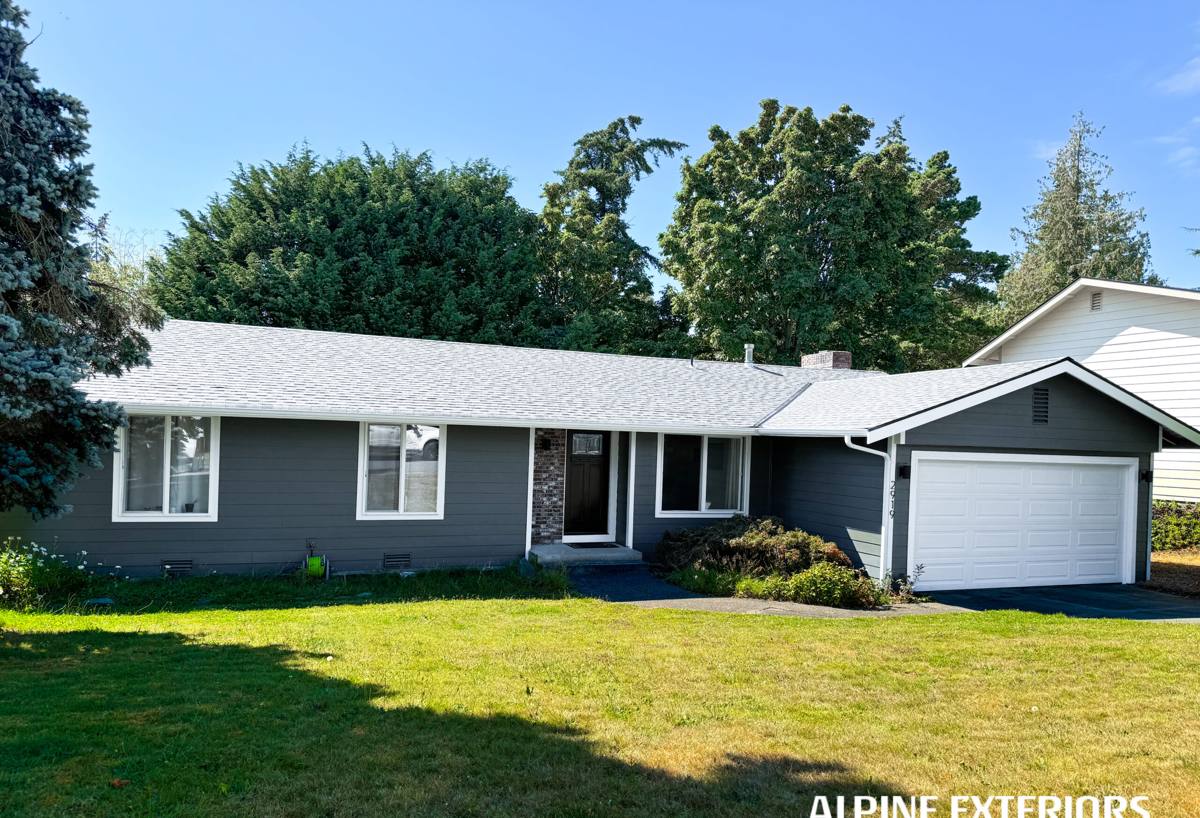
This page is about one job, done right, in one place: replacing siding on a Point Roberts home with James Hardie fiber cement, installed to hold up to the specific conditions this peninsula sees year after year.
What Point Roberts' Marine Climate Does to Siding
Salt Air and Corrosion
Being surrounded by saltwater means airborne salt is a constant, low-grade stressor on everything exposed outdoors — fasteners, flashing, paint film, and the siding substrate itself. Salt-laden air accelerates the breakdown of cheap coatings, corrodes uncoated or undersized fasteners, and works its way into any gap in a wall assembly that isn't properly sealed. Over years, that steady exposure is what separates a home that still looks sharp after a decade from one that's chalking, staining, and swelling.
Driving Rain and Wind-Driven Moisture
Point Roberts gets weather straight off the water, and that means rain doesn't just fall here — it drives sideways into wall assemblies during storms. Siding that relies on face-sealed joints or minimal flashing detail will eventually let that wind-driven rain past the surface, and once moisture gets behind siding on an exposed peninsula like this, it has a hard time drying back out. Correct flashing and drainage planes matter more here than they would on a sheltered inland lot.
The Long Moss Season
Cool, wet stretches that last for months create ideal conditions for moss and algae growth on north-facing and shaded walls. Beyond the cosmetic issue, moss holds moisture against the siding surface for extended periods, which is exactly the kind of sustained dampness that breaks down absorbent or poorly sealed siding materials over time. A siding replacement here needs to account for a genuinely long moss season, not just an occasional damp week.
Signs Your Point Roberts Home Needs Siding Replacement
Not every siding problem calls for full replacement — but on a peninsula this exposed, small issues tend to compound faster than homeowners expect. Watch for:
- Soft, spongy, or visibly swollen panels, especially near the bottom courses or around windows and doors
- Persistent moss or dark staining that returns quickly after cleaning
- Paint that's chalking, peeling, or bubbling within a few years of a repaint
- Visible gaps, warping, or panels that have pulled away from the wall
- Rust streaks running down from fasteners or trim
- Rising energy bills that suggest the wall assembly behind the siding is no longer performing
- Interior signs — musty smells, peeling interior paint, or soft drywall on exterior walls
Any one of these on its own might just need a repair. Several together, especially on a home that's been through a decade or more of this climate, usually means the siding system itself has reached the end of its useful life.
What a Correct Siding Replacement Actually Involves
Tear-Off and Inspection
A proper replacement starts with removing the old siding entirely and inspecting the sheathing underneath — not just eyeballing it, but checking for soft spots, rot, and hidden moisture damage that never would have shown from the outside. Any compromised sheathing gets replaced before a single new panel goes up. Skipping this step is the single most common shortcut that leads to problems a few years down the road.
Weather-Resistive Barrier and Flashing
Behind every new siding installation should be a continuous weather-resistive barrier, properly lapped and sealed, with flashing detailed correctly around every window, door, and penetration. On a site that takes driving rain from multiple directions, this drainage plane is what actually keeps a home dry — the siding itself is the second line of defense, not the first.
Fastening and Coursing
Fiber cement has specific fastening requirements — correct nail type, spacing, and penetration depth all matter, and they're detailed by the manufacturer for good reason. Corrosion-resistant fasteners are non-negotiable this close to saltwater. Coursing needs to be laid out so butt joints are properly flashed or caulked per spec, not just tucked together and hoped for the best.
Factory Finish
James Hardie's ColorPlus finish is baked on at the factory under controlled conditions, which gives it more consistent coverage and better adhesion than field-applied paint. That matters in a climate where UV, salt, and moisture are all working against a finish simultaneously — a factory finish simply holds color and resists fading longer than most site-applied paint jobs.
Why We Install Only James Hardie Fiber Cement Here
We standardized on James Hardie fiber cement for every job we do, including on Point Roberts, and it's worth explaining why rather than just asserting it. The table below lays out how the common siding options actually perform against the specific stresses this peninsula creates.
| Material | Salt Air Resistance | Moisture/Moss Tolerance | Maintenance Burden | Typical Longevity Here |
|---|---|---|---|---|
| Vinyl | Doesn't corrode, but can warp/fade in sun and wind exposure | Sheds water on the surface but can trap moisture behind it at seams | Low upkeep, but limited repair options once damaged | Moderate |
| Engineered wood (LP SmartSide) | Coating can wear; wood-based core is moisture-sensitive | Vulnerable at cut edges and joints if seals fail | Requires diligent caulk/paint maintenance | Moderate, highly installation-dependent |
| Cedar / primed spruce | Natural material, no rust risk, but absorbs salt-laden moisture | Prone to moss growth and rot without regular maintenance | High — regular refinishing needed | Shorter without diligent upkeep |
| James Hardie fiber cement | Non-combustible, dimensionally stable, doesn't corrode | Engineered for wet climates; resists moisture-driven swelling and moss damage | Low — factory finish holds up for years | Long, when installed to spec |
James Hardie also engineers its product formulations differently by climate zone through its HardieZone system, rather than selling one generic product everywhere. For a marine environment like this one, that means a formulation and finish built around sustained moisture exposure — not just a coastal-sounding marketing claim.
Our Process, Start to Finish
- On-site assessment — we inspect existing siding, sheathing condition, and problem areas specific to your home's exposure
- Written scope and product selection — plank style, exposure, and color chosen from Hardie's ColorPlus lineup
- Tear-off and sheathing repair — any rot or damage addressed before new material goes up
- Weather barrier and flashing installation — the drainage plane that does the real work of keeping water out
- Siding installation to manufacturer spec — correct fasteners, coursing, and joint treatment
- Trim, caulking, and final detailing
- Walkthrough — we go over the finished work and warranty coverage with you directly
Why Hiring a Crew That Already Works Point Roberts Matters
Point Roberts is a U.S. exclave connected to the rest of Whatcom County by land only through Canada — getting a crew, equipment, and material there and back means crossing the border twice each way it's needed. A contractor who hasn't planned for that will either pad your schedule with delays or cut corners to avoid the trip altogether. A crew that already works this peninsula regularly has that logistics problem solved: material orders staged in advance, crossing times built into the schedule, and no surprises that turn a two-week job into a six-week one.
It also matters for accountability. A crew that treats Point Roberts as a regular part of its territory — not a once-a-year special trip — has a reason to stand behind the work, because they'll be back in the area for the next job and the one after that.
Cost Factors for Point Roberts Siding Replacement
| Factor | Why It Affects Cost |
|---|---|
| Home size and wall complexity | More square footage and more corners, dormers, and trim details mean more labor and material |
| Existing siding condition | Rotted sheathing found during tear-off adds repair scope beyond the siding itself |
| Plank profile and exposure | Wider reveals and specialty profiles cost more in material and installation time than standard lap siding |
| Color and finish | Factory ColorPlus finishes vary in price by color depth and product line |
| Site access and logistics | Point Roberts' border-crossing access affects scheduling and material staging, which can factor into project timelines |
Every home is different, and the only way to get a real number is a site visit — general ranges quoted without seeing your walls aren't worth much either way.
If your Point Roberts home is showing signs of wear from the salt air, driving rain, or moss that this peninsula sees every year, we're glad to take a look. Reach out for a free, no-pressure estimate using the form below.