 Ferndale Siding
 Why Custer's Weather Is Hard on a Roof
Custer sits close enough to Puget Sound and the Strait of Georgia that salt-laden air is a regular part of the weather here, not an occasional event. Add Whatcom County's long wet season, wind-driven rain off the water, and the shaded, moisture-trapping tree cover common to this part of the Ferndale area, and you have a roofing environment that punishes anything installed with shortcuts. Asphalt shingles granulate and curl faster under these conditions. Wood shakes hold moisture and feed moss. A roof here needs to shed water fast, resist corrosion, and survive months of low sun angle and standing dampness every winter.
That combination — salt air, driving rain, and a moss season that can run from October through April — is exactly the set of conditions metal roofing was built to handle, provided it's specified and installed correctly for this specific location, not treated as a one-size-fits-all product.
Where Metal Roofing Earns Its Keep in This Climate
Salt Air and Corrosion
Homes within a few miles of saltwater deal with airborne salt settling on every exterior surface, including the roof. Bare or poorly coated steel will rust in this environment faster than it would twenty miles inland. This is why panel material and coating matter more here than in a landlocked market: not every metal roof product sold in the region is rated for coastal exposure, and the difference shows up in five to ten years, not immediately.
Moss, Lichen, and Shaded Rooflines
Whatcom County's tree cover and damp winters make moss and lichen a fact of life on any roof that stays shaded and slow to dry. Moss holds water against a roofing surface, and on shingles or shakes that moisture works its way under the material over time. Metal sheds water immediately and gives moss spores far less to hold onto, especially on steeper pitches. It won't stop moss from growing on a roof entirely — spores land everywhere — but it removes the moisture-retention problem that lets moss actually damage the roofing material underneath.
Wind-Driven Rain and Water Intrusion
Storms coming off the water push rain sideways, not just down, which stresses every seam, lap, and penetration on a roof. A metal roof's resistance to this depends entirely on how it's detailed — panel seams, fastener pattern, and flashing at valleys, chimneys, and wall transitions. A well-built standing seam roof handles wind-driven rain about as well as any residential roofing system available; a poorly flashed one leaks regardless of the panel quality.
What a Correctly Installed Metal Roof Actually Involves
The panels themselves are the least likely part of a metal roof to fail. Leaks and premature wear almost always trace back to what's underneath and around them. A correct install in this climate comes down to four things done right: underlayment, fastening, flashing, and ventilation.
Underlayment and Ice/Water Protection
A synthetic, high-temperature underlayment goes down first, with self-adhered ice-and-water membrane at eaves, valleys, and any low-slope transitions where water is likely to back up under wind pressure. Skipping or thinning this layer is one of the most common shortcuts we see on older reroofs.
Fastening and Panel Layout
Panels need to run true, with fastener spacing and clip systems for standing seam matched to the local wind exposure. Custer's open, water-adjacent lots can see higher sustained wind loads than more sheltered inland properties, which affects fastener schedule and panel gauge selection.
Flashing, Penetrations, and Transitions
Every pipe boot, chimney, skylight curb, and wall-to-roof transition is a place water can get in. Custom-bent metal flashing, properly lapped and sealed with compatible sealants, matters more than the panel profile itself when it comes to keeping a roof dry through years of driving rain.
Ventilation
Metal roofs perform better with balanced intake and exhaust ventilation. Proper airflow keeps the roof deck dry, controls condensation on the underside of the panels, and helps prevent the kind of trapped moisture that leads to rot in the sheathing below — a real risk in a climate this damp.
How a Metal Roof Meets Your Siding and Trim
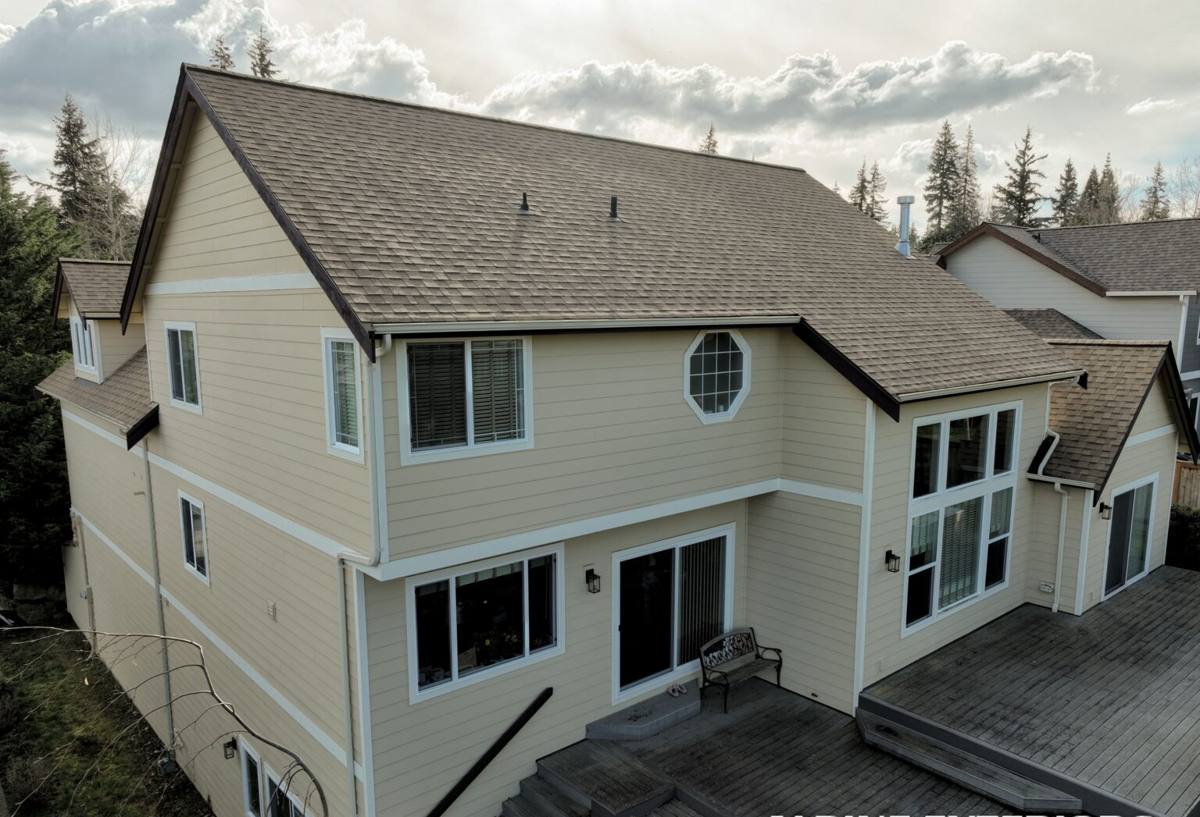
A roof doesn't perform in isolation. Where it meets a wall — at a dormer, a chimney chase, or a lower roofline against a second-story wall — the flashing has to tie into whatever siding and trim are there, and that joint is a common failure point on homes where roofing and siding were handled by separate crews at different times with no coordination between them. Kickout flashing that's missing or undersized at a roof-to-wall intersection is one of the most common sources of hidden water damage we find, and it has nothing to do with the roofing material itself. Because we work on both siding and roofing, we look at these transitions as one system: fascia and rake trim get replaced or repaired to match the new roofline, and flashing details are built to shed water into the gutter, not behind the siding. That's a genuine advantage of hiring one exterior contractor for both jobs rather than coordinating two separate trades and hoping the details line up.
Panel Types: Which Fits a Custer Home
Not every metal roofing product is the same, and the right choice depends on the home, the budget, and how long the owner plans to stay put.
| Panel Type | Best For | Trade-Offs |
|---|---|---|
| Standing seam (concealed fastener) | Homes prioritizing longevity and clean lines; best water-shedding performance | Higher upfront cost; requires skilled installation to detail correctly |
| Exposed-fastener panel | Budget-conscious reroofs, outbuildings, simpler rooflines | Fasteners and washers age faster in salt air and need periodic inspection |
| Stone-coated steel | Homeowners wanting a traditional shingle or shake look with metal's durability | More components (coating layer, granules) to maintain than plain painted steel; higher material cost |
For most Custer homes we recommend standing seam or a quality exposed-fastener system with a marine-grade coating, matched to the roof's pitch, complexity, and how close the property sits to open water.
Finish matters as much as panel profile. A premium paint system (the kind rated for long-term color retention and chalk resistance) costs more than a basic finish but holds up better against UV and salt exposure over the life of the roof. Warranty coverage on metal roofing is also usually split into two separate pieces — a finish/coating warranty from the manufacturer and a workmanship warranty from the installer — and it's worth understanding which one covers what before you sign anything. We walk through that distinction plainly during the estimate instead of leaving it buried in fine print.
What Drives the Cost of a Metal Roof
| Factor | Why It Matters |
|---|---|
| Panel type and coating | Standing seam and marine-grade coatings cost more than basic exposed-fastener panels but last longer in salt air |
| Roof complexity | Valleys, dormers, and multiple penetrations add labor and flashing work regardless of panel choice |
| Tear-off vs. overlay | Removing old shingles or shakes and inspecting the deck costs more upfront but avoids trapping moisture under new panels |
| Deck condition | Rot or soft sheathing found during tear-off needs repair before panels go on — common on older homes in wet climates |
| Ventilation and flashing upgrades | Bringing an older roof's intake/exhaust balance up to standard adds cost but extends the life of the whole assembly |
We give straightforward, itemized proposals rather than a single lump number, so homeowners can see exactly where the money goes and where there's room to adjust scope.
Our Process for a Custer Metal Roof Project
The order of operations matters as much as the materials. Here's how a project typically runs from first call to final walkthrough:
- On-site inspection of the existing roof, deck, and ventilation, with notes on anything that affects the estimate
- A written proposal that spells out panel type, underlayment, flashing details, and ventilation work — no vague allowances
- Scheduling that accounts for Whatcom County's wet-season weather windows, so tear-off doesn't leave a roof exposed longer than necessary
- Tear-off and deck inspection, with any rot or damage flagged and priced before it's covered up
- Underlayment, flashing, and panel installation to the specification agreed on upfront, including any roof-to-wall trim work
- Final walkthrough covering what was done and what routine maintenance to expect going forward
Maintenance: What to Watch Once It's Installed
Metal roofing is low-maintenance compared to shingles or shakes, but low isn't zero, especially in a climate that grows moss on nearly everything shaded and damp for half the year.
- Clear needles and debris from valleys and behind chimneys once or twice a year — trapped organic matter holds moisture against any roof
- Keep gutters clear so water isn't backing up under the eave edge during heavy rain
- Check exposed fasteners (if that's the panel type) every couple of years for backing-out or coating wear
- Watch for moss or algae staining in shaded sections and rinse it off before it builds up
- Have flashing around chimneys, skylights, and vents inspected periodically — these are the first place a leak shows up, not the panels themselves
Why Hire a Crew That Already Works in Custer and Ferndale
A metal roof is only as good as its flashing details and fastener schedule, and both of those decisions should reflect the actual site — how exposed it is to wind off the water, how much tree cover feeds moss on the north-facing slopes, how the local permitting and inspection process works. A crew that installs roofs across Whatcom County sees the same failure patterns repeatedly: underlayment skipped at valleys, exposed fasteners left unchecked for years, ventilation ignored on older homes. That local pattern recognition is what keeps a metal roof performing for decades instead of needing early repairs.
We're familiar with the building department requirements that apply in this area, and we size panel gauge and fastening for the wind and rain conditions Custer actually sees, not a generic inland spec pulled from a manufacturer's national brochure.
If you're weighing a metal roof for a home in Custer or elsewhere around Ferndale, we're happy to take a look and give you a straightforward, no-pressure estimate — fill out the form below and we'll get back to you.