 Ferndale Siding
 Why Lynden Roofs Wear Differently Than Roofs Inland
Lynden sits in the part of Whatcom County that gets the full Pacific Northwest weather pattern: long stretches of steady, driving rain from fall through spring, damp air moving in off the Salish Sea, and mild temperatures that never really dry a roof out for long. That combination is exactly what moss, algae, and slow-leak damage need to take hold. A roof in a drier inland climate can go years without a real inspection and be fine. A roof in Lynden usually can't.
The moss season here isn't a two-week nuisance — it's most of the year. Spores land on shaded, north-facing slopes and low-pitch valleys, and once moss establishes itself it holds moisture directly against the shingle or shake surface. That constant dampness is what breaks roofs down early, well before the material itself would otherwise wear out. Add in the corrosive effect of salt-laden air moving inland from the coast, which accelerates rust on exposed fasteners, flashing, and metal roof panels, and you get a roof that ages faster here than the same roof would twenty miles east.
None of this means Lynden homes need constant replacement. It means repairs have to be done correctly the first time, with materials and methods chosen for this specific climate — not just patched with whatever's fastest.
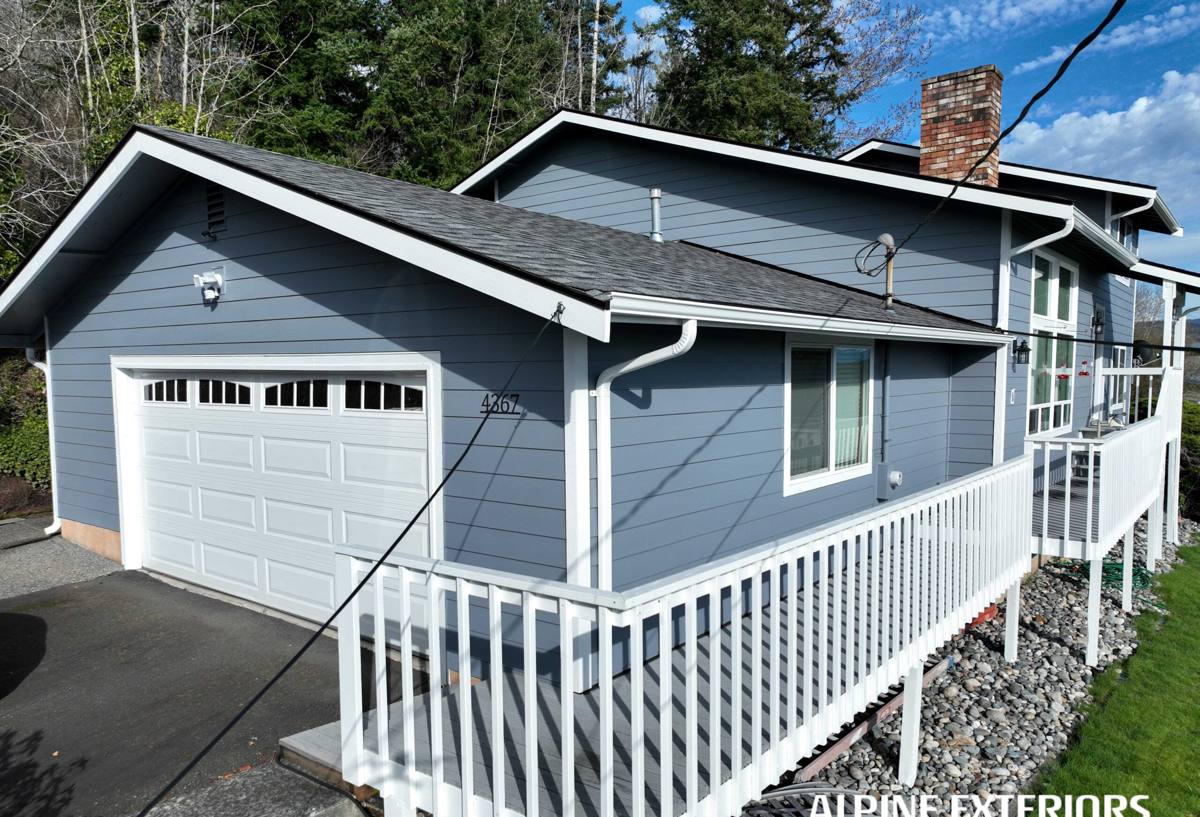
Signs a Lynden Roof Needs Repair Now
Most roof failures we see didn't start as a big problem. They started small and got ignored through a wet season or two. Watch for these signs:
- Dark streaking or thick moss growth concentrated on shaded slopes or in valleys
- Granules collecting in gutters or at downspout outlets (a sign shingles are wearing thin)
- Soft spots, sagging, or discoloration on interior ceilings, especially after a heavy storm
- Rust staining below metal flashing, vents, or fasteners
- Curling, lifting, or cracked shingles along ridge lines and roof edges
- Daylight visible through the attic roof deck, or damp insulation near the eaves
- Gutters pulling away from the fascia, which lets water run behind the roof edge instead of off it
Any one of these is worth a look. Several together usually mean water has already found a way past the surface layer and into the deck or framing underneath, which is where a simple repair turns into a much bigger job if it sits too long.
What a Correct Roof Repair Actually Involves
A roof repair done right isn't just sealing the spot where water is showing up inside. Leaks travel — water entering at a ridge vent can show up as a stain three feet away, following a rafter or sheathing seam downhill. A repair that only addresses the visible symptom often leaves the actual entry point untouched.
Moss and Debris Removal
Before any repair work starts, the affected area needs to be cleared of moss, needles, and organic debris — by hand or soft-brush methods, not high-pressure washing, which can drive water under shingles and strip protective granules. On a Lynden roof, this step alone often reveals the true extent of the damage once the moss mat is pulled back.
Flashing and Fasteners
Flashing around chimneys, skylights, vents, and roof-to-wall transitions is the single most common failure point on repair calls in this area. Salt-air exposure and constant moisture corrode nail heads and thin metal flashing faster than dry-climate roofs experience. A correct repair replaces compromised flashing and fasteners rather than just resealing over rust and gaps with caulk, which is a short-term fix at best.
Underlayment and Decking
If water has been getting through for a while, the underlayment beneath the shingles and possibly the wood decking itself may be saturated or soft. Patching over compromised decking doesn't hold — it needs to be cut out and replaced with matching material before new roofing goes back down.
Ventilation Check
Poor attic ventilation traps moisture inside the roof system, which speeds up rot from the underside even when the exterior surface looks fine. Any real repair should include a quick check of soffit and ridge ventilation, since a moisture problem caused by poor airflow will keep recurring no matter how many times the surface is patched.
Roofing Materials Common on Lynden Homes
Different roofing materials fail in different ways here, and the right repair approach depends on what's already on the roof.
| Material | Common Failure Points in This Climate | Repair Considerations |
|---|---|---|
| Composition (asphalt) shingle | Granule loss, moss lift, curling edges, nail pop | Most repairable material; matching shingle age/color can be a challenge on older roofs |
| Cedar shake or shingle | Moisture retention, splitting, moss and moss-driven rot | Requires careful spot-replacement of individual shakes; full sections often need re-lacing |
| Metal roofing/panels | Fastener corrosion, seam movement, panel scratching | Repairs focus on fasteners and sealant at seams; panel replacement is possible without full tear-off |
| Low-slope/flat roofing | Ponding water, membrane seam failure | Needs membrane-specific repair methods; patching the wrong material to the wrong membrane fails fast |
We don't push a full re-roof when a targeted repair will genuinely hold up. We also won't tell you a patch is fine when the underlying material is past the point where repair makes sense — that's a judgment call that depends on age, extent of damage, and what's underneath, and it's something we walk through with you honestly during the inspection.
Our Roof Repair Process
- Inspection. We get on the roof (not just look from the ground) and check the deck, flashing, ventilation, and interior attic space where accessible, not just the spot you called about.
- Diagnosis and written scope. We tell you what's actually failing, why, and what it will take to fix it — including if a repair isn't the right call anymore.
- Debris and moss clearing. The work area is cleared using methods that don't damage surrounding shingles or force water under the surface.
- Removal of damaged material. Compromised shingles, shakes, panels, flashing, or decking are removed back to solid material — not just covered over.
- Repair and reinstallation. New flashing, underlayment, fasteners, and roofing material are installed to match the existing roof as closely as possible, using fastening and sealing methods suited to sustained wet-weather exposure.
- Cleanup and final check. Gutters and ground areas are cleared of debris, and the repaired area is checked for a proper water-shedding tie-in with the surrounding roof.
Repair or Replace? How We Help You Decide
This is the question every homeowner actually wants answered, and it depends on more than the size of the visible leak.
| Factor | Favors Repair | Favors Replacement |
|---|---|---|
| Roof age | Well within expected material lifespan | Near or past the material's typical service life |
| Extent of damage | Isolated to one area (flashing, one slope, one penetration) | Recurring leaks in multiple areas or widespread granule/material loss |
| Decking condition | Solid, no soft spots found during inspection | Soft, delaminated, or rotted decking found in multiple locations |
| History of past repairs | First or second repair on this roof | Repeated patch jobs on the same sections over recent years |
| Budget timeline | Repair buys reasonable additional service life | Cost of repeated repairs starts approaching replacement cost |
We'll give you a straight answer either way. If a repair is the honest recommendation, that's what we'll quote. If the roof is genuinely past that point, we'll explain exactly why, in plain terms, rather than upselling a replacement a repair could have handled.
Timing Repairs Around Whatcom County's Weather
Roof repair work can happen most of the year here, but timing still matters. Late spring through early fall gives the most dry-weather windows for tear-off and reinstallation work, which matters most for larger repairs involving decking or underlayment replacement. That said, small to moderate repairs — flashing, spot shingle replacement, moss-related fixes — can typically be done between rain systems throughout the year, and waiting for "the right season" often just gives an active leak more time to spread. If water is already getting into the attic or ceiling, that repair shouldn't wait for summer.
Fall is also worth flagging on its own: getting moss cleared and flashing checked before the heavy winter rain season starts is one of the most effective things a Lynden homeowner can do to avoid an emergency call in January.
Why Working With a Crew That Already Knows Lynden Matters
Roofing crews that mostly work drier climates tend to under-detail flashing, skip moss-specific removal steps, or use fastening schedules that aren't built for constant wind-driven rain. That's not a knock on their skill — it's just not what their normal work calls for. A crew that regularly repairs roofs in Whatcom County's climate already knows which flashing details fail first here, how moss actually spreads under shingles versus how it looks from the ground, and which repair shortcuts don't hold up through a wet Pacific Northwest winter. That local pattern recognition is often the difference between a repair that lasts and one you're calling about again next season.
A Simple Roof Maintenance Checklist for Lynden Homeowners
- Have moss and debris cleared from the roof at least once a year, ideally before the wet season builds
- Check gutters and downspouts for granule buildup after storms — it's an early wear signal
- Look at interior ceilings after major rain events for new staining or soft spots
- Have flashing around chimneys, vents, and skylights inspected every few years, sooner if the roof is older
- Confirm attic ventilation is clear and functioning, especially before winter
- Address small leaks immediately rather than waiting for a dry season
- Keep a record of past repairs so a contractor can judge patterns, not just the latest issue
If you're seeing moss buildup, a stain on the ceiling, or just want an honest read on how much life is left in your roof, we're happy to take a look. A free, no-pressure estimate is a straightforward way to find out what's actually going on before it turns into a bigger repair — use the form below to get started.