 Ferndale Siding
 Siding Replacement Built for Custer's Weather, Not Just Its Curb Appeal
Custer sits close enough to the water and open farmland that homes here take a different kind of beating than siding in a sheltered subdivision. Salt-laden air drifts in off the Strait, driving rain comes sideways more often than straight down, and the region's long, damp winters give moss and algae months at a time to get a foothold on anything that stays wet. If you're researching siding replacement for a home in this area, the product and the installation both need to answer to those specific conditions, not just look good on the day the crew leaves.
This page focuses on one job, done right, in one place: full siding replacement for Custer homes. We'll walk through what the local climate actually does to siding over time, what a correct replacement job includes, how our process works, and why it matters that the crew on your roofline already knows this stretch of Whatcom County.
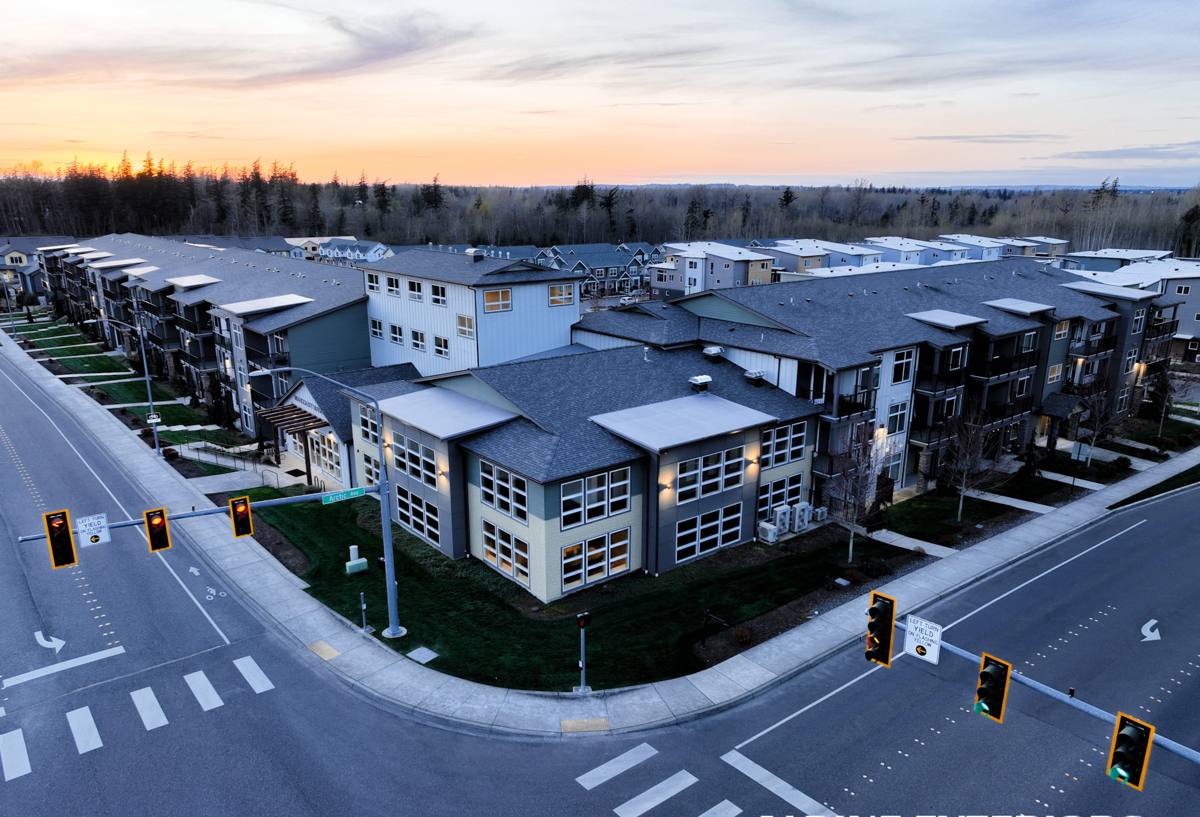
What Salt Air, Driving Rain, and Moss Season Actually Do to a Wall
Every siding material fails in its own way, but the mechanisms in Custer are pretty consistent because the climate stressors are consistent.
Salt Air and Moisture-Laden Wind
Homes near open water and exposed farmland catch more airborne salt and moisture than siding fifteen miles inland. Salt is hygroscopic — it pulls moisture out of the air and holds it against a surface. On wood-based or wood-fiber products, that means longer damp periods at the surface, which accelerates swelling, checking, and paint or coating breakdown. On fasteners and trim, it accelerates corrosion if the wrong hardware was used.
Driving, Wind-Driven Rain
Custer doesn't just get rain — it gets rain pushed sideways into wall assemblies by wind off open ground. That matters because siding is only half the water-management system; the other half is the water-resistive barrier, flashing, and drainage plane behind it. Wind-driven rain finds every shortcut in a lap joint, a butt seam, or a poorly flashed window, and it finds them faster here than in calmer microclimates.
A Long Moss and Algae Season
Whatcom County's wet season runs long, and shaded north- and west-facing walls in Custer can stay damp for days after a storm passes. Any siding material that holds surface moisture — bare wood, some composite products, uncoated fiber cement — gives moss and algae exactly the conditions they need. Once organic growth establishes itself, it holds even more moisture against the wall, and the cycle accelerates.
None of this means Custer is an unusually harsh place to build. It means siding selection and installation quality matter more here than they would in a drier, calmer climate — and cutting corners shows up sooner.
Signs a Custer Home Needs Siding Replacement, Not Another Repair
Not every siding problem calls for a full replacement. But there's a point where patching becomes a losing game, especially under this climate load. Watch for:
- Soft or spongy spots when you press on the siding, especially near the bottom courses and around window and door trim
- Persistent moss or algae staining that returns within weeks of cleaning
- Visible cupping, buckling, or gaps opening up at lap joints and seams
- Paint that's failing in sheets rather than fading evenly, which often points to moisture trapped behind the surface
- Rot or staining at inside corners, under windows, or wherever two planes of the house meet
- Fastener stains — rust streaks bleeding down from nail or screw heads
- Rising energy bills alongside visibly failing siding, which can mean the wall assembly itself is compromised
If you're seeing two or more of these, it's worth a professional look before deciding whether repair or full replacement is the right call.
Why We Install Only James Hardie Fiber Cement
We don't install vinyl, LP SmartSide, Cemplank, Allura, or primed wood siding — not because those products have no merit, but because after years of doing this work in Whatcom County's marine climate, we standardized on one system we're willing to stand behind on every job, including in Custer.
Vinyl is inexpensive and low-maintenance in mild conditions, but it's a thin plastic product that expands and contracts with temperature swings, can crack in impact or cold, and its seams and J-channels are exactly the kind of shortcut that wind-driven rain exploits. LP SmartSide and similar engineered-wood products perform well when detailing is perfect and maintenance stays current, but they're wood-based at the core — meaning the salt-air moisture cycle described above works against them over decades in a way it doesn't against fiber cement. Cemplank and Allura are also fiber cement, and reasonable products, but we've built our installation training, flashing details, and warranty relationships around the Hardie system specifically, and we don't mix systems on a crew.
James Hardie fiber cement is non-combustible, dimensionally stable across our wet-to-dry seasonal swings, and comes pre-finished with ColorPlus — a factory-baked finish that holds color and resists the moisture-driven paint failure that's common on field-painted siding in this climate. Hardie also engineers specific product lines (HZ5, HZ10) for different climate zones, which matters in a region that sees both hard freezes and prolonged wet spells. The backing warranty is transferable, which protects resale value, not just the original owner.
For a home in Custer specifically — exposed to salt air and driving rain more than most inland Whatcom County properties — that combination of moisture resistance, factory-cured finish, and non-combustible material is the standard we think the house deserves.
What a Correct Siding Replacement Actually Involves
The siding itself is maybe half the job. The other half is everything underneath it, and it's the part that determines whether the house stays dry for the next thirty years or starts failing in five.
Tear-Off and Substrate Inspection
Old siding comes off down to the sheathing, and that sheathing gets inspected for rot, delamination, or soft spots — especially common at the bottom plate and around old window flashing that wasn't done to current standards. Anything compromised gets repaired or replaced before a single new panel goes up. Covering damaged sheathing with new siding just hides the problem for a few more years.
Water-Resistive Barrier and Drainage Plane
A new weather-resistive barrier goes on with correctly lapped and taped seams, shingle-style from the bottom up so water sheds outward at every layer. In a climate with as much wind-driven rain as Custer sees, we also build in a drainage gap behind the siding wherever the wall assembly calls for it, so any moisture that does get past the cladding has somewhere to go instead of sitting against the sheathing.
Flashing at Every Penetration
Windows, doors, hose bibs, vents, and light fixtures are where most real-world leaks start, not the field of the siding itself. Correct head, side, and sill flashing at every one of those penetrations, integrated properly with the water-resistive barrier, is non-negotiable on our jobs.
Fastening and Clearances
Hardie panels get fastened per manufacturer spec with corrosion-resistant fasteners — important given the salt exposure here — and installed with the correct clearance above grade, roof lines, and decks so the bottom edge of the siding never sits in standing water or constant splash-back.
Trim, Caulking, and Finish Details
Corners, trim boards, and butt joints get sealed with products rated for the exposure, and any field-cut panel edges get factory-matched touch-up so the whole wall performs and looks consistent.
Our Process, Start to Finish
- Free on-site estimate. We walk the exterior with you, look at trouble spots you've noticed, and check things you might not have — sheathing condition at accessible points, flashing at windows, moisture patterns on shaded walls.
- Written scope and product selection. You get a clear proposal covering the Hardie product line, color, trim details, and what the tear-off and prep work will involve — no vague allowances.
- Scheduling around Whatcom County weather. We plan tear-off and dry-in sequencing to minimize the days a wall sits exposed, which matters more here than in drier climates.
- Tear-off, substrate repair, and dry-in. Old siding comes off, sheathing gets inspected and repaired as needed, and the new water-resistive barrier goes on promptly.
- Hardie installation to manufacturer spec. Panels, fasteners, flashing, and trim go in following James Hardie's published installation requirements — not a generalized "siding" approach.
- Final walkthrough. We go over the finished work with you before calling the job done.
Comparing Siding Options for a Custer Home
| Material | Behavior in Salt Air / Driving Rain | Moss & Algae Resistance | Finish Durability |
|---|---|---|---|
| Vinyl | Seams and channels are leak-prone under wind-driven rain; can crack in impact | Moderate; growth washes off but returns on shaded walls | Color molded in but can fade/chalk over time |
| LP SmartSide / engineered wood | Wood-based core is vulnerable to prolonged salt-moisture cycling if detailing fails | Lower; wood substrate holds moisture longer | Factory finish good, but edge-sealing is critical |
| Cedar / primed wood | High maintenance burden in this climate; needs regular refinishing | Low without diligent upkeep | Field-applied finish fails fastest under moisture cycling |
| James Hardie fiber cement | Dimensionally stable, engineered HZ lines for regional exposure | Good; factory finish resists surface moisture retention | ColorPlus factory-baked finish, strong warranty |
What Drives Cost on a Custer Siding Replacement
Every home is different, so we won't quote a number without seeing the house, but the main factors that move the price are consistent:
| Factor | Why It Matters |
|---|---|
| Wall square footage and home shape | More corners, dormers, and cutouts mean more labor and trim detail |
| Substrate condition | Rotted or damaged sheathing found during tear-off requires repair before new siding goes on |
| Siding profile and trim package | Lap width, trim complexity, and accent details affect material and labor |
| Access and site conditions | Grading, landscaping, and building height affect scaffolding and staging needs |
| Existing flashing and window condition | Bringing older penetrations up to current flashing standards adds scope but protects the investment |
What to Ask Before Hiring Anyone for This Work
- Do you install to the manufacturer's published installation instructions, and will that be part of the written scope?
- What water-resistive barrier and flashing details do you use at windows, doors, and penetrations?
- Are fasteners corrosion-resistant, and is clearance above grade and roof lines built into the plan?
- What happens if you find damaged sheathing once tear-off starts?
- Is the manufacturer's warranty registered in my name, and is it transferable if I sell the home?
- Have you worked on homes in this specific area, and do you understand the exposure here?
Why a Crew That Already Works in Custer Matters
Siding installation isn't identical everywhere. A crew used to sheltered, inland neighborhoods can do competent work and still under-detail flashing or drainage for a wall that takes direct, wind-driven rain the way Custer properties often do. Working this area regularly means we've already seen where moss establishes first, which wall orientations take the worst weather, and where older homes in this part of Whatcom County tend to have flashing that hasn't held up. That local pattern recognition shows up in the details — the ones you can't see once the siding is on, but that determine whether the wall stays dry for decades.
If your Custer home needs new siding, we're happy to take a look and give you an honest read on condition, scope, and options — no pressure, no obligation. Reach out using the form below to schedule a free estimate.