 Ferndale Siding
 Siding Repair That Accounts for Where Sumas Actually Sits
Sumas sits inland along the Nooksack River valley near the Canadian border, and that position shapes how siding fails here. It's spared the direct ocean spray you get closer to the coast, but it isn't spared moisture. Valley fog settles in overnight for much of the fall and winter, driving rain off the Pacific still reaches this far inland, and the same marine air that carries salt toward Bellingham Bay moves through the county and keeps humidity high for days at a time. Add a moss season that can run eight months out of the year on north-facing walls and shaded siding, and you get a slow, steady kind of wear that doesn't announce itself until paint is peeling, boards are soft, or a seam has opened up and let water behind the wall.
That combination — persistent dampness rather than dramatic storms — is exactly why siding repair in Sumas has to start with figuring out how water is getting in, not just patching what's visible. A lot of repair calls we get are for damage that's been building for a year or more before anyone noticed it.
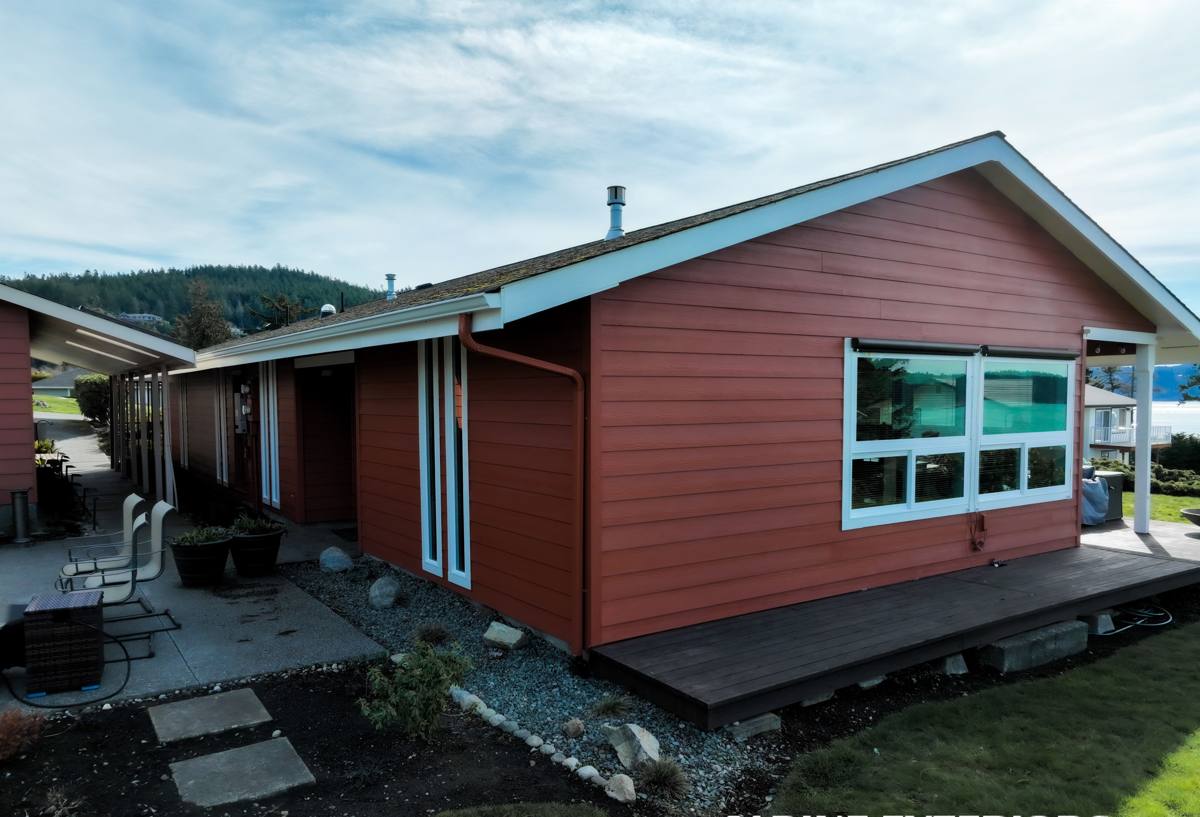
What Actually Goes Wrong With Siding in This Area
Most of the repair work we do around Sumas and the rest of Whatcom County falls into a handful of categories:
- Moisture intrusion at seams and butt joints — where two pieces of siding meet, caulking fails, and water works its way behind the material over repeated wet-dry cycles.
- Failed flashing around windows, doors, and roof lines — the siding looks fine, but water is entering above or below it and running down inside the wall cavity.
- Moss and algae growth holding moisture against the surface — especially on shaded north and east walls, where siding rarely gets a chance to dry out between rains.
- Swelling, delamination, or soft spots in wood-based or engineered wood products that have absorbed water at cut edges or fastener points.
- Impact damage from storms, tree debris, or routine yard work that's gone unrepaired long enough for water to get behind it.
The common thread is that the surface problem — a stain, a soft board, a patch of moss — is usually a symptom. The real issue is almost always a moisture path that needs to be found and closed, not just covered up.
Why "Just Patch It" Often Backfires
It's tempting to treat siding repair as a cosmetic fix: replace the damaged board, caulk the edges, repaint, done. In a dry climate that might hold up. In Whatcom County, if the underlying flashing, house wrap, or seam detail that let water in wasn't corrected, the same spot fails again — often faster the second time, because the wall assembly behind it is already wet. A repair that doesn't address why the damage happened in the first place is a temporary fix at best.
Signs It's Time to Call for a Repair
Homeowners in Sumas should treat any of the following as worth a look, especially before winter's wet stretch sets in:
- Paint that's bubbling, peeling, or flaking in a localized area rather than uniformly across the wall
- Soft or spongy spots when you press on the siding near the base of the wall or under windows
- Visible gaps, cracks, or separation at seams and corners
- Moss or dark streaking that keeps coming back in the same spot after cleaning
- A musty smell or visible staining on interior walls that back onto exterior siding
- Siding that looks warped, bowed, or pulled away from the wall in one section
Any one of these is usually a small job if it's caught early. Left through another wet season, most of them turn into a full section replacement instead of a repair.
What a Correct Repair Involves
Diagnosis Before Anything Gets Removed
Before we touch a board, we're looking for the actual entry point — a failed flashing detail, a gap at a trim joint, a fastener that backed out, or house wrap that's torn behind the siding. Pulling the damaged material and checking the sheathing and wrap underneath tells us whether the framing has been affected and how far the moisture has traveled, which is often further than the visible damage suggests.
Matching Materials, Not Guessing
A repair only looks right if the replacement piece matches the existing siding's profile, exposure, and finish. On factory-finished fiber cement, that means matching the specific plank width and color rather than pulling a close-enough board off the shelf. Mismatched replacement pieces are one of the most common reasons a repair job stands out instead of blending in.
Correcting the Detail That Failed
This is the step that's easy to skip and the one that matters most. Re-flashing a window head, extending a kick-out flashing, re-lapping house wrap correctly, or re-sealing a joint with the right sealant (not just caulk smeared over the gap) is what keeps the repair from repeating itself in a year or two.
Finishing to Match
The last step is making sure paint or factory finish, caulk lines, and trim details match the surrounding wall. A repair that's structurally sound but visually obvious is still an unfinished job in our book.
Repair or Replace? What Actually Decides It
Not every damaged section needs a full re-side, and not every "small fix" should stay small. Here's how we walk homeowners through that decision:
| Factor | Points Toward Repair | Points Toward Replacement |
|---|---|---|
| Extent of damage | Isolated to one or two sections | Recurring across multiple walls |
| Underlying wall condition | Sheathing and wrap intact once opened up | Rot or moisture found in framing/sheathing |
| Age of existing siding | Siding is under 15-20 years old | Siding is at or past its expected service life |
| Material on the house | Fiber cement or another durable, matchable product | A product prone to widespread failure (swelling wood-composite, brittle old vinyl) |
| Cause of damage | One-time event (impact, isolated flashing failure) | Systemic issue (original installation defects, chronic moisture path) |
When we find one section failing for a reason that likely affects the rest of the house — for example, an installation detail that was done the same way on every wall — we say so plainly, even if that means recommending more work than a homeowner called us for.
Why the Siding Material Affects How It's Repaired
We install only James Hardie fiber cement siding, and one reason is how predictably it behaves when something does go wrong. Fiber cement doesn't swell, rot, or delaminate the way wood-based composite products can when moisture gets behind them, and it doesn't become brittle and crack the way older vinyl does in cold snaps. That makes repairs more straightforward: a damaged plank comes out clean, a matching replacement plank goes in, and the ColorPlus factory finish means the new piece can match the existing color without a repaint of the whole wall. On homes with wood, engineered wood, or vinyl siding, we still make honest repairs — but we're upfront that those materials often show their age unevenly, and a repair today doesn't guarantee the section next to it won't need attention soon after.
Our Process on Repair Calls in Sumas
- Inspection: we look at the damaged area and the surrounding wall, not just the spot you called about.
- Diagnosis: we identify the moisture path or cause of failure before quoting anything.
- Honest scope: we tell you whether this is a contained repair or a sign of a bigger issue, and why.
- The fix: correct the underlying detail, replace with matched material, finish to blend in.
- Walkthrough: we show you what we found and what we did before we call the job done.
Why It Matters That We Already Work in Sumas
A crew that regularly works Whatcom County homes recognizes the difference between cosmetic weathering and an actual moisture problem faster, because we've seen how houses in this valley age. We know what a season of valley fog and prolonged dampness does to north-facing walls, and we know which flashing details tend to fail first on homes built to a given era's code. That's not a substitute for inspecting your specific house, but it means less time spent guessing and more time spent fixing the actual problem.
After the Repair: Keeping It From Happening Again
A good repair buys you time, but siding in this climate still needs attention to get the most out of it. A simple annual routine covers most of it:
- Rinse siding (especially shaded, north-facing walls) once a year to knock back moss and algae before it takes hold
- Walk the exterior each fall and check caulking at seams, corners, and trim for cracking or gaps
- Keep gutters clear so overflow isn't running down the wall face during heavy rain
- Trim back vegetation and tree limbs that keep siding shaded and damp longer than it needs to be
- Address small paint or caulk failures the season you notice them, not the season after
None of this is complicated, but it's the difference between a repair that lasts and one that needs revisiting in two years.
If you've got a section of siding in Sumas that's showing damage, staining, or moss that keeps coming back, we're glad to take a look and give you a straight answer on what it needs. Estimates are free, there's no pressure, and we'll tell you honestly if it's a small repair or something more — just fill out the form below to get started.