 Ferndale Siding
 Building New in Semiahmoo Means Building for the Water
Semiahmoo sits right up against the marine air coming off the water, and that changes what a new-construction window install needs to survive. This isn't the same job as swapping windows in a dry inland home. Homes here take on salt-laden air, wind-driven rain that comes at the wall sideways instead of straight down, and a long stretch of the year where moss, algae, and standing dampness are just part of life. If the window openings aren't detailed correctly the first time, while the wall is still open and everything is accessible, the home pays for it in slow, hidden ways for decades.
New construction is actually the best possible time to get this right. Once siding, trim, and interior finishes are closed up, correcting a bad window installation means tearing back into finished work. Getting the flashing, sequencing, and sealant details right while the rough opening is still exposed is far cheaper than fixing a leak five years later.
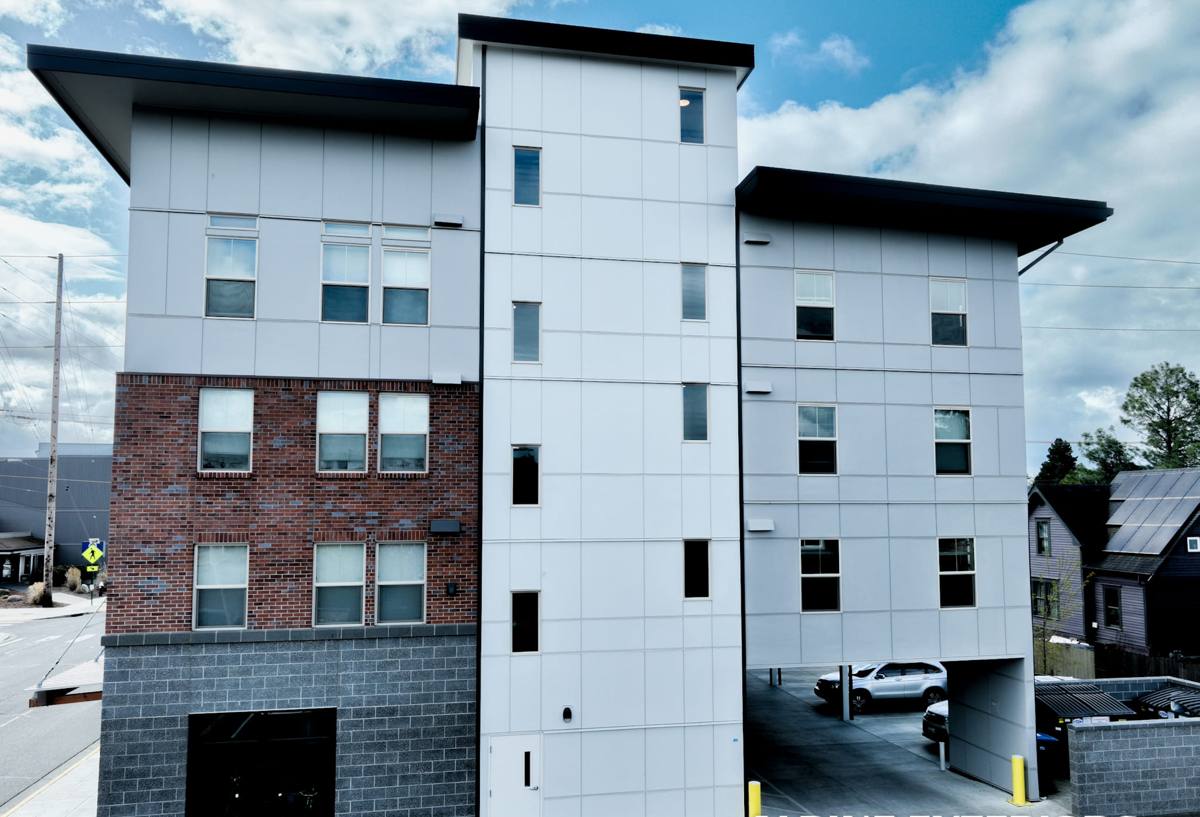
What New-Construction Window Installation Actually Involves
"New-construction window" refers to windows installed with a nailing flange, set into a rough opening before the siding goes on — different from a pocket or insert replacement window that goes into an existing frame. That flange is what ties the window into the weather-resistive barrier (WRB) and the rest of the wall's drainage plane, so the install quality depends on more than just the window itself. It depends on:
- How the rough opening was prepped and whether it's square, level, and properly sized
- Whether a sloped sill pan was installed to shed any water that gets past the window to the outside, not into the wall cavity
- How the WRB and flashing tape are lapped around the opening so water sheds downward and outward at every layer
- How the head flashing and drip cap direct water away from the top of the window
- How the gap between the window frame and rough framing is sealed and insulated without trapping moisture
Any one of these done out of order or skipped entirely can turn into a leak path. In a climate that gets sustained wind-driven rain off the water, that leak path gets tested constantly, not occasionally.
Why Sequencing Matters More Than the Window Itself
A premium window installed out of sequence with the WRB will leak eventually. A mid-grade window installed with correct shingle-lap sequencing — WRB behind the head flashing, over the side flashing, over the sill pan — will shed water for the life of the house. The order layers overlap in matters as much as the window brand does. This is the piece that's easy to rush on a new build schedule and the piece we refuse to rush.
Frame Material: Salt Air Changes the Calculus
Coastal salt air accelerates corrosion on hardware, fasteners, and certain frame finishes faster than it would a few miles inland. It doesn't mean every window option is off the table near the water, but it does mean frame material and hardware finish deserve a real conversation before you order windows for a Semiahmoo build.
| Frame Material | Coastal/Salt-Air Behavior | Maintenance | General Cost Position |
|---|---|---|---|
| Vinyl | Doesn't corrode; UV and heat exposure over many years can affect color and seals | Low | Lowest to mid |
| Fiberglass | Very stable dimensionally, resists corrosion, holds paint well in coastal air | Low | Mid to higher |
| Aluminum-clad wood | Attractive exterior durability, but any breach in the cladding exposes wood beneath to moisture | Moderate | Higher |
| Bare aluminum | Prone to corrosion and pitting in salt air unless specifically coated/anodized for marine exposure | Higher | Varies |
Our standard for a Semiahmoo build leans toward vinyl or fiberglass frames with corrosion-resistant (typically stainless or coated) fasteners and hardware, specifically because they hold up with the least maintenance burden in salt-influenced air. Aluminum-clad wood can still be the right call for a specific look, but we'll walk through the added maintenance honestly before you commit to it on a home this close to the water.
Glass and Performance Choices for This Climate
Whatcom County's marine west coast climate is mild in temperature swing but wet almost year-round, so the performance priorities are a little different than they'd be somewhere with harsh winters or intense sun. A few things matter more here than elsewhere:
- Low-E coatings help with both heat retention in our cool, wet winters and reducing solar gain on the rare hot stretch — the coating spec should match orientation, not be one-size-fits-all across the house
- Argon-filled dual-pane is standard-adequate for most new builds here; triple-pane adds cost and weight with a smaller performance jump in this climate than it would somewhere with real winter cold
- Condensation resistance matters because of sustained high humidity — a window with a poor thermal edge spacer will show it on the inside glass during our damp months
- Weep system design on the sill needs to actually clear the volume of water this area sees, not just token drainage holes
Our New-Construction Window Process
We coordinate directly with your builder or general contractor rather than working in isolation, because window installation touches framing, the WRB, and the siding trades on either side of it. Our process on a new-construction job:
- Review rough openings against window schedule and manufacturer specs before delivery, catching sizing issues while they're still cheap to fix
- Install sloped sill pans at every opening — this is non-negotiable on our jobs regardless of window brand
- Set the window plumb, level, and square, with proper shim placement so the frame isn't stressed and hardware operates correctly for the life of the window
- Lap flashing tape and WRB in correct shingle order: sill pan, side flashing, then head flashing over the top, so every layer sheds outward and down
- Seal and insulate the perimeter gap with a method that manages moisture rather than trapping it against the frame
- Photograph and document flashing details at each opening before siding closes it up — useful for warranty records and for you if you ever need to reference how an opening was detailed
- Final air-seal and trim work once siding is installed, checking operation and weatherstripping contact on every unit
Cost Factors on a New-Construction Window Job
Every new build is different, but the line items that move the price the most are consistent. We'll always give you a written number for your specific window schedule — the table below is meant to help you understand what's driving the range, not to quote a number sight unseen.
| Factor | Why It Moves the Cost |
|---|---|
| Number and size of openings | More openings and larger units mean more labor and material per house |
| Frame material | Vinyl runs lower than fiberglass or clad-wood options |
| Glass package | Specialty Low-E coatings, tempered/safety glass where code requires it, and upgraded spacers add cost |
| Site access and scaffolding | Multi-story openings or difficult site access add labor time |
| Timing with other trades | Coordinating tightly with framing/WRB schedules is more efficient than working around finished work |
A Practical Checklist Before Windows Go In
If you're a builder, owner-builder, or homeowner overseeing a new build in the Semiahmoo area, these are the things worth confirming before the window crew shows up:
- WRB is installed and lapped correctly before window delivery, with no gaps or damage at the openings
- Rough openings match the window schedule dimensions, including allowance for shimming
- Sill pan flashing material is on-site and compatible with your WRB (some tapes and membranes don't adhere well to every housewrap)
- Window fastening schedule matches manufacturer requirements for your wind exposure — this affects warranty coverage
- A plan exists for documenting flashing details at each opening before siding closes them up
- Interior sealing and insulation approach is decided in advance so it isn't improvised on-site
Why a Crew That Already Works Semiahmoo Matters
A window installed to code minimums in a sheltered inland location can still fail here if the crew doesn't account for how exposed the site is to wind and driving rain off the water. Crews who work this area regularly know which elevations of a build take the worst weather, adjust flashing and sealant detailing accordingly, and don't treat every opening as identical regardless of orientation. They also know how Whatcom County's inspection process runs for new construction, so scheduling doesn't stall waiting on a rough-in inspection nobody planned for.
None of this replaces a good window. It's what determines whether a good window actually performs the way its warranty promises once it's facing real Semiahmoo weather for the next twenty or thirty years.
Getting Started
If you're framing a new build in or around Semiahmoo and want the window package detailed correctly from the rough opening forward, we're glad to walk your plans and give you straight answers on frame material, sequencing, and cost. Reach out for a free, no-pressure estimate using the form below.