 Ferndale Siding
 Windows Built for Sandy Point's Coastline, Not a Catalog Average
Sandy Point sits right up against the water, and that changes what a window has to survive compared to a house a few miles inland in Ferndale or greater Whatcom County. Salt-laden air corrodes hardware and finishes faster than dry inland air ever will. Wind-driven rain off the Strait doesn't just hit the glass — it gets forced sideways into any gap in the flashing or trim. And the long, damp moss season that blankets this part of Washington keeps wood, caulk, and paint wet for weeks at a time. A window that's fine in a typical suburban install can start failing early out here if it wasn't chosen and installed with that environment in mind.
We install custom windows for Sandy Point homes with those conditions built into every decision — the frame material, the hardware finish, the flashing detail, and the sealant. This page covers what that actually looks like, not just what "custom windows" means in general.
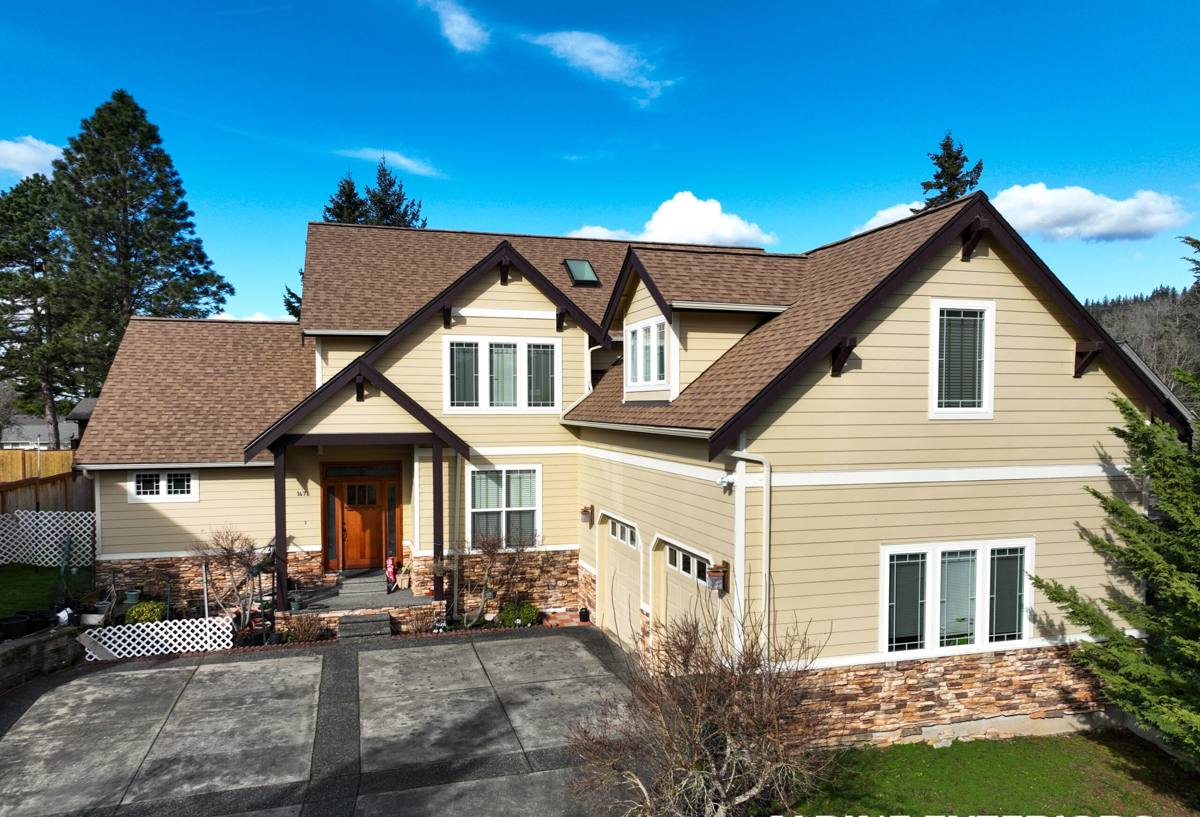
What "Custom" Actually Means Here
Custom doesn't mean expensive for its own sake. It means the window is built to fit your specific opening, your home's style, and your site conditions — instead of forcing a stock size into a rough opening and packing the gaps with trim.
Common reasons Sandy Point homeowners go custom
- Older openings that are out of square or slightly out of standard dimensions, common in homes built decades ago along the shoreline
- Larger view openings toward the water where a mulled (ganged) window assembly needs specific engineering for wind load
- Matching a specific grid pattern, trim profile, or sash style to keep a home's character consistent
- Upgrading from single-pane or early dual-pane units that were never rated for coastal exposure
- Replacing a shape that isn't standard — arched tops, odd bays, or angled walls
In each case, the goal is the same: a window that fits tight the first time, seals correctly, and doesn't need to be re-caulked every year to stay weathertight.
Material and Hardware Choices That Actually Matter in Salt Air
Not every window material behaves the same way a few hundred feet from saltwater. This is where a lot of the real decision-making happens, and it's worth understanding before you pick a product.
| Factor | What to look for near the water | Why it matters in Sandy Point |
|---|---|---|
| Frame material | Vinyl or fiberglass with UV- and corrosion-stable formulations; clad wood as an option for interior wood look | Bare or lower-grade aluminum frames corrode and pit faster in salt air |
| Hardware finish | Marine-grade or corrosion-resistant coatings on locks, hinges, and cranks | Standard hardware finishes can start showing rust or pitting within a few seasons this close to the water |
| Glass package | Dual-pane, low-E, with an argon or similar gas fill; consider laminated glass on exposed elevations | Cuts wind noise and helps with driving rain impact resistance on the water-facing side of the house |
| Weatherstripping | Compression-fit seals rated for high-wind exposure | Wind-driven rain finds any weak seal; a marginal gasket will leak here before it would inland |
| Sill and flashing detail | Sloped sill pan, back-dam, and integrated flashing tied into the wall's water-resistive barrier | This is the single most common failure point we find on older coastal installs — not the window itself |
We'll talk through these trade-offs with you directly rather than pushing one brand. The honest truth is that even a good window fails early if the flashing and sill detail underneath it are wrong — that's more common than the glass or frame itself being the problem.
Why we don't cut corners on aluminum-frame retrofits
Bare aluminum frames are lightweight and were common in older coastal construction, but in salt air they're prone to pitting, corrosion around fasteners, and thermal performance that lags behind vinyl or fiberglass. Our standard on Sandy Point homes is to move clients toward frame materials and finishes built for marine-adjacent exposure, because a callback for premature corrosion costs everyone more than doing it right the first time.
The Flashing and Sealing Detail Is Where Coastal Jobs Are Won or Lost
A window can be top-quality and still leak if it's set into the wall wrong. On a Sandy Point install, this step gets more attention than it would on a typical inland Ferndale remodel:
- Remove the old unit and inspect the rough opening for hidden rot or moisture damage before anything new goes in
- Install a sloped sill pan with a back-dam so any water that gets past the window sheds outward, not into the wall
- Integrate flashing tape and the window's nailing fin with the house wrap in the correct shingle-lap order — water always flows over the layer below it, never under
- Seal the interior air barrier separately from the exterior water barrier — these are two different jobs, not one bead of caulk
- Use a sealant rated for the temperature swings and UV exposure of a west- or north-facing coastal wall
This is also why we're cautious about "one-day window replacement" pitches on any home this close to the water. Speed is fine when the wall assembly underneath is straightforward, but a coastal opening deserves the time to check the sheathing and flashing properly.
Moss Season and Long-Term Window Health
Whatcom County's wet season runs long, and Sandy Point's exposure keeps things damp even between storms. That has a few practical implications for windows specifically:
Trim and cladding around the window
Wood trim that stays wet for extended periods is where moss and rot get a foothold first — often before anyone notices a problem with the window itself. We pay attention to how the trim, cladding, and window casing shed water, not just the unit in isolation.
Drainage behind the frame
Good window installs include a way for incidental moisture to drain back out rather than pool behind the frame. On a home exposed to near-constant marine moisture, this detail is what separates a window that lasts decades from one that needs attention in five or six years.
Hardware maintenance
Even corrosion-resistant hardware benefits from an occasional rinse and light lubrication in a salt-air environment. We'll walk you through what upkeep actually makes a difference versus what's unnecessary.
Our Process for a Sandy Point Custom Window Project
- On-site assessment — we measure every opening individually, check for existing moisture or rot damage, and evaluate what the current flashing looks like
- Material and glass selection — we walk through frame, glass, and hardware options with the coastal exposure of your specific elevation in mind
- Custom fabrication — units are built to your exact rough opening rather than shimmed from stock sizes
- Removal and opening prep — old units come out, and any sheathing or framing damage found underneath gets addressed before the new window goes in
- Installation with full flashing integration — sill pan, back-dam, flashing tape, and air/water barrier separation, done in the correct order
- Final inspection and walkthrough — we check operation, seals, and finish with you before calling the job done
What This Typically Involves Cost-Wise
Every home and opening is different, so we won't quote a number without seeing the site, but a few honest factors drive the range on a coastal custom window project:
| Cost factor | Why it moves the price |
|---|---|
| Number and size of openings | Larger view windows and mulled assemblies cost more to engineer and install than standard-size units |
| Frame material | Fiberglass and higher-grade vinyl typically cost more upfront than basic vinyl but hold up better in salt air |
| Condition of the existing opening | Hidden rot or old flashing failures add labor to repair before the new window can go in |
| Glass package | Impact-rated or laminated glass on exposed elevations adds cost but reduces long-term risk on water-facing walls |
| Trim and cladding work | Matching existing trim profiles or replacing damaged siding around the opening adds scope |
We'd rather give you a real number after walking the site than a range that doesn't match your actual home.
Why a Crew That Already Works Sandy Point Is Worth It
General window installers who mostly work inland don't always think about sill pans, back-dams, or corrosion-rated hardware as default steps — because most of their jobs don't need them. On a Sandy Point home, skipping those details isn't a small shortcut; it's the difference between a window that's still tight in fifteen years and one that's leaking behind the trim in five.
We work throughout Ferndale and Whatcom County, and Sandy Point's shoreline exposure is a known quantity for us — not something we're solving for the first time on your house. That familiarity shows up in the details: how we flash the opening, which hardware we spec, and how we talk you through trade-offs instead of just selling a size and color.
Questions to Ask Before You Sign a Window Contract on the Water
- Will you install a sloped sill pan and back-dam, not just caulk the sill?
- What hardware finish is spec'd for salt-air exposure, and is it upgradeable?
- How do you handle hidden rot or sheathing damage if you find it during removal?
- Is the glass package rated for wind-driven rain on the exposed elevation?
- What's the warranty structure — on the unit itself and on your installation labor?
If a bid doesn't have clear answers to those, it's worth a second opinion before work starts.
If you're weighing a custom window project for a Sandy Point home, we're glad to walk the property, look at your existing openings, and give you a straightforward estimate — no pressure, no obligation. Use the form below to get started.