 Ferndale Siding
 Decking on the Water Takes a Beating in Sandy Point
Sandy Point sits close enough to the water that decks here deal with a different set of stresses than a deck a few miles inland in Ferndale. Salt-laden air off the water accelerates corrosion on anything metal, driving rain gets pushed sideways into ledger boards and railing posts, and the long stretch of gray, wet months each year keeps every horizontal surface damp far longer than homeowners expect. A composite deck built the right way handles all of that without much fuss. One built with shortcuts — the wrong fasteners, poor drainage under the boards, no thought given to airflow underneath — will show problems within a few seasons, not decades.
This page covers what a composite deck actually needs to hold up in Sandy Point's climate, what a correct installation looks like, and what to watch for when you're comparing bids.
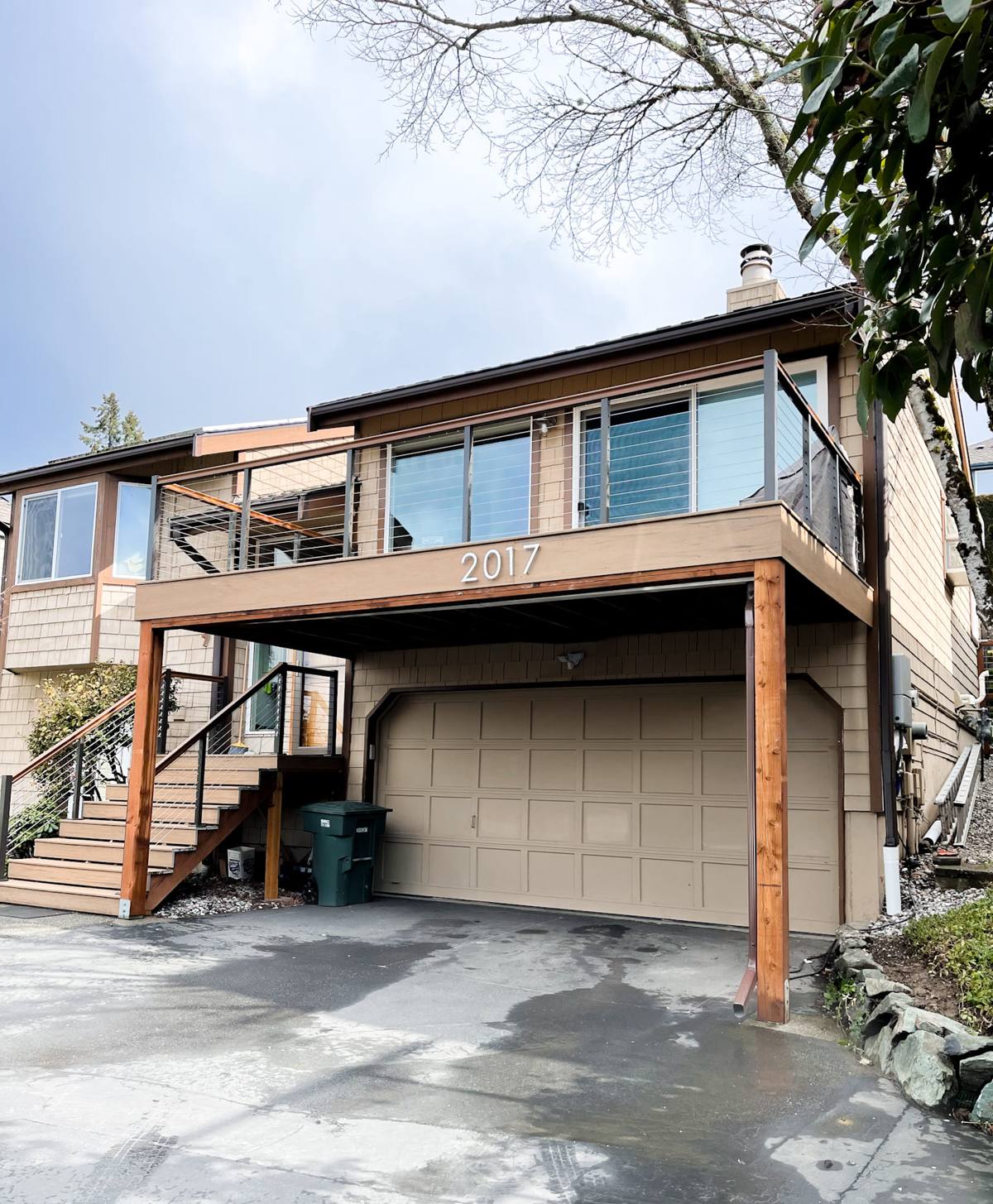
What This Climate Actually Does to a Deck
Salt Air and Corrosion
Even a modest distance from saltwater is enough to speed up rust and corrosion on fasteners, brackets, and railing hardware. Standard exterior-rated screws that would be fine ten or fifteen miles inland can start showing corrosion streaks on a waterfront deck in Whatcom County within a year or two. That staining isn't just cosmetic — corroding fasteners lose holding strength over time, and a board that's only lightly attached is a board that can work loose, squeak, or lift in wind.
Driving Rain
Rain in this part of Washington rarely falls straight down. Wind off the water pushes it sideways, which means it gets driven into places a calm-weather installation wouldn't account for: under railing base plates, behind ledger boards, into the end grain of boards that weren't properly capped or sealed. Water that gets in and can't get back out is what causes rot in the framing underneath a deck, even when the decking material itself is fully synthetic.
Moss and Prolonged Dampness
Whatcom County's moss season runs long — moist, mild conditions for much of the year are exactly what moss and algae need to take hold. On a deck, that shows up as a green film on boards that stay shaded or don't drain well, and it makes the surface slick. Composite boards resist rot, but they don't automatically resist surface growth; that comes down to drainage, airflow, and board texture, not just the material itself.
What a Correct Composite Deck Needs Here
Substructure and Framing
The composite boards on top get most of the attention, but the framing underneath is what determines whether the deck lasts. In a marine climate, we treat the substructure as the part that has to survive the weather, not just support weight. That means pressure-treated or naturally durable framing lumber, joist tape or a comparable moisture barrier over the tops of joists, and framing spaced and pitched so water actually sheds instead of pooling.
Fasteners and Hardware
This is the detail that gets skipped most often, and it's the one that matters most this close to saltwater. We use fasteners and structural hardware rated for coastal or marine exposure — stainless steel or coated hardware designed to resist the kind of corrosion that ordinary deck screws can't stand up to here. It costs more up front. It's also the difference between hardware that's still solid in ten years and hardware that's staining and loosening in two.
Ventilation and Drainage
A deck that can't breathe underneath stays damp longer after every rain, and in this climate that's most of the year. Proper joist spacing, gapping between boards, and keeping the underside of the deck clear of trapped debris all matter more here than they would in a drier climate. On decks close to grade or built over patios, we also pay attention to how water is meant to exit the site once it clears the decking — a deck that just dumps water against a foundation or crawlspace vent creates a second problem to solve later.
Choosing the Right Composite Board
Not all composite decking is built the same way, and the differences matter more in a wet, salty climate than they do somewhere dry. The two main categories are capped and uncapped composite.
- Capped composite has a plastic shell wrapped around a wood-plastic core. The cap is what actually resists moisture absorption, staining, and fading — it's the layer doing the work in wet weather.
- Uncapped composite is a wood-plastic blend all the way through, with no protective shell. It costs less but absorbs more moisture at cut ends and exposed edges, which matters on a deck that stays damp for months at a time.
For Sandy Point specifically, we lean toward fully capped boards (capped on all four sides, not just the top face) for anywhere near grade, near planters, or in shaded, slow-drying areas. The extra cost is modest compared to the cost of dealing with swelling or staining at cut ends down the road.
Composite vs. Other Decking Materials Near Saltwater
| Material | Moisture Behavior | Maintenance | Typical Lifespan Here |
|---|---|---|---|
| Capped composite | Resists absorption and rot; won't splinter or need refinishing | Periodic washing; no staining or sealing | Decades, with proper substructure and fasteners |
| Uncapped composite | More prone to moisture uptake at cut edges | Low, but more sensitive to standing water | Long, but shorter than capped in wet, shaded spots |
| Pressure-treated wood | Absorbs water readily; needs to dry between rains | Regular sealing/staining and mold treatment | Shorter in constant marine dampness without upkeep |
| Cedar | Naturally decay-resistant but still absorbs moisture | Periodic sealing to hold color and resist checking | Moderate; depends heavily on maintenance |
Our Installation Process
- Site evaluation. We look at sun and shade patterns, wind exposure, drainage across the yard, and how close the deck sits to the water or to salt-laden prevailing wind — all of it changes the build details.
- Removal and framing check. If we're replacing an existing deck, we check the ledger board and any framing we're reusing for hidden rot before anything new goes on top of it. Building a new deck over compromised framing just hides the problem.
- Substructure build-out. Treated or rot-resistant framing, moisture barrier over joists, and hardware rated for coastal exposure.
- Board installation. Hidden fastener systems where the product allows for it, correct board spacing for drainage and seasonal expansion, and layout planned around doors, stairs, and railing posts before the first board goes down.
- Railings and trim. Fascia, railing posts, and any built-in features get the same corrosion-resistant hardware as the deck frame — a deck that ages evenly is one where every component was specified for the same climate.
- Final walk-through. We go over care basics with the homeowner before we call the job done, not after a follow-up call about it.
Mistakes We See on Older or Poorly Built Decks
Most of the composite deck problems we get called out to look at in this area trace back to a handful of shortcuts:
- Standard-grade screws or brackets used instead of coastal-rated hardware, showing rust streaks within a year or two
- No moisture barrier over the joists, leading to hidden rot under boards that look fine on the surface
- Boards installed tight against each other with no drainage gap, trapping water and encouraging moss and algae
- Ledger boards attached to the house without proper flashing, letting driven rain track back into the wall framing
- Uncapped composite used in shaded, slow-drying spots where it stays damp longer than it was designed for
None of these show up on day one. They show up two, five, or ten years in — which is exactly why the build quality matters more than the brand name on the board.
Maintaining a Composite Deck in a Salt Air, Moss-Prone Climate
Composite decking is low-maintenance compared to wood, but "low-maintenance" isn't the same as "no maintenance," especially this close to the water. A short seasonal routine keeps a well-built deck looking and performing the way it should:
- Rinse or sweep off salt residue and organic debris a few times a year, more often if the deck gets direct wind off the water
- Clean shaded or slow-drying areas before moss or algae gets established rather than after it's visible
- Keep gaps between boards clear of leaves, needles, and dirt so water keeps draining as designed
- Check railing posts and hardware annually for early signs of corrosion staining
- Trim back vegetation that keeps sections of the deck shaded and damp longer than the rest
What Affects the Cost
| Cost Factor | Why It Matters in Sandy Point |
|---|---|
| Board type (capped vs. uncapped) | Fully capped boards cost more but hold up better in constant dampness and near salt spray |
| Fastener and hardware grade | Coastal-rated stainless or coated hardware costs more than standard exterior hardware but resists corrosion far longer |
| Substructure condition | Rebuilding or reinforcing rotted framing on a replacement deck adds cost but is not optional |
| Deck size and layout | Stairs, multiple levels, and built-in railings all add labor and material |
| Site access and exposure | Waterfront and shoreline lots can add logistics for material delivery and protection during the build |
Every homeowner's situation is different, and the honest answer is that a firm number only comes after we've seen the site and the existing structure, if there is one.
Why Hire a Crew That Already Works Sandy Point
A lot of decking problems in this area aren't the fault of the material — they're the fault of a build that was specified for a drier, calmer climate. A contractor who mostly works inland jobs may not default to coastal-rated hardware, moisture barriers over every joist, or drainage gaps sized for months of steady rain, simply because those details matter less where they usually build. Working regularly in Ferndale and the surrounding Whatcom County shoreline means those choices aren't an upsell we have to explain from scratch on every job — they're just how we build here, because we've seen what happens when they're skipped.
If you're planning a new composite deck or replacing one that's showing its age, we're happy to take a look and give you a straightforward, no-pressure estimate — just fill out the form below.